Training
Gluteus maximus and medius when running: roles and tips
Two decisive muscles for running better, stabilizing the pelvis, and understanding why the hip supports every stride.

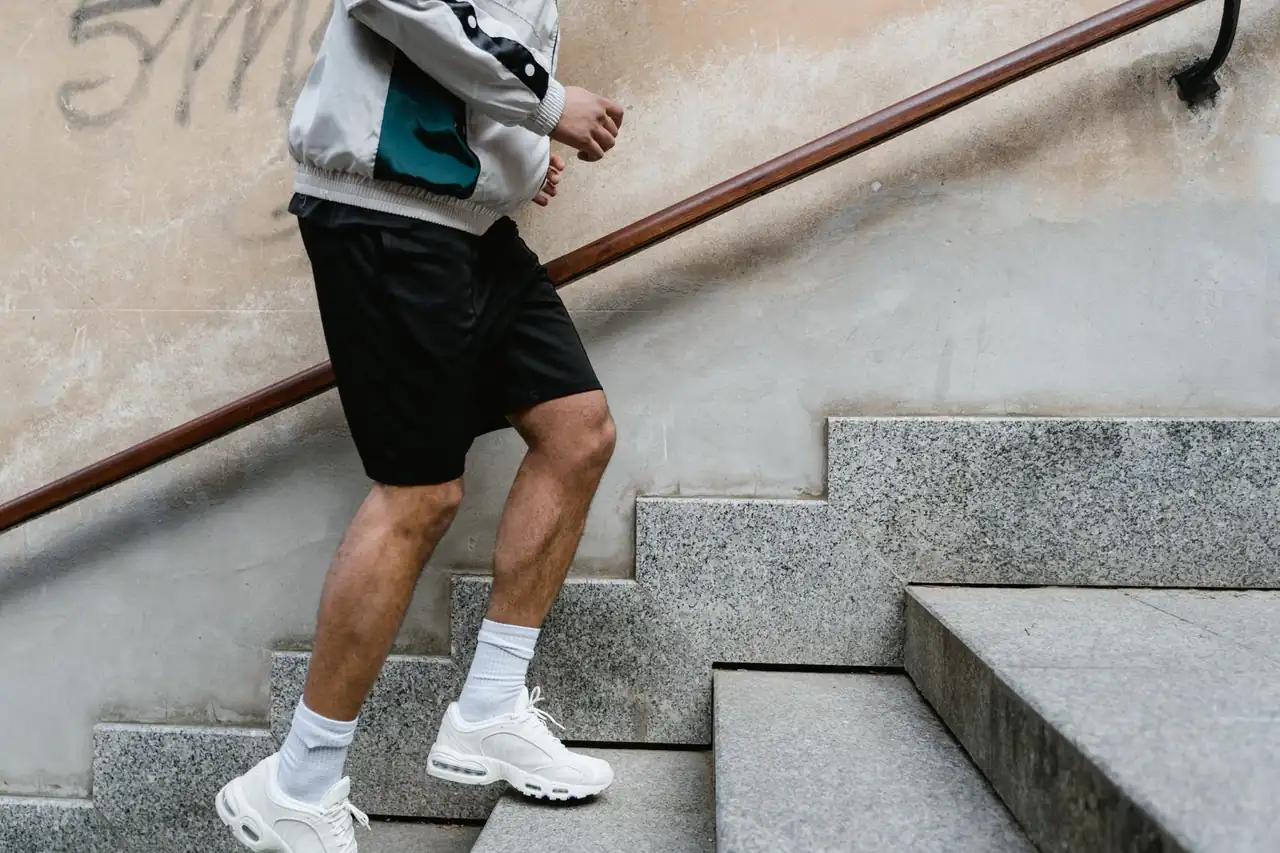
With every stride, the gluteus maximus helps drive the hip backwards, while the gluteus medius helps keep the pelvis stable. This teamwork can go unnoticed as you run, but it supports your movement and posture. If your form loses control, your pelvis may sway and areas such as the knee or lower back may take on more load.
In running, this muscle pair works like a hinge of power and balance. The maximus provides brute force, like an engine pushing from behind; the medius acts as a lateral stabilizer that keeps the trunk over the support leg. Their coordinated work explains why some runners move with a fluid stride while others drag the hip, shorten the stride, or carry tension in the lower back.
The hip engine that marks the start of movement
The gluteus maximus is the largest muscle in the gluteal region and one of the most powerful in the human body. It originates on the posterior surface of the ilium, the sacrum, the coccyx, and the sacrotuberous ligament, and inserts into the iliotibial tract and the gluteal tuberosity of the femur. Its arrangement is not decorative: its fibers are oriented to extend the hip efficiently, especially when the body needs to move from a flexed position to an upright one.
In a run, that motion appears again and again. As the foot leaves the ground, the gluteus maximus helps swing the thigh backward; when climbing stairs or standing up from a chair, it does almost the same job. It also participates in external rotation of the thigh and, depending on the portion involved, may help with abduction or adduction. That versatility makes it a central piece of the posterior chain, together with the hamstrings, spinal erectors, and thoracolumbar fascia.
Its innervation depends on the inferior gluteal nerve, with roots L5, S1, and S2. That nerve connection explains why a problem in that pathway quickly affects hip extension and the ability to keep the trunk firm when effort increases. For that reason, the gluteus maximus is not only important aesthetically, but also functionally: it helps distribute loads, protects the lower back, and gives continuity to the pushing chain every runner needs to move forward without disorder.
What the gluteus medius really does in every step
Less obvious at first glance, the gluteus medius is a first-line stabilizer. It originates on the gluteal surface of the ilium, between the anterior and posterior gluteal lines, and inserts on the lateral surface of the greater trochanter of the femur. Its fan shape is no accident: it allows it to act precisely on the hip and pelvis, two structures that in running move like clockwork parts and must be synchronized at high speed.
Its main action is hip abduction, that is, moving the thigh away from the body’s axis, but that definition is incomplete. The anterior fibers contribute to internal rotation, while the muscle as a whole stabilizes the pelvis when one foot is in the air and the other bears all the weight. In practical terms, it prevents the hip on the free side from dropping as if the body were losing a lateral support.
The superior gluteal nerve, with roots L4, L5, S1, gives the motor command. When that signal weakens or the muscle does not respond with enough force, the well-known Trendelenburg pelvic drop appears. The body tries to compensate by leaning the trunk, like a tree bending so it does not break in the wind. In runners, that pattern usually translates into a less economical stride, with more vertical oscillation and an energy cost that rises without providing real speed.
The difference between power and control
Comparing both muscles helps clarify their division of labor. The gluteus maximus works as a major propulsor, delivering force in hip extension and powering push-off. The gluteus medius, by contrast, operates like a lateral support cable, quiet but indispensable. Without that subtle brake, the pelvis would move too much and mechanics would become unstable, like a table with one leg shorter than the others.
That balance is especially noticeable in single-leg running. For a very brief moment, all the weight falls on one leg, and then the gluteus medius must hold the pelvis while the maximus contributes to forward motion. This is not isolated work, but a continuous conversation between force and alignment. An efficient stride does not come only from strong muscles; it comes from strong muscles that also know how to coordinate.
The relationship between the two also explains why many hip, knee, or lower-back pains do not start where they are felt. A fatigued gluteus medius can shift the load to the tensor fasciae latae, the quadriceps, or the outside of the knee. A gluteus maximus that does not produce enough extension can force the hamstrings to take on more work than they should. The result is often a kind of unfair distribution of movement tasks.
Where they come from and where they push
The anatomy of the gluteus maximus explains why it is so influential. Its fibers originate over a broad surface and converge into a strong insertion, allowing it to generate a large lever arm. That structure favors hip extension in explosive movements, but also in less flashy tasks, such as keeping the trunk stable while standing up or absorbing part of the load when going downhill.
In the gluteus medius, the location is different: it occupies a more lateral and deeper area, partly covered by the gluteus maximus. Its fibers spread from the ilium toward the greater trochanter and create useful tension to keep the pelvis level. That intermediate position, between surface and depth, gives it a tactical role: it is not the largest or most striking muscle, but it is one of the most influential on movement quality.
The relationship with the gluteus minimus and the iliotibial band completes the picture. Although the minimus is not the main focus of this text, both share functions of stability and fine hip control. Together they form a support system that, when well coordinated, makes it possible to run, walk, and turn with less mechanical noise. When this system goes out of alignment, the body improvises; and in biomechanics, improvising is usually expensive.
Why they matter so much for runners
In running, the gluteus maximus becomes the main player during the propulsion phase. Every time the runner pushes the ground backward, that muscle helps transform elastic and muscular energy into forward motion. It is not only about maximum power; its ability to produce repeated force over many minutes, with efficiency that does not overburden the rest of the leg, also matters.
The gluteus medius, for its part, works with a less visible but equally decisive logic. During the stance phase, it stabilizes the pelvis so the trunk does not sway from side to side. If that stability fails, the body compensates with more motion in the foot, knee, or lower back. That is why many runners with lateral hip pain actually have a proximal control problem rather than a localized injury in the joint.
Running economy depends heavily on this muscle pair. A strong gluteus maximus allows for clearer push-off; a competent gluteus medius prevents energy leaks at each ground contact. Together they reduce the cost of moving the body forward. In a discipline where every small saving counts, that difference is closer to tuning an engine than replacing it with another one.
The warning signs that reveal an imbalance
When the gluteus maximus does not respond well, hip extension loses quality. The stride shortens, the pelvis may stay slightly more flexed at the end of stance, and the hamstrings become more involved than they should. In some cases, the runner even notices that it is hard to drive uphill, start after a pause, or maintain clean technique when fatigue sets in.
If the problem is in the gluteus medius, the signal is usually more lateral. There may be a drop in the pelvis toward the opposite side, a feeling of instability when standing on one leg, or repeated overload on the outer part of the hip. It is also common for the knee to drift inward, a movement that alters the alignment of the entire lower limb and can multiply tension in other areas.
Trendelenburg gait neatly summarizes that support failure. There is no need to dramatize it to understand its clinical value: when the pelvis is not kept level, the body pays the price with every step. And in repeated-impact sports like recreational athletics, these small mechanical errors tend to accumulate until they become visible as pain, early fatigue, or inconsistent performance.
How to understand them better with everyday examples
Standing up from a chair with a push, stepping onto a curb, or pushing a heavy door with the leg opposite the body activates the gluteus maximus. It is the muscle most like a thick spring, capable of releasing energy when it is time to step forward. That is why its function is noticeable both in powerful gestures and in simple kitchen or office movements that often go unnoticed.
The gluteus medius is easier to understand by looking at single-leg posture. When a person brushes their teeth standing on one leg, gets dressed while standing, or steps down off a stair, that muscle has to keep the pelvis still despite the imbalance. It is a fine support job, similar to a tensioned cable that keeps a wobbling structure from collapsing.
In running, that combination repeats hundreds or thousands of times. The body moves forward because one muscle propels and the other stabilizes. Power and control are not opposing concepts, but two sides of the same gesture. Someone who runs smoothly usually has that relationship well solved; someone who always overloads the same areas does not. Anatomy, in the end, is expressed in visible patterns.
What clinical practice says when something does not fit
Medical and physiotherapy practice has long emphasized a simple idea: it is not enough to measure strength, you have to look at function. A gluteus maximus may be present and still not integrate well into hip extension. A gluteus medius may contract in an isolated test, but fail when the pelvis has to manage real load. That gap between test and movement explains why some discomfort returns again and again.
It is also worth remembering that gluteal pain does not always originate in the muscle that hurts the most. The area shares the spotlight with the hip joint, the sacroiliac joint, the lower back, and nearby structures such as the fascia lata or the deep rotators. When load is not distributed well, some structures compensate for others. The result is mechanics that are clumsier, stiffer, and more vulnerable to overuse.
Pelvic stability is a very useful functional marker because it summarizes, in a single gesture, the work of several muscles and joints. If the pelvis drops, something is not holding as it should. If push-off is weak, something is not extending efficiently. That clinical reading, simple on the surface, is one of the reasons gluteus maximus and gluteus medius remain central in anatomy applied to sport.
Why their balance changes the way we move
A dominant gluteus maximus but a weak gluteus medius can produce a powerful yet disorganized stride. The body pushes, but it sways. Conversely, a competent gluteus medius with a less reactive maximus produces good stability, but the stride lacks spark. Movement quality appears when both work together without competing.
That balance also affects posture outside sport. The pelvis is a platform on which the trunk is organized, and the way it is supported affects the lower back, hip alignment, and load distribution in the legs. A strong, coordinated gluteal system does not make anyone immune to discomfort, but it does improve the mechanical base from which the body handles everyday and athletic demands.
The key lies in combining strength and precision. The gluteus maximus provides drive; the gluteus medius, direction. When one pulls and the other corrects, movement loses its naturalness. When both fit together, the hip becomes an efficient transmission center, almost like a well-oiled axle. That is why these muscles deserve attention not only in the gym, but in any serious analysis of human movement.
How the gluteus maximus and medius work in every stride
When you run, the gluteus maximus helps extend the hip and contribute to forward propulsion. The gluteus medius helps control the pelvis as you bear weight on one leg. They do not work alone: your trunk, feet and other muscles are involved too. So an uneven stride cannot, by itself, tell you which muscle is working less or confirm an injury.
During easy runs and longer outings, pay attention to persistent changes in your form: a hip that seems to drop, a new trunk lean or a clear difference between sides. Also notice discomfort around the hip, knee or lower back, especially if it gets worse while running or changes your stride. These signs can help you decide what to review, but they are not a diagnosis.
If you feel fatigued or less in control, do not try to compensate by lengthening your stride or pushing the pace. Consider easing the effort or shortening the session, then see how you respond before building the workload again. Strength training can include controlled hip-extension and stability exercises, using a technique you can maintain without pain. A qualified professional can help tailor the exercises and progression to your needs. Avoid introducing a demanding new routine just before a race.
Allow time to recover between hard sessions. If pain or changes to your running form persist, get worse or limit your everyday activities, consult a healthcare professional before continuing to increase your training.
A lesson that goes beyond aesthetics
For years, popular conversation about the glutes has focused too much on shape and too little on function. Yet the real value of the gluteus maximus and gluteus medius lies in how they allow us to move, stabilize, and withstand load. Appearance may be a side effect of training; utility, by contrast, is a structural necessity.
In the runner, the walker, and anyone who spends many hours sitting, these muscles function as a safety net. The maximus pushes, the medius supports, and both distribute efforts that would otherwise fall more harshly on the back, knee, or hip. That is the most sober and at the same time most convincing version of their importance: they are not an anatomical ornament, but a support machine that makes movement with less friction possible.
Understanding them changes how we read the body. Every single-leg support, every exit from a turn, every uphill jog reveals part of that silent work. And in that almost choreographed repetition, the gluteus maximus and gluteus medius show why anatomy is not a static catalog, but a story of forces crossing paths so movement can keep making sense.



How to prevent thigh chafing: causes and real solutions

Women’s running windbreakers: seven jackets and how to choose

Do more workouts get rid of soreness? A guide for runners

Jaén Half Marathon 2026: Record 3,800 Runners Registered

Men’s short running tights: how to choose the right pair

World Triathlon confirms data breach involving medical data

Izan Edo targets podium at Miyazaki World Cup

María Pérez ranks ninth in World Athletics’ 2026 top ten

Dos Santos, Duplantis and Sawe: World Athlete of the Year finalists

San Silvestre Vallecana 2026: 42,000 places, prices and start times

 Races4 months ago
Valencia Half Marathon 2027: date and registration

 Races4 months ago
Valencia Marathon 2026: entry, ballot and course

 Reviews and Comparisons4 months ago
Asics Gel-Roadmiles 3 for men: review and current price

 Reviews and Comparisons4 months ago
Asics Gel Sonoma 8 Gore-Tex: complete analysis for trail and rain

 Sneakers3 months ago
Saucony Endorphin Pro 4: full review and verdict

 News5 months ago
Strava API 2026: what changes for clubs, challenges and runner apps?

 Reviews and Comparisons5 months ago
Nike Alphafly 3: opinions, sensations, and real key points

 Reviews and Comparisons4 months ago
Under Armour running shoes review 2025-2026: models and key features

 Sports Equipment4 months ago
Shoe sizes in cm: a clear guide to getting the right fit for your footwear

 Sneakers3 months ago
Skechers GO RUN Consistent 2.0 analysis: comfort and limits

 News5 months ago
Valencia Marathon 2026 route: key tips to train and run better

 Sneakers4 months ago
Adidas Adizero Boston 13 for men: review and verdict