Training
Half marathon plan October: how to structure your summer without really burning out
Keys to approach the final stretch with order: paces, long runs and taper before running 21.1 km in Valencia.

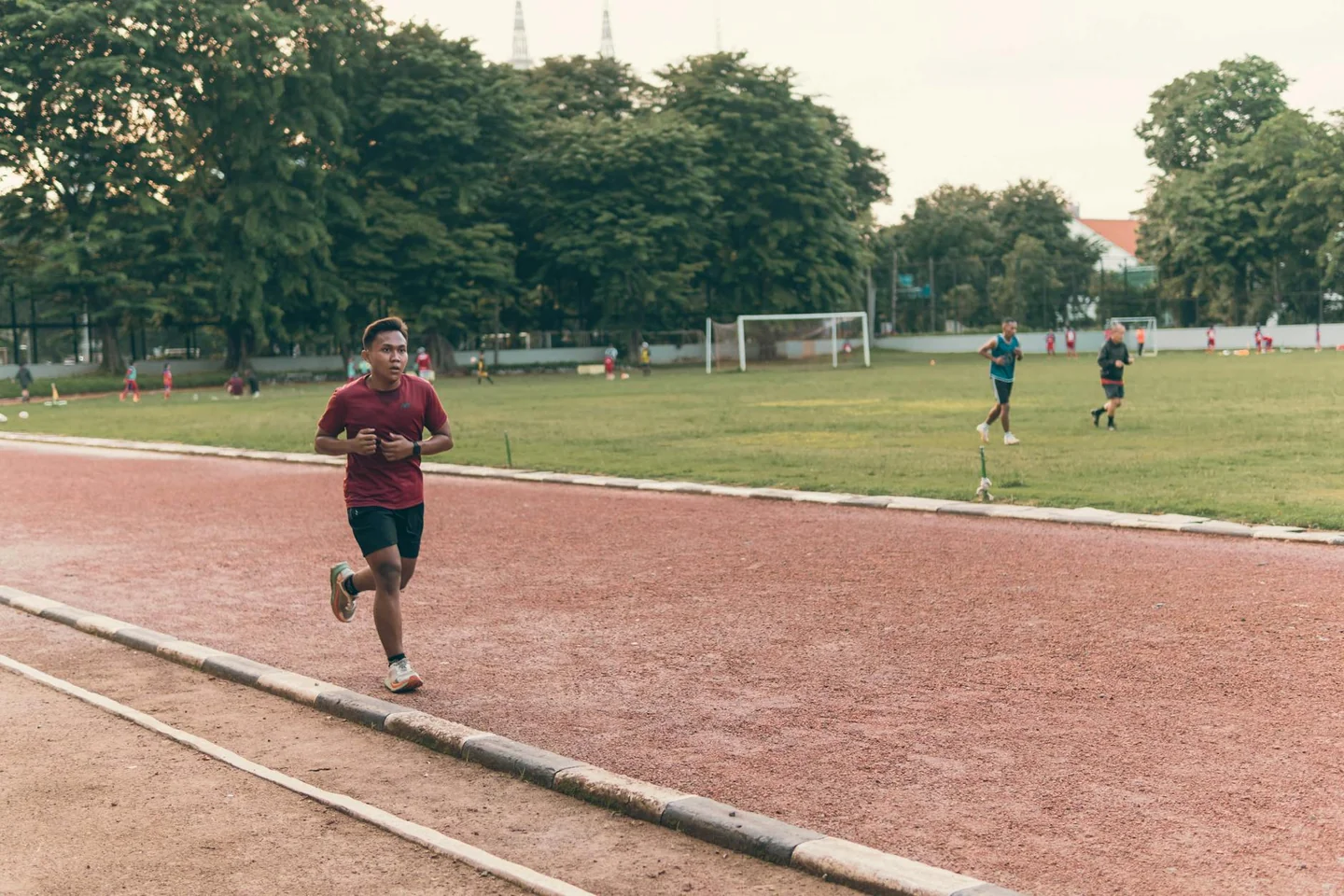
Imagen: Peter Kambey / Pexels
October concentrates one of the most demanding final stretches on the runner’s calendar. At this point, preparation is no longer about piling up kilometers without direction, but about tuning the engine so it responds on race day with lively legs, energy reserves, and a calm head. In a half marathon plan for October, the difference between arriving strong or arriving spent usually lies in the details: the pace of the intervals, the length of the long runs, the recovery between efforts, and the courage not to push where you shouldn’t.
The Valencia Half Marathon, scheduled for October 26 in recent editions, has become a perfect barometer for measuring that level of fitness. Its fast course, the start and finish on avinguda dels Tarongers, and the atmosphere of a city fully committed to running explain why so many runners use it as their big autumn goal. But the beautiful setting doesn’t run for anyone: what makes the difference is a well-tuned preparation in the weeks leading up to it.
The decisive phase before 21.1 kilometers
The final part of preparation doesn’t need heroics, it needs structure. In a half marathon, the body responds better when it has already built a solid aerobic base and then enters a specific stretch where race pace, tempo changes, and workouts that teach you to sustain effort start to appear. October usually arrives with a packed calendar, but also with a clear advantage: the runner has already gone through weeks of adaptation and can read their sensations better.
That moment calls for a double perspective. On one hand, it’s worth thinking of the race as a 21.0975-kilometer test in which stability matters more than the shine of a single workout. On the other, it helps to remember that the half marathon isn’t won in the last month, but it can definitely be lost through overexcitement, poor recovery, or a badly measured progression. October training often works like a match in a dark room: it lights up what’s missing and also what’s left over.
The Valencia reference helps make that balance easier to understand. The course has become famous for its speed, its almost completely flat profile, and its ability to attract personal bests. That makes many runners think about pushing harder than they should. However, the right preparation rarely looks like a constant climb in intensity; it looks more like a well-set building, with a strong foundation, solid middle floors, and a light finishing touch that doesn’t overload the structure.
How a ten-week plan is organized
Ten weeks are enough to fine-tune a lot, but only if there is already a prior base. The specific plans that appear in October usually divide the work into blocks with different goals: absorbing volume, introducing quality, consolidating half marathon paces, and reducing the load as race day gets closer. It’s no coincidence that many programs aimed at Valencia use that time window. It’s the right margin to activate without burning out.
The logic is simple, even if it’s not always easy to carry out. The first weeks of that phase usually combine easy runs with controlled-pace sessions and a long run that is still important, but no longer has to feel like an expedition. Later on, more repetitions at lively paces come in, stretches close to threshold, and some 10K stimulus to remind the body that running economy is trained too. The final week, on the other hand, should remove the noise: fewer kilometers, less fatigue, and more snap.
The most common mistake is turning the plan into a weekly competition. If every session ends up feeling like a kind of exam, the runner reaches the end with empty legs and a saturated mind. A half marathon plan in October should feel more like a long conversation with the body than a military order. There are days for pushing and days for craft; weeks of load and weeks of assimilation. Progress appears when those pieces fit together, not when one single piece tries to dominate the whole board.
Paces that are really worth respecting
Paces are the compass of preparation and also its danger zone. In many half marathon plans, references appear to 5K pace, 10K pace, half marathon pace, and marathon pace. That classification isn’t technical decoration: it serves to place each workout where it belongs. If an easy run turns into a cheerful outing, recovery is lost. If an interval session is run too fast, the body receives a different stimulus than intended and the wear increases.
As a general guide, 5K pace is usually about 10 to 15 seconds per kilometer faster than 10K pace, half marathon pace can be 15 to 20 seconds per kilometer slower than 10K pace, and marathon pace is still a little slower. In easy runs, the reference changes depending on the main goal: for someone preparing for a marathon, aerobic runs are usually 30 to 40 seconds per kilometer above marathon pace; for someone not focused on the marathon, a common guideline is to run between 50 seconds and one minute per kilometer slower than 10K pace.
The usefulness of these scales lies in the way they simplify decisions. A runner who knows their paces stops improvising so much. They know when they’re working threshold, when they’re building base, and when they’re just accumulating fatigue. That clarity is worth gold in October, because the calendar invites you to race on feel: the weather is better, the legs respond more, and the temptation to run a little faster every day appears like an underground current that’s hard to ignore.
The key weeks before the load drops
As race day gets closer, preparation has to become more precise and less noisy. In a typical October block, the most intense week can still include 500, 600, or 1,000-meter intervals, 10K work, and some continuous blocks at half marathon or marathon pace. The idea is not to empty the tank, but to keep the nervous system awake and remind the body of the specific effort. After that, volume drops and the runner starts arriving with less accumulated fatigue.
Long runs, for their part, should no longer be seen as an invitation to stretch everything out. At this stage, a 80- to 100-minute outing can be more useful than an excessive session. The goal is not to add suffering, but to consolidate endurance without dragging heaviness around for days. In a half marathon, arriving with heavy legs can be just as harmful as arriving underprepared. The middle ground, though less flashy, is usually the one that delivers the best results.
The role of strength work also changes. In the final weeks, strength training is no longer about building what wasn’t done before, but about supporting the structure: core, glutes, hips, and overall stability. A short maintenance block can be useful, but anything excessive comes at a price. October, with its pace changes and tune-up races, rewards freshness more than gym-room heroics.
What usually works in the final stretch
The plans that age best share a simple idea: alternate stimulus and recovery with discipline. That makes it possible to reach race day with a body that recognizes half marathon pace without feeling threatened by it. Quality sessions gain value when they’re placed inside a reasonable week, with truly easy days and real rest. Not every workout needs to be memorable; some just need to do their job.
In practice, the runner usually benefits from three types of work in this phase. First, controlled-pace blocks that come close to race intensity without going over it. Second, short or medium intervals that wake up the stride and improve efficiency. Third, easy runs that maintain volume without punishing the muscular system. That combination, well distributed, is usually more effective than a string of hard efforts linked together like wagons without brakes.
Rest stops being a reward and becomes a performance tool. Sleeping well, spacing out loads better, and reducing the anxiety of training more than necessary may sound like obvious advice, but in practice it changes races. Many half marathons are decided before the gun goes off, in the quality of sleep, in recovery between sessions, and in the ability to accept that not every day is trained the same way.
How to read the course and use it to your advantage
Valencia offers a course that invites you to run with your head and without surprises. The start and finish in the university area, the wide avenues, and the fast-course nature all favor a smooth pace from the beginning. That doesn’t mean blasting off. It means the terrain won’t make excuses, and precisely for that reason, it demands more craft from the runner. When the road is in your favor, ambition often gets ahead of common sense.
The flat profile makes it possible to hold paces with fewer changes in effort than in other, hillier half marathons. That’s an obvious advantage for anyone chasing a personal best, but also a subtle trap: with no hills to slow you down, the runner can go out a few seconds per kilometer faster than planned without noticing in the first five kilometers. Then the bill arrives. That’s why pace management has to be done with patience, not blind faith in the group’s momentum.
Knowing the course also helps prepare the mind. Visualizing the sections, the aid stations, the points where the crowd gets louder, and the approach to the finish can reduce the feeling of uncertainty. That familiarity doesn’t replace training, but it does support it. In mass-participation races, the mind burns energy; the less it improvises, the more it saves for the decisive stretch.
Mistakes that show up exactly when it hurts most to make them
The most common one is arriving in October with too much accumulated wear. Sometimes it comes from piling on too much volume, other times from racing too often, and in many cases from training every day a little above what was needed. The body holds on for a while, but it does so by charging interest. When the specific part of preparation arrives, it no longer responds with the same freshness and the plan turns into a race to recover what was lost earlier.
Another common mistake is confusing progression with constant acceleration. A runner can improve without speeding up every day. In fact, they usually do better when they reserve the lively efforts for the sessions that require them and let the easy runs do the quiet work of building endurance. That economy of effort is especially valuable in October, when the calendar offers tune-up races, group workouts, and the false feeling that there’s always fuel left in the tank.
Small niggles shouldn’t be underestimated either. An overload in October doesn’t always mean stopping, but it does mean looking at things clearly. Cutting a repeat, shortening a run, or swapping a quality day for an easy one can save a preparation. In the end, the half marathon rewards the runner who arrives healthy more than the one who arrives saturated. That simple idea often separates a good morning from a bad one.
Race week changes the rules of the game
The final week is no longer for building, but for preserving what’s already been done. The goal is to reduce fatigue without switching off the body’s response. That’s why short runs, a few very brief touches of fast pace, and rest days usually appear, and they shouldn’t be mistaken for laziness, but rather as part of the work. Tapering, when understood properly, doesn’t take fitness away: it lets it come out.
In that final stretch, the runner also benefits from simple routines. Checking logistics, knowing the schedules, preparing the clothes, and sorting out the small details avoids unnecessary mental load. In a race like Valencia, with a huge turnout and very careful organization, that prior planning makes it easier for attention to focus where it should: on running.
The activation on Saturday or the day before is usually brief and clearly intentional. There’s no need to finish feeling like you completed a full workout. A few strides, a few minutes of easy running, and the feeling that the body is still alive are enough. The goal is not to get less tired by chance, but to arrive with the muscles awake and the pulse steady. The half marathon is rarely decided in that warm-up, but it can definitely be ruined by overdoing it.
What a good October preparation leaves behind
A good October plan doesn’t just prepare a race, it also teaches the runner judgment. It teaches you to tell useful fatigue apart from empty fatigue, ambition apart from haste, productive volume apart from kilometers that only fill the week. That maturity isn’t measured by a stopwatch, but it ends up affecting every training block that comes after. Those who learn to respect paces and recovery usually train better for longer.
The half marathon, especially in a city like Valencia, brings together many of the elements that make this sport so appealing: atmosphere, times, strategy, and a fair, hard but accessible demand. October is the month when all of that gets organized. The runner arrives with what’s been done, sharpens what’s still pending, and crosses the start line with a reasonable certainty: serious work shows, even if it doesn’t always make noise.
And that’s the key to a well-designed half marathon plan for October: less improvisation, more control, and a progression that doesn’t break what was already working. The race rewards that balance with a very recognizable image, that of a runner who reaches kilometer 21 whole, still able to hold form when others are already negotiating with the effort. On a fast course, that difference is clear. You can feel it too.
The countdown, in reality, starts long before the starting arch. It starts when an easy run is respected, when an interval is run at the right pace, and when it’s accepted that improvement in the half marathon is usually built like a tide: without noise, but with enough force to change everything.



How to prevent thigh chafing: causes and real solutions

Women’s running windbreakers: seven jackets and how to choose

Do more workouts get rid of soreness? A guide for runners

Jaén Half Marathon 2026: Record 3,800 Runners Registered

Men’s short running tights: how to choose the right pair

World Triathlon confirms data breach involving medical data

Izan Edo targets podium at Miyazaki World Cup

María Pérez ranks ninth in World Athletics’ 2026 top ten

Dos Santos, Duplantis and Sawe: World Athlete of the Year finalists

San Silvestre Vallecana 2026: 42,000 places, prices and start times

 Races3 months ago
Valencia Half Marathon 2027: date and registration

 Races3 months ago
Valencia Marathon 2026: entry, ballot and course

 Reviews and Comparisons4 months ago
Asics Gel-Roadmiles 3 for men: review and current price

 Reviews and Comparisons4 months ago
Asics Gel Sonoma 8 Gore-Tex: complete analysis for trail and rain

 Sneakers3 months ago
Saucony Endorphin Pro 4: full review and verdict

 News5 months ago
Strava API 2026: what changes for clubs, challenges and runner apps?

 Reviews and Comparisons5 months ago
Nike Alphafly 3: opinions, sensations, and real key points

 Reviews and Comparisons4 months ago
Under Armour running shoes review 2025-2026: models and key features

 Sports Equipment4 months ago
Shoe sizes in cm: a clear guide to getting the right fit for your footwear

 Sneakers3 months ago
Skechers GO RUN Consistent 2.0 analysis: comfort and limits

 News5 months ago
Valencia Marathon 2026 route: key tips to train and run better

 Sneakers4 months ago
Adidas Adizero Boston 13 for men: review and verdict