Training
The exact pace to run a marathon under three hours
Target pace, splits, workouts and race strategy for running a marathon in under three hours.

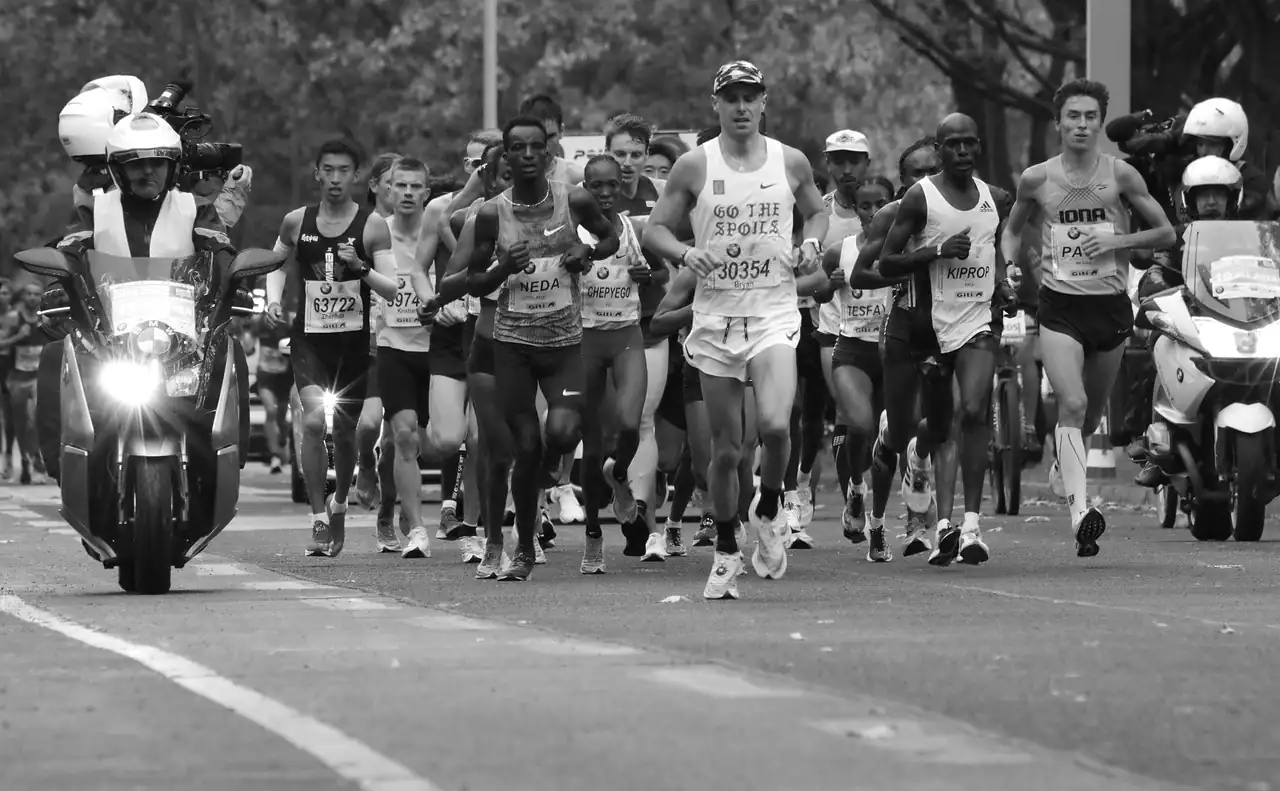
Imagen: wal_172619 / Pixabay
Running 42.195 kilometers in under three hours requires holding an average of 4:15 minutes per kilometer. Reaching that pace for a few minutes is not enough: the challenge is maintaining it from the start to the finish while dealing with muscular fatigue, aid stations, heat and small changes in the course. In practical terms, the margin is narrow: an average pace of 4:14/km leads to about 2:59:17, while exactly 4:15/km equals roughly 2:59:20.
Preparation for this goal combines aerobic endurance, controlled speed, strength, nutrition and a conservative race strategy. The key point is simple, although applying it takes months of work: target pace must be practiced, not merely memorized. Starting too fast can turn the final 10 kilometers into a heavy bill, while controlled pacing allows the runner to reach the decisive section with reserves.
The number that defines the three-hour barrier
An official marathon is 42.195 kilometers long. To finish in under three hours, average speed must be around 14.1 kilometers per hour and target pace is 4:15/km. Since GPS watches often record extra distance, racing with a small reserve is sensible. A reasonable plan may target a real average of 4:14/km, provided conditions, course and preparation make it realistic.
Splits help interpret effort without relying on one instant number. The 5K should be reached near 21:15, 10K in 42:30, halfway in approximately 1:29:55 and 30K around 2:07:00. Passing 35K at roughly 2:28:50 leaves about 14 kilometers to protect the goal. These times are guidelines and must be considered alongside perceived effort, wind and runner density.
The difference between an even strategy and an impulsive start can exceed several minutes. Passing the first 5K in 20:45 means running at 4:09/km, only six seconds faster per kilometer, but that excess can create substantial fatigue. By contrast, covering the opening kilometers between 4:15 and 4:17 allows breathing to settle and effort to stabilize without unnecessary energy expenditure. Patience during the first half is part of performance, not a sign of limited ambition.
What previous level does this goal usually require
No single performance guarantees a marathon under three hours. Individual endurance, training history, course profile and the ability to use carbohydrates all change the relationship between distances. Still, common reference points place the 10K near 38-40 minutes and the half marathon approximately between 1:24 and 1:27 for runners with specific preparation and good tolerance for prolonged effort.
These marks are not an entrance exam. A durable runner may perform better in the marathon with a slightly slower 10K, while a very fast runner may lose too much time after 30K. Short-distance calculators offer an estimate, not a verdict. A 1:25 half marathon may project a marathon close to 2:57 through some formulas, but only when enough weekly volume and specific adaptation are already in place.
Experience also matters. Before chasing this goal, it is useful to have completed several uninterrupted training cycles and to tolerate weeks of roughly 60 to 90 kilometers, depending on the athlete’s history. Consistency matters more than one spectacular week: a well-assimilated 16- or 20-week preparation usually offers more confidence than a short block filled with excessive sessions.
How specific preparation is built
Training is usually organized into a base phase, a development phase and a final reduction in workload. During the base phase, easy runs, strength work and progressive long runs are consolidated. The aim is not to run fast every day, but to increase the ability to handle regular weeks without fatigue becoming injury. At this stage, comfortable pace must genuinely feel comfortable, even when that means moving well away from race pace.
The specific phase introduces sessions that teach the body to run near 4:15/km while already carrying some fatigue. One example could be an 18-kilometer run with two 4-kilometer blocks at target pace, separated by easy running. Another useful session is 3 by 5 kilometers slightly faster than or around marathon pace, with short, controlled recoveries. Workload must match individual level; specific workouts are not all-out tests.
Long runs are the main laboratory of preparation. Some are entirely easy, while others include controlled sections near the end, such as 26 kilometers with the final 8 to 10 kilometers close to target pace. The benefit is not limited to the legs: these runs allow athletes to test shoes, clothing, hydration and gels. They also show whether the planned pace remains sustainable as glycogen begins to decline.
Fast intervals play a supporting role. Repetitions of 800 meters, 1,000 meters or 2,000 meters can improve running economy and raise aerobic capacity, but they do not replace long runs or specific work. For a three-hour goal, running every interval too quickly can damage recovery and reduce the quality of the week’s most important session. Speed should serve endurance.
The volume, strength and recovery that support pace
Suitable weekly volume depends on experience, age, work, surface and musculoskeletal tolerance. Some runners reach their best performance at 70 kilometers per week; others need to progress beyond that number. There is no magic amount. There is, however, a sound principle: increase workload gradually, schedule recovery weeks and avoid placing two demanding sessions too close together.
A balanced week may include four or five running days, one quality workout, one long run, several easy runs and at least one complete rest day. In some cases a second moderate session is added, but the schedule must leave room for recovery. Easy recovery runs have a physiological and mental role: they improve circulation, maintain training frequency and allow mileage to accumulate without turning every outing into a race.
Strength work helps preserve technique when the legs are tired. Squats, lunges, calf raises, deadlifts with appropriate loads and trunk exercises can form part of a general routine, always adjusted to the athlete’s experience. The aim is not maximum hypertrophy, but improved ability to produce and sustain force. Resilient muscles protect stride mechanics in the final kilometers, when posture tends to fall apart.
Rest is not an empty space in the plan. Insufficient sleep, work stress and poor nutrition can disrupt recovery even when sessions are well designed. Discomfort that changes running form requires caution and, when it persists, medical assessment. Pushing through worsening pain does not turn demanding preparation into better preparation; it often moves the problem toward race day.
Nutrition and hydration over 42 kilometers
Race pace also depends on available energy. Glycogen stores are limited and a marathon at 4:15/km depletes them quickly. That is why fueling during the race must be practiced on long runs, not improvised at the last moment. A common reference for trained athletes is 60 to 90 grams of carbohydrates per hour, although tolerance varies and intake must be increased gradually.
Gels, sports drinks and other products provide carbohydrates at different concentrations. Fluid needs depend on temperature, humidity, sweat rate and available aid stations. Drinking excessively without thirst can also be dangerous. The strategy should combine carbohydrates, fluids and sodium without turning the race into a series of improvised decisions.
A practical trial may begin with an intake before the start and small amounts every 25 or 30 minutes, always according to personal tolerance and product instructions. It is worth checking how many aid stations there are, what they provide and which side of the course they are on. Slowing slightly for a few seconds to drink may be more profitable than skipping the station and later facing dehydration or a sharp energy drop.
The pre-race dinner does not need to be extravagant. A familiar meal rich in carbohydrates and low in foods that usually cause digestive discomfort is generally safer than a new recipe. Breakfast should be tested during early training sessions and respect the athlete’s normal digestion time. The objective is to start with adequate reserves, not to eat until feeling heavy.
Race strategy to avoid paying for the start
The start of a major marathon is noisy, fast and confusing. Runners accelerate to pass, groups block the way and the atmosphere encourages racing from the first meter. For a sub-three-hour goal, the initial priority is finding space and establishing a stable effort. The first 3 or 5 kilometers should feel controlled, with firm breathing and no need to prove anything.
Between kilometers 5 and 25, pace should settle around 4:14-4:16/km, with small changes dictated by turns, wind and aid stations. Trying to correct every second on the watch can create tension. With imperfect GPS, official splits and overall feel are more useful. Even effort matters more than chasing a perfectly flat line on the screen.
The halfway point is not the moment to decide that the goal is too conservative. If it is reached near 1:29:50 or 1:30:00 with good sensations, the sensible choice is to maintain concentration. From kilometer 25 to 32, protect technique, eat and drink as practiced, and avoid abrupt changes. That section may feel comfortable, but there is still enough distance for any excess to appear later.
From kilometer 32 onward, attention turns to movement economy. Compact arms, relaxed shoulders, eyes forward and a stride that is not artificially lengthened help preserve energy. If the body responds, pace can be maintained or slightly improved after kilometer 35. If clear exhaustion appears, accepting a small slowdown and keeping the race moving is better than entering a cycle of surges and stops.
How to know whether the goal is ready
Control sessions provide more useful information than one isolated feeling. Completing 10 or 12 continuous kilometers near target pace, finishing a long run with several kilometers at 4:15/km and recovering normally are encouraging signs. It also matters that easy runs remain fluid during the heaviest weeks. One good session cannot compensate for persistent fatigue.
A test consisting of two 6-kilometer blocks at marathon pace, separated by a short recovery, can offer an indicative reference for some runners. It should not become a hidden race. The result only makes sense when it fits the rest of the preparation: stable volume, no significant injuries, tolerance to race fueling and a recent half marathon consistent with the objective.
The final two or three weeks progressively reduce volume while keeping some short stimuli to preserve feeling. This phase, known as tapering, is not designed to create sudden fitness gains. Its purpose is to let the body absorb accumulated work and arrive fresh. Fitness is built during the loading weeks, but it is expressed when fatigue fades.
Running under three hours should not be treated as an obligation that invalidates any result above that line. A marathon is exposed to factors no plan can fully control: heat, wind, illness, fueling mistakes or a poor physiological day. Rigorous preparation raises the odds, but it does not eliminate uncertainty. The right pace comes from combining data, experience and respect for the distance.
The value of staying controlled to the finish
The three-hour barrier is decided long before reaching the start line, through the quiet accumulation of easy runs, rest, strength sessions and fueling practice. The central number is 4:15/km, but behind that figure lies a more complex ability: sustaining a high effort for almost three hours without spending too much during the opening stages.
An intelligent strategy leaves room for the race to unfold. Even splits, practiced fueling and an honest reading of sensations make it possible to reach kilometer 35 with real options. At that point, speed no longer depends only on the heart or legs; it depends on everything done correctly during the preceding months. Sub-three is not won through impulse, but through endurance prepared to withstand the passage of time.



How to prevent thigh chafing: causes and real solutions

Women’s running windbreakers: seven jackets and how to choose

Do more workouts get rid of soreness? A guide for runners

Jaén Half Marathon 2026: Record 3,800 Runners Registered

Men’s short running tights: how to choose the right pair

World Triathlon confirms data breach involving medical data

Izan Edo targets podium at Miyazaki World Cup

María Pérez ranks ninth in World Athletics’ 2026 top ten

Dos Santos, Duplantis and Sawe: World Athlete of the Year finalists

San Silvestre Vallecana 2026: 42,000 places, prices and start times

 Races3 months ago
Valencia Half Marathon 2027: date and registration

 Races3 months ago
Valencia Marathon 2026: entry, ballot and course

 Reviews and Comparisons4 months ago
Asics Gel-Roadmiles 3 for men: review and current price

 Reviews and Comparisons4 months ago
Asics Gel Sonoma 8 Gore-Tex: complete analysis for trail and rain

 Sneakers3 months ago
Saucony Endorphin Pro 4: full review and verdict

 News5 months ago
Strava API 2026: what changes for clubs, challenges and runner apps?

 Reviews and Comparisons5 months ago
Nike Alphafly 3: opinions, sensations, and real key points

 Reviews and Comparisons4 months ago
Under Armour running shoes review 2025-2026: models and key features

 Sports Equipment4 months ago
Shoe sizes in cm: a clear guide to getting the right fit for your footwear

 Sneakers3 months ago
Skechers GO RUN Consistent 2.0 analysis: comfort and limits

 News5 months ago
Valencia Marathon 2026 route: key tips to train and run better

 Sneakers4 months ago
Adidas Adizero Boston 13 for men: review and verdict