Training
Runner calves: how to train them to run better
Well-trained calves provide drive, stability, and a lower risk of discomfort while running.

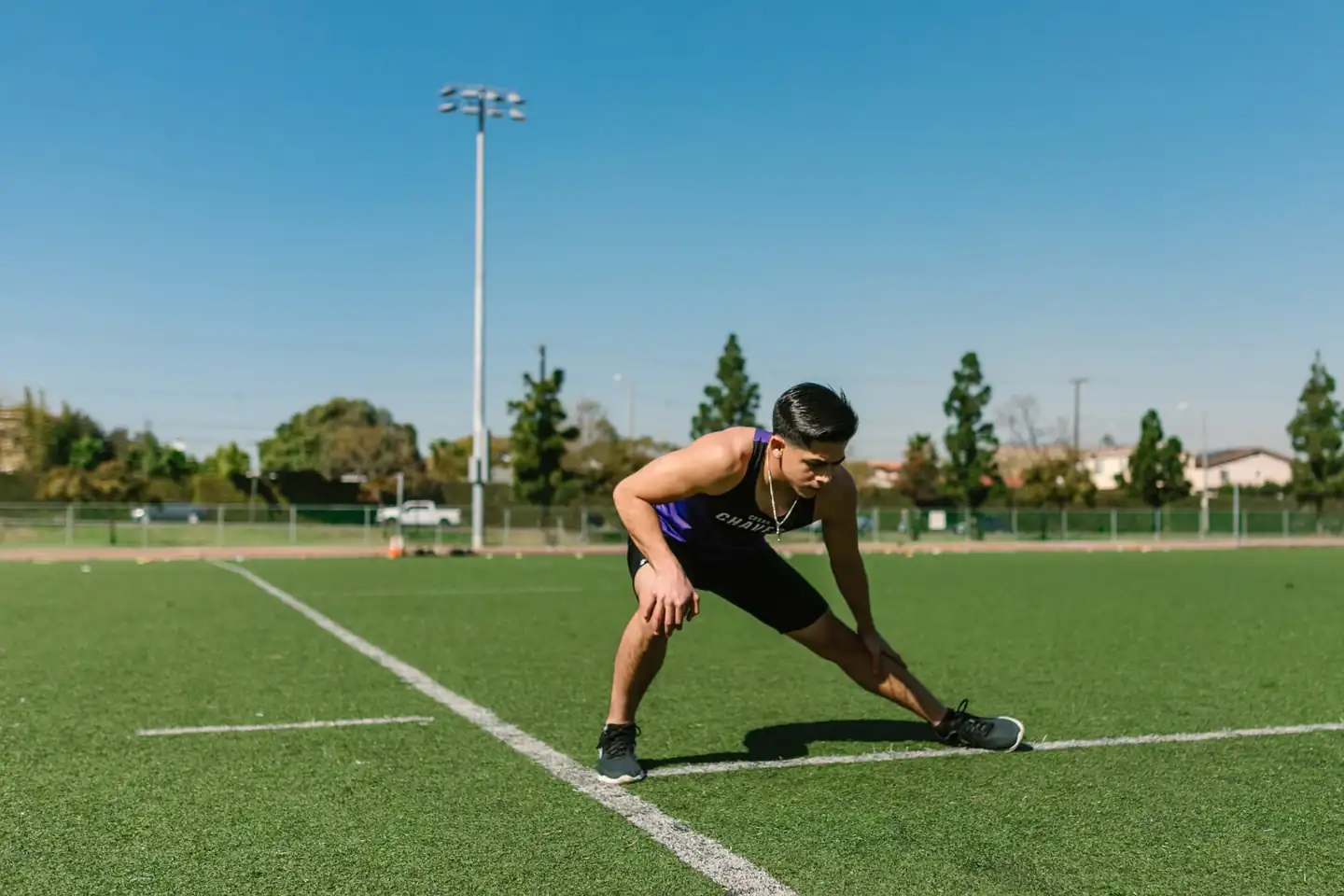
The calves support a decisive part of the running motion. They don’t just drive you forward with every stride: they also absorb impact, stabilize the ankle, and help make running more efficient. When that area shows up weak or fatigued, the body compensates above and below, and the price usually appears in the form of overload, tightness, or a loss of fluidity.
For the recreational runner, that muscle group often gets pushed into the background until it starts to fail. But the evidence and clinical practice agree on one basic thing: a strong, elastic, and resilient calf musculature is a central piece for performing better and moving with less wear and tear. It’s not an aesthetic detail or a gym whim; it’s pure mechanics applied to every foot strike.
What they actually do when running
The calf complex is made up mainly of the gastrocnemius and the soleus, two muscles that work together with the Achilles tendon as a functional unit. The first crosses the knee and ankle, while the second works more quietly, tucked into the lower part of the leg, with a huge role in continuous running. Both take part in plantar flexion, that action of pushing against the ground as the foot lifts off.
Their job is not limited to pushing forward. With every ground contact they must control the body’s drop, store and return elastic energy, and help with ankle stability. Put simply: they work like springs and brakes at the same time. If technique, volume, or terrain demand more than they can handle, they get irritated quickly. When the runner speeds up, climbs hills, or lands tired, the demand rises as if the system had to respond in a higher gear.
The soleus deserves a chapter of its own because it usually carries a good part of the daily workload. When running at easy, sustained paces, especially in runners who land with a slight knee bend, this muscle takes center stage. That’s why some athletes feel a deep, diffuse discomfort in the calf, more like heavy fatigue than a clear stab. The soleus doesn’t always make itself known, but it rarely stays still.
Why a strong calf changes the stride
Well-trained musculature improves running economy, meaning it helps you spend less energy at the same pace. That effect usually doesn’t feel like a spectacular improvement from one day to the next, but rather like a lighter run, with less loss of force and a cleaner push in the final phase of support. In long races, that difference multiplies kilometer after kilometer.
Stability also improves. A firm, reactive ankle reduces unnecessary oscillations, especially when the runner lands fatigued, changes surface, or enters curves and changes in elevation. The calf acts like an intelligent hinge: it gives just enough, responds on time, and keeps movement from spilling down the lower chain. That mechanical precision matters just as much in a 5K as in a marathon.
There is also a direct link with preventing common issues. Especially with the plantar fascia, the Achilles tendon, and overload in the triceps surae itself. This is not about promising immunity, because that doesn’t exist in running, but about reducing a relevant part of the risk. A more capable tissue tolerates repeated impact better, and repeated impact is, precisely, the runner’s signature.
The mistake of thinking running is enough
Going out to train does not replace specific strength work. Running develops endurance and coordination, but it doesn’t always provide enough stimulus to strengthen the area fully. Running repeats a similar pattern millions of times, and the muscle adapts to that specific task; however, to increase its real capacity, it usually takes added load, pauses, control, and different working angles.
That nuance explains why some runners accumulate discomfort despite training a lot. The legs become efficient in the movement, but not necessarily robust under greater loads, long climbs, pace changes, or phases of fatigue. It’s a bit like always driving on a smooth highway and suddenly finding a bumpy road: the engine works, but the suspension wasn’t ready for that terrain.
Running form also plays a role. Those who land more on the forefoot, those who do a lot of trail, or those who pile up intervals and explosive work demand more from the calf. The same happens with runners who suddenly increase volume or return to activity after a break. In all those scenarios, the tissue receives a mix of tension, impact, and traction that should be dosed with judgment.
What kind of work responds best
It’s not enough to do calf raises in a hurry. The calf needs different stimuli because it doesn’t always act the same way. There are moments when maximum strength matters, others when muscular endurance is more useful, and others when the body asks for reactivity. Each one touches a part of the system, as if tuning an instrument section by section rather than in one single blow.
Maximum strength helps you better handle the load. It’s trained with more resistance, fewer repetitions, and controlled execution. Muscular endurance, on the other hand, aims to tolerate more repetitions without the technique collapsing. And power appears in exercises with bounce, jumps, or quick changes of support, where the muscle learns to respond rapidly. For runners, that combination is usually more useful than obsessing over a single quality.
Eccentric work deserves special attention. It’s the phase in which the muscle lengthens while braking the movement, like when you slowly lower a heel from a step. That action is key for absorbing impact and toughening the tissue against overload. In practice, it’s usually one of the most efficient ways to strengthen the area without needing complex routines.
Exercises that actually help
Heel raises are still the basic movement. Standing, on one leg or two, with weight or without it, they let you work the calf’s most direct contraction. If done on a step and the heel is lowered below the line of support, the range increases and the stimulus becomes more complete. The key is to rise with intention and lower without bouncing.
The seated version puts more focus on the soleus. By bending the knee, the gastrocnemius loses part of its mechanical advantage and the work shifts toward the deep area. This is especially useful for those who notice recurring discomfort in the lower part of the calf or for those who run at easy paces for long periods. It’s a simple detail, but it changes the load distribution a lot.
Controlled bounces, tiptoe walking, and short jumps also work well. Not to improvise a plyometric circus, but to teach the foot and calf to respond more briskly. For road runners, it can be useful to introduce that stimulus carefully; in trail running, where reactivity decides uncertain foot placements, even more so. Always with clean technique and without turning the work into a race against the clock.
A well-designed session doesn’t need extravagance. It can combine two or three exercises, a reasonable rep range, and slow progression. What matters is not exhausting the muscle until it trembles, but giving it a load that forces adaptation. Consistency matters more than one afternoon of heroics.
When to train them and when to hold back
Two or three sessions a week are usually enough to progress without adding excessive fatigue. For people who accumulate a lot of running volume, a lower but steady frequency can also be useful. What matters is not filling the week with exercises, but fitting the stimulus into days that don’t disrupt the key sessions.
It’s not a good idea to place a hard calf workout right before a long run or demanding intervals. Fatigued musculature alters support, and altered support costs meters, energy, and sometimes discomfort. Better to separate that effort from the most intense days or from races. The runner arrives sharper when they don’t add useless fatigue to the main load.
If the area is stiff from overuse, it’s wise to ease off. Persistent stiffness, discomfort when starting, or a deep pulling sensation usually call for caution. A very easy run may be tolerated, but a fast workout, a long session, or an aggressive hill can make things worse. In the body’s plain language, the calf warns you when it’s no longer recovering at the expected pace.
The most common discomforts and how to read them
Not every tight feeling in the calf means the same thing. A runner may notice muscular overload, the start of a strain, or irritation of the Achilles tendon, and each case has different nuances. The location, the type of pain, and the moment it appears all give valuable clues. It’s not the same pain that shows up when starting out as pain that appears at the end of a climb or the day after a hard session.
Overload usually shows up as a feeling of hardness or heaviness. It doesn’t stop activity all at once, but it makes it less comfortable. A strain, on the other hand, can appear as a sudden stab or a sharp hit, especially during pace changes or abrupt pushes. And when the Achilles gets involved, the pain is usually closer to the heel and hurts when lifting the foot, especially first thing in the morning.
Stretching doesn’t always solve the problem. In fact, sometimes prolonged stretching makes irritation worse if there is a recent injury. The movement may bring relief for a moment, but that doesn’t mean the tissue is ready for more tension. That’s why useful treatment doesn’t depend on a single miracle technique, but on getting the type of load, the timing, and the progression right.
Running technique also takes its toll
The way you land determines how much the calves work. A very forefoot-heavy stride, a low cadence, or a sudden increase in intensity raises the demand on the gastrocnemius-soleus-Achilles complex. That doesn’t mean one technique is bad in itself, but rather that each pattern distributes effort differently. The body always charges for the way it’s asked to run.
Hills are a good example of that load transfer. Going uphill demands more push, more ankle range, and more extension strength. Going downhill, on the other hand, punishes eccentric control and forces braking. If the calf isn’t prepared, the hill becomes an accumulated bill that can be felt at the end or even two days later.
Trail adds another layer of complexity. Changes in support, rocks, roots, and uneven slopes force constant reactions. That’s why in the mountains the calf doesn’t just push, it also corrects and stabilizes. What on the track would be repetitive work, on a trail feels more like a continuous conversation with the terrain.
Signs the work is going in the right direction
A better-trained calf doesn’t always show up as more visible muscle, but it does show up in stronger sensations. The runner feels less load at the end, a better response in the first minutes, and more ability to keep technique when fatigue appears. Improvement rarely arrives with a dramatic effect; it usually feels like a more stable run and less noise inside.
Tolerance to specific sessions also changes. Hills, pace changes, progressions, or technique work are absorbed with less protest. Support becomes more elastic and recovery between short efforts improves. That extra margin is valuable because it lets you train with less friction and sustain continuity better, which is where progress is ultimately built.
It’s important not to confuse adaptation with a total absence of fatigue. It’s normal to feel the area working after a new stimulus. What matters is that that sensation fades within a reasonable time and doesn’t affect daily life or the next session. When fatigue turns into repeated pain, the body is no longer adapting: it’s protesting.
Why distance runners notice them so much in the final stretch
In the last kilometers of a long race, the calf pays for the accumulated wear. The stride loses elasticity, support becomes flatter, and every push costs a little more. If the muscle doesn’t have endurance, the runner starts to notice stiffness, a loss of snap, and a kind of internal brake that kicks in just when more economy is needed.
That wear affects both performance and mechanical safety. A tired muscle controls the ankle less well and leaves more work to other structures. Then compensations appear in the knee, the foot, or even the hip. What starts as simple heaviness can end up as a chain of small alterations that shouldn’t be underestimated.
That’s why marathon, half-marathon, and trail runners often benefit a lot from specific, sustained work. Not because the calf decides the race on its own, but because it helps sustain it. In a long event, every gram of efficiency counts. And efficiency, in this terrain, is cooked up with strength, elasticity, and a rather unglamorous dose of patience.
What changes when the calf stops being the forgotten part of the lower body
When this muscle group gets the place it deserves, running becomes more consistent. You land better, you brake less than necessary, and the push comes out cleaner. You don’t need to turn your legs into gym columns to notice the difference; it’s enough to stop treating them like an auxiliary piece. Running begins below, at ground contact, and there the calf matters more than it seems.
The runner who strengthens the area with judgment usually gets a triple benefit. They perform better, fatigue less, and handle pace and surface changes more confidently. Add to that a lower tendency toward overload, as long as the rest of the plan is also well adjusted. Because no muscle can single-handedly save a poorly balanced preparation, but a solid calf can keep a good week from being ruined by a silly ache.
At heart, it’s about respecting an elementary truth of running. The stride is not born in the watch or in the pace chart, but in a living structure that pushes, gives, and pushes again thousands of times. Whoever takes care of that base runs with more margin, more control, and fewer surprises. And in a sport where almost everything repeats, that margin is worth gold.
A muscle that looks small, but is big in running
The calf is a territory of discreet but essential work. It doesn’t make headlines on its own, it doesn’t stand out like the quadriceps, and it rarely dominates locker room conversations. Still, it supports a huge part of the athletic gesture. Its function is so integrated into running that you only really notice it when it’s missing.
Training it intelligently is one of the most profitable investments for any runner. It doesn’t require sophisticated equipment or endless sessions, but it does require judgment: progressive load, careful technique, and respect for recovery. Whoever understands that stops seeing the calf as a secondary area and starts seeing it for what it is, a small engine with a lot of responsibility. And in running, the discreet engines are usually the ones that make the difference when the asphalt is already heavy and the clock doesn’t forgive.



Reebok runs large or small: a real fit guide

Hoka Challenger ATR 7 GTX: complete review of the all-terrain shoe

How to clean white sneakers without ruining them

Altus Pirineos 40-liter backpack: analysis, use, and key points

20,000 mm waterproof jacket for men: key points to get it right

Under Armour HOVR Sonic 6: complete review of the shoe

incline treadmills: guide to choosing better

Achilles tendonitis: real recovery time

Pain in the Achilles heel: causes, signs, and relief

What to take for calf pain: real relief and when to worry

 Races3 months ago
Valencia Half Marathon 2026: date and registration

 Reviews and Comparisons4 months ago
Asics Gel-Roadmiles 3 for men: review and current price

 Races3 months ago
Valencia Marathon 2026: entry, ballot and course

 Reviews and Comparisons4 months ago
Asics Gel Sonoma 8 Gore-Tex: complete analysis for trail and rain
- Sneakers3 months ago
Saucony Endorphin Pro 4: full review and verdict

 News5 months ago
Strava API 2026: what changes for clubs, challenges and runner apps?

 Reviews and Comparisons5 months ago
Nike Alphafly 3: opinions, sensations, and real key points

 Reviews and Comparisons4 months ago
Under Armour running shoes review 2025-2026: models and key features
- Sneakers4 months ago
Adidas Adizero Boston 13 for men: review and verdict

 Sports Equipment4 months ago
Shoe sizes in cm: a clear guide to getting the right fit for your footwear
- Sneakers3 months ago
Neutral running shoes with lots of cushioning: the best of 2026

 News4 months ago
Where is the Hoka brand from and why was it born in France