Training
Sunrise shoots: how to make the most of the cool hour in Valencia now
The first light transforms the set, the city, and the pace of work: a brief, demanding, and highly coveted window.

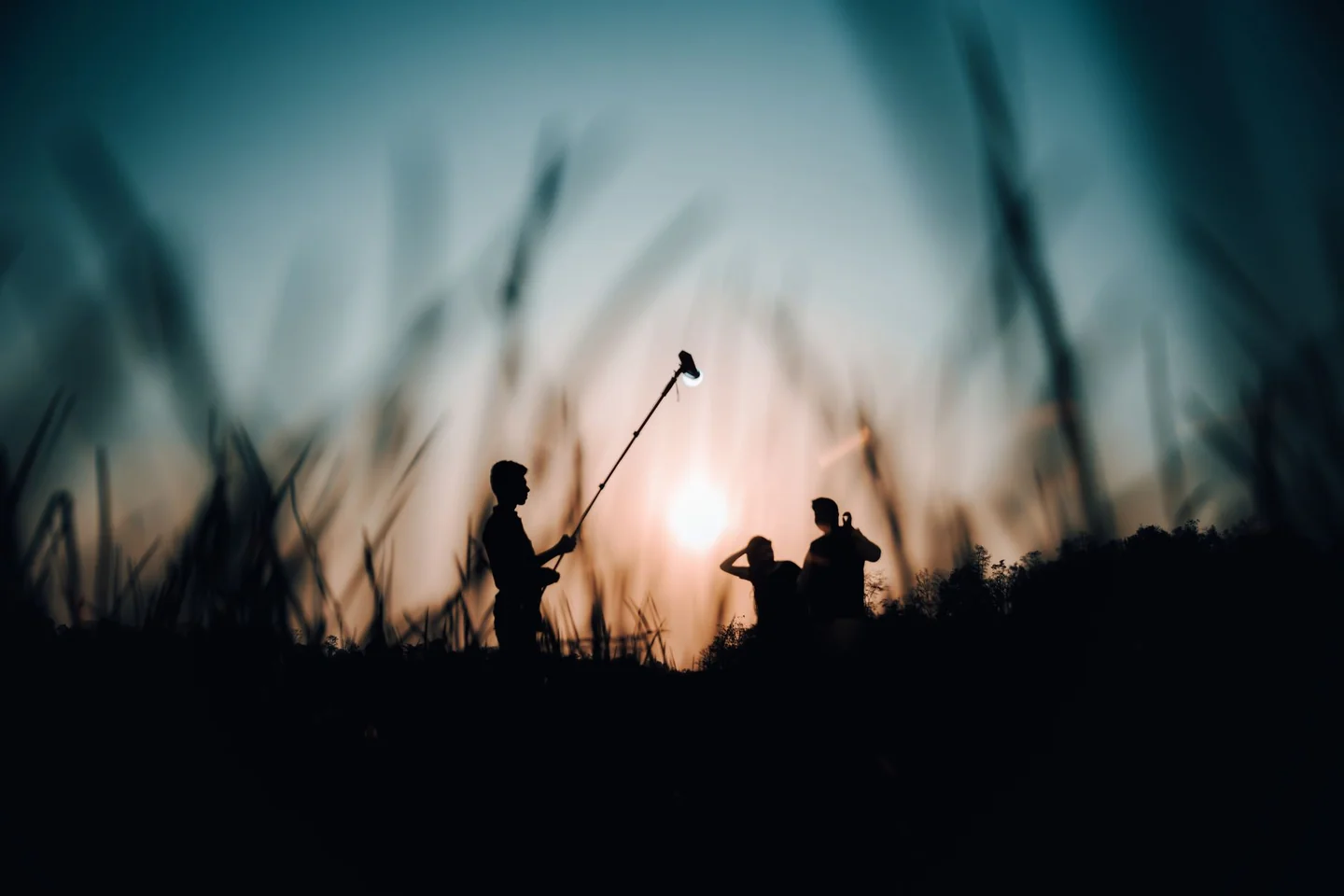
Imagen: Suraj Behra / Pexels
Dawn light has a quality that cinema has been exploiting for decades: it softens edges, stretches shadows, and makes an ordinary street look like the set of a decisive scene. In that brief stretch, before traffic regains its pulse and shop windows wake up, part of the practical magic of audiovisual production is concentrated. Sunrise shoots are not just an aesthetic choice; they are also a logistical solution, a window of control and, in many cases, a way to gain authenticity without resorting to excessive artifice.
That early hour changes the behavior of the set and also that of the city. There is less noise, fewer pedestrians, fewer visual interferences and a different working temperature, more contained, almost laboratory-like. What to a viewer looks like a spontaneous shot usually requires precise machinery: permits, transport, makeup, lighting reinforcement and millimetric coordination so that everything happens before the sun rises too much and alters the continuity of the scene.
The blue hour that sets the visual tone
Dawn offers a light that cinematographers seek insistently: warm yet still delicate, with moderate contrast and a depth that does not repeat itself during the rest of the day. That in-between moment, when night has not quite gone and day is beginning to take over the frame, creates a very specific emotional atmosphere. A conversation on a bridge, a run along a seafront promenade or a farewell in a station take on another density with that faint, shifting backdrop.
The industry knows that value well. The so-called blue hour, which precedes and accompanies sunrise, usually lasts only a few useful minutes to capture shots with a visual balance that is hard to imitate in a studio. That is why it is planned obsessively. The stopwatch matters more than intuition: every exposure adjustment, every camera movement and every take is measured in seconds, not minutes. The beauty of that light lies, precisely, in its scarcity.
There is also a narrative reason. Dawn suggests beginning, fragility, possibility. A city filmed at that hour seems still innocent, almost deserted, as if offering itself to the viewer before putting on the armor of the day. In advertising, film and television, that feeling is valuable because it brings truth without needing to underline it. A tired face, an asphalt still wet, or a bus passing silently are enough to build a scene with memory.
The invisible logistics behind an early scene
Shooting in the middle of the night or at dawn involves a more delicate organization than a conventional shoot. The technical crew arrives before daybreak, often after an almost sleepless night. Supplementary lighting has to be set up, cables protected, ambient sound monitored, and actors, extras and support staff must be ready at the exact minute. A small delay can ruin the light continuity of an entire sequence.
Coordination with local authorities is often decisive when the action takes place on public streets. Traffic closures, detours, access control and space reservations are part of the invisible landscape of the shoot. In urban areas, the first hour of the day is a negotiation between cinema and the city: the set occupies a street that, shortly after, will belong again to neighbors, delivery drivers, buses and offices. That tension forces the team to work with efficiency and respect for everyone’s time.
There is also a human side to it. Not everyone adapts equally well to the overnight shift. Art, camera, sound, continuity and production departments start working when the body is still following the logic of night. Even so, many professionals accept that sacrifice because the visual reward is enormous. Dawn, on screen, can lift an ordinary sequence until it becomes a memory.
Why cities transform before the day begins
The urban space offers its best cinematic version at dawn: facades without harsh reflections, almost empty roads and a cleaner geometry than at midday. The elements that by day compete with one another — signs, bicycles, terraces, traffic, crossing shadows — are temporarily ordered. The eye finds clearer lines, and the camera, a more breathable composition. That is why so many productions seek that stretch for scenes of transit, solitude or the reconstruction of a routine.
In coastal settings, the low light adds another layer of value. The sea acts as an unstable mirror that multiplies the tones of the sky, while the promenade becomes a silent corridor where every step sounds louder than usual. In a Mediterranean city, this atmosphere has a particular appeal: brightness comes early, but for a few minutes everything seems suspended. That balance between calm and visual promise is hard to achieve at any other time.
The relationship between shoot and territory also leaves an economic and cultural mark. When a production works in a neighborhood or on an avenue at dawn, it activates security, accommodation, transport and catering services at unusual hours. At the same time, it projects an image of the city that later circulates on screens and in campaigns. It is not just about dressing a scene; it is about turning a real place into part of a narrative that can travel much farther than the set itself.
The technical challenge of capturing a light that does not wait
The main difficulty of filming at dawn is that the light changes too quickly. What works at 7:12 already requires a different exposure at 7:18. The camera, color balance and art direction must move at the same pace as the sky. That instability forces rehearsals in advance and reduces improvisation. In practice, the work is done with the precision of a watchmaker and the attention of someone who knows that a small mistake can be visible on screen.
Artificial lighting comes into play as support, not as a substitute. Soft panels, bounce boards and small fill sources help maintain continuity on faces when the sky loses intensity. However, the goal is not to erase dawn, but to accompany it. The audience senses that difference even if they do not name it: a scene that is too brightly lit can feel false; a well-balanced scene lets the natural atmosphere breathe.
Sound also has its own nuances. At those hours, the city sounds different. There are fewer engines, fewer slamming doors, fewer overlapping conversations, but other very specific noises appear: a delivery truck, a rolling shutter, a street sweeper, a metal door. For the sound team, that relative cleanliness is an advantage, though never a total one. Morning stillness is a partial illusion, and precisely for that reason it is so expressive.
Why dawn seduces film, series and advertising
The audiovisual industry uses this hour because it condenses emotion, utility and visual economy. A scene shot in that light can communicate intimacy, exhaustion, hope or vertigo without adding explanatory dialogue. In advertising, that advantage is even more obvious: a product, a silhouette or an everyday gesture gains character if placed in an atmosphere where everything seems to begin again. Dawn sells cleanliness, order and possibility; that is why it appears so often in sports, automotive, fashion and technology campaigns.
In series and feature films, moreover, that hour is associated with moments of narrative transition. The character leaving home before the neighborhood wakes up, the runner crossing an empty city, the couple saying goodbye in backlight or the detective looking at the horizon from a rooftop all share a common quality: they are at a point of passage. Early light translates that state with a clarity that narrative appreciates.
There is also a reason of perception. The audience intuitively recognizes the difference between an image taken in daylight and one built at dawn. Skin looks different, the air seems thinner, colors fade a little before lighting up. That small sensory shift adds credibility. There is no need to show that dawn has arrived; it is enough to feel it in the texture of the shot.
How a day is organized when it begins while everything sleeps
The day of a dawn shoot usually starts long before dawn. The logistical work begins in the dark, when transport has already unloaded equipment and the technical crew is finishing the adjustment of lights, flags and supports. In practice, the set is built like a small temporary ecosystem. For a few hours, cables, thermoses of coffee, makeup artists, assistants, cameras and production coexist with a concentration that is uncommon outside cinema.
That very early start conditions the team’s energy. Conversations are shorter, movements more measured and attention more surgical. There is no room for distraction. In return, the atmosphere can become strangely serene, almost ritualistic. The silence before the first take has something of a technical ceremony, as if everyone were waiting for the same signal: the sky changing color.
Then comes an intense, short phase. The useful minutes are taken advantage of with almost athletic efficiency. If the scene requires several angles, the essentials are prioritized and the support shots are left for the moment when the light is more stable. That strategy is not a whim; it is the only way to make natural beauty compatible with the demands of the shooting schedule.
The narrative value of an empty city
An empty city at dawn has a force that does not depend on genre. It can work for suspense, romantic drama, comedy or even documentary. The absence of people does not mean the absence of life; on the contrary, it lets details appear that the day hides. A blinking traffic light, a cyclist cutting diagonally across, a window with the light on or a street sweeper in the background are enough to build depth.
That use of space is closely related to the contemporary gaze. Productions seek images that seem captured in a real instant, not manufactured with excessive control. Dawn, with its mix of order and accident, offers exactly that. Everything seems casual, but nothing is. The camera captures a city at rest, even if that rest has been meticulously prepared.
In places with a strong identity, that strategy becomes even more powerful. A wide avenue, a historic square or a seafront promenade do not need major transformations to look cinematic if they are filmed at the start of the day. Architecture, weather and light do half the work. The rest depends on knowing how to look without overloading the frame.
A brief stretch that concentrates technique, beauty and craft
Dawn shoots are proof that the most natural image is often the most worked on. Behind a few seconds of clean clarity there are hours of planning and an entire team attentive to an atmospheric transition that cannot be stopped. That combination explains why this stretch remains so valuable in film, television and advertising.
It also explains why dawn carries so much symbolic weight. It is not just a time of day; it is a visual threshold. On set, that threshold forces people to move quickly, think precisely and accept that the landscape never repeats itself in exactly the same way. For the viewer, on the other hand, the result seems simple: a quiet street, a soft light and a scene that breathes as if it had been born on its own. That is where its strength lies: in making what required enormous discipline pass for natural.
In an era of saturated screens, filters and increasingly sophisticated effects, that fidelity to real light retains a kind of silent prestige. Dawn does not need to explain anything. It is enough to see it fall on a sidewalk, a facade or a face to understand why cinema still gets up early.



How to prevent thigh chafing: causes and real solutions

Women’s running windbreakers: seven jackets and how to choose

Do more workouts get rid of soreness? A guide for runners

Jaén Half Marathon 2026: Record 3,800 Runners Registered

Men’s short running tights: how to choose the right pair

World Triathlon confirms data breach involving medical data

Izan Edo targets podium at Miyazaki World Cup

María Pérez ranks ninth in World Athletics’ 2026 top ten

Dos Santos, Duplantis and Sawe: World Athlete of the Year finalists

San Silvestre Vallecana 2026: 42,000 places, prices and start times

 Races3 months ago
Valencia Half Marathon 2027: date and registration

 Races3 months ago
Valencia Marathon 2026: entry, ballot and course

 Reviews and Comparisons4 months ago
Asics Gel-Roadmiles 3 for men: review and current price

 Reviews and Comparisons4 months ago
Asics Gel Sonoma 8 Gore-Tex: complete analysis for trail and rain

 Sneakers3 months ago
Saucony Endorphin Pro 4: full review and verdict

 News5 months ago
Strava API 2026: what changes for clubs, challenges and runner apps?

 Reviews and Comparisons5 months ago
Nike Alphafly 3: opinions, sensations, and real key points

 Reviews and Comparisons4 months ago
Under Armour running shoes review 2025-2026: models and key features

 Sports Equipment4 months ago
Shoe sizes in cm: a clear guide to getting the right fit for your footwear

 Sneakers3 months ago
Skechers GO RUN Consistent 2.0 analysis: comfort and limits

 News5 months ago
Valencia Marathon 2026 route: key tips to train and run better

 Sneakers4 months ago
Adidas Adizero Boston 13 for men: review and verdict