Training
How to get your kilometer time under 5 minutes without burning yourself out
A demanding but achievable pace with well-directed work, an aerobic base, and a realistic progression.

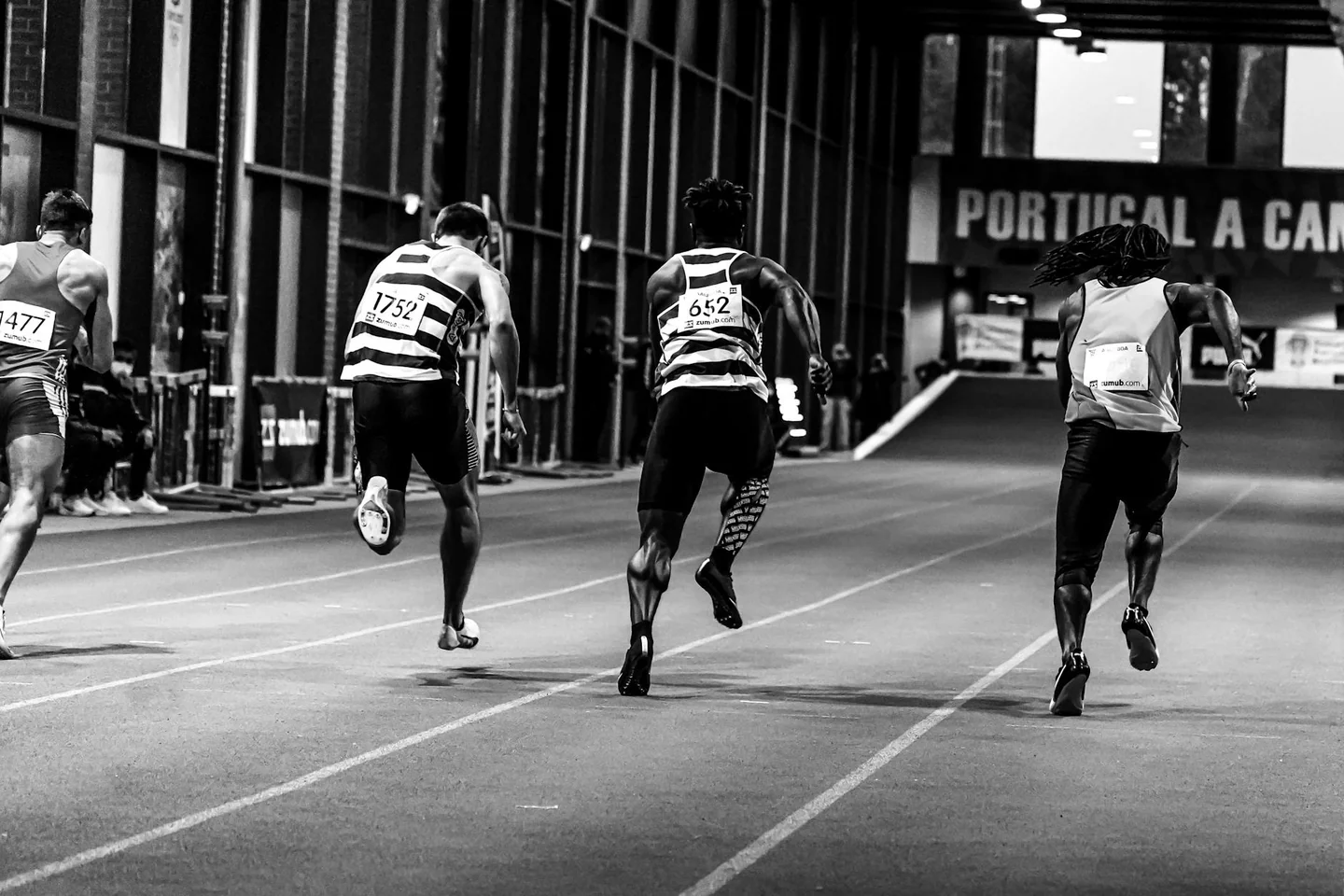
Imagen: RUN 4 FFWPU / Pexels
Running under five minutes per kilometer stops being just a number when you understand what it means in the body, in the head, and in the training log. It’s a pace that separates the runner who only racks up kilometers from the one who starts moving them with intention, and that’s why it feels so tempting and so intimidating at the same time. It doesn’t speak of a talent reserved for a few, but of a mix of aerobic base, tolerance to effort, and consistency that, when worked well, turn an accessible mark into a serious goal.
For most recreational runners, that threshold means sustaining a lively intensity without falling apart in the first few minutes. It demands less romance and more method: knowing how to run easy when it’s time, pushing with purpose, resting enough, and not confusing hurry with progress. Anyone aiming for that pace needs to understand that real improvement rarely comes from chaotic accumulation; it usually appears when each session has a logical place within a broader structure.
What that pace represents in practice
Going under five minutes per kilometer means maintaining, in a stable way, a pace close to 4:59 for every 1,000 meters. Translated into common distances, that’s exactly 25 minutes in 5 kilometers, about 49:50 in 10 kilometers, and around 1 hour and 45 minutes in a half marathon, as long as that pace could be held throughout the race. That equivalence helps keep your feet on the ground: it’s not an isolated gesture, but a speed that, when repeated, leaves its mark on the cardiovascular system, on the muscles, and on running economy.
The important thing is not just the clock, but the kind of effort behind it. At that pace, the runner stops being comfortably conversational and starts moving in a zone where breathing takes over. There’s room to hold the stride, yes, but the physiological cost is already there. The more efficient the technique and the more organized the preparation, the less expensive that pace will be. And there lies one of the most underrated keys: speed is not always gained by running faster, but by spending less energy with each footstrike.
That’s why this goal is better understood as a consequence of everything before it, not as an isolated target. The runner who manages to get under that line will usually have already improved their basic endurance, leg strength, recovery between efforts, and ability to tolerate changes of pace. The time per kilometer is only the visible part of the iceberg; underneath are weeks of work that don’t draw attention, but hold the mark up when the good day comes.
Who is usually in a position to go after it
There isn’t a single profile, although there are some clues. Someone who already runs regularly, completes several weekly workouts, and moves with a certain ease in easy runs has a better chance of getting close to that threshold than someone who only goes out jogging from time to time. Previous experience at other distances also matters: someone who has learned to run 5 kilometers with control usually has an easier time making the leap than someone who starts with intense efforts without a base behind them.
Age matters less than people sometimes think; what weighs more is the sporting background, current fitness, and consistency. There are 40- or 50-year-old runners who move with admirable ease because they’ve built a steady routine over months or years. And there are also twenty-somethings who get stuck because they want to go too fast from the start. Consistency usually beats rushing, even if it takes a little longer to show the reward.
It’s also worth separating desire from starting point. Dropping below five minutes per kilometer can be a reasonable goal for someone who already runs 10 kilometers in under 55 minutes and trains several times a week. For someone starting farther back, the path may not be about chasing that number right away, but about cutting down first in a solid, progressive way. In running, the goals that are respected are the ones that allow intermediate steps.
The base that supports speed
Before thinking about intervals and fast paces, the body needs a discreet but decisive infrastructure. That base is built with easy runs, enough weekly volume, and a load that allows you to add up without falling into a spiral of fatigue. Without it, any attempt to run fast ends up looking like a small fire: it draws a lot of attention, but it doesn’t last long and leaves uncomfortable embers behind.
Aerobic work improves the ability to transport and use oxygen, and that shows up everywhere afterward. A more efficient heart, muscles that better withstand sustained effort, and legs that take longer to empty make the target pace stop feeling like a wall. Useful race speed is cooked on the easy days, when the heart rate drops and the ego does too.
Recovery is also part of the base. Sleeping little, stringing together hard sessions, and training with the tank half empty can give a misleading sense of commitment, but it ends up reducing adaptation. The runner who progresses understands that improvements are consolidated in the pause, not only in the load. Sometimes the smartest training is the one that looks the least spectacular.
The kind of work that helps most
To get closer to that pace, preparation usually combines three major families of stimulus. On one hand, continuous easy running, which keeps the engine running. On the other, threshold or tempo efforts, which teach the body to sustain demanding intensities without falling apart. And finally, shorter quality work, like intervals, which sharpens the stride and expands the speed range. None of these pieces works alone with the same effectiveness; together, however, they create a much stronger structure.
Intervals shouldn’t be seen as a ceremony of suffering, but as a precision tool. Repetitions of 400, 800, or 1,000 meters, with proper recovery, allow the body to get used to paces above the target. Threshold work, for its part, is very valuable because it teaches you to run hard without overdoing it. It’s the point where the effort bites, but still doesn’t get out of hand. That zone, when worked well, is usually the most efficient lead-in to sustaining paces close to five minutes per kilometer.
It’s also worth making room for strength. You don’t need to imagine a gym full of machines to understand its usefulness; basic exercises done well are enough, core work, squats, lunges, and stability exercises. A strong runner isn’t always faster right away, but they’re usually more resistant to fatigue and discomfort. In running, strength is a kind of silent insurance: it doesn’t show as much as speed, but it protects the investment.
What it feels like to run at that pace
The first lesson is usually sensory. At that pace, the stride stops being purely instinctive and starts requiring clean, almost artisanal attention. The body looks for a balance between length and cadence, breathing changes gear, and the mind starts negotiating with fatigue. It’s not a savage effort, but it isn’t gentle either. It’s an in-between ground, demanding and very human.
Many runners discover that their perception of effort was fooling them. They thought a pace like that could only be held on extraordinary days and yet, as soon as they organize training better, they can sustain it more naturally. That’s where an important lesson appears: the feeling of impossibility usually lasts less than real improvement. What one day seems too fast becomes, weeks later, the pace you settle into with less drama.
Context also matters. It’s not the same to hold that kilometer on a flat, cool street as it is to do it on a course with turns, wind, or humid heat. In Spain, and even more so in coastal areas or during warm months, the environment can send the perception of effort through the roof. That’s why comparing times without looking at the weather, the course profile, or how rested you were that day leads to conclusions that are too simple.
Mistakes that slow progress down
One of the most common is wanting to run too fast on easy training days. The result is usually not heroic, but clumsy: accumulated fatigue, heavy legs, and quality sessions done halfway. When everything is run a notch above what it should be, the runner loses twice, because they neither recover well nor train hard for real. Improvement needs contrast, not uniformity.
Another frequent mistake is copying other people’s plans without respecting the starting point. Two people can chase the same mark and need very different paths. Weekly volume, injury history, previous experience, and available days all have a decisive influence. A useful plan is the one that fits the runner’s reality, not the one that sounds best in a locker-room conversation.
Underestimating recovery also does harm. Legs don’t improve through persistence alone; they improve when the load is absorbed. Sleeping less than needed, ignoring small aches, or stringing together demanding weeks without a deload can turn promising progress into a string of setbacks. Deep down, running fast isn’t about chasing intensity nonstop, but about managing it wisely.
What role technique plays
Technique is not a laboratory choreography, but the way the body handles impact, moves forward, and holds itself together. An orderly arm swing, a stable posture, and a stride that doesn’t get too far ahead of the center of gravity help more than it seems. They don’t work miracles, but they do cut losses. Every small saving adds up when the effort is repeated for several minutes.
It’s better to think in terms of running economy, not aesthetic perfection. There are very efficient runners with different styles, and chasing an idealized form can be counterproductive. What matters is that the movement is functional: that there isn’t excessive bouncing, that the landing doesn’t punish too much, and that cadence doesn’t get lazy. Useful technique is the one that lets you run better with less internal noise.
Sudden technical changes, on the other hand, usually come at a cost. Introducing too many corrections at once can alter sensations and increase the risk of overload. Better small, sustained adjustments that fit real training. In running, as in fine carpentry, a good piece isn’t forced; it’s fitted.
How those who end up achieving it usually progress
There’s a pattern that repeats often: first endurance improves, then ease at medium paces is gained, and later speed is sharpened. It’s a less flashy path than the one of quick promises, but much more solid. Progress is usually felt in very concrete details: a run that no longer leaves you breathless, an interval that comes out more stable, a race finish that’s less abrupt.
Confidence matters too. When a runner checks several times that they can hold a pace slightly below the desired threshold, the mark stops feeling foreign. The mind learns to tolerate discomfort with less shock. Confidence doesn’t come only from training more, but from stacking up proof that the body responds. That repetition of good signals weighs a lot on race day.
And still, there’s always a contextual component. Not every day goes smoothly, not every course helps, and not every body responds the same way each week. That’s why it’s worth understanding the mark as a range of abilities and not as an absolute judgment. An athlete may not nail that pace in a specific session and still be closer than ever to holding it in competition.
What signs show it’s already close
One clear sign is when runs with pace changes stop draining you completely. Another is when blocks at a lively pace start coming out with reasonable recovery and without dragging fatigue for days. It also helps to look at how the last repetitions feel: if they don’t systematically fall apart, the body is learning to tolerate the work better.
The relationship between effort and recovery offers many clues. Someone who arrives at the next session less beaten up is usually assimilating the work. Someone who, on the other hand, strings together heaviness, irregular sleep, and legs without spark is probably accumulating load without enough margin. Performance improvement almost always leaves clear traces in how the body recovers. Listening to them helps more than chasing every workout as if it were a final.
It also shows in the way you run. At a pace that once felt demanding, the movement becomes less tense, breathing a bit more orderly, and the head less dramatic. It’s not magic; it’s adaptation. And when that adaptation settles in, the clock starts giving in to what it used to deny so easily.
A goal that’s worth the journey
Dropping below five minutes per kilometer has value because of the number, but above all because of everything it forces you to improve around it. It pushes you to train with more judgment, to take recovery seriously, to understand the difference between useful fatigue and useless wear. It’s a goal with a very clear pedagogy: it teaches that running fast doesn’t depend only on effort, but on organizing that effort well.
It also has something of a symbolic boundary. Whoever reaches it usually discovers that the next step is no longer just to run faster, but to do it with greater control. The goal stops being a stopwatch obsession and becomes a reference point of level. The mark matters, but the runner built to achieve it matters even more.
That’s why this number still seduces so many recreational runners. It doesn’t represent an unreachable privilege or a mere calendar anecdote; it’s a speed that demands discipline, patience, and a mature relationship with training. And precisely for that reason, when it falls, it isn’t experienced as a coincidence. It’s experienced as the logical result of having done, for quite a long time, many things well that at first glance seemed small.



How to prevent thigh chafing: causes and real solutions

Women’s running windbreakers: seven jackets and how to choose

Do more workouts get rid of soreness? A guide for runners

Jaén Half Marathon 2026: Record 3,800 Runners Registered

Men’s short running tights: how to choose the right pair

World Triathlon confirms data breach involving medical data

Izan Edo targets podium at Miyazaki World Cup

María Pérez ranks ninth in World Athletics’ 2026 top ten

Dos Santos, Duplantis and Sawe: World Athlete of the Year finalists

San Silvestre Vallecana 2026: 42,000 places, prices and start times

 Races3 months ago
Valencia Half Marathon 2027: date and registration

 Races3 months ago
Valencia Marathon 2026: entry, ballot and course

 Reviews and Comparisons4 months ago
Asics Gel-Roadmiles 3 for men: review and current price

 Reviews and Comparisons4 months ago
Asics Gel Sonoma 8 Gore-Tex: complete analysis for trail and rain

 Sneakers3 months ago
Saucony Endorphin Pro 4: full review and verdict

 News5 months ago
Strava API 2026: what changes for clubs, challenges and runner apps?

 Reviews and Comparisons5 months ago
Nike Alphafly 3: opinions, sensations, and real key points

 Reviews and Comparisons4 months ago
Under Armour running shoes review 2025-2026: models and key features

 Sports Equipment4 months ago
Shoe sizes in cm: a clear guide to getting the right fit for your footwear

 Sneakers3 months ago
Skechers GO RUN Consistent 2.0 analysis: comfort and limits

 News5 months ago
Valencia Marathon 2026 route: key tips to train and run better

 Sneakers4 months ago
Adidas Adizero Boston 13 for men: review and verdict