Training
Treadmill routine for weight loss with a real plan
Progressive treadmill plan to lose fat with pace, incline, and consistency, without needing to run or strain the joints.

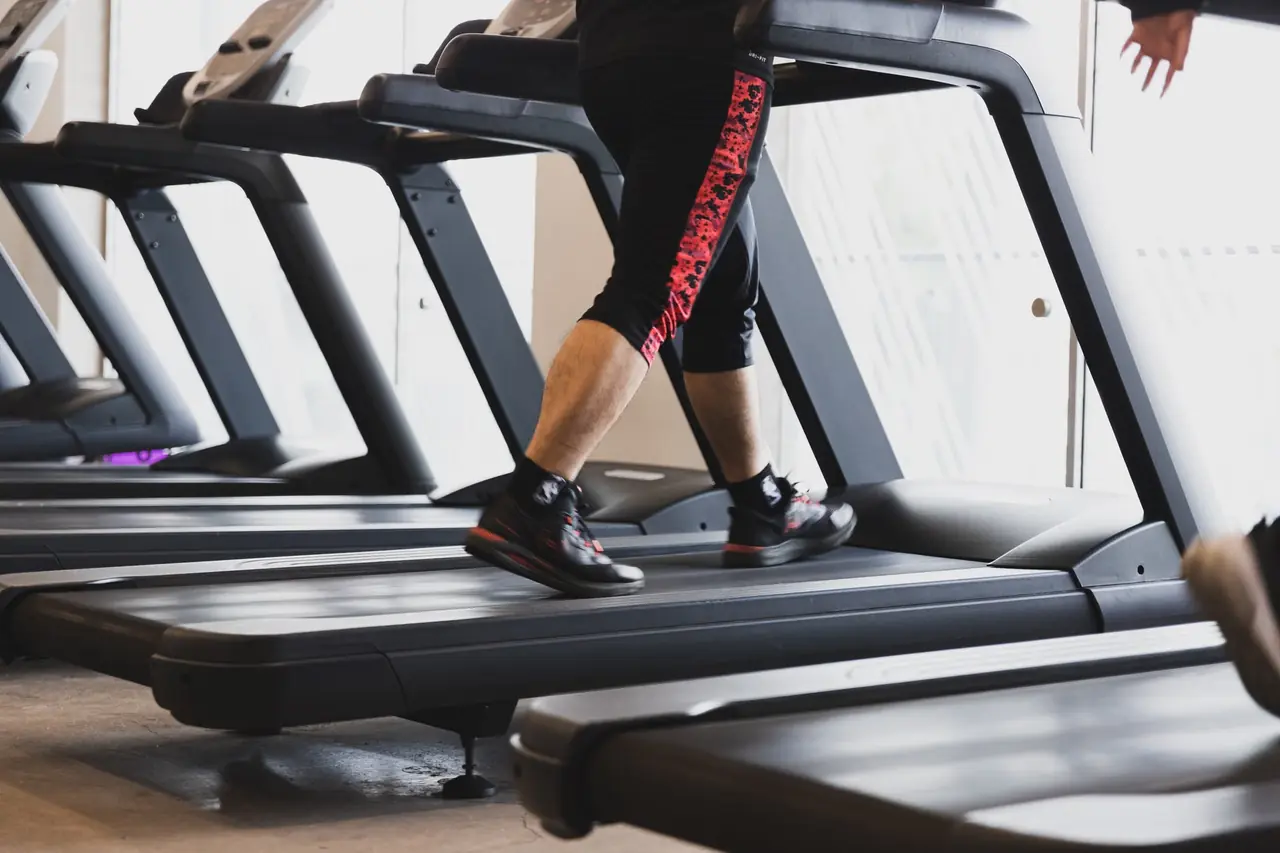
Walking on a treadmill with intention has become one of the most reliable ways to lose weight without punishing the joints. The difference is not in sweating more, but in organizing the effort intelligently: incline, pace, duration, and a progression that forces the body to keep responding. A walk with no purpose barely moves the needle; a well-structured session does change energy expenditure.
The key to losing weight is not turning every session into a battle, but repeating a stimulus that is sufficient, measurable, and sustainable. The treadmill offers an unglamorous but decisive advantage: it allows you to control every variable precisely, from speed to incline, and that turns training into a useful tool for losing fat gradually and realistically.
Why the treadmill really helps you lose weight
The body responds to what it can sustain over time. That is why walking fast, especially on an incline, often works better than a badly repeated burst of intensity. Treadmill walking raises calorie expenditure, improves cardiovascular capacity, and keeps impact low, something especially valuable for those starting from scratch or returning after a long break.
There is another important nuance: when the incline increases, the work is no longer concentrated only in the legs and is distributed with greater demand toward the glutes, hamstrings, and calves. The body stops gliding along a comfortable plane and starts pushing against gravity, like climbing a long hill with a backpack on. That simple detail multiplies the effort without forcing you to run.
Fat loss does not happen because of a single workout, but through the sum of sessions, habits, and recovery. That is why the treadmill works best when used as a steady part of the week, not as an isolated gesture. Consistency matters more than heroics, and that is good news for anyone looking for results without relying on the motivation of a single day.
How to build a useful session for losing weight
An effective session is not improvised. It starts from three variables worth treating like control knobs: speed, incline, and time. If one goes up, the others do not have to follow at the same pace. That logic prevents premature exhaustion and helps you progress without falling into the trap of repeating the same thing forever.
For most people, walking between 5 and 6.5 km/h is already serious work if the incline is there to help. You do not need to run for the body to work; you need to find a brisk pace that can be sustained for several minutes without losing posture or technique. The right speed is the one that makes you work, not the one that forces you to fall apart or cling to the handrails like a lifeline.
The incline usually makes the most visible difference. Moving between 4% and 8% turns a banal walk into a real effort, with greater muscular demand and greater expenditure. In specific sessions, going even higher for short stretches helps break adaptation. The goal is not to suffer for its own sake, but to create a small physiological shock that the body cannot solve the same way week after week.
A four-week progressive plan that actually makes sense
The best plan is the one that does not overwhelm you at the start. That is why a four-week progression is useful: it leaves room to adapt, adds load little by little, and prevents the body from settling in too soon. The first week should feel easy compared with the last; if it does not, the progression has been poorly designed.
During the first week, it is reasonable to do sessions of 25 to 30 minutes, three or four days a week, with a moderate speed and gentle incline. The focus is not on pushing hard, but on accumulating quality minutes. That allows the cardiovascular system to kick in without creating fatigue that later ruins consistency.
In the second week, the incline can rise a little and the duration can grow to 30 or 35 minutes. The third should already feel different: more minutes, a bit more incline, and a brisk pace that starts to feel like training, not a stroll. The fourth week is the one that breaks inertia, with sessions of up to 40 or 50 minutes and small intervals alternating demanding stretches with active recovery.
A sensible progression does not need embellishment. It is enough to raise just one variable every few days for the body to keep receiving a clear signal. Sometimes it is better to increase incline before speed; other times, to extend the session by five minutes. That game of adjustments is what prevents stagnation and keeps training within a productive zone.
What a full week can look like without falling into monotony
Monotony is one of the great enemies of home cardio. Not because exercise stops working, but because the brain gets bored and the body adapts. Varying the stimulus is just as important as adding minutes, and the treadmill makes that possible without technical complications.
A balanced approach can combine days of brisk walking with moderate incline, one longer session at a steady pace, and another with short intervals where the incline goes up and down. That mix keeps everything from feeling too similar and, at the same time, reduces the risk of overuse. You do not need to invent anything strange to get a smarter workout.
The order also matters. A shorter, steeper day feels different from a longer, less aggressive one. That alternation helps sustain the routine mentally, because not every session demands the same level of concentration. A good plan does not drain motivation; it distributes it wisely.
The treadmill also has an underappreciated virtue: it allows you to train even when the weather, schedule, or city does not cooperate. In a week of rain, heat, or limited time, it is still there, waiting. That continuity matters a great deal in the final results, more than any trendy method that sounds spectacular for two days and disappears by the third.
The ideal session that best sums up the method
A simple, well-designed session usually begins with five minutes of warm-up at a comfortable pace and with no incline. That start activates the joints, tendons, and cardiovascular system. The warm-up is not a formality; it is the entry corridor that prepares the body to walk with more purpose without jumping straight into hard effort.
Then comes the main phase, which can last between 20 and 30 minutes depending on the level. This is where the brisk walk comes in, with moderate incline, aiming for intense but still controllable breathing. If the person can speak in short sentences without gasping, they are usually close to an intensity that is useful for burning fat without triggering excessive fatigue.
The finishing block can include a brief, more demanding segment, with a slightly higher incline for two or three minutes, followed by another easier stretch for recovery. That small ebb and flow keeps things interesting and forces the body not to settle into comfort. Cooling down completes the work and helps the heart rate come down gradually, something as unshowy as it is important.
Posture matters more than it seems. It is best to look ahead, not hunch over, and avoid putting weight on the rails. Holding on continuously reduces the actual work of the legs and trunk, and cuts part of the energy expenditure. The treadmill should help you walk, not support the body like scaffolding.
Why incline is more valuable than pushing mindlessly
Many plans fail because they confuse intensity with raw speed. In reality, walking faster is not always the best lever. Incline makes it possible to increase the cost of effort without turning the session into an awkward jog or subjecting knees and ankles to unnecessary impact.
Going uphill activates more muscle mass than walking on a flat surface. That matters because more working muscle means greater energy demand during the session and a fuller sense of effort, without needing your feet to strike the ground with the force of running. For people with excess weight or delicate joints, that difference is huge.
In addition, incline helps fight mental routine. A 30-minute session on a flat surface can feel endless; the same session with small changes in incline becomes much easier to handle. The clock stops being the only enemy and the workout gains internal rhythm, almost as if the walk had chapters.
What to do when progress stalls
Plateaus usually appear when the treadmill is used like a piece of furniture in the background rather than as a variable tool. The body is naturally economical: if it detects the same stimulus over and over, it spends less to deal with it. Adaptation is normal; what is not advisable is letting it take control.
The solution usually starts with a modest adjustment. Sometimes it is enough to raise the incline by one point, other times to add five minutes to the main block. In other weeks, it helps to change the structure: more incline and less time, or the other way around. That exchange of pieces rekindles the stimulus and prevents the session from becoming mechanical.
It is also important to review the broader context. A useful walk does not make up for a disordered diet or poor rest. The body does not separate training cleanly from what happens off the treadmill. If sleep is short, eating is irregular, and daily activity is very low, fat loss slows down even if the sessions seem correct.
Another common mistake is pushing too hard in the first few days. Those who empty the tank at the beginning usually quit before seeing changes. Smart progression wins through accumulation, not drama. The best plan is the one that lets you come back tomorrow with some energy in reserve.
Nutrition and rest matter as much as the session
Treadmill walking helps, but it is not magic. Weight loss depends on a favorable energy balance, and that is built outside training too. Eating a little less than you burn remains the foundation, even if that well-known phrase is sometimes ignored precisely where it matters most.
You do not need to live on extreme restrictions. In fact, overly severe eating habits often end up breaking consistency. What usually works best is a more orderly plate: enough protein, vegetables, quality carbohydrates, and reasonable attention to the extras that sneak in quietly. Training opens the door; food determines much of the outcome.
Rest is also part of the equation. Poor sleep alters appetite, worsens recovery, and makes it harder to maintain consistency. The treadmill can be a great ally, but it does not compensate for an exhausted body. Recovering well is part of the plan, even if it does not appear on the machine’s display.
How to know if the intensity is right
You do not need to measure every step obsessively, but it helps to have clear reference points. One useful sign is breathing: if it speeds up, but still allows you to sustain the effort for several minutes, the level is usually right. If the pace forces you to stop every little while, the session has probably gone too far.
Another practical guide is the talk test. At a well-chosen intensity, you can speak, but not sing or give long speeches. That middle ground is very valuable for fat loss because it combines sustained work with a manageable load, without constantly swinging between strolling and exhaustion.
Posture gives another clue. If the body leans too far forward, the arms tense up, or the person clings to the rails, the load is too high. By contrast, when the stride flows and the torso stays stable, the session is moving into a more productive zone.
The real value of a simple, sustainable routine
Complicated routines usually do not last long. Simple, well-designed ones are more likely to stick. The treadmill fits into that second category because it does not require learning complex technique or setting aside an impossible hour. Its strength lies in repetition, not in spectacle.
Anyone looking to lose weight usually needs more than a nice-looking plan. They need a habit that fits real life: an accessible machine, a clear progression, and effort that does not leave the body wrecked the next day. Incline walking fills that role with a discreet, almost silent, but very consistent effectiveness.
That is why so many people end up trusting the treadmill after trying more flashy formulas. There is no hidden trick or miracle formula. There is incline, pace, minutes, and continuity. And when those pieces line up, training stops being a promise and starts to look like a method.
A humble tool that works when used with judgment
The treadmill does not need to be sold as the perfect solution to prove that it works. Its merit lies elsewhere: it makes gradual, measurable weight loss compatible with everyday life. Used well, it is a serious ally; used badly, just a moving surface under your feet.
The most sensible approach combines brisk walking, progressive incline, and enough sessions to generate adaptation. That triangle, together with reasonable eating and proper rest, usually delivers better results than chasing impossible intensity peaks that cannot be maintained. Consistency, in this area, has the muted sound of what truly works.
One central idea remains, almost sober but decisive: losing weight by walking does not require turning the body into a running machine. It requires respecting the timing, raising the bar prudently, and sustaining the habit. The treadmill rewards regularity, and that reward, although slow, usually lasts longer than any shortcut.
Este artículo contiene enlaces de afiliado: si compras a través de ellos, se genera una pequeña comisión sin coste adicional para ti. Más información.



How to prevent thigh chafing: causes and real solutions

Women’s running windbreakers: seven jackets and how to choose

Do more workouts get rid of soreness? A guide for runners

Jaén Half Marathon 2026: Record 3,800 Runners Registered

Men’s short running tights: how to choose the right pair

World Triathlon confirms data breach involving medical data

Izan Edo targets podium at Miyazaki World Cup

María Pérez ranks ninth in World Athletics’ 2026 top ten

Dos Santos, Duplantis and Sawe: World Athlete of the Year finalists

San Silvestre Vallecana 2026: 42,000 places, prices and start times

 Races3 months ago
Valencia Half Marathon 2027: date and registration

 Reviews and Comparisons4 months ago
Asics Gel-Roadmiles 3 for men: review and current price

 Races3 months ago
Valencia Marathon 2026: entry, ballot and course

 Reviews and Comparisons4 months ago
Asics Gel Sonoma 8 Gore-Tex: complete analysis for trail and rain

 Sneakers3 months ago
Saucony Endorphin Pro 4: full review and verdict

 News5 months ago
Strava API 2026: what changes for clubs, challenges and runner apps?

 Reviews and Comparisons5 months ago
Nike Alphafly 3: opinions, sensations, and real key points

 Reviews and Comparisons4 months ago
Under Armour running shoes review 2025-2026: models and key features

 Sports Equipment4 months ago
Shoe sizes in cm: a clear guide to getting the right fit for your footwear

 Sneakers3 months ago
Skechers GO RUN Consistent 2.0 analysis: comfort and limits

 News5 months ago
Valencia Marathon 2026 route: key tips to train and run better

 Sneakers4 months ago
Adidas Adizero Boston 13 for men: review and verdict