Training
What to eat before a run for energy without feeling weighed down
The pre-workout choice determines performance: steady energy, good digestion, and less fatigue.

What you eat and drink before a run can make a real difference: it can help you maintain your pace, stay focused and avoid struggling from the first kilometre. Your body is better prepared when it has carbohydrates, some protein and enough fluids. The key is to choose the right type and amount for the time you have before heading out.
There is no single pattern that works for everyone. A light running session, a long run, a demanding workout, or a strength session do not call for the same thing. Nor does a runner who eats breakfast two hours before respond the same as someone heading out to train with only half an hour to spare. The difference between getting it right and getting it wrong often comes down to a simple choice: enough fuel without causing heaviness, gas, or an energy dip halfway through the session.
The energy that reaches the muscle starts before you leave to train
The main fuel for intense exercise is carbohydrates. They are stored as glycogen in the muscles and liver, and when those stores are well topped up, the body responds more effectively. In running, this shows up in the ability to maintain pace; in strength work, it is reflected in the quality of each repetition; and in both cases it reduces the feeling of running out of gas too early and having to back off before time.
The other side of the coin is just as clear: arriving with too little available energy worsens performance and makes it more likely that dizziness, apathy, or a feeling of empty legs will appear. It is not about eating more by default, but about eating better at the right time. A well-thought-out pre-workout intake acts as an auxiliary tank, not as dead weight in the stomach.
It is also worth remembering that training does not start on the street, on the track, or in the weight room, but at the table. What you drink and eat before exertion affects body temperature, glucose availability, and the subjective feeling of effort. Pre-planning is a performance tool, not an optional ritual.
The most reliable foundation: carbohydrates, water, and a moderate portion of protein
Carbohydrates are the central piece. In a full meal before training, foods such as oats, rice, whole-grain bread, potatoes, sweet potatoes, quinoa, or couscous work well. These are options that release energy progressively and fit especially well when there is time to digest, for example two to three hours before heading out for a run or going into the gym.
Protein adds stability and helps protect muscle mass, but it does not need to take center stage if the meal is very close to the session. Plain yogurt, eggs, fresh cheese, chicken, or turkey are useful alternatives when a moderate intake is desired, without turning digestion into a slow burden. By contrast, abundant fats and very high fiber are usually more problematic the closer the session is.
Hydration deserves its own place. Water is still the safest and most universal choice, because starting a workout thirsty or slightly dehydrated hurts endurance, concentration, and exercise tolerance. On hot days, in long sessions, or when training comes after several hours of activity, drinking before you head out is almost as important as choosing the right breakfast or snack.
When you only have half an hour, quick digestion rules
The closer the workout is, the simpler the choice should be. In a 30- to 60-minute window, the goal is not to have a full meal, but to provide immediate energy with easy-to-digest foods. This is where fruits such as banana, grapes, orange, or dates come in, along with toast with a little honey, plain yogurt, or a small serving of simple cereal.
In that time frame, very fatty foods, legumes, heavy sauces, or very fibrous dishes can work against you. Digestive comfort matters more than nutritional density in the minutes before exertion. A calm stomach lets you warm up with a better feeling and prevents the body from having to choose between digesting and running at a good pace.
There is an almost mechanical logic to this choice: the body needs fuel, but it does not want a burden. That is why a ripe piece of fruit or a small handful of dried fruit can be more useful than a large meal. In morning sessions, this formula is especially practical because it leaves room to wake up the body without heading out with a full abdomen.
The fruits that work best before heading out for a run
Bananas are one of the most balanced options. They provide relatively quick-absorbing carbohydrates, potassium, and a stomach-friendly texture. They work well before running because they deliver energy without demanding much digestive work, and they adapt to both an easy outing and a more demanding session. If very ripe, their sugar is released more quickly; if firmer, they may fit better when there is a bit more time before training.
Grapes, oranges, fresh figs, and apples also help. These are fruits with water, natural sugars, and useful micronutrients, and they can be eaten on their own or together with yogurt, oats, or bread. Raisins and dates, meanwhile, pack energy into a small volume, which is very practical before a session if you do not feel like eating too much. In a pocket, in a backpack, or even in the car, they can handle an emergency snack quite well.
It is worth clarifying a common idea: fruit does not always have the same effect. A food with more fiber or a higher sugar load may sit better or worse depending on individual tolerance. What matters is not the food trend, but how it behaves in your digestion. In pre-workout nutrition, that silent test matters more than any universal list.
Cereals, bread, rice, and tubers: long-lasting fuel
Oats remain one of the most reliable classics. They contain complex carbohydrates, fiber, and some plant protein, making them an excellent base when breakfast is eaten with time. However, if they are tried for the first time just before competing or doing a demanding run, their fiber can be uncomfortable. Digestive experience matters: the body appreciates what it already knows.
Rice, al dente pasta, potatoes, sweet potatoes, and couscous provide firmer ground when the session will be long or intense. Brown rice and pasta cooked al dente release energy more steadily, while potatoes and sweet potatoes provide satiety without excessive heaviness if they are roasted, boiled, or steamed. Corn, quinoa, and whole-grain bread round out a broad range for different times of day and different tolerance levels.
Texture also matters. A dry food, a cream, a piece of toast, or a warm meal do not feel the same. People who train regularly often learn to read those signals: the body warns when something will sit well and when something may keep turning over in the stomach during the first minutes of warm-up. Comfort is a form of performance.
Protein helps, but it should not displace the main fuel
Eggs, plain yogurt, milk, fresh cheese, or turkey can complete an intake before exertion. They are especially useful when the goal is to arrive with a moderate feeling of fullness and with amino acids available, which is interesting in strength sessions or on days with double training. They can also be combined with bread, fruit, or oats to build a more complete breakfast.
Protein, however, does not replace carbohydrates. A breakfast made almost exclusively of protein falls short on the fuel the muscle uses during high intensity, and that becomes especially noticeable in fast running, pace changes, and long intervals. Protein yes, but in its place: as a smart companion, not as the only protagonist.
Eggs work well in simple, low-fat preparations; plain yogurt, preferably without added sugar, is convenient and easy to combine; milk can serve as a base for smoothies or more liquid breakfasts. Everything depends on the available time, the type of session, and digestive tolerance. In sensible pre-workout nutrition, the kitchen does not compete with the clock: it keeps pace with it.
Coffee and green tea can help, but they do not fix poor planning
Caffeine is a real ergogenic aid when there is already a habit and good tolerance. Coffee can improve alertness, delay fatigue, and sharpen the perception of effort. It can also be useful before heading out to run early or in sessions where getting started feels hard, as long as it does not cause nervousness, gastrointestinal discomfort, or sleep problems later on.
Green tea follows a similar logic, although with a milder stimulating effect. It does not replace a balanced meal, but it can complete the routine before exertion for people used to drinking it. The important thing is to understand that stimulation does not replace fuel: an energizing drink with an empty tank still leaves the engine short on energy.
Here too, context matters. Caffeine is not suitable for everyone, in any amount, or at any time. People who take it routinely should avoid trying a new dose on race day or before an important session. In sports nutrition, improvisation is usually expensive; the body, in the end, charges interest.
What prevents the most digestive problems before running or strength training
Too much fat is the most common mistake when the time window is short. Very aged cheeses, fried foods, pastries, heavy sauces, or too many nuts can slow digestion and create a feeling of heaviness that is hard to hide. That does not mean these are bad foods in themselves, but rather that the timing is not ideal for them if training is near.
Fiber also calls for caution. Legumes, very raw vegetables, very whole-grain cereals, or large amounts of oats may work well in a breakfast with time, but not always before fast running or high-intensity work. Individual tolerance rules, although a fairly useful rule is to keep the meal closest to training in the easy-digestion zone.
Another common mistake is eating too little out of fear of feeling heavy. That strategy can leave the athlete without fuel, especially in workouts of an hour or more. The real balance is not between eating a lot or eating nothing, but between providing enough energy without overloading the digestive system.
How the choice changes depending on the type of training
A speed session does not ask for the same thing as an hour of easy running. In endurance, glycogen matters much more, and that is why a carbohydrate base carries more weight. In strength work, protein combined with carbohydrates can be especially useful for sustaining training volume. In short, calm sessions, something light will be enough; in long or demanding workouts, it is worth eating with more foresight.
In popular races, the margin gets even tighter. The body handles improvisation worse when adrenaline, heat, or nerves go up. Trying new foods on race day is a bad idea, because digestion has memory and punishes late decisions. What works on an ordinary Tuesday should have been tested before in similar conditions.
On morning outings, breakfasting on a simple combination of fruit, bread, oats, or yogurt is usually enough. In afternoon sessions, a main meal with rice, potatoes, pasta, or quinoa can prepare the ground, and then a small top-up is enough if the session comes several hours later. The day’s schedule matters as much as the menu.
Useful examples that work without complications
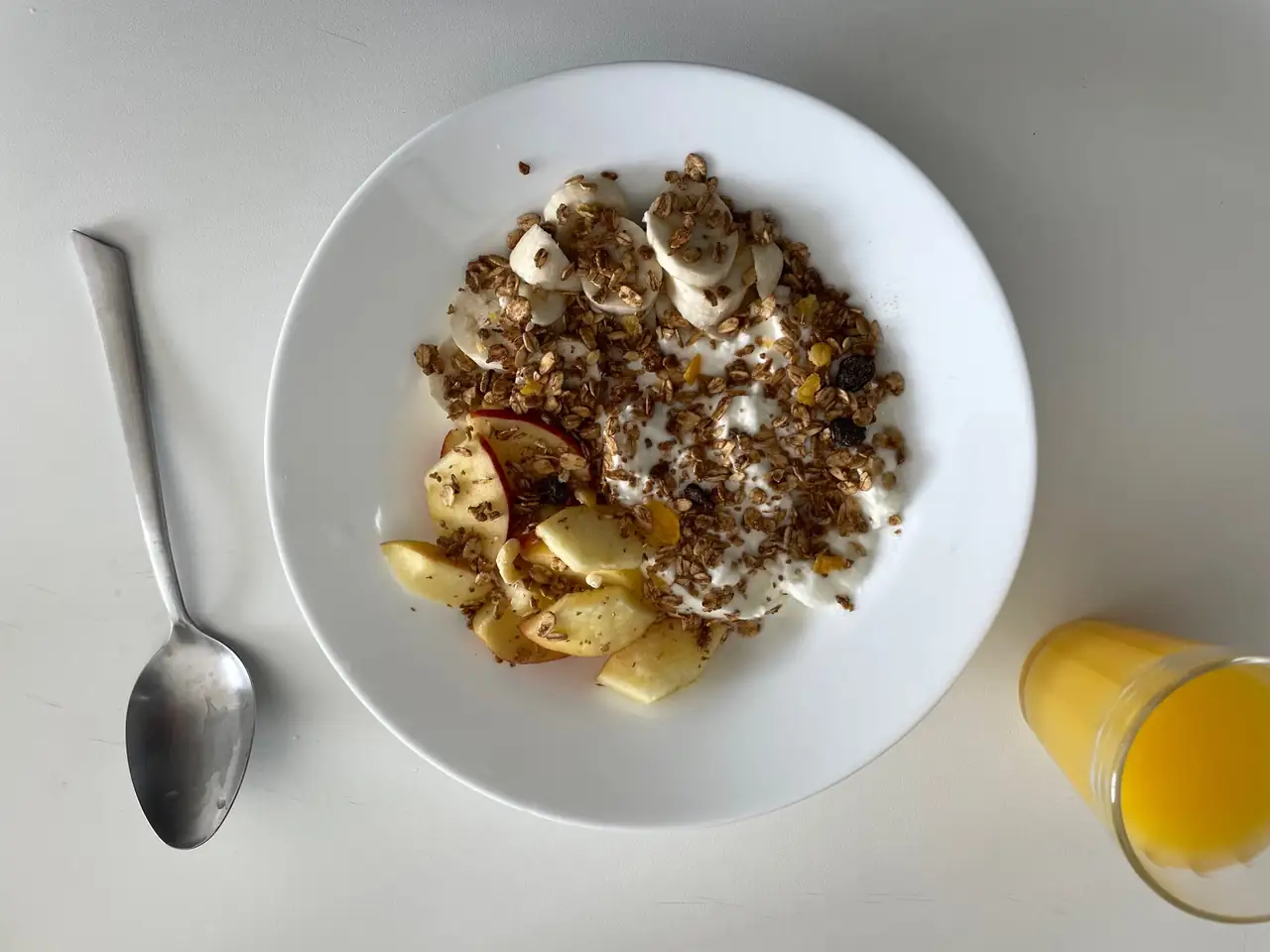
A bowl of oats with plain yogurt and banana can handle a breakfast 2 or 3 hours before running. It provides steady energy, some protein, and an easy-to-eat texture. If the session is earlier and time is short, toast with honey and a piece of fruit is usually wiser than a complex meal that takes too long to settle.
Rice with chicken or with egg, or al dente pasta with a small portion of lean protein, fits better when the workout will be long or high quality. For someone heading out in a hurry, a handful of dates, some raisins, and water can be a reasonable resource. And if the effort will be very intense, a ripe piece of fruit with coffee, as long as it is well tolerated, can provide an interesting activation boost.
Combinations do not need to look clinically precise to work. What matters is that they are familiar, easy to digest, and suited to the effort. A good pre-workout meal is recognized by a simple feeling: available energy, a calm stomach, and a steady stride in the first minutes.
What to eat before a run, depending on your session and schedule
For an easy run, it may be enough to stay hydrated and follow your usual eating routine. Before a long run, interval session or race, it is worth paying closer attention to your available energy. Carbohydrates are the main fuel for intense efforts. If you have not eaten enough for your needs, you may struggle to hold your pace, feel your legs losing energy or find it hard to focus. There is no need to eat extra by default: choose something that suits you and fits the session.
If you have a couple of hours, a familiar meal containing carbohydrates, such as bread, rice, oats or potatoes, can work well. You can include a moderate amount of protein if you like. With only half an hour to go, a simple, easy-to-digest snack, such as fruit or toast, may feel more comfortable. The closer you are to setting off, the more cautious you should be with large meals and foods that are high in fat or fibre. Drink water according to your thirst and the conditions. If it is hot or you are running for a long time, take care not to start thirsty.
Everyone tolerates food differently. Try options during training and notice whether you experience heaviness, gas, nausea or low energy. Keep track of what you ate and when, then adjust for future runs. Avoid trying unfamiliar foods or making a major change to your routine just before a race. If discomfort or symptoms persist, seek advice from a healthcare professional.
The right choice is noticeable when the effort begins
Before training, eating well does not mean eating a lot. It means choosing the right amount, with the correct balance between energy, hydration, and digestive tolerance. Water remains the foundation, carbohydrates are the main fuel, and protein completes the picture when the session calls for it. From there, the rest is fine-tuning.
Ripe fruit, plain yogurt, oats, bread, rice, pasta, potatoes, or sweet potatoes do not all play the same role at every time of day, but they can all help if they are placed at the right moment. The best choice is the one that nourishes without getting in the way, the one that reaches the muscle without getting stuck in the stomach. In running, as in other sports, performance often starts long before the first step.
One clear lesson remains: the pre-workout meal should not be a blind bet, but a practical and repeated decision. The body responds better to a well-tuned habit than to a flashy experiment. And in that discreet, almost silent precision, lies the difference between simply going out to train and going out with real room to perform.



How to prevent thigh chafing: causes and real solutions

Women’s running windbreakers: seven jackets and how to choose

Do more workouts get rid of soreness? A guide for runners

Jaén Half Marathon 2026: Record 3,800 Runners Registered

Men’s short running tights: how to choose the right pair

World Triathlon confirms data breach involving medical data

Izan Edo targets podium at Miyazaki World Cup

María Pérez ranks ninth in World Athletics’ 2026 top ten

Dos Santos, Duplantis and Sawe: World Athlete of the Year finalists

San Silvestre Vallecana 2026: 42,000 places, prices and start times

 Races3 months ago
Valencia Half Marathon 2027: date and registration

 Reviews and Comparisons4 months ago
Asics Gel-Roadmiles 3 for men: review and current price

 Races3 months ago
Valencia Marathon 2026: entry, ballot and course

 Reviews and Comparisons4 months ago
Asics Gel Sonoma 8 Gore-Tex: complete analysis for trail and rain

 Sneakers3 months ago
Saucony Endorphin Pro 4: full review and verdict

 News5 months ago
Strava API 2026: what changes for clubs, challenges and runner apps?

 Reviews and Comparisons5 months ago
Nike Alphafly 3: opinions, sensations, and real key points

 Reviews and Comparisons4 months ago
Under Armour running shoes review 2025-2026: models and key features

 Sports Equipment4 months ago
Shoe sizes in cm: a clear guide to getting the right fit for your footwear

 Sneakers3 months ago
Skechers GO RUN Consistent 2.0 analysis: comfort and limits

 News5 months ago
Valencia Marathon 2026 route: key tips to train and run better

 Sneakers4 months ago
Adidas Adizero Boston 13 for men: review and verdict