Reviews and Comparisons
Coros vs Garmin: real differences for choosing a watch
Two great running watches compete in battery life, maps, metrics, and price. These are their real differences.

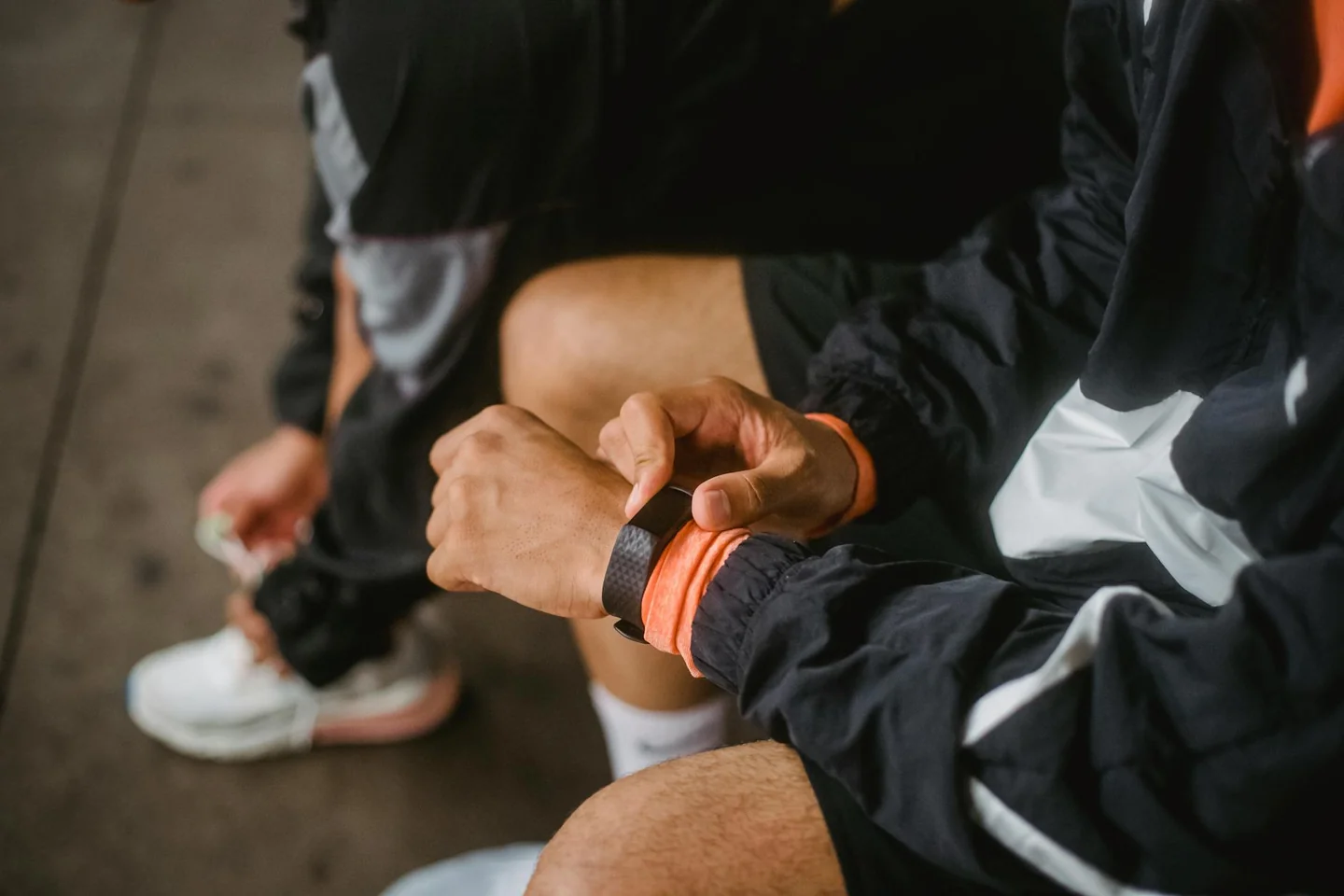
Coros and Garmin compete on increasingly refined ground: GPS running watches that no longer just measure paces and kilometers, but interpret load, recovery, routes, and even daily habits. The comparison between both brands is no longer reduced to which one has more features, but to what kind of runner fits better with each philosophy. Garmin bets on a broader and deeper ecosystem; Coros, on a cleaner, lighter experience focused on performance.
The distance between the two brands has narrowed in recent years, but it has not disappeared. Garmin still leads in navigation, advanced metrics, and everyday-use functions; Coros keeps a very visible edge in battery life, simplicity, and value for money. In today’s market, the decision rarely depends on a single specification. It depends more on how you train, where you run, and how much you value each layer of information.
Two watches that look alike on the outside, different on the inside
At first glance, a Coros watch and a Garmin watch can seem like siblings. Both offer multiband GPS in their mid and high ranges, button or crown control, running metrics, sleep tracking, and phone connectivity. The exterior similarity, however, is misleading. Garmin designs watches that want to accompany the athlete’s whole life, while Coros has built a more direct, almost minimalist proposition around training.
That difference in approach shows up in daily use. Garmin usually wraps the runner in layers of information: training readiness, acute load, heart rate variability status, predictions, full maps, contactless payments, music, and a huge catalog of models. Coros, on the other hand, simplifies the on-screen journey and concentrates the experience on what really affects the next session. Less noise, more focus.
The practical consequence is clear. Those looking for a watch that acts almost like a command center usually lean toward Garmin. Those who want a reliable, sober, easy-to-read tool while running find in Coros a very convincing option. It is not a matter of absolute superiority, but of priorities and usage style.
GPS accuracy: a technical tie with nuances
In satellite measurement, both brands have reached a high level. Recent Coros and Garmin watches use multiband systems and support for several satellite constellations, which improves tracking in cities, next to tall buildings, and in wooded areas. The difference in accuracy is no longer usually about the brand, but about the specific model and the chosen configuration.
Garmin adds SatIQ technology in several watches, which automatically adjusts GPS mode to balance accuracy and battery consumption. Coros, for its part, has built much of its reputation around signal acquisition speed and consistent tracking in long workouts. On an urban run or in an open park, both can deliver very solid results; in narrow alleys or tricky trails, both perform well, although behavior varies more by device than by brand name.
For road runners, the difference is usually not decisive. In trail or mountain running, where a poorly tracked route can distort average pace and elevation gain, Garmin gains ground when the model includes full maps. Coros, although it has improved, still works with a simpler navigation system, based on breadcrumbs, route alerts, and basic return functions. Accuracy and navigation are not the same thing, and that is where Garmin keeps the advantage.
Battery life: Coros’s big argument
If the watch is thought of as a long-term training tool, battery life matters just as much as the screen. And here Coros has built its strongest story. In many mid and high-range models, GPS battery life clearly surpasses that of equivalent Garmin watches. The Coros Pace 3, for example, reaches up to 38 hours in GPS mode, while a Garmin Forerunner 265 sits at around 20 hours in the same use. In everyday life, that difference is noticeable too: about 24 days of smart battery life versus close to 13 days on the Garmin mentioned.
At the high end, Garmin holds up better. Models like the Fenix and Enduro stretch very competitive figures, especially when they include solar charging or power-saving modes. Even so, Coros usually still has a very strong advantage in the mid-price range. That is no small thing for anyone stacking sessions, double workouts, long runs, or trips without wanting to live attached to a charger. Coros battery life works as a practical argument, not as an abstract promise.
In ultradistance, battery life stops being a convenience and becomes safety. A watch that lasts through a long race, several days of trekking, or a heavy training week without needing a plug brings peace of mind. Garmin offers excellent solutions in its higher ranges, but Coros remains a very solid reference for those who want to forget about charging more often. That advantage weighs heavily in the real balance.
Training metrics: Garmin goes deeper, Coros simplifies better
Both brands record useful data during and after training: pace, distance, heart rate, cadence, elevation gain, laps, and recovery estimates. The real separation appears when the user enters the analysis layer. Garmin offers a more ambitious system, with Training Readiness, training status, acute load, HRV Status, time predictions, mountain metrics, and pacing tools like PacePro.
Coros responds with EvoLab, a clearer and less overwhelming environment. There you’ll find training load, fitness level, recovery time, fitness base, and race prediction. It is enough to make informed decisions, but without Garmin’s density. Garmin delivers more data; Coros makes the data easier to digest. For some runners, that last part is worth gold.
The choice here depends on the kind of relationship each person has with their numbers. Those who enjoy interpreting trends, comparing training blocks, and moving through graphs usually find a mine of information in Garmin. Those who prefer a quick read, without having to go through endless menus, usually feel more comfortable with Coros. Both help you train better, but they do not do it in the same way.
Heart rate, sleep, and recovery: useful, though not infallible
Optical wrist measurement has improved a lot, but it is still less accurate than a chest strap in demanding efforts, sudden pace changes, or intense heat. Within that common limitation, Garmin usually offers somewhat more stable and complete tracking in its mid and high ranges, especially when combined with its recovery and heart rate variability metrics. Garmin’s system integrates sleep better with training load, and that creates a more coherent reading of daily physical condition.
Coros also records sleep, nighttime HRV, rest, and recovery, but its approach is more direct. In several models, the user sees that data in fewer steps and with fewer layers of interpretation. That is attractive for runners who do not want the watch to become a control panel. The trade-off is obvious: Garmin offers more context; Coros offers less friction.
In practice, neither brand replaces a professional evaluation when there are doubts about health, fatigue, or injury. They do, however, help detect trends: weeks with worse sleep, accumulated sessions with more load than planned, or resting heart rates that rise steadily. That is the real value of these watches, beyond the marketing of the perfect number.
Maps, routes, and trail: Garmin makes the difference
If running takes you through new paths, trails, or mountains, Garmin opens up a considerable gap. Its models with full maps let you see streets, contour lines, paths, and visual references on the screen, as well as guide you with more complete directions. In trail running, that capability completely changes the experience, because you no longer have to rely only on a line over the background of the screen.
Coros has made progress in navigation, but its proposal is still more basic. Routes can be followed, courses can be imported, and there is a return-to-start function, but the level of detail does not reach Garmin’s in its most advanced watches. For road running and familiar routes, it may be enough; for unknown terrain, Garmin is much more convincing. That contrast is especially visible on long outings, mountain workouts, or trips where you do not know the area.
Navigation also affects the type of user. Some runners only need to know whether they are on the right track; others need a rich visual reference, as if they were carrying a folded map on their wrist. For this second group, Garmin clearly comes out on top. In this category, the difference is not subtle.
Smart features and daily life: Garmin opens up the range
The race does not end when you cross the finish line, and there Garmin widens the gap again. Many of its watches include music, contactless payments, more complete notifications, app compatibility through Connect IQ, and safety features such as incident detection or LiveTrack. It is a sports watch, but it also wants to be an everyday device.
Coros prefers not to enter that battle. Its smart feature offering is more limited and revolves around the basics: notifications, music on some models, simple controls, and app synchronization. That choice is not an accidental flaw, but a product decision. By removing layers unrelated to training, Coros preserves battery and avoids distractions. The result is a more austere watch, but also a cleaner one.
For those who want to carry their phone less often, pay from the wrist, listen to playlists without a phone, or expand the watch with apps, Garmin has the advantage. For those who value a device that does not try to solve half their digital life, Coros feels more coherent. The real question is not how many features each one offers, but how many of those features are actually used.
Design, weight, and feel on the wrist
Comfort also enters the comparison, because a watch that bothers you ends up in a drawer. In this area, Coros usually wins people over with its lightness and more restrained design. Even in models with a rugged case, the overall feeling is that of a device made to disappear while you run. Less weight means less distraction, something that is especially noticeable in long sessions or on hot days.
Garmin responds with more variety. It has very light watches, yes, but also robust ranges, more premium finishes, and AMOLED screens in several models that completely change the look of the device. That variety is an advantage for users with small wrists, large wrists, or those who want a watch that also looks good outside training. The trade-off is that, on average, Garmin usually feels a bit bulkier in equivalent models.
The navigation system also matters. Coros uses a side crown or dial that simplifies moving through menus and can feel intuitive on the move. Garmin alternates buttons and, on some models, a touchscreen. The experience depends a lot on each runner’s preferences. Some people would never trade buttons for anything, and others never want to go back to a watch without a crown.
App and ecosystem: Garmin Connect is bigger, Coros is more direct
The app is part of the watch, even if it is not always seen that way. Garmin Connect offers graphs, trends, challenges, plans, integration with external platforms, and a level of depth that can impress or overwhelm, depending on the user. It is a very complete platform, almost a living archive of the sporting career. For highly analytical runners, that is an obvious virtue.
The Coros app goes in another direction. Its interface is cleaner, with a less rough learning curve and quick access to workouts, progress, and routes. It also makes structured sessions easier to work with and, in general, makes the data less intimidating. Those who open and close the app often usually appreciate that clarity. Those who spend hours reviewing metrics will probably miss more depth.
In external compatibility, Garmin keeps the advantage because of the size of its ecosystem and the long life of its platform. Coros, even without such a broad universe, has established useful connections with the tools most used by runners. In short, Garmin builds an ecosystem; Coros builds a functional app.
Price and real value: where the difference you actually pay for is
The price tag remains one of the most decisive factors. Coros has been aggressive in this part of the market, with watches like the Pace 3 at around 229 euros, a figure that puts it up against clearly more expensive Garmin options. That price difference does not always translate into an equivalent difference in performance, and that is why Coros has won so many fans among distance runners, ambitious beginners, and triathletes looking for efficiency.
Garmin, for its part, asks for more money in exchange for a broader range of features, better navigation, and a more mature ecosystem. In some cases, the price jump is well justified. In others, the user pays for extras they may never use. The key is to compare equivalent models, not entire brands. A basic Garmin watch does not compete fairly with a mid-range Coros, nor does a premium Coros model with an entry-level Garmin.
The value for money therefore depends on the context. For those who want a serious running watch without blowing the budget, Coros offers a proposition that is very hard to beat. For those who need more layers of analysis, maps, and smart features, Garmin may be worth the extra cost. The right choice is not the cheapest or the most expensive, but the one that forces the fewest compromises.
Which profile fits each brand better
Coros usually fits better with runners who prioritize battery life, lightness, and clarity. Also with those who train by feel but want reliable data at hand, or with those who do not want to get lost in an overly loaded system. The athlete who goes out for a run, checks just enough, and gets on with the day will probably find their natural rhythm here.
Garmin is more convincing for those who value routes, recovery, daily information, and a watch that also works as a small control center. Trail runners, triathletes, users who already have other Garmin devices, or very meticulous runners when it comes to load tracking usually get more out of its ecosystem. Garmin is broader; Coros is more austere, and that sentence sums up much more than it seems.
There is also a generational aspect. Coros has attracted quite a few runners who come from more basic watches and want a clean step up, without paying extra for features they will not use. Garmin maintains its strength among those who have been in the ecosystem for years and have built a very complete technical routine around it. Brand loyalty, in this case, comes from both experience and habit.
The comparison that really matters to the runner
The duel between Coros and Garmin has no single winner because it does not answer a single need. Coros dominates when the main criteria are battery life, price, and simplicity. Garmin comes out on top when the user wants maps, deep metrics, smart features, and a more complete environment around training. Both brands are good; what changes is the type of run each one accompanies better.
In a market where almost all watches already measure well, the value lies in the nuances. One more button or one less, a better map, a battery that lasts through a long weekend, a less saturated app, a more useful prediction, a clearer interface. That is where the purchase is decided. Not in the isolated spec sheet, but in the sum of small advantages that, in the end, matter on every outing.
That is why this comparison remains alive and will keep being so. Coros and Garmin no longer compete only on specifications; they compete on the way each runner wants to train, review their sessions, and live with the watch on for hours, days, and, in many cases, years. And it is precisely in that routine where the difference becomes real.
Este artículo contiene enlaces de afiliado: si compras a través de ellos, se genera una pequeña comisión sin coste adicional para ti. Más información.



How to prevent thigh chafing: causes and real solutions

Women’s running windbreakers: seven jackets and how to choose

Do more workouts get rid of soreness? A guide for runners

Jaén Half Marathon 2026: Record 3,800 Runners Registered

Men’s short running tights: how to choose the right pair

World Triathlon confirms data breach involving medical data

Izan Edo targets podium at Miyazaki World Cup

María Pérez ranks ninth in World Athletics’ 2026 top ten

Dos Santos, Duplantis and Sawe: World Athlete of the Year finalists

San Silvestre Vallecana 2026: 42,000 places, prices and start times

 Races3 months ago
Valencia Half Marathon 2027: date and registration

 Races3 months ago
Valencia Marathon 2026: entry, ballot and course

 Reviews and Comparisons4 months ago
Asics Gel-Roadmiles 3 for men: review and current price

 Reviews and Comparisons4 months ago
Asics Gel Sonoma 8 Gore-Tex: complete analysis for trail and rain

 Sneakers3 months ago
Saucony Endorphin Pro 4: full review and verdict

 News5 months ago
Strava API 2026: what changes for clubs, challenges and runner apps?

 Reviews and Comparisons5 months ago
Nike Alphafly 3: opinions, sensations, and real key points

 Reviews and Comparisons4 months ago
Under Armour running shoes review 2025-2026: models and key features

 Sports Equipment4 months ago
Shoe sizes in cm: a clear guide to getting the right fit for your footwear

 Sneakers3 months ago
Skechers GO RUN Consistent 2.0 analysis: comfort and limits

 News5 months ago
Valencia Marathon 2026 route: key tips to train and run better

 Sneakers4 months ago
Adidas Adizero Boston 13 for men: review and verdict