Reviews and Comparisons
Runna reviews: real analysis of the running plan app
Reviews, price, features and limits of Runna, the running plan app that sparks the most debate among runners.

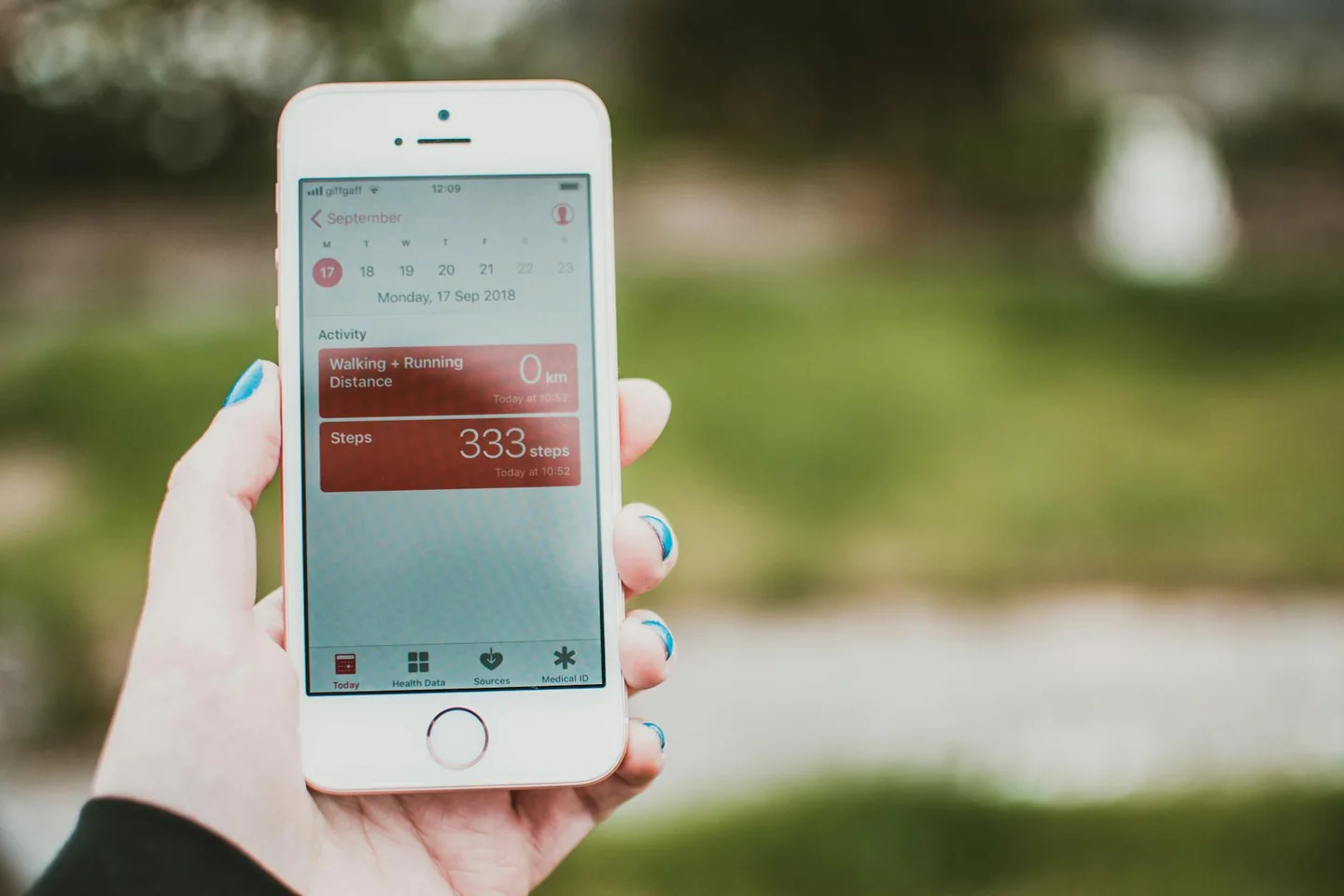
Runna has gained ground among running apps because it combines structured plans, clear metrics, and a proposal very much aimed at the runner looking for order in their training. Public ratings place it in the upper range of the category, with scores close to 4.8 out of 5 on the App Store and around 4.7 on Google Play, although the real conversation about its use is much more nuanced than a simple number.
The most repeated opinions sketch two sides of the same coin: on one hand, a very complete tool for preparing 5K, 10K, half marathons, marathons, and even ultras; on the other, an app with a paywall that appears early and with synchronization details that do not always convince. That contrast explains why searches about Runna opinions are not only about knowing whether it works, but about understanding for whom it makes sense and what can fail in practice.
The image left by public ratings
The most visible reviews in official stores repeat a very specific idea: Runna stands out for its ability to provide structure. Beginner runners point out that it helps them get started without improvisation, while more experienced users value that it does not just pile up miles, but combines easy runs, intervals, strength, mobility, and complementary work. That mix of stimulus and order is one of its biggest selling points.
In positive comments, the language of progression appears frequently. Those who use it talk about varied sessions, adjusted paces, and a constant sense of support. The app does not present itself as a simple training calendar, but as an environment where the plan adapts to the goal, the time available, and the runner’s level. That approach is especially appealing to anyone who feels lost among generic plans or tables made for everyone and, therefore, for no one.
The other half of the opinions is just as useful for understanding it. Some users complain that the free version is too limited and that the subscription appears almost immediately, sometimes after the first workouts or even shortly after starting to explore the plan. There are also criticisms about duplicates when syncing with Strava or Apple Fitness, an issue that does not break the experience for everyone, but does weigh on it when the user expects absolute precision in tracking.
What Runna offers in practice
Runna is designed as a personalized training app for running. Its proposal revolves around plans based on distance and goal, from runners who want to improve a 5K to those preparing for a marathon or ultras. The app also includes options to get back into running after a break, return after an injury, or structure a parallel block of strength and mobility alongside running work.
That point matters because the difference from a pure tracking app is not only in the design, but in the logic of training. Runna does not just say what was done, but suggests what to do tomorrow, what pace to hold, and at what moments it makes sense to introduce lighter loads. For many users, that reduces the mental friction of having to design each week from scratch, a task that ends up wearing down even experienced runners.
Another much-cited feature is integration with common watches and platforms. Compatibility with Garmin, COROS, Fitbit, Suunto, Apple Watch, and Strava places Runna in a comfortable spot for anyone who already uses devices and does not want to duplicate training control. In a discipline where data rules, being able to see progress on the watch and in the app provides a continuity that many people look for and do not always find in simpler solutions.
The weight of price in the opinions
Cost marks a decisive part of the debate. The brand’s website has shown a monthly subscription of 19.99 dollars and an annual one of 119.99 dollars, with variations depending on country and platform. In practice, that places Runna in a premium range within running apps, though far below the cost of an individual personal coach. The comparison comes up often because the app is selling precisely the idea of receiving an advanced plan at a lower price than continuous human guidance.
However, the price is not interpreted the same way by everyone. For an occasional runner, paying a monthly fee may seem excessive if they only want to go running with some regularity. On the other hand, for someone preparing a half marathon or trying to improve times with a defined schedule, the cost may seem reasonable if the app provides the discipline that was missing. That is where the heart of the matter lies: it is not only about how much it costs, but what degree of real usefulness it brings to each profile.
The free version also influences perception. Although Runna does let users explore some features without paying, the limitations arrive quickly and that creates the feeling of a short trial. For new users, that quick transition to payment can feel abrupt. For more determined runners, however, it may be seen as a way to filter out those who really want a structured plan and are not just browsing.
Who it fits best and who it falls short for
Runna fits well with profiles that value planning over improvisation. Runners preparing for a specific race, people who need a clear routine so they do not get lost among easy runs and intervals, and those who appreciate having strength, mobility, and technique sessions integrated into the same ecosystem usually come away better off. It is also useful for beginners who appreciate progressive guidance, without excessive jumps or complex daily decisions.
By contrast, it may fall short for anyone looking for an almost handcrafted experience, very finely tuned to changing sensations or with a much closer level of human follow-up. Although the app boasts personalization, it is still a digital tool, not a flesh-and-blood coach who interprets nuances of fatigue, life context, or small changes in physical state with the same sensitivity as a direct conversation. That difference does not invalidate the app, but it is worth keeping in mind so as not to demand from it what it does not promise.
There is also a cultural factor that matters: Runna is available in Spanish, but its identity remains closely tied to the Anglo-Saxon market, where it has become strong. That is not a problem for using it, although it does explain why certain communications, support, and references from the brand still sound more like a global product than a local service. For some runners that is irrelevant; for others, it reduces closeness.
The features that convince runners the most
The weekly structure is one of the best-rated features. The combination of hard, easy, and recovery days creates a clear sense of progression, something many users do not find in randomly downloaded plans. The runner knows what is next and why it is next, and that clarity reduces the mental noise that usually comes with preparing for a race.
The other big strength is the complementary side. Strength, mobility, and Pilates appear as additions that reinforce the main training. In a sport as repetitive as running, where the same movement is repeated thousands of times, that accessory work is not decoration. It helps sustain volume, keep the body more stable, and distribute the load better. Runna has understood that logic well and turned it into part of its story.
The sense of accompaniment also adds value. The app does not just show workouts; it aims to guide. That nuance may seem small, but it makes the difference between a cold table and a user experience more like a roadmap. Someone who opens Runna to prepare for their first half marathon, for example, is usually looking for exactly that: an ordered sequence of steps that turns a big goal into something manageable.
The weak points worth not overlooking
Irregular synchronization appears repeatedly in the criticism. Duplicates, failures when recording sessions, or small mismatches with external platforms are problems that do not affect everyone, but are enough to erode trust when you expect accuracy. In a training app, incorrect data is not a minor detail: it changes the reading of progress and can confuse the comparison between sessions.
The other problem is the perception of commercial pressure. If the user feels they have barely explored the interface and are already being pushed toward the paid plan, the emotional rating drops, even if the product works well. The app may be powerful, but first impressions matter. And in the subscription market, the initial experience weighs almost as much as technical quality.
Also, not every runner needs that much structure. Some people enjoy improvising based on feelings, terrain, and schedule. For that profile, such a guided platform can feel rigid. That does not mean it is bad, only that its value is very closely tied to the need for order. Where some see rigor, others see a soft straitjacket.
How to read the high store rating
Runna’s high scores should not be interpreted as an automatic guarantee of universal satisfaction. Ratings of 4.8 or 4.7 reflect, above all, that a significant part of users finds a lot of value in the tool. But store reviews usually capture those who have a strong experience, good or bad, and that is why enthusiastic praise coexists with very specific complaints about payment, synchronization, or unmet expectations.
In that sense, the high average speaks of a solid product, not a perfect one. Runna seems to have found a convincing formula for runners who want a modern, well-packaged plan with quite a bit of depth. The less friendly side appears when that depth is paid for too soon or when technical performance does not match the ambition of the marketing.
The result is an app with a strong reputation, but also with a type of user who is more demanding than average. Those who choose it usually arrive with a clear intention: to train better, not just to log more. And that raises the bar for evaluation. A runner who pays for structure expects real structure, not just a pretty interface with neatly arranged workouts.
What the opinions say about the market moment
Runna’s success says a lot about the current moment in digital running. Runners are no longer satisfied with measuring miles; they want interpretation, progression, and a certain sense of intelligence in the plan. The popularity of personalized apps responds to a very contemporary need: saving mental time without giving up the feeling of training with purpose.
Runna benefits from that trend because it packages an old idea, planning, in a very current format. Clean interface, goal-based plans, device synchronization, and a performance-driven narrative. Everything is aimed at reducing the daily doubt of what to do today. In a sport where consistency matters more than flashy gestures, that simplification carries a lot of weight.
The other side of that evolution is that runners are no longer so forgiving. If the app promises personalization, they expect personalization; if it promises compatibility, they expect compatibility; if it promises tracking, they expect the tracking not to fail. The opinions about Runna reflect precisely that new level of demand. The app is liked because it solves real problems, but it also receives criticism when those same problems reappear from another angle.
A useful verdict for today’s runner
Runna comes out well when evaluated as a structured training tool. It is one of the most serious proposals in the field of running apps, especially for those who want a clear, measured plan with progression. Its public ratings, the weight of its features, and the breadth of its plans support that reading.
But the opinions also leave a clear warning: it is not a cheap or universal solution. Its value depends a lot on the runner’s starting point, how they plan to use the app, and how much they care about paying for convenience, design, and planning. If the goal is to improvise less and train with more order, Runna has arguments. If the priority is to spend less or avoid closed systems, the balance changes.
The conversation around Runna, in the end, neatly sums up the state of digital running: more data, more personalization, and also more expectations. The app has not invented smart training, but it has packaged it quite effectively. And that is why its opinions matter so much: because they speak less about a trend and more about how the way we train is changing.



How to prevent thigh chafing: causes and real solutions

Women’s running windbreakers: seven jackets and how to choose

Do more workouts get rid of soreness? A guide for runners

Jaén Half Marathon 2026: Record 3,800 Runners Registered

Men’s short running tights: how to choose the right pair

World Triathlon confirms data breach involving medical data

Izan Edo targets podium at Miyazaki World Cup

María Pérez ranks ninth in World Athletics’ 2026 top ten

Dos Santos, Duplantis and Sawe: World Athlete of the Year finalists

San Silvestre Vallecana 2026: 42,000 places, prices and start times

 Races3 months ago
Valencia Half Marathon 2027: date and registration

 Races3 months ago
Valencia Marathon 2026: entry, ballot and course

 Reviews and Comparisons4 months ago
Asics Gel-Roadmiles 3 for men: review and current price

 Reviews and Comparisons4 months ago
Asics Gel Sonoma 8 Gore-Tex: complete analysis for trail and rain

 Sneakers3 months ago
Saucony Endorphin Pro 4: full review and verdict

 News5 months ago
Strava API 2026: what changes for clubs, challenges and runner apps?

 Reviews and Comparisons5 months ago
Nike Alphafly 3: opinions, sensations, and real key points

 Reviews and Comparisons4 months ago
Under Armour running shoes review 2025-2026: models and key features

 Sports Equipment4 months ago
Shoe sizes in cm: a clear guide to getting the right fit for your footwear

 Sneakers3 months ago
Skechers GO RUN Consistent 2.0 analysis: comfort and limits

 News5 months ago
Valencia Marathon 2026 route: key tips to train and run better

 Sneakers4 months ago
Adidas Adizero Boston 13 for men: review and verdict