Training
The best running apps for going out for a run in 2025
An updated selection of apps to log runs, follow plans, and get the most out of every outing with more data and less noise.

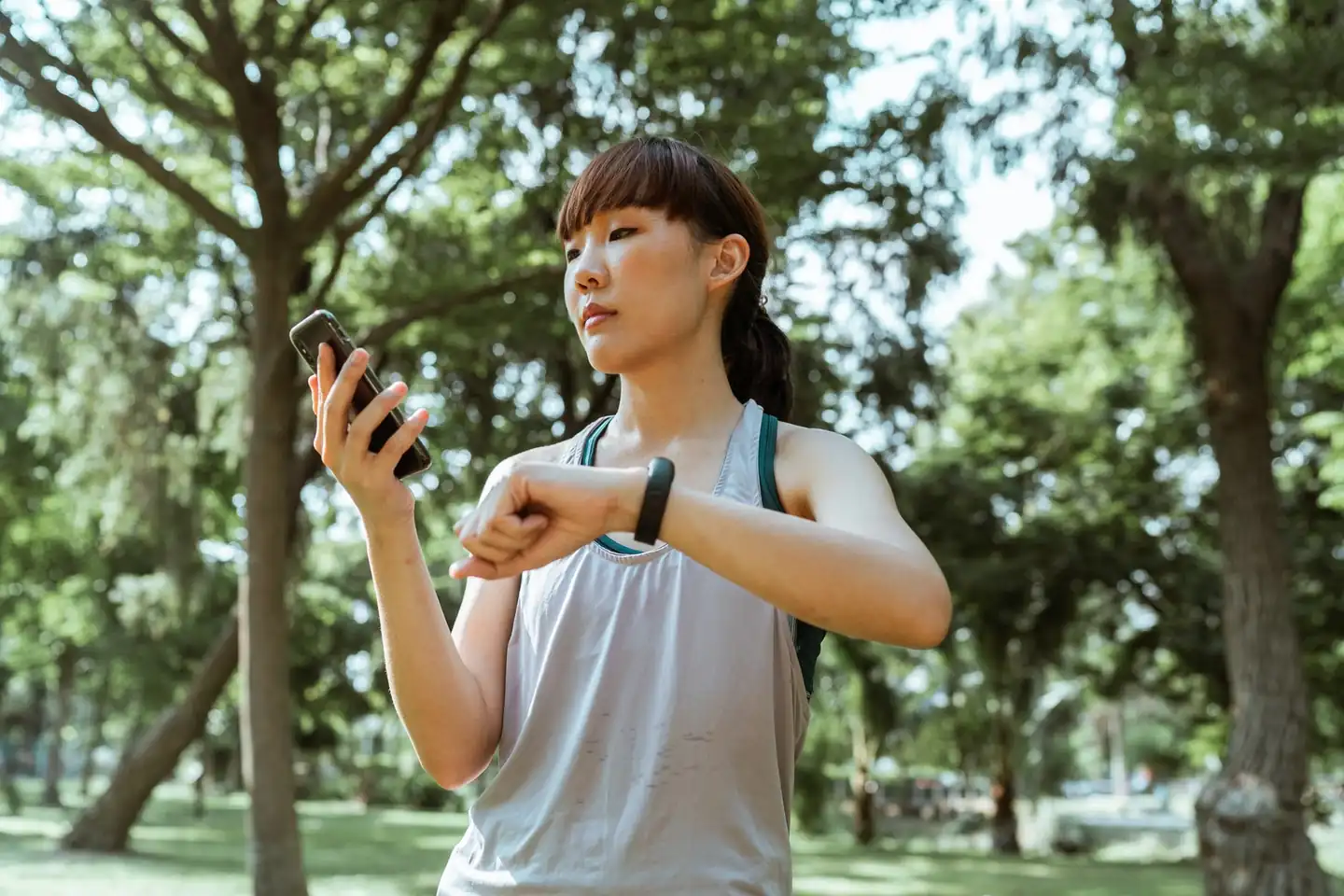
Running apps are no longer an accessory. For millions of runners, the phone has become a training log, a map and, in some cases, a metronome that sets the pace of every outing. The difference between heading out to run blind or doing it with precise information can be felt in details as concrete as pace per kilometer, accumulated elevation gain, average heart rate or weekly consistency.
In 2025, the offering is broad and very uneven. There are apps designed to record kilometers reliably, others that prioritize motivation and community, and some that go straight for anyone who needs structure, plans and voice in their headphones. Choosing well matters because not all of them do the same thing or perform equally on Android, iPhone or smartwatch.
What a good running app brings in practice
The real usefulness starts with tracking. A good app does not just draw a route on the map; it turns every workout into readable data. That extra layer makes it possible to compare weeks, detect pace drops, control load and understand whether an easy session was really easy or whether it ended up being an effort disguised as a comfortable run.
There is also a less visible but decisive value: consistency. The best-resolved apps offer reminders, challenges, goals and small achievements that help sustain the habit. They do not replace discipline, but they do organize it. They run alongside the user, like a silent metronome that keeps a good week from dissolving into three of abandonment.
Another key point is compatibility. GPS, heart rate monitors, sports watches, Spotify, Apple Music and training platforms do not always integrate in the same way. An app can be very complete on paper and, however, fail in its connection with the watch or in data synchronization. That is why it is worth looking beyond the marketing and paying attention to what it measures, how it presents it and how stable it is in day-to-day use.
Strava still sets the social pace
Strava is the best-known reference for those who want more than a simple log. Its strength lies in mixing tracking, analysis and a huge community that turns every outing into a piece of a collective conversation. Running, walking or cycling are all integrated into the same activity logic, with statistics that let you see elevation gain, distance, time, pace and broader trends.
Its great asset is not just the data screen. It also offers segments, challenges, shared routes and comparisons that make progress visible. For many runners, that social dimension is a real incentive: looking at a stretch and checking how it was run compared with previous weeks has more effect than any abstract promise. The paid version adds layers of analysis and advanced features, but the free one already covers the essentials for serious use.
Strava works especially well for anyone who alternates disciplines or trains with other people. It is an app that records, organizes and connects. And that word, connection, explains much of its success: it does not treat running as an isolated gesture, but as part of a network of habits, routes and comparisons that feed each other.
Adidas Running stands out for its balance between data and guidance
Adidas Running, heir to Runtastic, keeps one of the clearest interfaces for anyone who wants to see results without getting lost in menus. Its proposal combines GPS tracking, detailed statistics and guidance features that are useful for running as well as walking or hiking. It is one of the most versatile options for anyone who does not limit themselves to a single type of outing.
The app adds guided workouts, plans for different goals and voice prompts that help maintain pace without looking at the screen every minute. That assistance is especially convenient in long sessions or when the runner prefers to focus on sensations, breathing and cadence. It also stands out for its integration with smartwatches and heart rate devices.
Its profile is that of a very complete tool, but still accessible. It does not demand a heavy learning curve and, at the same time, offers enough data to follow progress with judgment. In practice, that makes it a solid option for those looking for control, simplicity and structured plans without giving up a pleasant design.
Nike Run Club still delivers one of the best guided experiences
Nike Run Club has a clear advantage: it knows how to accompany you. Its guided sessions, with motivational audio and structured workouts, make a run feel less like a string of loose kilometers and more like a piece of work with a beginning, development and goal. For someone just starting out or someone needing to get back into a routine, that sense of accompaniment matters a lot.
The app lets you record road or treadmill runs, track pace, times and distances, and complete programs of different kinds, from easy runs to more dynamic sessions. Its catalog of guides is broad and designed for very different profiles, from someone going out for the first time to someone already looking for variety to avoid monotony.
In addition, the social side is well handled. Sharing achievements, challenging friends or saving personal bests is part of its design. It is not the most technical app on the market, but it is one of the most effective for sustaining the habit with a balanced mix of motivation, clarity and a sense of progress.
Runkeeper offers a very clean starting point
Runkeeper, under the ASICS umbrella, remains one of the easiest apps to use for anyone who wants to start running without fighting the interface. Its strength lies in clarity: distance, pace, calories, time and routes are presented without clutter. That makes it especially appealing to beginner runners or to those who prefer a clean dashboard over an avalanche of metrics.
The app includes training plans and goal tracking, as well as integration with music and smartwatches. It also allows walking to be recorded, which broadens its use for those who combine running and walking in their first weeks of training. That mix, so common in the learning process of a beginner runner, is handled well and without drama.
Its design conveys a very valuable idea in this kind of tool: progress does not need to be complicated. It is enough for the information to be reliable, easy to understand and consistent. Runkeeper works exactly there, in the territory of routines that last because they do not wear you out too soon.
MapMyRun puts the focus on routes and technique
MapMyRun, from Under Armour, stands out for something that is not always well used in other apps: the relationship between route, gear and basic biomechanics. In addition to the classic data, it allows you to link devices and some of the brand’s shoes to offer more specific metrics, such as cadence, ground contact time or foot strike angle in certain contexts.
That level of detail is especially interesting for those who want to better understand how they run, not just how much they run. It is also useful for those who enjoy exploring new routes, because the app offers planning and tracking with quite a bit of reliability. In unfamiliar cities or while traveling, it becomes a kind of sports compass that avoids unnecessary detours and makes it easier to discover new routes.
Its profile is more analytical than playful, although it does not fall into technical excess. Those who use it find an app designed to record, compare and fine-tune, with a clear orientation toward the runner who wants to learn from their data and not just store it.
Sports Tracker and Relive broaden the map of possibilities
Sports Tracker has built its identity on GPS precision and broad usability. It works for running, walking and cycling with a very clear tracking logic, and it can also connect with heart rate devices and Suunto watch compatibility. For anyone who values the traceability of effort and does not want to lose any detail of the route, it remains a very serious option.
Relive, on the other hand, plays in a different league: that of visual storytelling. Its appeal lies in turning routes into 3D videos that summarize the activity in a striking and easy-to-share way. It is not the app that best serves training analysis down to the millimeter, but it is one of the most powerful for giving context to the outing, especially on beautiful routes, trips or long days in the mountains or the city.
Together they represent two different ways of looking at running: one more technical and the other more visual. One keeps the data; the other turns it into memory. In an ecosystem as broad as today’s, that difference is not minor. Some runners want precision and others want a story. These two apps understand that division well.
The options for starting without stress still carry a lot of weight
Someone who is just starting does not need an app packed with features. They need clarity, guidance and a sense of progress that does not feel intimidating. That is why tools like Runkeeper, Nike Run Club or even more start-focused proposals still work well, where walking and running are combined with purpose.
That gradual approach matters because it reduces the risk of frustration. A beginner runner rarely needs to know twenty metrics from day one; it is enough to understand whether they can last longer, whether they get less tired and whether they can sustain a routine two or three times a week. The apps that best support that process are usually the ones that organize effort into small, understandable blocks.
Audio is also worth considering. Voice prompts, pace cues and narrated workouts remove the need to look at the screen and make the experience more comfortable. The right app for starting out does not impress with complexity; it convinces because it does not get in the way and because it leaves room for the body to learn how to respond.
Paid apps and subscriptions deserve a different reading
The market has normalized monthly payments in a sector that once seemed almost entirely free. Today, apps with a solid basic version coexist with others that reserve the most interesting plans for the subscription. Runna, for example, has gained ground thanks to its focus on personalized plans and usually sits in a price range around 20 euros per month or 120 per year, with an initial trial in some markets.
That logic is not bad in itself, but it is worth understanding. The value of a subscription depends on whether the app solves something the user cannot find elsewhere: realistic planning, adaptation to specific goals, weekly progression and a training structure that does not force improvisation. If it only adds embellishments, the cost quickly loses meaning.
At the same time, many free apps already offer enough for most recreational runners. The decision should not be based on how many features an app boasts, but on how much it genuinely helps the habit you want to build. In running, as in almost everything, less noise can mean more clarity.
What to look at before downloading an app
The best choice usually comes from three practical questions: what you want to measure, how much you want to complicate things and which device you are going to use it with. If the goal is to record outings and see pace, a few well-resolved features are enough. If the idea is to train for a 5K, a half marathon or a structured season, you need plans, alerts and some analytical capacity.
Compatibility with the user’s ecosystem also matters. An app that syncs smoothly with Apple Watch, Garmin, Fitbit or a Bluetooth heart rate monitor does not perform the same as another that requires extra steps every time. The real experience is not in the ad, but in those repeated small gestures: logging in, waiting for GPS signal, saving the run, syncing it and checking it later without errors.
Finally, transparency in the data matters. A good running app should clearly explain what it measures and how it presents it. The runner does not need opaque formulas; they need information they can read at a glance and use the next day. That is the line between a useful app and one that is merely flashy.
The final choice depends less on the catalog and more on daily use
There is no perfect app for everyone. Someone who competes with friends and shares every outing will probably feel more comfortable in Strava. Someone looking for order and guidance will appreciate Nike Run Club or Runkeeper. Someone who wants an extra layer of analysis may find more sense in MapMyRun or Sports Tracker. And someone who prioritizes visual memory may lean toward Relive.
That map of options explains why the best running apps are not measured only by downloads. They are measured by continuity, by clarity and by the ability to fit into a routine that already demands quite a lot on its own. The run begins on the street, yes, but today it also continues on the screen, where every kilometer is filed away as a small piece of sports memory.
In 2025, the right app is not the one that promises to do everything, but the one that accompanies without distracting, measures without overwhelming and motivates without noise. That combination, as simple as it is scarce, is still what makes the difference between adding outings or letting the phone become another forgotten icon among dozens.
Este artículo contiene enlaces de afiliado: si compras a través de ellos, se genera una pequeña comisión sin coste adicional para ti. Más información.



How to prevent thigh chafing: causes and real solutions

Women’s running windbreakers: seven jackets and how to choose

Do more workouts get rid of soreness? A guide for runners

Jaén Half Marathon 2026: Record 3,800 Runners Registered

Men’s short running tights: how to choose the right pair

World Triathlon confirms data breach involving medical data

Izan Edo targets podium at Miyazaki World Cup

María Pérez ranks ninth in World Athletics’ 2026 top ten

Dos Santos, Duplantis and Sawe: World Athlete of the Year finalists

San Silvestre Vallecana 2026: 42,000 places, prices and start times

 Races3 months ago
Valencia Half Marathon 2027: date and registration

 Races3 months ago
Valencia Marathon 2026: entry, ballot and course

 Reviews and Comparisons4 months ago
Asics Gel-Roadmiles 3 for men: review and current price

 Reviews and Comparisons4 months ago
Asics Gel Sonoma 8 Gore-Tex: complete analysis for trail and rain

 Sneakers3 months ago
Saucony Endorphin Pro 4: full review and verdict

 News5 months ago
Strava API 2026: what changes for clubs, challenges and runner apps?

 Reviews and Comparisons5 months ago
Nike Alphafly 3: opinions, sensations, and real key points

 Reviews and Comparisons4 months ago
Under Armour running shoes review 2025-2026: models and key features

 Sports Equipment4 months ago
Shoe sizes in cm: a clear guide to getting the right fit for your footwear

 Sneakers3 months ago
Skechers GO RUN Consistent 2.0 analysis: comfort and limits

 News5 months ago
Valencia Marathon 2026 route: key tips to train and run better

 Sneakers4 months ago
Adidas Adizero Boston 13 for men: review and verdict