Reviews and Comparisons
Salewa Mountain Trainer Mid GORE-TEX: complete analysis
Detailed analysis of a technical trekking boot: fit, materials, weight, traction, and the scenarios in which it excels.

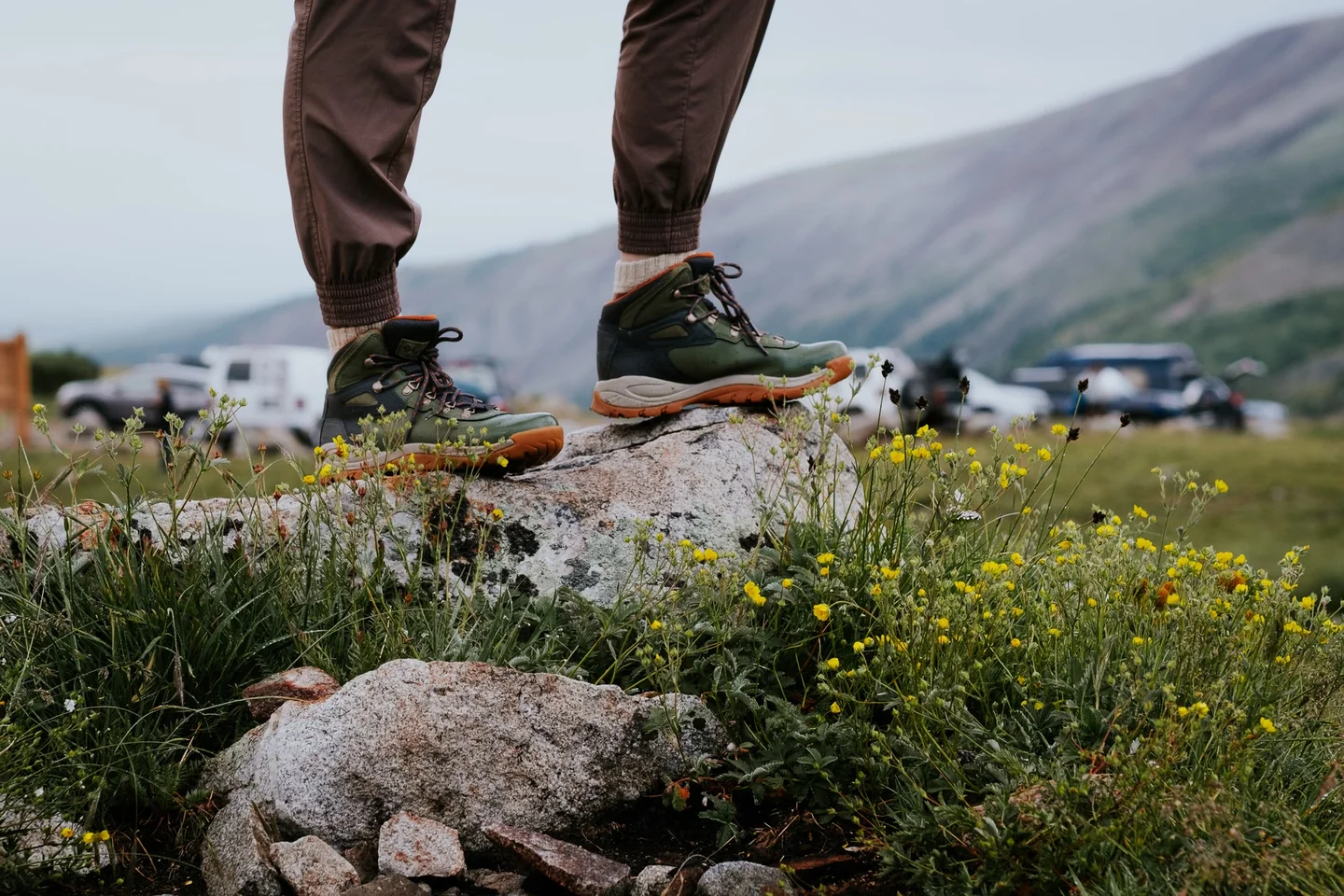
The Mountain Trainer Mid with GORE-TEX membrane has earned a permanent place among technical trekking boots for a simple reason: it combines support, protection, and a more agile stride than its rugged appearance suggests. It is not a boot designed for strolling along easy paths; it is aimed at mixed terrain, rocky trails, long ascents, and descents where the ankle needs room, but also control.
Its approach fits especially well on medium and high-mountain outings, where the weight of the backpack, uneven ground, and changing weather turn footwear into a decisive piece of gear. The key lies in the balance: a mid-height shaft that protects without fully restricting movement, a Vibram outsole with reliable grip, and a build that prioritizes durability over extreme lightness.
A technical boot that seeks stability without excessive stiffness
The first trait that defines this model is its character as an approach and technical trekking boot, rather than a soft, general-purpose hiking shoe. Salewa designed it to move confidently on loose rock, ridges, wet gullies, and sections where footholds are not uniform. The feeling when you put it on is that of a precise tool, not a domestic shoe adapted for the mountains.
That approach is especially noticeable in how it performs on the foot uphill and downhill. On long climbs, it helps keep support stable when the terrain steepens and the effort begins to affect posture. On descents, its mid-height shaft and fit system reduce internal play, something that matters a great deal when the foot slides forward and toe discomfort appears. It is a boot meant to provide confidence, not just cushioning.
The technical specifications help explain why so many people associate it with demanding routes. It weighs around 670 grams per boot in the men’s version, a reasonable figure for its category, and it has a mid-cut with a relatively wide last in some sizes and versions. It is not ultralight, but it does not enter the realm of heavy classic mountaineering boots either. That middle ground explains much of its popularity.
Materials and construction: split leather, durable fabric, and 360-degree reinforcements
On the outside, the combination of 1.6 mm split leather and durable technical fabric gives it a solid, almost shell-like appearance. The leather provides structure and good abrasion resistance, while the textile reduces some bulk and allows a gentler flex than a fully rigid boot. Around the base, the perimeter rubber reinforcement protects the toe and sides from impacts against rock, roots, and sharp edges.
That 360-degree reinforcement is not decorative. On rocky routes, when the foot constantly brushes against boulders or stone edges, it makes the difference between a boot that ages with dignity and one that frays too soon. Visual and structural durability are part of its identity, and Salewa reinforces that with a sober aesthetic, truly mountain-oriented rather than showroom-like.
The construction also conveys an important idea for anyone who goes into the mountains frequently: this type of boot is designed to withstand continuous use, mud, dust, moisture, and repeated drying cycles. That does not mean invulnerability, but it does mean much greater resistance than hybrid footwear that tries to do everything and ends up falling short in every scenario.
GORE-TEX and climate comfort: dry on the outside, reasonable on the inside
The presence of GORE-TEX Performance Comfort or Extended Comfort, depending on the documentation and sales channel, places this boot in the familiar waterproof-breathable category used in technical mountain footwear. The idea is simple: block external water without turning the inside into a sealed chamber. In practice, performance always depends on activity, temperature, and perspiration levels, but the membrane remains one of the model’s strongest selling points.
On spring, autumn, or high-altitude summer routes, that protection is very welcome. Wet grass at dawn, puddles, leftover snow, or sudden downpours stop being an immediate threat to the foot. What matters is not only keeping water out, but also delaying foot cooling when the ground is damp and the pace slows. In the mountains, that detail changes the comfort of an entire day.
It is important not to confuse waterproofing with warmth. Several users and the model’s technical logic itself indicate that this is not a winter boot with major thermal insulation. It performs well on cool outings and in mid-mountain conditions, but it does not replace footwear specifically designed for prolonged snow or intense cold. That distinction is key if you don’t want to ask more of it than it offers.
Vibram outsole, traction, and feel on rock
The Vibram WTC outsole is one of the elements that most shapes its reputation. It is designed to walk safely on changing surfaces, with a tread pattern that seeks grip without becoming excessively aggressive. On dry rock it performs reliably; on mixed terrain it offers a sense of control that is especially appreciated when a day combines trail, boulders, and the occasional tricky step.
That said, traction on wet rock never depends on the tread alone. The rubber compound, foot placement technique, and even the angle of the step all come into play. Most reviews agree on solid, dependable grip, although there are also nuances regarding very polished wet surfaces, where any boot loses some bite. That is normal in this category.
The midsole and moderate stiffness help keep the support from feeling overly soft. That gives more confidence on traverses where the terrain punishes the foot with irregular stones. It does not turn the boot into a board, but it does provide the steadiness needed to move with less fatigue on long routes. In the mountains, that kind of firmness feels like a stable conversation between sole and ground.
Fit, last, and 3F system: a well-secured foot matters as much as the sole
One of the most frequently mentioned points by users is the fit. Salewa’s 3F system connects the instep, heel, and sole to improve stability without fully immobilizing natural movement. In practice, that translates into a better-held heel and fewer blisters from the first uses, provided the size is correct and the foot matches the last.
There is no single answer to the fit question because it depends heavily on foot width. Some users with narrow feet find it perfect, while others with wider feet appreciate extra room or a half size up. It is not a universally fitting boot; its behavior changes quite a bit depending on foot anatomy and the type of sock used. In this case, the right size matters just as much as the brand’s reputation.
The Flex Collar also comes into play, a component designed to favor ankle mobility on descents. That area tends to take a beating when the backpack is heavy and the path is long. The collar’s rear flexibility helps the support feel less intrusive, something some users describe as a boot that goes along with the descent instead of fighting the foot. It is a subtle detail, but very useful on multi-hour routes.
Real comfort in motion: where it shines and where it needs adaptation
During the first few kilometers, this boot can feel somewhat firm. That is not unusual; the upper structure, perimeter protection, and overall support create a sense of robustness that should not be mistaken for softness. After a reasonable break-in period, most users describe it as comfortable, stable, and surprisingly forgiving for a boot of its kind.
That behavior fits routes with elevation gain, broken ground, and technical sections better than simple walks on compact tracks. On smooth trails, some people find it more demanding than necessary, precisely because that is not its true nature. It is like driving a car designed for mountain roads: yes, it works, but its strengths show up when the surface stops being predictable.
The most critical opinions usually focus on perceived weight, somewhat high initial stiffness, or an unhelpful fit for very wide feet. There are also comments about insoles that some users prefer to replace with personal options. That does not invalidate the model; it simply confirms that it is not trying to please everyone, but rather to perform well in a very specific use profile.
Compatibility with crampons and use limits
Another relevant aspect is crampon compatibility. The documentation and user experience indicate that it can work with universal or strap-on crampons, but it is not designed as a specific boot for semi-automatic or automatic crampons. That difference matters a lot, because not all technical-looking soles accept the same type of attachment.
In other words: if the goal is to walk occasionally on snow, cross isolated hard snowfields, or go on a mountain outing with simple gear, it may be a good fit. If the activity requires a more precise and stable connection for glacier terrain or more serious winter mountaineering, it is better to look at models expressly designed for that purpose. Its natural terrain is alpine trekking, not hard mountaineering.
This nuance explains part of the confusion generated by some commercial product sheets. It is sometimes presented as a very versatile mountain boot, and it is, but versatility has limits. In a broad catalog, users can lose sight of the difference between a robust approach boot and a specific tool for ice or continuous snow. Here it is worth reading the model calmly, without overestimating its capabilities.
Who it makes sense for and who it falls short for
Its natural user is someone who goes into the mountains regularly and needs a reliable boot for routes with elevation gain, rocky trails, full-day treks, and outings where the foot needs to feel protected without being trapped. It also works well for those who alternate between trails and rock, or for those who spend part of the year in mid-mountain areas and part in more alpine summer terrain.
By contrast, it may fall short for those who prioritize absolute lightness, the flexibility of a trail shoe, or the agile feel of speed hiking footwear. It is also not the best choice for serious winter outings with intense cold, persistent snow, or the need for advanced crampon compatibility. Its strength lies in a very specific middle range, and that is where it performs best.
The overall impression it leaves is that of an honest boot: it does not promise magic or sell extreme lightness as if it were free. It offers structure, grip, protection, and a comfort that grows with use. That is, ultimately, the kind of footwear that tends to stay in the memory of those who really go to the mountains, because it solves real problems rather than catalog problems.
Price, value, and competition in the technical segment
The official price in its range usually sits around 250 euros, a figure that places it in the upper-middle part of the technical trekking market. It does not compete by being the cheapest, but by offering careful construction, a waterproof membrane, a Vibram outsole, and a support package that justifies part of the outlay. In this segment, the cost makes sense when the user really takes advantage of those features.
Against rival models from Salomon, La Sportiva, Scarpa, Lowa, Asolo, or Merrell, the Mountain Trainer Mid stands out for its balance between robustness and mobility. It is not always the lightest or the most immediately comfortable, but it is one of the models that best combine lateral protection, alpine feel, and perceived durability. Its value lies in consistency, not in an immediate wow effect.
Comparisons usually favor it among those looking for a dependable boot for demanding routes without yet stepping into the territory of very stiff high-mountain boots. In that niche, competition is tough, but this model maintains a recognizable personality. That matters a lot in a market where too many boots look alike until they hit the rocks and reveal their limits.
The final impression it leaves in the mountains
The Mountain Trainer Mid GORE-TEX works as a boot designed to accompany serious days out, not to decorate occasional getaways. Its combination of split leather, rubber reinforcements, waterproof membrane, Vibram outsole, and 3F system creates a coherent package, with its own character and behavior that is easy to understand for anyone who has already tried technical mountain footwear.
Its best version appears when the terrain demands precision, when the trail steepens, when the backpack is heavy, and when the foot needs support without losing mobility. It is not a boot for everyone, but it is one of those options that, with the right size chosen and its character accepted, can accompany many outings with a rare mix of steadiness and security in its class.
In the technical trekking market, that combination still has value. Because in the end, more than a list of numbers, what matters is the confidence it conveys when stepping onto a wet slab, descending through loose stones, or chaining hours of walking with the ankle still intact. That is where this model justifies its name and its reputation.
You may also like: Scarpa Mont Blanc Pro GTX: review, price, and features.
Este artículo contiene enlaces de afiliado: si compras a través de ellos, se genera una pequeña comisión sin coste adicional para ti. Más información.



How to prevent thigh chafing: causes and real solutions

Women’s running windbreakers: seven jackets and how to choose

Do more workouts get rid of soreness? A guide for runners

Jaén Half Marathon 2026: Record 3,800 Runners Registered

Men’s short running tights: how to choose the right pair

World Triathlon confirms data breach involving medical data

Izan Edo targets podium at Miyazaki World Cup

María Pérez ranks ninth in World Athletics’ 2026 top ten

Dos Santos, Duplantis and Sawe: World Athlete of the Year finalists

San Silvestre Vallecana 2026: 42,000 places, prices and start times

 Races3 months ago
Valencia Half Marathon 2027: date and registration

 Races3 months ago
Valencia Marathon 2026: entry, ballot and course

 Reviews and Comparisons4 months ago
Asics Gel-Roadmiles 3 for men: review and current price

 Reviews and Comparisons4 months ago
Asics Gel Sonoma 8 Gore-Tex: complete analysis for trail and rain

 Sneakers3 months ago
Saucony Endorphin Pro 4: full review and verdict

 News5 months ago
Strava API 2026: what changes for clubs, challenges and runner apps?

 Reviews and Comparisons5 months ago
Nike Alphafly 3: opinions, sensations, and real key points

 Reviews and Comparisons4 months ago
Under Armour running shoes review 2025-2026: models and key features

 Sports Equipment4 months ago
Shoe sizes in cm: a clear guide to getting the right fit for your footwear

 Sneakers3 months ago
Skechers GO RUN Consistent 2.0 analysis: comfort and limits

 News5 months ago
Valencia Marathon 2026 route: key tips to train and run better

 Sneakers4 months ago
Adidas Adizero Boston 13 for men: review and verdict