Health and Nutrition
Backpacks for Walking the Camino de Santiago: Practical Guide 2026
Keys to choosing a comfortable, lightweight, and well-fitting backpack for walking with less weight and greater safety.

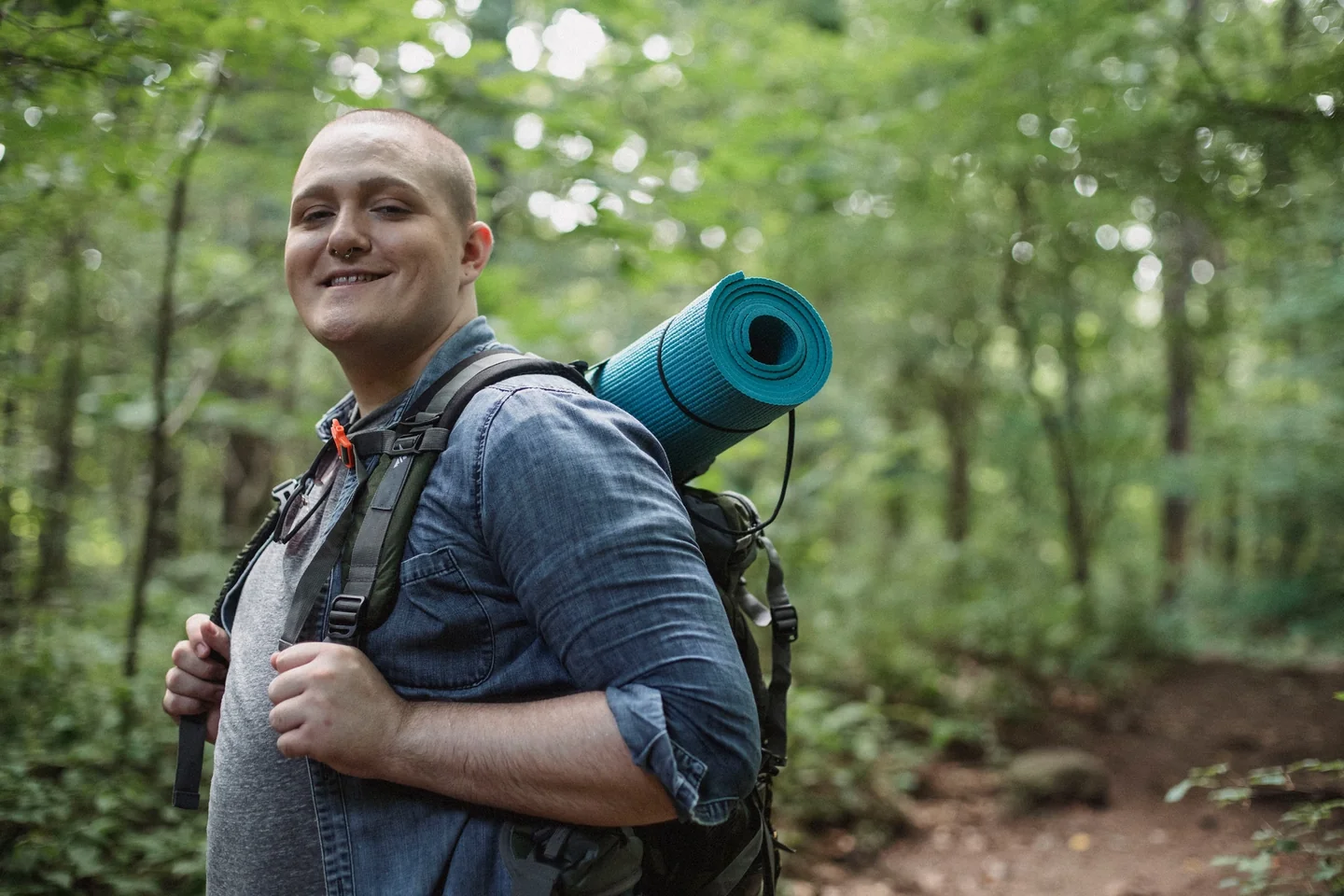
The backpack sets the pace of the Camino de Santiago long before the first yellow waymarkers appear. It is neither a secondary accessory nor a simple piece of luggage: it is the center of gravity of every stage, the object that can turn a long walk into a manageable day or into a succession of aches in the shoulders, neck, and lower back. That is why choosing well is not about aesthetics or accumulating pockets, but about balance, fit, and practicality.
On the Jacobean route, the ideal backpack is the one you barely notice. It should distribute the weight close to the back, ventilate enough so you do not soak your shirt on the climb, withstand Galician rain, and allow access to water, rain jacket, or credential without turning every stop into a small excavation. That is the difference between carrying and walking.
The right size matters more than the brand
On the Camino, the useful volume is usually between 20 and 40 liters for most pilgrims traveling light. That range covers short getaways, routes with reserved accommodation, and trips in spring or summer, when outerwear takes up less space. A 30-liter backpack usually offers a good balance between space and restraint, while 40 liters already allow for a bit more clothing, a waterproof layer, and a small first-aid kit without forcing the closure as if it were a suitcase.
Backpacks of 50 liters or more only make sense for specific profiles: those who prefer to carry a bulky sleeping bag, those traveling in cold seasons, or those who, out of habit, cannot manage to reduce their luggage. But the greater the volume, the easier it is to fill it with unnecessary things. That is the real risk. The large backpack is tempting like an empty room: it seems like there is space to spare, until there is no energy left in the legs.
Capacity should go hand in hand with the style of travel. A route with laundry and daily accommodation is not the same as a more self-sufficient one, nor does the Camino Francés in summer demand the same as a winter stretch of the Camino del Norte. If the plan includes luggage transport between stages, the backpack can be smaller and more technical; if it is going to be on your back all day, it is better to minimize what goes inside rather than increase the shell to compensate for clutter.
Total weight is the silent enemy
The most sensible guideline is not to exceed 10% or 12% of body weight, and in many cases to stay below that. It is not an arbitrary figure: it reflects the body’s basic mechanics when it repeats hundreds of thousands of steps under load. Beyond a certain point, the stride shortens, posture leans forward, and fatigue appears much sooner than expected. On a 20- or 25-kilometer day, those extra grams become accumulated debt.
It is worth distinguishing between total weight and emotional volume. There are objects that seem indispensable out of fear, excessive caution, or that habit of traveling as if the absence of something were an emergency. But the Camino is more like a well-organized kitchen than a warehouse: a few well-chosen items work better than a collection of just-in-case things. A second sweatshirt, a book that is too thick, or several pairs of shoes add mass without bringing relief.
The good backpack not only weighs little; it also distributes what you carry well. One poorly placed kilo pulls on the back more than two well-stabilized ones. That is why padded shoulder straps, the sternum strap, and the hip belt matter so much. They are not catalog decorations. They are the pieces that transfer part of the load to the pelvis and ease the work of the shoulders, exactly where complaints usually begin by the end of the morning.
Fit is worth more than any technical spec
A backpack for the Camino has to adapt to the torso, not the other way around. The back is not a flat board and the steps are not identical for eight hours. A good fit prevents bouncing, rubbing, and the pendulum effect that punishes every change of pace. The back panel should sit stably, with the top close to the shoulders and the base resting well on the hips, without hanging or riding too high.
Torso length matters more than a person’s total height. Two pilgrims of similar stature may need different sizes if one has a shorter or longer back. That is why backpacks with adjustable straps, an adjustable harness, and a padded belt usually offer more room for correction. Real comfort is decided while walking, not by looking at the label in a store.
Ventilation also matters. On warm routes or during long climbs, the back gets wet very quickly. Systems with a gap between mesh and back help air circulate, although they sometimes add a bit of weight or move the load slightly away from the body. It is an unavoidable trade-off: more airflow usually means a little less compactness. The choice depends on whether the pilgrim prioritizes coolness or body-hugging stability.
Materials, rain, and durability: the less flashy side
The Camino is tough on seams, closures, and fabrics. There is dust, asphalt, stones, mud, strong sun, and, in Galicia, rain with an almost pedagogical persistence. That is why resistant fabrics such as nylon or dense polyester are worthwhile, along with zippers that do not feel delicate. A pretty backpack may not last long if the fabric tears at a corner or if the shoulder-strap seams give way after a few weeks of intense use.
Water resistance deserves special attention. Many backpacks are water-repellent, but not strictly waterproof. That means they handle drizzle or a brief downpour, not an entire afternoon of fine rain. An external waterproof cover remains a simple and useful solution. And if the trip includes unpredictable stages, it helps even more to keep delicate items inside dry bags or lightweight pouches, a kind of home insurance for dry clothes.
Durability also has a practical dimension: fewer breaks, less improvisation, less wasted time. In the middle of the Camino, a jammed zipper or a detached pocket is not a minor issue. It becomes a daily nuisance. Backpacks with a good reputation usually share simple traits: reliable materials, clean seams, reinforcements where there is more tension, and a structure that does not deform as soon as you fill it with a handful of clothes and a water bottle.
How to organize the inside so you can walk without fighting it
The backpack works best when the heaviest items are close to the back and in the mid-to-upper section. That placement reduces leverage on the lower back and prevents the contents from shifting with each step. The lightest items, such as spare clothing or light accessories, can go at the top or in outer pockets. The goal is to keep the center of mass stable, as if the backpack were an extension of the torso and not a bag swinging freely.
Side pockets are useful for water and small frequently used items. The front or top can be used for the rain jacket, credential, or a snack. The less the main compartment has to be opened during the day, the better. On the Camino, simple gestures are appreciated: stop, take out, put away, keep going. Daily friction decreases when each item has a clear logic.
Internal organization also avoids mental clutter. It is not just about comfort. It means less time searching for a clean change of clothes in a bag at the bottom and fewer nerves when it suddenly starts raining. Many pilgrims use small fabric or compression bags to separate dry clothes, toiletries, and technical gear. They do not add glamour, but they do add order, and on a long route, order saves energy.
The right backpack changes with the season
In spring and summer, the backpack can be smaller and lighter. Clothing takes up less space, the sleeping bag is usually less bulky, and thermal layers are reduced. Under those conditions, a backpack of 25 to 35 liters is usually enough for multi-day trips if the luggage is well measured. The season’s visual lightness is not entirely misleading: it is warm, yes, but long stages and the need to hydrate better also increase.
In autumn, the situation changes. Rain becomes more frequent, mornings are cooler, and gear takes up more space. Then a backpack of 35 to 45 liters may make more sense, especially if you add warm clothing or an extra layer that was not needed before. In winter, the margin grows again for many profiles, although the underlying recommendation remains the same: do not carry more just in case than you would actually use.
The season also influences the type of outing and the terrain underfoot. The Camino Francés behaves differently from the Camino del Norte, where humidity weighs almost as much as the scenery. The backpack should not be chosen in the abstract, but in relation to the climate, the route, and the way you sleep. The same model can be reasonable in May and awkward in January.
Details that seem minor but end up shaping the day
Compression straps, trekking-pole holders, and the sternum strap are not cosmetic extras. Compression straps keep the contents compact so they do not bounce. The pole holder frees up your hands when entering a town or taking a break. The sternum strap helps keep the shoulder straps from shifting sideways, especially useful when clothing is wet or the terrain requires frequent changes of pace.
The lower access can be practical if you carry a sleeping bag or separate clothing, though it is not essential. More useful than the number of access points is for the main opening to be wide and easy. A backpack that opens badly often turns the moment of stopping into a small battle with zippers, layers of clothing, and items that slip out. Smart design is not noticeable when everything goes well; it is appreciated when it rains or when you need something quickly before setting off again.
Ventilated back panels, padded shoulder straps, and a good lumbar belt are not luxuries. They are the line between tolerating the load and living with it. On a multi-day route, the body quickly learns which backpack suits it and which one takes a toll. That physical memory, more than marketing, ends up dictating which model gets used again the following year.
What people usually carry and what is almost always unnecessary
A well-thought-out backpack leaves room for the essentials, not for everything imaginable. Spare clothes, a waterproof layer, basic toiletries, documents, water, some food, and the usual small medical kit are usually enough for most stages. Beyond that, each additional item should justify its place through real use, not imagined peace of mind. The Camino rewards lightness of judgment as much as physical lightness.
There is a recurring mistake that repeats year after year: trying out a new backpack without loading it first. That is like wearing new running shoes on the day of a long race. The shape when empty is misleading. Only while walking do you discover whether the back gets too sweaty, whether the belt is uncomfortable, whether a pocket sits too low, or whether the top bangs against the neck on descents. The moving test is the real evaluation.
It is also wise to check the closure system and friction points before setting off. Loose buckles, tight seams, and poorly adjusted straps usually reveal themselves at home, not at kilometer 18. The Camino is not very forgiving of oversights at the source. A small prior adjustment prevents a chain of compensations that ends up punishing ankles, back, and neck.
The backpack as part of the Jacobean experience
There is an almost narrative dimension to the Camino backpack. Each pilgrim fills it in their own way, but they all tell a similar story: wanting to move forward with just enough and learning to do without the superfluous. That pruning has something of an intimate map to it. As the days go by, the external weight decreases in symbolic terms even though the backpack stays the same; you walk with more judgment, open it less, and know better what is missing and what is not.
That is why the debate about size, brand, or design matters less than the coherence between body, route, and season. An oversized backpack can be as uncomfortable as a poorly resolved small one. A well-chosen backpack disappears while walking, which is the best possible compliment. It does not attract attention, does not get in the way, and does not force the pilgrim to negotiate with it at every incline.
On the Camino, the right backpack does not show off: it accompanies. And that discretion is its greatest virtue. It withstands rain, heat, dust, and fatigue without demanding the spotlight, like a silent companion who does its job without asking for recognition. Choosing it well does not eliminate the effort, but it does prevent the effort from being accompanied by unnecessary burden, which would already be too much of a lesson for one trail.
A choice you notice in every kilometer
Getting the backpack right changes how you walk, not just how comfortable you feel. It reduces unnecessary stops, improves posture, and lets you focus on the landscape, the pace, and the cadence of the stages. On long routes, that margin becomes a tangible advantage. The body appreciates it at the end of the day, and so does the mind, because walking without fighting your gear leaves more room for what really matters: moving forward.
The best reference remains the same, even as trends change: little weight, good fit, reliable materials, and simple organization. The rest is storefront noise. Those who set out on the Camino with a sensible backpack soon discover that the real technology is in the basics done well. Nothing more, but nothing less.
And so, step by step, the backpack stops being luggage and becomes part of the journey. That is the exact measure of a good choice: that after a few hours you no longer think about it, only about the path ahead.



How to prevent thigh chafing: causes and real solutions

Women’s running windbreakers: seven jackets and how to choose

Do more workouts get rid of soreness? A guide for runners

Jaén Half Marathon 2026: Record 3,800 Runners Registered

Men’s short running tights: how to choose the right pair

World Triathlon confirms data breach involving medical data

Izan Edo targets podium at Miyazaki World Cup

María Pérez ranks ninth in World Athletics’ 2026 top ten

Dos Santos, Duplantis and Sawe: World Athlete of the Year finalists

San Silvestre Vallecana 2026: 42,000 places, prices and start times

 Races4 months ago
Valencia Half Marathon 2027: date and registration

 Races4 months ago
Valencia Marathon 2026: entry, ballot and course

 Reviews and Comparisons4 months ago
Asics Gel-Roadmiles 3 for men: review and current price

 Reviews and Comparisons4 months ago
Asics Gel Sonoma 8 Gore-Tex: complete analysis for trail and rain

 Sneakers3 months ago
Saucony Endorphin Pro 4: full review and verdict

 News5 months ago
Strava API 2026: what changes for clubs, challenges and runner apps?

 Reviews and Comparisons5 months ago
Nike Alphafly 3: opinions, sensations, and real key points

 Reviews and Comparisons4 months ago
Under Armour running shoes review 2025-2026: models and key features

 Sports Equipment4 months ago
Shoe sizes in cm: a clear guide to getting the right fit for your footwear

 Sneakers3 months ago
Skechers GO RUN Consistent 2.0 analysis: comfort and limits

 News5 months ago
Valencia Marathon 2026 route: key tips to train and run better

 Sneakers4 months ago
Adidas Adizero Boston 13 for men: review and verdict