Routes
Footwear for the Camino de Santiago: how to get it right without punishing your feet
Shoes, boots, and socks: the right choice completely changes the experience and reduces chafing, heat, and fatigue.

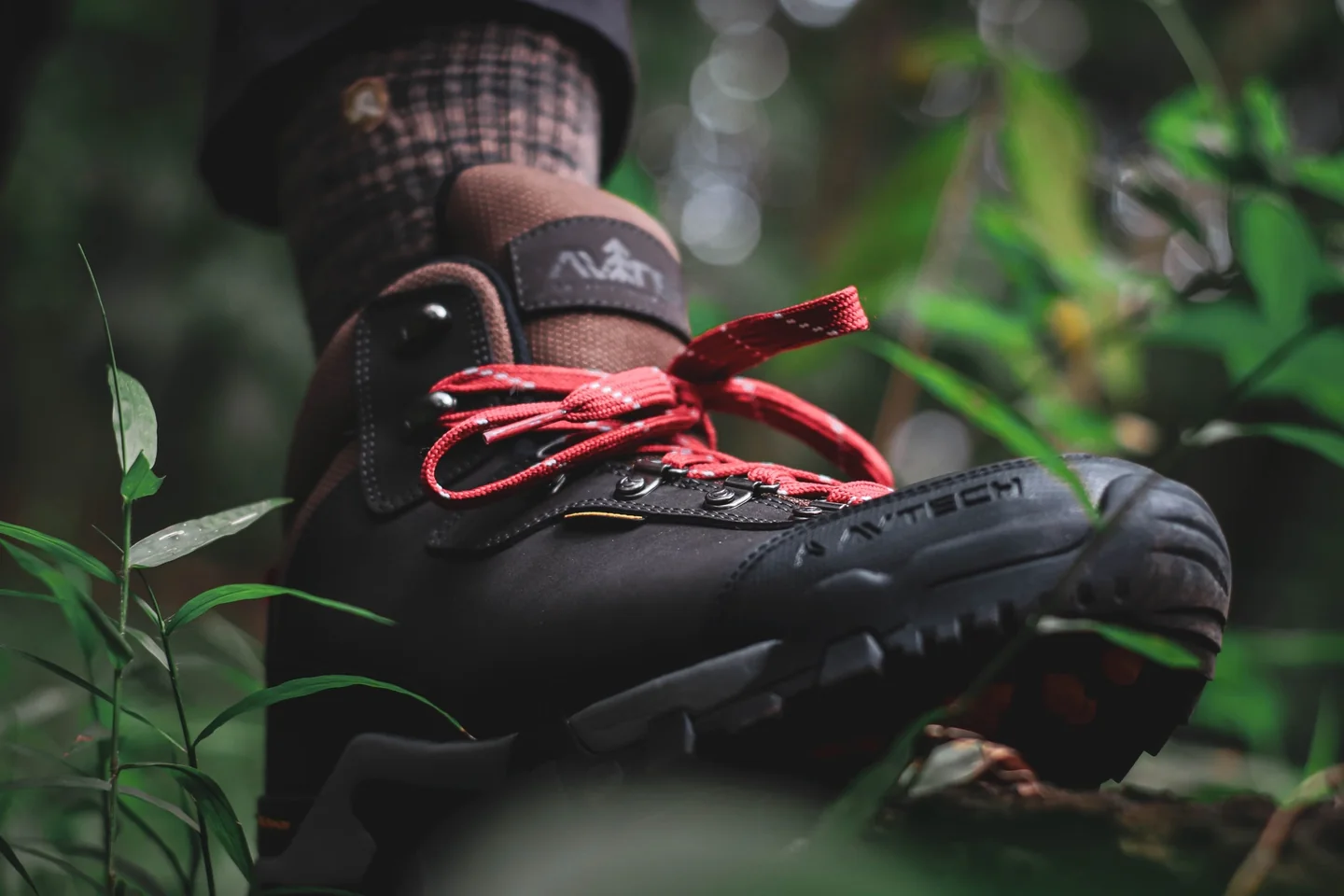
Footwear makes the difference between moving forward with a steady stride or ending each stage weighed down by blisters. On the Camino de Santiago, your feet endure day after day of effort, changing surfaces, and accumulated wear that leaves no room for improvisation. The right choice depends not only on the brand or the price, but also on the route, the season, the weight of the backpack, and the actual shape of the foot.
A good decision starts with understanding that there is no single ideal model. Some pilgrims feel comfortable in lightweight hiking shoes, others prefer mid-cut boots for stability and protection, and many get through hot stages with sandals during rest stretches. What matters is that the whole setup works like a precision piece: last, sole, ventilation, fit, and sock must all fit together without rubbing or internal movement.
What the Camino asks of your feet
The Camino mixes asphalt, compact earth, loose stone, mud, and sometimes long climbs. That variety means the foot does not always work in the same way. On soft ground the body absorbs impact better; on hard or paved stretches, on the other hand, each step rebounds more and punishes the sole. That is why footwear for a Jacobean route cannot be judged by the same standards as urban shoes for walking around the city.
Distance also matters. A pilgrim who walks 10 or 12 kilometers a day does not need the same level of protection as someone who strings together 25 or 30 over several days. As fatigue builds up, the foot swells, the way you step worsens, and small frictions appear that at first seem insignificant. That rubbing today usually becomes a blister tomorrow.
That is why it makes sense to think of footwear as a health tool rather than an accessory. The sole must protect, yes, but it must also flex naturally; the upper has to hold without crushing; and the inside needs enough room so the toes do not hit the front on downhills or when walking in the heat. On a long trek, true comfort is worth more than the feeling of extreme firmness that some models convey after just a few seconds of trying them on in a store.
Shoes, boots, or sandals: what fits best in each case
Hiking shoes are the most balanced option for most pilgrims in spring, summer, and part of autumn. They are lighter than boots, breathe better, and usually reduce the feeling of heaviness at the end of the day. They are especially useful on routes with plenty of asphalt or well-compacted paths, where the priority is not stiffness but efficiency and freshness.
Boots still make sense when the terrain is more technical, there is persistent mud, frequent rain, or extra ankle support is needed. However, a boot that is too heavy can become a burden when many hours of walking are repeated. More protection does not always mean better results: if the model is stiff, not very breathable, or too high for the type of stage planned, the cure can end up being worse than the problem.
Trekking sandals should not be understood as the main footwear for the Camino, but rather as a complement for resting the feet or for short trips after finishing the stage. On very hot days they can be welcome on the final stretch, but they do not replace a closed model when there is gravel, dust, moisture, or a risk of toe impact. Experience on long routes leaves a fairly simple lesson: the foot appreciates air, but it also needs protection when the terrain gets rough.
On dry, easy trails, a well-ventilated shoe usually offers the best balance between protection and lightness. On mountain passes, wet areas, or stages with rain in the forecast, the balance shifts toward models with a waterproof membrane or a more robust construction. The point is not to collect options, but to anticipate the environment in which you will actually walk.
Size is not chosen like for a short stroll
Buying your usual size is often a mistake when preparing for a multi-day walk. During prolonged effort the foot expands, especially in the heat, and downhill sections also punish the front of the shoe. If the toes travel too close to the toe box, you will get black toenails, pressure on the big toenail, and that hammering sensation that ruins an entire stage.
In practical terms, many specialists recommend leaving a margin of about half a centimeter to one centimeter between the longest toe and the front of the shoe, always checking the fit with the sock you will wear on the route. The last matters almost as much as the size. A larger size does not fix a narrow last; sometimes it only adds unstable looseness and side-to-side movement. The goal is for the foot to be held securely, but without pressure at the front or on the instep.
Trying the footwear on at the end of the day gives a more realistic reading than doing so in the morning, when the foot is still rested. It also helps to walk on a slope if the store or testing area allows it. On a downhill, any sizing flaw becomes obvious immediately. If the heel moves too much or the toe hits, the model is not working in the walker’s favor.
Pre-adaptation is just as important as the purchase. Going out for the first time in completely new footwear multiplies the risk of chafing. The sensible approach is to wear it for several weeks beforehand, on short outings and then longer walks, so the material softens and the foot and sole learn to coexist without surprises.
Which materials and soles stand up best to a long trek
The upper of the footwear must balance durability, ventilation, and flexibility. Lightweight technical fabrics work well when the heat is intense because they wick sweat better and reduce total weight. Leather, for its part, offers durability and some extra protection, although it can be heavier and take longer to dry if it gets wet. The waterproof membrane, very useful in rainy areas, has a cost: it can limit breathability on hot days.
The sole matters more than it seems. Good traction does not always mean an aggressive sole; on many Camino routes, enough grip and a base that cushions without turning the step into a soft bed is enough. Too much cushioning can reduce stability, and a sole that is excessively hard tires out the sole of the foot. The ideal is to find a middle ground that spreads out impact and maintains a feeling of control.
It is also worth looking at the sole pattern. On gravel, damp earth, or mud, a pattern with good grip reduces slips. By contrast, for stretches dominated by asphalt, a less pronounced sole usually rolls better and wears out the legs less. The Camino forces you to think in nuances, not universal formulas.
Another decisive detail is flexibility in the forefoot area. If the footwear bends naturally while walking, energy expenditure drops and the foot works in a way that is closer to its habitual movement. When the sole turns into a plank, the body pays for it, especially on long stages or at the end of several consecutive days.
Socks, chafing, and sweat management
The best footwear loses much of its value with an unsuitable sock. Cotton retains moisture, dries slowly, and encourages the skin to soak, which is exactly the opposite of what a long walk calls for. Technical fabrics, quick-drying synthetic blends, or combinations with merino wool work much better, as they regulate temperature more effectively and reduce that sticky damp feeling.
Seams are another critical point. A poorly placed ridge in the toe box or on the instep can create a small friction spot that, over the hours, becomes a blister. Preventing chafing starts at skin level: well-fitting socks, without folds and with the right size for the foot, keep the inside of the shoe from becoming an invisible trap.
On very hot stages, changing socks halfway through the day can be a simple solution to reduce moisture and friction. It is also useful to carry at least one dry spare pair in the backpack. There is no heroism in putting up with a soaked sock; that habit often ends up taking its toll in the form of macerated skin and persistent odor.
Those prone to blisters usually appreciate models with heel and forefoot reinforcements, or designs with a double layer meant to reduce internal friction. Even so, the key remains the same: the whole setup should not move inside the shoe. If the sock shifts, wrinkles, or gives too much, the risk of injury skyrockets.
The climate changes the kind of response your feet need
The footwear choice is not the same in June as it is in November. In warm months, ventilation matters more than waterproofing; in rainy periods or muddy sections, protection against water takes center stage. The Camino del Norte or the Primitivo, with more humidity and sudden weather changes, usually demand a little extra foresight compared with other drier, flatter routes.
Spring and autumn sit on a delicate boundary. In the morning it can be cool, at midday the sun can heat up strongly, and in the afternoon a fine rain may arrive that seems harmless until the path turns into a slippery ribbon. In that scenario, drying ability matters almost as much as waterproofing. A shoe soaked for several hours is far more punishing than a little water entry that is properly managed.
In summer, especially on routes with lots of asphalt or little shade, the heat inside the shoe can become unbearable if the model is too closed. The skin softens, friction increases, and sweat does the rest. In those cases, a lightweight and breathable design is usually more sensible than a heavily protected boot. In winter, by contrast, it is worth giving more weight to the barrier against cold, rain, and persistent mud.
There is no valid answer for all stages and all months. The sensible thing is to adapt the purchase to the time of year and the specific route. The perfect footwear for the French Way in May may not be the most suitable for a trek through Galicia in the middle of winter, and vice versa.
What mistakes leave a pilgrim out of the game
Wearing the footwear for the first time on day one is one of the most common mistakes. The material needs to give, and the foot needs to check that there are no hidden pressure points. Without that adjustment period, any seam, poorly placed tongue, or stiff area becomes magnified after just a few hours. The result usually comes in the form of a blister, a damaged toenail, or pain in the arch.
Another common mistake is choosing based on aesthetics or sports habit rather than the actual hike the Camino demands. Very soft running shoes, for example, may be fine for jogging, but they do not always provide the lateral support or protection needed for long stretches with a backpack. Walking for several hours is not running slowly; the motion changes, the load is distributed differently, and fatigue builds up in different areas.
People also go wrong by underestimating the role of weight. A pair of very heavy boots may seem like a guarantee, but over dozens of kilometers every gram is noticeable. The body compensates by lifting the hips more, using more energy, and loading the calves more heavily. That explains why many pilgrims end up valuing lightness as much as protection.
And moisture should not be forgotten. Walking with the inside of the shoe wet for many hours turns friction into a bigger problem. Drying the gear well at night, airing it out, and avoiding direct heat sources like radiators or powerful hair dryers helps preserve materials and arrive the next day with less discomfort. Dry footwear ages better and protects more.
How footwear behaves on a long day
The first hour is deceptive. A model may seem perfect when leaving the hostel and yet show flaws by mid-morning. The foot swells, the pace changes, sweat appears, and the backpack starts reminding you that every kilo counts. That is when you find out whether the fit was real or only apparent.
On long days, comfort is measured in small details: the heel should not slip, the toes should not hit on descents, the tongue must not create pressure on the instep, and the base of the shoe has to keep the foot stable even when the stride becomes clumsy from fatigue. The worst feeling is not hardness; it is constant doubt with every step.
Rest at the end of the day is also part of the strategy. Changing into more ventilated footwear, checking the sole of the foot, drying the inside, and letting the material breathe reduces the accumulated burden a lot. The relationship between foot and shoe is, after all, a daily coexistence. If that coexistence is cared for, the walk gains continuity; if neglected, each stage becomes a negotiation with pain.
That is why the main criterion is almost never the manufacturer’s promise or the generic recommendation that works for everyone. The best footwear is the one that disappears while you walk: it does not pinch, does not rub, does not weigh too much, and does not force you to think about it every kilometer.
A prudent choice is worth more than a spectacular model
Choosing the right footwear for the Camino de Santiago is a practical decision, not an aesthetic one. The right model depends on the terrain, the season, how long you plan to walk each day, and each person’s gait. Sometimes a simple, well-fitting hiking shoe works better than an imposing boot; other times, a sturdier sole provides just the stability that was missing on a hard or wet stretch.
The lesson from experienced pilgrims is fairly consistent: try beforehand, leave room in the size, take care with the sock, and do not underestimate the weight of the gear. The feet carry the story of the journey. If they arrive intact, the route is enjoyed; if not, everything else loses its shine. On such a long trek, comfort is not a luxury. It is the difference between accumulating stages and accumulating injuries.
In the end, the best criterion is almost always the most sober one: footwear that protects without constricting, that breathes without leaving the foot exposed, and that lets you walk for hours without drama or ceremony. On the Camino, the prize is not wearing the most eye-catching shoe, but moving forward with the calm of someone who barely notices it is there.



How to prevent thigh chafing: causes and real solutions

Women’s running windbreakers: seven jackets and how to choose

Do more workouts get rid of soreness? A guide for runners

Jaén Half Marathon 2026: Record 3,800 Runners Registered

Men’s short running tights: how to choose the right pair

World Triathlon confirms data breach involving medical data

Izan Edo targets podium at Miyazaki World Cup

María Pérez ranks ninth in World Athletics’ 2026 top ten

Dos Santos, Duplantis and Sawe: World Athlete of the Year finalists

San Silvestre Vallecana 2026: 42,000 places, prices and start times

 Races3 months ago
Valencia Half Marathon 2027: date and registration

 Races3 months ago
Valencia Marathon 2026: entry, ballot and course

 Reviews and Comparisons4 months ago
Asics Gel-Roadmiles 3 for men: review and current price

 Reviews and Comparisons4 months ago
Asics Gel Sonoma 8 Gore-Tex: complete analysis for trail and rain

 Sneakers3 months ago
Saucony Endorphin Pro 4: full review and verdict

 News5 months ago
Strava API 2026: what changes for clubs, challenges and runner apps?

 Reviews and Comparisons5 months ago
Nike Alphafly 3: opinions, sensations, and real key points

 Reviews and Comparisons4 months ago
Under Armour running shoes review 2025-2026: models and key features

 Sports Equipment4 months ago
Shoe sizes in cm: a clear guide to getting the right fit for your footwear

 Sneakers3 months ago
Skechers GO RUN Consistent 2.0 analysis: comfort and limits

 News5 months ago
Valencia Marathon 2026 route: key tips to train and run better

 Sneakers4 months ago
Adidas Adizero Boston 13 for men: review and verdict