Health and Nutrition
Pain in the ball of the foot: causes, symptoms, and relief
Forefoot discomfort, common causes, warning signs, and useful measures to stop it before it limits walking.

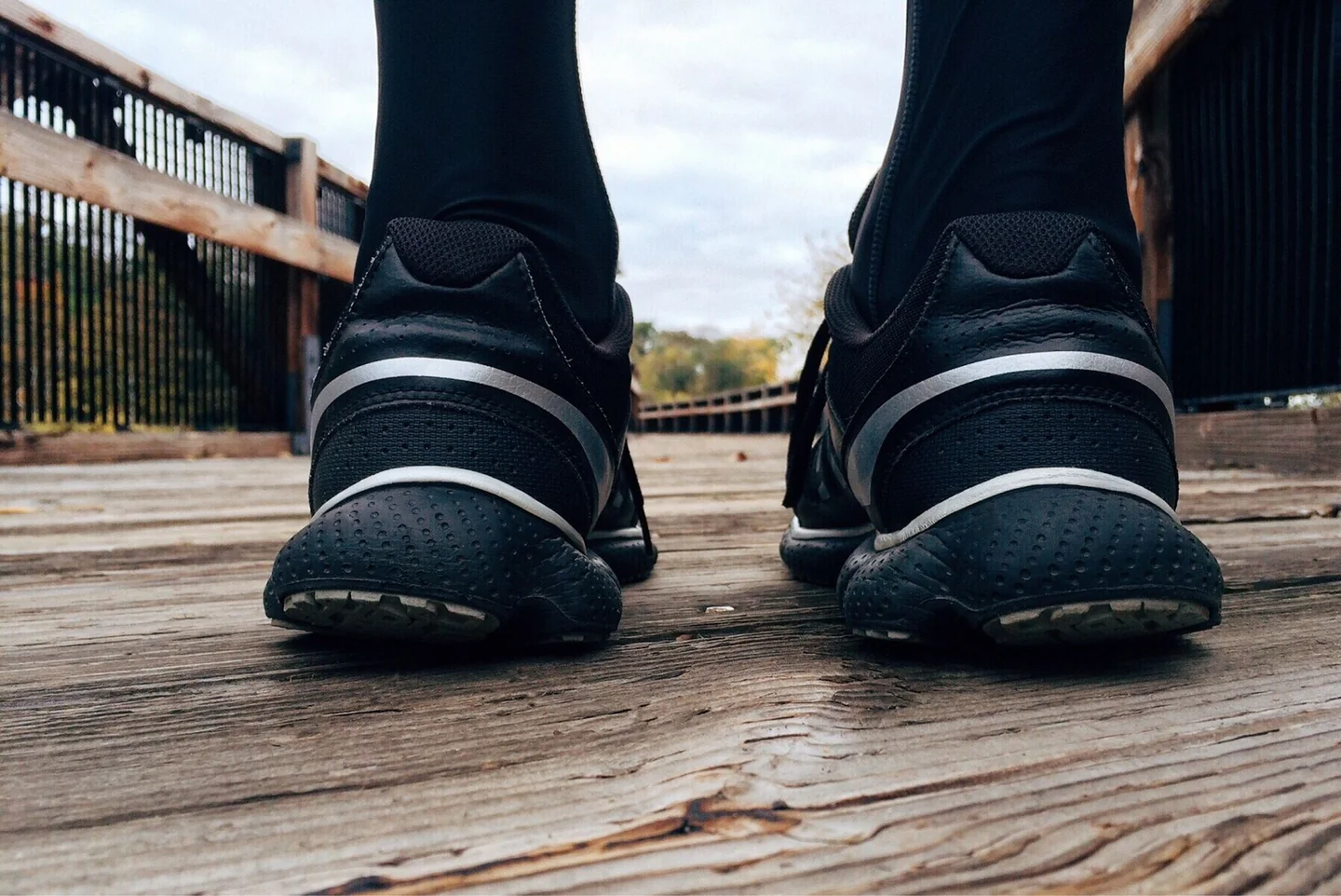
Pain in the foot pad is usually felt just beneath the metatarsals, in the area that takes the impact when walking, running, or jumping. It is not a minor discomfort: that small support surface acts as a natural shock absorber and, when it becomes inflamed, worn down, or loses its ability to distribute load, every step can feel like a stone under the skin.
In runners, that pressure often appears after increasing mileage, wearing unsuitable new shoes, or accumulating sessions on hard asphalt. It can also hide metatarsalgia, an overload of the metatarsal heads, or an injury to the soft tissues of the forefoot ranging from a simple persistent rub to a small tear in the plantar fat pad.
What happens in the forefoot support area
The plantar fat pad is not just any filler. It is made up of a resistant epidermis, a dermis with collagen fibers, and subcutaneous tissue with fatty compartments that distribute pressure like air chambers. That architecture is designed to absorb impact, provide traction, and protect deeper structures such as tendons, joints, and small bones.
When that area takes too much punishment, or receives it in a very specific spot, the tissue becomes irritated. In running, that happens easily if the stride lands too far forward, if technique shifts the load toward the forefoot, or if the footwear has little cushioning in the front area. The result is a burning, stabbing, or sharp impact sensation under the base of the toes, often more intense at toe-off.
The biomechanical key lies in how weight is distributed. The foot does not work like a rigid piece, but as a set of levers and springs. If one of those springs fails, the support shifts and the fat pad ends up acting as a shield for a surface that is not designed for excessive, repeated loading.
The most common causes in runners and active people
The most frequent cause is usually mechanical overload. It can appear from running for long periods, increasing intensity too quickly, repeating hills or intervals, or using shoes that leave the forefoot too exposed. In some cases, the pain comes from pure metatarsalgia, in others from localized inflammation of the plantar fat, and in others from a combination of both factors.
Foot shape also plays a role. A very high arch concentrates pressure in specific spots; a flatter foot may distribute it poorly because of excess pronation; and limited big-toe motion forces compensation through the rest of the forefoot. That imbalance, small in appearance, ends up leaving the same mark as a poorly aligned wheel on the road: wear where it should not be.
There are less obvious triggers. Excess body weight, impact sessions on hard surfaces, tight calves and soleus muscles, calluses on the forefoot, or a digital deformity can all raise pressure right where it hurts. In veteran runners, moreover, the fat pad loses part of its elasticity over time, and that loss makes discomfort appear sooner and take longer to settle.
How it feels and what signs help distinguish it
Pain in the foot pad is usually described as a diffuse, stabbing, or crushing discomfort under the front part of the sole. It often worsens when walking barefoot on hard floors, running at a brisk pace, or rising onto the toes. In some cases, the foot seems to ask for rest after a few minutes of activity and remains tender to the touch even after removing the shoe.
When overload has been present for some time, the skin may respond with thickening, hyperkeratosis, or small calluses. That does not solve the problem; on the contrary, it usually indicates that pressure has been repeated for weeks or months. If a very localized pain appears under a specific metatarsal head, mechanical metatarsalgia, sesamoiditis, or a stress injury should also be considered.
Timing matters a lot. Pain that improves within one or two days after reducing load usually points to mild irritation. If it lasts more than two or three weeks, always returns when training is resumed, or prevents normal weight-bearing, it is worth assessing a more serious structural cause, from a stress fracture to a plantar plate injury.
What is often behind it in a runner
In people who run regularly, the forefoot support area bears very high forces. During running, the foot can تحمل several times body weight, and that repetition turns small faults into persistent discomfort. A shoe change, a sudden increase in volume, or returning too quickly after a break can be enough to upset load distribution.
Technique also matters. Someone who lands very far forward, especially at medium and fast paces, loads the forefoot more. That is not necessarily a problem on its own, but it is when it combines with a foot structure that is already sensitive. In these cases, the fat pad acts like the grass on a heavily trodden field: it cushions, yes, but each step takes away a little more functional thickness.
Clinical experience in sports podiatry has shown that metatarsal offloading, relief insoles, and some sock designs with biomechanical elements can reduce pressure in the central forefoot. Recent studies have observed improvement in pain and function with integrated offloading systems, although the evidence remains stronger for pressure control than for promising uniform results in every case.
When it may be more than simple overload
Not every pain under the forefoot is due to irritation of the plantar fat. Sometimes the source lies in the metatarsophalangeal joint, the sesamoids, a compressed nerve, or a stress fracture. If the discomfort appears suddenly, there is notable swelling, or you cannot take four steps without limping, the situation deserves medical evaluation.
Signs that require closer attention include night pain, visible deformity, marked redness, fever, numbness, loss of strength, or an exquisitely painful spot over the bone. In runners, the persistence of load can mask a small crack that at first seems harmless and then ends up interrupting weeks of training.
It is also worth suspecting another cause if the pain changes a lot depending on footwear. An inflamed fat pad usually hurts with almost anything, but pressure or friction injuries can worsen very clearly with a narrow toe box or a sole that is too stiff. That pattern helps guide the problem, although it does not replace a proper examination.
What the specialist usually does when assessing this problem
The examination focuses on locating the exact painful point and observing how the load is distributed when walking, rising onto the toes, or standing on one foot. The metatarsal heads, the soft area of the forefoot, and toe mobility are palpated. The distinction between bone pain and soft-tissue pain completely changes the direction of the case.
In some patients, it is enough to review foot shape, shoe wear, and the distribution of plantar callus. In others, an X-ray is needed to rule out fractures, deformities, or indirect signs of overload. Ultrasound can help assess the plantar fat, the plantar plate, or irritated soft tissues, and MRI is reserved for persistent or unclear cases.
The diagnosis does not depend only on seeing a nice image or a normal test. Sometimes the problem lies in the sum of small details: a less mobile toe, an altered arch, a poorly fitted insole, a sudden increase in mileage. Clinical assessment, in the foot, still carries a great deal of weight.
Measures that usually relieve the discomfort
The first sensible measure is to reduce load for a few days. That does not mean absolute immobilization, but rather cutting back on what triggers the pain: fast runs, hills, jumps, or long walks on hard pavement. At the same time, it usually helps to use shoes with good forefoot cushioning and a fit that does not compress the front of the foot.
Local offloading devices, whether metatarsal pads, plantar supports, or elements built into the sock fabric itself, aim for the same thing: shift pressure away from the irritated area and distribute it better. In mechanical metatarsalgia, that redistribution can make the difference between continuing to accumulate discomfort or regaining a more comfortable gait.
Ice can be useful in acute phases, especially if there is a feeling of inflammation. Applied for 10 to 15 minutes, with protection between the skin and the cold source, it helps modulate pain. Relative rest, cushioning, and offloading form the most reasonable triad in mild or moderate discomfort, before considering more complex interventions.
Common mistakes that make the condition worse
One of the most common mistakes is to keep running with the idea that the pain will go away on its own. Sometimes it does, but often it does not. The area keeps taking pressure, becomes more inflamed, and the problem becomes chronic. The foot is patient, but not infinite; it stores the memory of every impact, like a sheet folded over and over in the same place.
Another very common mistake is using worn-out shoes or shoes that are too soft in the forefoot, thinking they provide more cushioning. That is not always true. If the forefoot loses stability, pressure can concentrate over a smaller surface and increase discomfort. Nor is it wise to make a drastic change in shoe geometry just when the tissue is already sensitive.
Hard insoles or improvised supports can worsen some cases if they are used without judgment. In forefoot problems, the goal is not to make the support harder, but to redistribute it precisely. What brings relief for one foot may become a new source of pressure for another.
The role of foot type and age
With age, the plantar fat pad loses some of its thickness and its ability to deform. That explains why forefoot pain is very common in active older people, especially women, and why it can appear after relatively short periods of walking. The cushioning tissue no longer responds the same way, much like an aged sole that has lost its rubber.
Arch shape also influences it. A cavus foot tends to concentrate a lot of load on the heel and forefoot; a flat foot can alter the support sequence and favor sustained pronation; and a stiff big toe forces the push-off to be transferred to the central metatarsals. The consequence is almost always the same: excessive pressure in the front part.
In endurance runners and people who spend a lot of time standing, the problem usually combines age, load volume, and anatomy. That is why two people covering the same distance can end up with opposite sensations. The foot, in the end, does not understand generic charts; it understands force distribution, and each person brings their own.
Relationship with other forefoot conditions
Pain in the foot pad can coexist with corns, claw toes, bunions, plantar plate irritation, or Morton’s neuroma. Sometimes these alterations are not the main cause, but they are the reason pressure concentrates in a specific spot. A small deformity can act like a wedge that changes the weight distribution of the entire forefoot.
It should also be distinguished from plantar fasciitis, which is usually felt more in the arch and heel, and from calcaneal or navicular injuries, where the pain is located farther back. The location of the symptom gives a lot of guidance, although not always clearly. The foot speaks in a broken voice: sometimes it mixes several discomforts into one sensation.
In some cases, the skin on the forefoot becomes thicker as a defense mechanism. That hyperkeratosis is not the problem itself, but a response to rubbing and pressure. If the thickening is removed without correcting the mechanics, the body will make it again. It is a misguided repair, like patching a leak without fixing the pipe.
What role footwear and the running surface play
The terrain changes the load almost as much as the foot itself. Running on asphalt is harsher than doing so on compact ground or more deformable surfaces, although the latter also carry risks if they require too much stabilization. There is no ideal combination, but there are clearly worse scenarios: hard pavement, worn-out shoes, and fast intervals in the same week.
Footwear should protect without constraining. A forefoot that is too narrow compresses the toes and encourages rubbing; a minimal sole in someone sensitive to impact can trigger pain; and an excessively soft last can reduce support control. Individual tolerance matters as much as the product’s technical specs.
In recreational sport, the most costly mistake is to rely on a single solution for everything. Shoes help, yes, but the training pattern, recovery, and volume management matter just as much or more. The foot is the last link in a long chain; if one link fails, the fat pad ends up paying the bill.
Signs that mean you should not ignore the problem
If the pain makes you limp, prevents you from completing a short session, or returns as soon as normal walking is resumed, this is no longer a simple annoyance. The persistence of discomfort, the appearance of swelling, or the sensation of walking on a coin are clues that the load is not being tolerated well.
Changes in color, local warmth, and pain when pressing a very exact point should also be monitored. When the symptom becomes focal, hard, and repetitive, it is worth ruling out bone injury or joint involvement. In runners, letting weeks pass usually does not improve the prognosis; it only prolongs the process and complicates the return.
The absence of warning signs does not guarantee a benign condition. Some stress fractures, certain plantar plate inflammations, or injuries to the forefoot fat pad begin subtly and present as a simple discomfort at the end of training. That is why the context is as important as the pain itself.
A small problem on the outside, demanding on the inside
The foot pad carries out a silent, constant task. Every step, every change of pace, every braking movement demands that it absorb energy that is rarely noticed until it starts to fail. Then everything becomes slower, stiffer, almost heavier, as if the ground had risen a few millimeters overnight.
In running, that discomfort is often the first sign of a broader imbalance: too much load, too little recovery, unsuitable footwear, or a foot that no longer distributes impact well. Listening to that early warning makes the difference between a passing irritation and an injury that forces weeks off.
That is why pain beneath the soft part of the forefoot should not be treated as a minor detail. Behind it there may be simple overload or an injury that needs evaluation. In both cases, the body’s message is clear: the support area has stopped cushioning as before and needs the load to be reorganized more intelligently.
Medical reference: Pain in the ball of the foot, NHS.



How to prevent thigh chafing: causes and real solutions

Women’s running windbreakers: seven jackets and how to choose

Do more workouts get rid of soreness? A guide for runners

Jaén Half Marathon 2026: Record 3,800 Runners Registered

Men’s short running tights: how to choose the right pair

World Triathlon confirms data breach involving medical data

Izan Edo targets podium at Miyazaki World Cup

María Pérez ranks ninth in World Athletics’ 2026 top ten

Dos Santos, Duplantis and Sawe: World Athlete of the Year finalists

San Silvestre Vallecana 2026: 42,000 places, prices and start times

 Races4 months ago
Valencia Half Marathon 2027: date and registration

 Races4 months ago
Valencia Marathon 2026: entry, ballot and course

 Reviews and Comparisons4 months ago
Asics Gel-Roadmiles 3 for men: review and current price

 Reviews and Comparisons4 months ago
Asics Gel Sonoma 8 Gore-Tex: complete analysis for trail and rain

 Sneakers4 months ago
Saucony Endorphin Pro 4: full review and verdict

 News5 months ago
Strava API 2026: what changes for clubs, challenges and runner apps?

 Reviews and Comparisons5 months ago
Nike Alphafly 3: opinions, sensations, and real key points

 Reviews and Comparisons4 months ago
Under Armour running shoes review 2025-2026: models and key features

 Sports Equipment4 months ago
Shoe sizes in cm: a clear guide to getting the right fit for your footwear

 Sneakers3 months ago
Skechers GO RUN Consistent 2.0 analysis: comfort and limits

 News5 months ago
Valencia Marathon 2026 route: key tips to train and run better

 Sneakers4 months ago
Adidas Adizero Boston 13 for men: review and verdict