Health and Nutrition
Heel pain when running: causes, signs, and treatment
Keys to understand why heel pain appears when running and how to relieve it without worsening the injury.

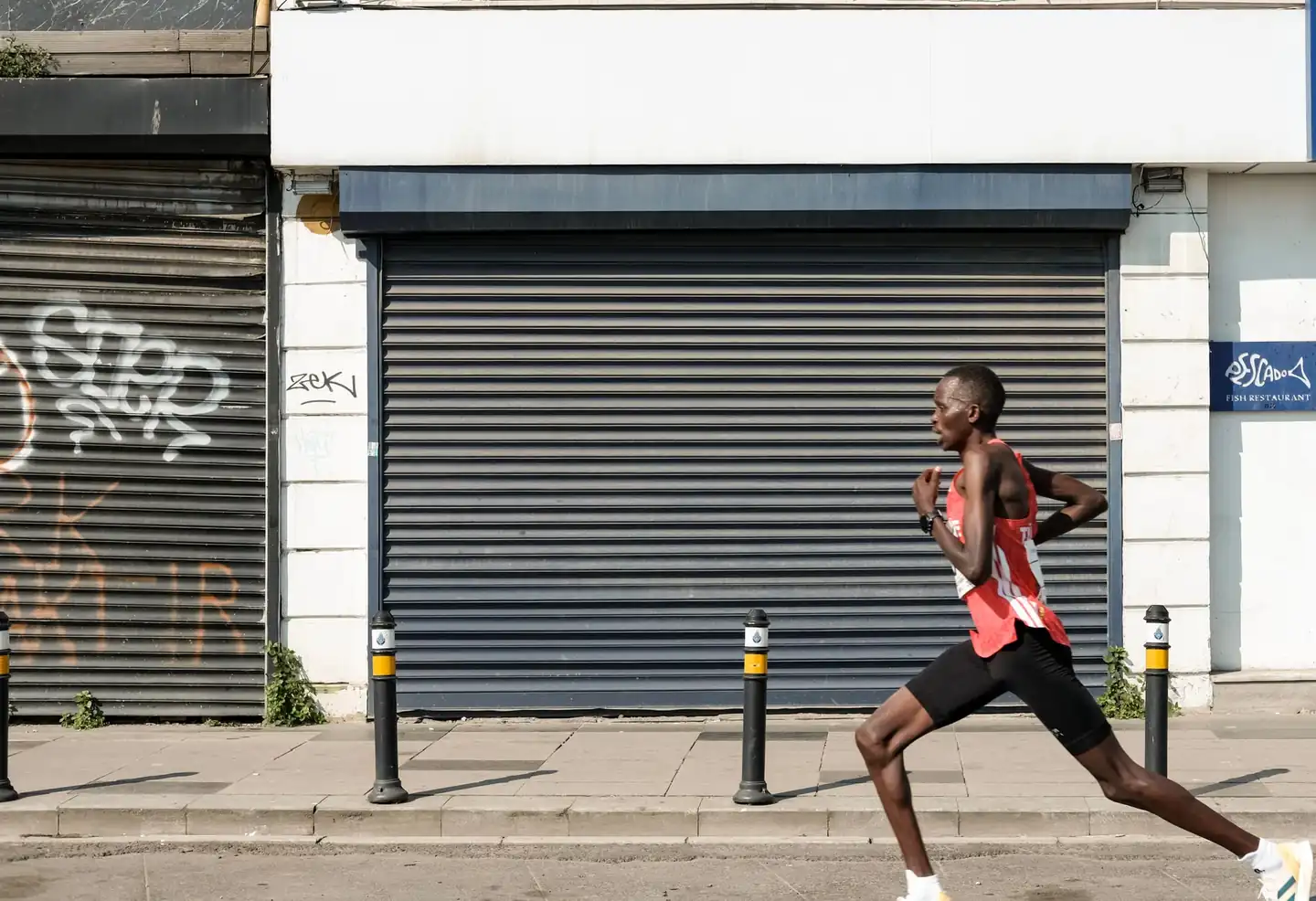
Heel pain is one of the most common discomforts among runners and, at the same time, one of the most misunderstood. It does not always come from the same injury or have the same origin: sometimes it starts in the plantar fascia, other times in the Achilles tendon, in an inflamed bursa, or even in an irritated nerve. That variety explains why two runners with similar symptoms may need different approaches.
In practice, the key point is usually not just where it hurts, but when the pain appears, how it feels, and what triggers it. If it hurts on the first steps in the morning, if it appears when speeding up, if it increases when going uphill, or if it is concentrated behind the heel, the picture changes. Understanding that difference is the basis for not treating all cases as if they were the same.
Why the heel becomes a sensitive point
The heel bears a high load with every stride. It is a small structure, but it works like a pillar that absorbs impact, transmits forces, and stabilizes foot strike as the body moves forward. In runners, that area can suffer from too many miles, sudden changes in volume or intensity, inefficient technique, or footwear that no longer matches the real demands of training.
The way work is distributed between the foot, calf, soleus, and hip also plays a role. When one of those gears fails, the body compensates. And those compensations usually end up in the same place as always: the heel, which ends up paying a silent bill, accumulated step by step, like a rope that tightens until it brushes against its limit.
The most common causes in runners
Plantar fasciopathy remains one of the most frequent causes. It is an irritation of the tissue that supports the arch of the foot, not a simple, passing inflammation as was thought years ago. It usually causes a very typical stabbing pain when getting up or when starting to walk again after sitting, because the fascia behaves like a band that has been stiff for a while and complains when weight is put back on it.
The Achilles tendon is also heavily involved, especially when the pain is located at the back of the heel or slightly above it. Here the problem may be tendinopathy, tendon overload, or, in some cases, irritation in the area where it inserts into the bone. It often worsens with hills, intervals, pace changes, or sessions in very flat shoes.
Another possibility is retrocalcaneal bursitis, an inflammation of the small sac that cushions friction between the tendon and the bone. The so-called Haglund syndrome can also appear, when the back of the heel repeatedly rubs against the shoe counter and the area becomes irritated. And although it is mentioned less often, tarsal tunnel syndrome or certain nerve compressions can cause a burning, more diffuse pain, accompanied by tingling or numbness.
How to tell one problem from another without getting lost in labels
Location gives many clues. If the pain is concentrated on the sole side and the first support of the day is especially uncomfortable, plantar fascia issues become more likely in the diagnosis. If the sharp pain appears behind the heel and becomes more noticeable when running fast or going uphill, the Achilles tendon is usually closer to the cause. When the discomfort is superficial, bothered by footwear, and accompanied by rubbing or pressure in the back area, it is worth thinking about the bursa or the shape of the bone.
The quality of the pain also provides guidance. Mechanical pain is usually more related to load and improves or worsens depending on effort. By contrast, a burning sensation, strange cramping, or deep cramping may suggest a nerve component. That difference matters because not everything is fixed by stretching more or resting for a few days. Sometimes it is necessary to review mechanics, footwear, ankle mobility, and training patterns, not just the visible symptom.
There is another useful detail: the duration of the issue. A brief episode after a long run or a change of shoes may respond to a temporary overload. If the pain has lasted for weeks or months, comes and goes, and activates earlier each time, the tissue is signaling that the load is no longer tolerated in the same way. At that point, the margin for improvisation shrinks a lot.
What role do load, footwear, and technique play
In running, most discomfort does not appear by chance. It arises when the load exceeds the tissue’s ability to adapt. That can happen by running more days at once, adding hills, starting intervals after a break, or returning to pavement without enough transition. The body tolerates a lot, but it does not tolerate everything at the same time.
Footwear also matters more than it seems. A very worn model, one that is too stiff, or one with a very low drop for someone who is not used to it can overload the back of the foot or the plantar fascia. There is no universally good shoe, because the foot is not a standard part. What unloads one runner may irritate another.
Technique, in the broad sense, is not about running with a perfect textbook posture, but about moving the body efficiently enough so that no structure takes all the pressure. A very short, fast stride, overloaded calves, or lack of hip strength can shift work to the foot and heel. That is why the problem is rarely only local; many times it starts higher up and shows up lower down.
When it makes sense to stop and look at the full picture
If the pain makes you limp, appears at rest, clearly worsens week after week, or comes with swelling, redness, or a feeling of heat, it is not a good idea to keep pushing. A very sharp discomfort after a specific movement, a jump, or a twist is also not a good sign. Although the origin is often benign, the heel can also hurt because of a more serious injury, such as a stress fracture or significant nerve irritation.
Clinical assessment should look for the real origin, not the quick label. Sometimes imaging tests are needed, especially if the pain does not fit a typical overload pattern or if the runner does not improve with reasonable measures. Ultrasound, X-ray, or, in selected cases, MRI can help refine the diagnosis. The important thing is not to confuse persistence with normality: just because a discomfort is common does not mean it should be ignored.
What usually helps in the initial phase
When pain appears because of overload, the first measure is usually to reduce the mechanical stress. That does not always mean stopping completely, but rather adjusting volume, intensity, elevation, and surface. Sometimes it is enough to remove intervals for a few days, shorten runs, or replace one session with a less demanding one so the tissue stops receiving the same repeated punishment.
Pain management may include ice in the early stages if there is clear irritation, although not as the only solution or as a mandatory ritual. It also helps to review footwear, avoid going barefoot if the fascia is very sensitive, and control the movements that trigger symptoms most, such as aggressive stretches or sessions on hills too soon. In cases with morning stiffness, a night splint may be useful in some cases, especially when the pattern resembles plantar fasciopathy.
Physical therapy usually focuses on restoring load tolerance with a logical progression. That includes foot and ankle work, calf and soleus strengthening, control of walking mechanics, and, if needed, balance and stability exercises. The goal is not to put the foot in a bubble, but to restore its ability to absorb impact without complaining at every step.
When the problem is in the Achilles tendon
Pain in the back of the heel deserves its own section because the Achilles tendon responds poorly to sudden changes. It is a powerful structure, designed to store and release energy, but also very sensitive to the combination of speed, volume, and stiffness. If a runner increases the load too much in a short time, the tendon can go from quiet to rebellious very quickly.
In these cases, the useful work is usually progressive strengthening, not prolonged rest as the only response. Load exercises, properly dosed, help the tendon tolerate effort again. Treatment changes depending on the exact area affected, because a mid-portion tendinopathy is not the same as an insertional one, which is closer to the heel bone and often more sensitive to shoe rubbing.
It is also wise to monitor hills, pace changes, and shoes that are too minimalist if there has been no prior adaptation. The tendon, like a violin string, needs tension to function, but not too much. When it is asked to do more than it can handle, the sound becomes harsh.
The plantar fascia and its relationship with foot stiffness
The plantar fascia acts like a tense bridge under the foot. If the arch is under too much traction or if the intrinsic foot muscles do not support it well, the tissue becomes irritated. The classic complaint is that stabbing pain when starting to walk after sleep or after being still for a while. The body gets up, the foot bears weight, and the fascia protests as if the tissue had spent the night stiff and without oil.
In this picture, working on foot strength, ankle mobility, and load control helps a great deal. Gentle stretches can ease symptoms, but they are rarely enough on their own. Nor is it wise to turn them into a daily battle against pain. If the tissue is irritated, the idea is not to stretch it to the limit, but to restore its responsiveness with graded stimuli.
Runners with flat feet or very high arches are not doomed, but they do need to be more careful about force distribution. The same goes for those who frequently change shoes or go from a sedentary life to running several days a week. The foot does not forget as quickly as the schedule.
What not to do when the pain starts
Ignoring the symptom and continuing to add mileage usually makes the problem worse. It is also a bad idea to try to compensate with more intense stretching, because an overloaded tissue does not always need more tension, but rather better dosage. Another common trap is to keep running in the hope that the pain will disappear once warmed up. Sometimes that happens; many other times, the discomfort only hides for a few minutes and returns more strongly once things cool down.
It is also not very useful to obsess over a single culprit. Heel pain is rarely explained by just one detail. There may be inappropriate footwear, yes, but also a hard week of work, stiff calves, weak hips, overly aggressive technique, or insufficient recovery. In the body, causes usually add up; they do not compete.
That is why the most sensible solution combines load adjustment, clinical evaluation, and patience. Improvement is not always linear. There are good days, regular days, and some worse ones. That does not invalidate the process. What matters is that the heel gradually tolerates more without needing to pay for each session with pain.
When pain becomes chronic and the body learns to protect itself
If the discomfort lasts a long time, the nervous system also gets involved. Pain stops being only a sign of irritated tissue and can become a more complex response, with sensitization, fear of loading, and changes in the way of walking. At that point, the runner is not only avoiding running; often they avoid loading the foot even in everyday activities.
When that happens, recovery usually requires a broader approach. It is not enough to look at the exact point where it hurts. Trust in loading has to be rebuilt, foot strength restored, tissue endurance improved, and impact gradually reintroduced. The body, after all, learns through repetition. If for weeks we teach it that the heel is only there to protect itself, it will later be harder to convince it otherwise.
The good news is that many cases improve with well-chosen measures and consistency. Even when the pain does not disappear overnight, it usually decreases clearly when the load is corrected and the physical base is worked on in an organized way. In running, as in almost everything worthwhile, haste does more harm than good.
A common symptom that requires careful reading
The heel is a small area with enormous responsibility. That is why its pain deserves more than a generic piece of advice or a couple of rest days. Distinguishing whether the problem comes from the fascia, the tendon, a bursa, or a nerve changes the way the discomfort is addressed and avoids blind treatment.
Useful interpretation does not stop at the name of the injury. It looks at accumulated load, the type of runner, footwear, ankle stiffness, leg strength, and the moment when symptoms appear. Only then does the pain stop being an irritating mystery and become a sign interpreted with criteria. In a sport as repetitive as running, that difference can mark the line between a passing discomfort and an injury that lasts longer than necessary.
Medical reference: Heel pain, NHS.



How to prevent thigh chafing: causes and real solutions

Women’s running windbreakers: seven jackets and how to choose

Do more workouts get rid of soreness? A guide for runners

Jaén Half Marathon 2026: Record 3,800 Runners Registered

Men’s short running tights: how to choose the right pair

World Triathlon confirms data breach involving medical data

Izan Edo targets podium at Miyazaki World Cup

María Pérez ranks ninth in World Athletics’ 2026 top ten

Dos Santos, Duplantis and Sawe: World Athlete of the Year finalists

San Silvestre Vallecana 2026: 42,000 places, prices and start times

 Races3 months ago
Valencia Half Marathon 2027: date and registration

 Races3 months ago
Valencia Marathon 2026: entry, ballot and course

 Reviews and Comparisons4 months ago
Asics Gel-Roadmiles 3 for men: review and current price

 Reviews and Comparisons4 months ago
Asics Gel Sonoma 8 Gore-Tex: complete analysis for trail and rain

 Sneakers3 months ago
Saucony Endorphin Pro 4: full review and verdict

 News5 months ago
Strava API 2026: what changes for clubs, challenges and runner apps?

 Reviews and Comparisons5 months ago
Nike Alphafly 3: opinions, sensations, and real key points

 Reviews and Comparisons4 months ago
Under Armour running shoes review 2025-2026: models and key features

 Sports Equipment4 months ago
Shoe sizes in cm: a clear guide to getting the right fit for your footwear

 Sneakers3 months ago
Skechers GO RUN Consistent 2.0 analysis: comfort and limits

 News5 months ago
Valencia Marathon 2026 route: key tips to train and run better

 Sneakers4 months ago
Adidas Adizero Boston 13 for men: review and verdict