Health and Nutrition
Pain in the sole of the foot when stepping: causes and key warning signs
Discomfort when putting weight on the foot can come from overuse, plantar fasciitis, or hidden injuries. These are the key signs.

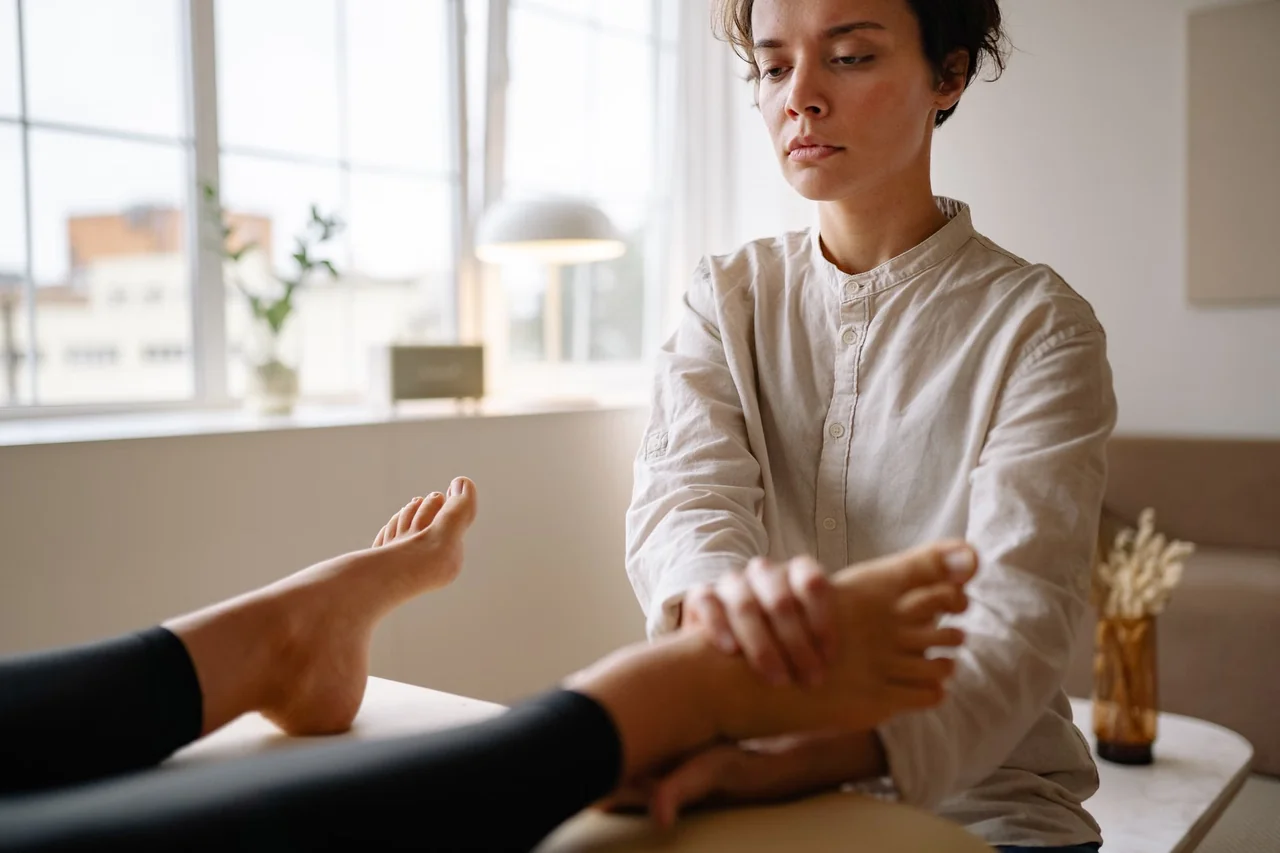
Taking the first step and noticing a sharp pain under the foot changes the way you walk in seconds. What seems like a minor annoyance can turn every trip into a sequence of cautious steps, as if the ground had become too hard. At the root of that pain, very different causes often coexist, from simple overuse to plantar fasciitis, metatarsalgia, or a more serious injury that requires medical evaluation.
The plantar area bears an enormous load with every stride. The arch, the heel, the metatarsal pad, and the tendons work like a suspension network. When one part fails, pressure is distributed poorly and pain appears. In runners, regular walkers, or people who spend many hours standing, that warning usually starts as a twinge when getting up, when walking again after resting, or at the end of a demanding workout.
What is usually behind discomfort when bearing weight
The most common cause is plantar fasciitis, an overuse problem in the fascia, the band of tissue that runs from the heel to the toes and helps maintain the arch. There is not always pure inflammation; in many cases there is mechanical irritation of the tissue, with micro-injuries and loss of elasticity. The result is very characteristic: pain in the first steps of the morning, stiffness after sitting, and worsening when impacts build up.
But not everything is explained by that label. Plantar pain can also come from a heel spur, metatarsalgia, Achilles or posterior tibial tendinopathy, a stress fracture, or even nerve entrapment. The exact location of the pain gives a lot of clues: if it is closer to the heel, the arch, or the front of the foot, the list of suspects changes. Intensity does not tell the whole story either; a dull ache that keeps growing can be as important as a sharp stab.
In active people, the cause is usually a combination of factors. Too much impact, poorly cushioned footwear, a sudden increase in training volume, and tight calves or soleus muscles place extra work on the fascia and the rest of the plantar structures. For people who work standing up, hard surfaces, long shifts, and a lack of breaks do the rest. The foot, quite literally, ends up paying the bill.
Signs that help distinguish one cause from another
Plantar fasciitis usually causes a very recognizable pain: the first steps hurt more, then there is a false improvement, and if you push on, the discomfort returns. It is typical to notice tightness in the heel or the inner edge of the arch. Sometimes the pain runs along the sole like a taut string. When the case progresses, walking barefoot at home becomes uncomfortable and walking on hard surfaces becomes almost abrasive.
Metatarsalgia, on the other hand, presents more toward the front. It burns, stabs, or presses under the toe area, as if the foot were resting on an invisible stone. It usually worsens with high heels, worn-out shoes in the front, or activities that concentrate load on the forefoot. The gait changes without realizing it: the body tries to escape the pain by landing on the heel earlier or forcing the ankle posture.
When the problem comes from a tendon, there are other nuances. Achilles tendinopathy usually causes morning stiffness and pain at the back of the ankle, while posterior tibial tendinopathy may be associated with a feeling of fatigue along the inner edge of the foot and loss of arch support. If there is a stress fracture, the pain tends to be more localized, increases with load, and gives no respite. In that context, persistence matters more than the intensity of the pain.
Why it appears in runners and in people who walk a lot
Running punishes the sole of the foot with a sequence of repeated impacts. Each step compresses tissues, stretches the fascia, and requires the plantar arch to provide an elastic response. If the load rises faster than the body can tolerate, the tissue does not have time to adapt. That is why pain appears after changes in pace, increased mileage, hill workouts, or runs on hard asphalt.
In runners, the problem does not always start in the foot. Tight calves, poor ankle mobility, weakness of the intrinsic foot muscles, and inefficient running mechanics can shift pressure toward the sole. An apparently minor detail, like a pair of shoes that is already worn out, is enough to alter force distribution. The foot stops cushioning like a spring and starts working like a fatigued plank.
There is also a silent component in everyday life. Spending many hours standing, walking on thin soles, carrying weight, or alternating very active days with near-total rest days creates peaks of tension that the tissue interprets badly. The pain then appears without a clear injury, like an accumulated debt. It is not unusual for the patient to remember a specific day, but the real story comes from weeks or months of overload.
When it is wise to suspect it is not just overuse
If the pain prevents weight-bearing, changes suddenly, or is accompanied by visible swelling, it is no longer wise to think only of a mechanical problem. Fever, marked redness, bruising, numbness, loss of strength, or night pain are signs that call for a broader look. In those cases, the sole of the foot may be where the problem is felt, but not necessarily where it began.
There is another very important clue: pain that does not improve with relative rest or that gets worse week after week. When the discomfort settles in and every step feels worse, there may be a stress injury, a partial tear, joint inflammation, or neuropathy. Prolonged self-medication can mask symptoms without solving the cause. The foot can tolerate a lot, but not everything.
In athletes, ignoring the signal has an extra cost. Changing the way you walk to avoid pain can overload the knee, hip, or lower back. What starts as a local problem turns into a chain of compensations. That is why the analysis should not stop at the painful area: often the key lies in how the foot lands, how the ankle moves, and how the entire leg responds.
What tests are used to clarify the origin
Clinical examination is the main guide. The exact location, how it started, the first steps in the morning, the relationship with exercise, and palpation provide many clues. A professional can assess ankle mobility, posterior chain tightness, arch condition, and the response to weight-bearing in different positions. That pattern, when read correctly, is often more useful than a single test.
When a deeper look is needed, ultrasound is a common tool to see thickening, changes in the fascia, or tendon abnormalities. If a stress fracture is suspected, X-rays are sometimes used, although in early stages they may not show clear changes. MRI is reserved for specific situations or when the picture does not fit a simple overuse problem. The goal is not to pile up tests, but to avoid misdirection.
Biomechanical assessment also has its place. Watching how the foot lands, how the stride progresses, and where pressure concentrates helps explain why the pain returns. Sometimes the problem is not in one structure alone, but in a combination of gait, footwear, and repetitive load. The body rarely fails because of one single piece; it usually does so because of a sum of small misalignments.
What measures usually really help
The first useful decision is to reduce the load that is irritating the tissue. That does not mean becoming completely immobilized, but rather reducing what triggers the pain: running less, avoiding hills, spreading out the steps, limiting barefoot time on hard floors, and choosing more stable footwear. Prolonged absolute rest usually takes more than it gives; the tissue needs unloading, but it also needs to keep receiving reasonable stimuli.
In plantar fasciitis and similar problems, calf, soleus, and plantar fascia stretches often play an important role. They do not cure the problem on their own, but they reduce tension and improve load tolerance. Strengthening the foot and the calf also helps, because a more capable arch distributes loads better. The goal is not only to stop it hurting today, but for the tissue to tolerate tomorrow better.
Orthotics can be useful when there is a clear mechanical problem, especially if the load is concentrated in specific points or the arch does not distribute pressure well. They are not a universal solution, but they are a valid tool in some cases. Changing shoes, choosing the right shape, and using reasonable cushioning also make a difference, especially in runners and regular walkers. Sometimes relief starts with something as simple as stopping the use of an already worn-out pair of shoes.
What role physiotherapy and local treatments have
Physiotherapy usually combines manual therapy, therapeutic exercise, and instrumental techniques depending on the origin of the pain. In overuse injuries, working on ankle mobility, releasing tight tissues, and retraining load management offers more solid results than simply treating the exact spot where it hurts. The foot does not function in isolation; it is part of a movement chain that is worth reviewing as a whole.
In some conditions, shock waves, dry needling, or percutaneous electrolysis may be part of the approach, always with a specific indication. They are not magic formulas and do not replace active work, but they can help when tissue is very irritable or when an injury has been stuck for a long time. The key is that treatment should not stop at shutting down the symptom, but should change the conditions that keep it going.
When pain has become chronic, recovery time usually depends more on consistency than on treatment intensity. Improvement may be noticed in weeks, but load-bearing tissues require gradual adaptation. Returning too quickly to the usual volume often reopens the problem. The foot, like a cable that has been bent in the same place over and over, appreciates slow and steady progression.
What to avoid while the pain lasts
Walking barefoot at home on hard surfaces usually makes the condition worse when the sole is already sensitive. Sudden increases in activity, long running sessions without adaptation, and aggressive stretches that cause intense pain are also harmful. Recovery does not speed up by forcing the tissue; often it is delayed.
Another common mistake is confusing rest with total abandonment. Stopping foot movement completely makes it stiffer and less tolerant to load. It also does not help to cover up the problem with painkillers for weeks without looking into the cause. If the origin is mechanical, continuing to load it in the same way only keeps the wheel spinning on the same axle.
For people who run, the return should be monitored. The return to training should be gradual, with controlled volume, intensity, and surfaces. Sometimes the mistake is trying to make up for lost time in just a few days. The tissue does not understand calendars; it responds to stimuli and tolerance margins. Those who respect them usually return sooner and with fewer relapses.
A small discomfort that is not always small
Plantar pain when bearing weight should not be normalized. It may be a temporary overload, yes, but it can also be the early warning of an injury that is still time to correct with simple measures. The difference between a passing discomfort and one that becomes chronic usually lies in recognizing the pattern, reducing the right load, and not insisting on the irritated tissue.
In running, standing jobs, and daily life, the foot is a discreet pawn that supports the whole game. When it starts to hurt, the body reorganizes its strategy and that is felt throughout the movement chain. Understanding what causes it, where it is located, and how it evolves makes it possible to distinguish between manageable overload and an injury that calls for more attention. The ground has not changed; what changes is the way the body negotiates each step.
Medical reference: Foot pain, MedlinePlus (U.S. National Library of Medicine).



How to prevent thigh chafing: causes and real solutions

Women’s running windbreakers: seven jackets and how to choose

Do more workouts get rid of soreness? A guide for runners

Jaén Half Marathon 2026: Record 3,800 Runners Registered

Men’s short running tights: how to choose the right pair

World Triathlon confirms data breach involving medical data

Izan Edo targets podium at Miyazaki World Cup

María Pérez ranks ninth in World Athletics’ 2026 top ten

Dos Santos, Duplantis and Sawe: World Athlete of the Year finalists

San Silvestre Vallecana 2026: 42,000 places, prices and start times

 Races4 months ago
Valencia Half Marathon 2027: date and registration

 Races4 months ago
Valencia Marathon 2026: entry, ballot and course
 Reviews and Comparisons4 months ago
Asics Gel-Roadmiles 3 for men: review and current price

 Reviews and Comparisons4 months ago
Asics Gel Sonoma 8 Gore-Tex: complete analysis for trail and rain

 Sneakers4 months ago
Saucony Endorphin Pro 4: full review and verdict

 News5 months ago
Strava API 2026: what changes for clubs, challenges and runner apps?

 Reviews and Comparisons5 months ago
Nike Alphafly 3: opinions, sensations, and real key points
 Reviews and Comparisons4 months ago
Under Armour running shoes review 2025-2026: models and key features
 Sports Equipment4 months ago
Shoe sizes in cm: a clear guide to getting the right fit for your footwear

 Sneakers3 months ago
Skechers GO RUN Consistent 2.0 analysis: comfort and limits

 News5 months ago
Valencia Marathon 2026 route: key tips to train and run better

 Sneakers4 months ago
Adidas Adizero Boston 13 for men: review and verdict