Health and Nutrition
How to heal an ankle sprain quickly without making it worse
Real speed comes with the right treatment, without rushing or mistakes that prolong the injury.

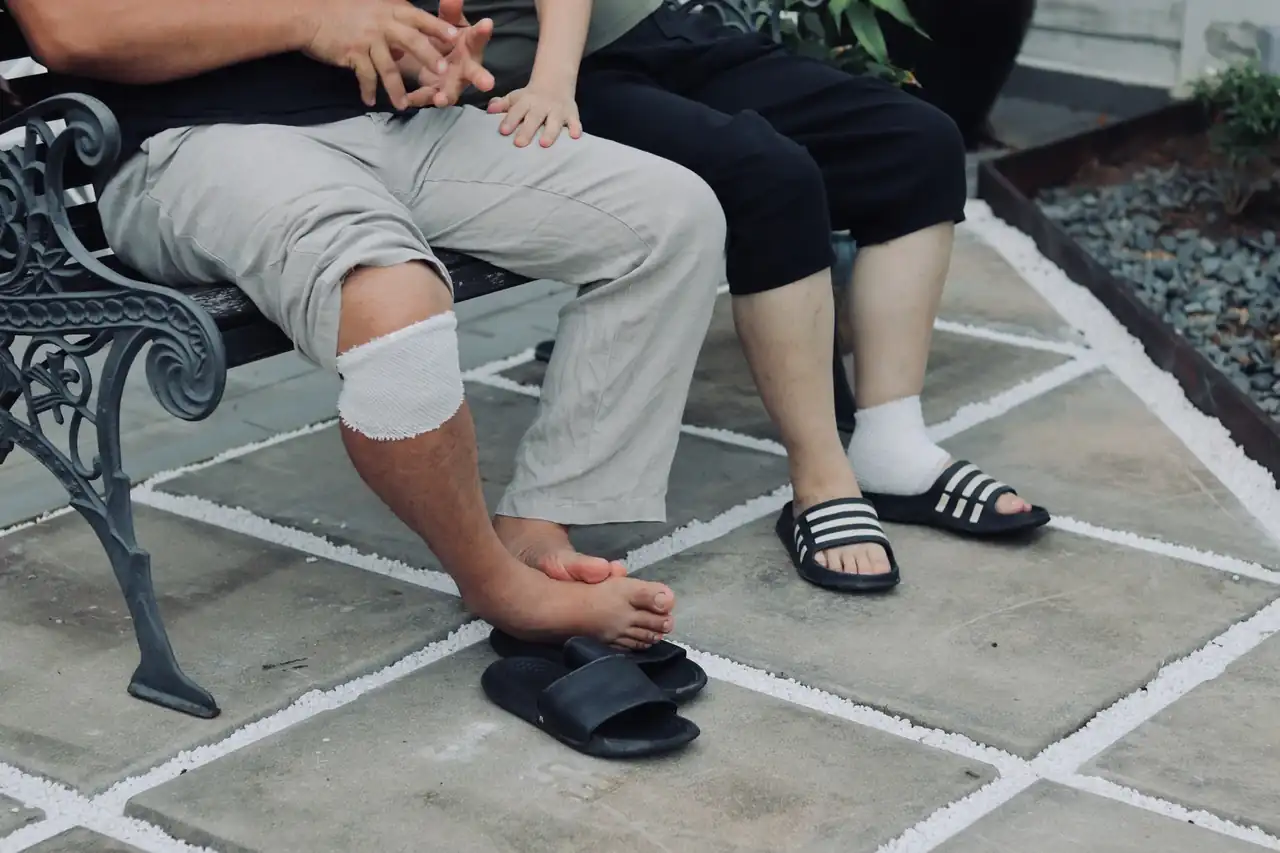
An ankle sprain is rarely resolved by impatience. The ankle swells, hurts when bearing weight, and loses precision, like a hinge that has slipped out of alignment. The fastest recovery does not come from pushing harder, but from reducing inflammation, protecting the joint, and respecting the degree of damage the ligaments have suffered.
For runners, that difference matters even more. A gesture as everyday as stepping off a curb, landing badly on a turn, or coming down with the foot twisted can mean days of rest or, if managed poorly, weeks of discomfort. The key to a quick return is simple to state and hard to improvise: rule out a serious injury, control pain from the very beginning, and restore mobility without turning the ankle into an immobile, rigid joint.
What happens inside the ankle when it twists
The sprain occurs when the foot rotates beyond its normal range and the ligaments are overstretched or partially torn. In most cases, the injury affects the outer side of the ankle, especially when the foot rolls inward. It is not just a matter of pain: the ligament no longer stabilizes the joint properly, and movement becomes awkward, unsafe, almost like walking on wet sand.
The body’s reaction comes quickly. Swelling can appear within minutes and bruising a little later, when blood seeps into the tissues. Pain usually increases in the first few hours, just when many people try to downplay it. That apparent resistance is misleading; often the ankle can manage a few steps and then gives out, like a wheel that still turns but is already rubbing against the fender.
Sprains are usually divided into three grades. Grade 1 involves stretching or micro-tears with mild pain and little instability. Grade 2 means a partial tear, more swelling, and difficulty walking. Grade 3 is a complete tear and usually brings a clear limitation, with significant bruising and the feeling that the ankle is not responding. That classification is not a formality; it determines how quickly recovery can be accelerated and what measures should be taken from the start.
The first hours set the pace of recovery
The most effective way to shorten recovery time is to act correctly in the acute phase. That means relative rest, local cold, compression, and elevating the foot above heart level whenever possible. It is a sober, almost basic combination, but it works because it targets the central problem: excess inflammation that blocks movement and multiplies pain.
Ice should be applied wrapped in a cloth, never directly on the skin, for about 15 to 20 minutes every two or three hours during the first 48 hours. Compression with an elastic bandage can help contain swelling, as long as it does not cut off circulation or leave the foot numb or cold. Raising the leg, though uncomfortable, promotes fluid drainage and usually brings relief within a few hours.
The most common mistake is confusing speed with activity. Walking too soon, running to check whether it is already fine, or ignoring a limp only prolongs the process. The joint does not improve through pride. It improves when it receives the right load, neither less nor more. In many mild sprains, the body tolerates partial weight-bearing; in moderate ones, forcing the gait only feeds inflammation and leaves the injury open like a poorly sewn seam.
How to tell a mild twist from an injury that needs medical assessment
Not every painful ankle is a minor sprain. The decisive clue is usually the ability to bear weight. If the pain is very intense, if it is not possible to take four consecutive steps, if there is visible deformity, or if a snap was heard at the moment of the twist, a medical assessment is advisable to rule out a fracture or other significant damage. In sports, that caution saves long setbacks and delayed diagnoses.
Very marked swelling, localized bone pain, clear loss of stability, or a bruise that grows quickly also deserve special attention. It is not uncommon for an apparently modest injury to hide a greater degree of damage. The ankle can be deceptive, like a door that seems to close well until you look at the hinge from the inside.
In mild sprains, relief usually begins within a few days if the area is well protected. In moderate ones, recovery is slower and requires more monitoring. In severe ones, talking about speed no longer makes sense unless the true extent of the damage is defined first. The priority is not to return quickly, but to return with stability, because an ankle that remains loose tends to repeat the injury and make the uncertainty when bearing weight chronic.
What measures really help and which ones prolong the problem
For years, contradictory remedies circulated, from prolonged immobilization to intense massages during acute pain. Today the most sensible approach combines initial protection and progressive mobility. The joint needs rest at first, but also stimulation afterward, because tissue heals better when movement returns gradually and in a controlled way.
Gentle mobilization usually begins when pain allows it. Drawing circles with the foot, flexing and extending the ankle, or moving the toes helps activate circulation and reduce stiffness. It is a way of reminding the body that the area is still alive, that it should not fuse like an internal cast. That said, any movement that triggers pain or increases swelling should be stopped immediately.
Over-the-counter pain relievers can ease discomfort, but they should not be used as a license to run or train too soon. In moderate injuries or when pain persists, physiotherapy and, at times, a functional wrap or ankle brace provide stability without completely eliminating movement. That difference matters: over-immobilizing promotes loss of strength and proprioception, while a well-chosen support protects without shutting the ankle down.
The return to weight-bearing: the moment when the ankle starts to trust again
Recovering the ability to walk does not mean returning to normal overnight. First less weight is borne, then the steps are lengthened, and later turns, small changes in slope, and changes in pace are introduced. That progression, which seems slow, actually speeds healing because it avoids the classic relapse of someone who feels better on Tuesday and worsens on Thursday for having tried to skip ahead an entire week.
A mild sprain can improve in one to two weeks if managed well. A moderate one usually requires three to six weeks to regain reasonable function, and the most severe cases may take longer. The range is wide because it depends on the extent of the tear, the initial swelling, age, muscle condition, and whether there were previous sprains. An ankle that has been injured repeatedly usually takes longer and feels less secure when bearing weight again.
Feeling okay does not always mean being ready. The runner who returns without pain but with little lateral strength or unstable balance is exposed to a setback as soon as the terrain changes or fatigue sets in. True fast recovery is not the one that shortens the clock at any cost, but the one that shortens the path without leaving cracks underneath.
How home treatment affects the final outcome
Home care is not a minor add-on; it often determines the outcome. Sleeping with the leg slightly elevated, avoiding long hours standing, and checking that the bandage is not too tight are part of a sober and effective approach. It is also worth observing the skin, the color of the toes, and the evolution of swelling morning and evening, because the ankle gives continuous clues about whether it is moving in the right direction.
When pain decreases, cold should no longer dominate the whole day. Once the most inflammatory phase has passed, the body asks for more movement than ice, more quality support than passive waiting. In that phase, an ankle brace or functional taping can be useful for everyday tasks or short walks, especially if the joint still hesitates when turning.
One detail often goes unnoticed: footwear. A shoe with an unstable sole, too soft, or a poor fit can sabotage recovery. The foot needs a clean, firm, and secure base, not a soft cushion that makes it wobble. For runners, that point becomes even more sensitive because repeated motion amplifies any small insecurity.
Why some sprains keep recurring and others heal well
The real enemy of the ankle is not always the first twist, but the second. After a poor recovery, residual instability, loss of strength, and worse balance control can remain. That combination opens the door to new injuries with increasingly small movements, as if the joint remembered the initial stumble too well and lost confidence on the next turn.
That is why rehabilitation matters so much, even when the injury seems minor. Strength work for the peroneals, calves, and foot muscles, together with balance exercises, helps the ankle react in time again. The goal is not just to stop hurting. The goal is for the joint to respond again with the speed of a spring rather than the hesitation of a rusty hinge.
In athletes, especially those who run on asphalt, dirt, or trails, incomplete recovery can translate into discomfort when resuming faster paces or going downhill. There the ankle needs more than rest: it needs proprioception, coordination, and progressive load tolerance. Otherwise, the problem changes name but does not disappear.
What to wait for before running again
Returning to running too soon is one of the most expensive shortcuts. Before lacing up again, the ankle should walk normally, tolerate small jumps without pain, and support body weight with reasonable stability. If those simple tests fail, running will soon bring the bill back in the form of swelling, limping, or pain the next morning.
The return is usually safer if it begins with gentle jogging, level ground, and short sessions. From there, the body sets the pace. A proper recovery leaves clear signs: less swelling at the end of the day, firmer support, no pain when turning, and a sense of control that no longer depends on thinking about every step. When that happens, the ankle stops being a fragile piece and fits back into the mechanics of the stride.
The word fast only makes sense if it goes together with well done. An ankle sprain that heals in a rush may seem resolved for a few days and then come back as soon as the terrain slopes or training intensifies. Healing quickly, in practice, means not wasting time with mistakes that later force you to start over.
The margin between a passing twist and an unstable ankle
A sprain may seem like a trivial event, but it can also leave a mark if it repeats or is treated poorly. An unstable ankle, persistent discomfort, and a feeling of giving way usually do not appear overnight; they are built up by small twists, by half-finished recoveries, and by the habit of carrying on as if nothing had happened. The body, however, collects interest on that neglect.
The best recovery is the one that combines careful diagnosis, control of inflammation, progressive weight-bearing, and later strengthening. There is no magic recipe or universal timeline, but there is a clear idea: the sooner the injury is addressed, the sooner the ankle recovers with confidence. In contrast, the more it is pushed at the beginning, the longer the road becomes and the more fragile the gait remains.
In running, where each step is repeated hundreds or thousands of times, that margin between healing and relapsing is decisive. An ankle that returns stable allows miles to be resumed normally; one that comes back halfway turns every stride into a negotiation. And in that negotiation, the injury almost always wins.
Medical reference: Sprained ankle treatment, Mayo Clinic.



How to prevent thigh chafing: causes and real solutions

Women’s running windbreakers: seven jackets and how to choose

Do more workouts get rid of soreness? A guide for runners

Jaén Half Marathon 2026: Record 3,800 Runners Registered

Men’s short running tights: how to choose the right pair

World Triathlon confirms data breach involving medical data

Izan Edo targets podium at Miyazaki World Cup

María Pérez ranks ninth in World Athletics’ 2026 top ten

Dos Santos, Duplantis and Sawe: World Athlete of the Year finalists

San Silvestre Vallecana 2026: 42,000 places, prices and start times

 Races3 months ago
Valencia Half Marathon 2027: date and registration

 Races3 months ago
Valencia Marathon 2026: entry, ballot and course

 Reviews and Comparisons4 months ago
Asics Gel-Roadmiles 3 for men: review and current price

 Reviews and Comparisons4 months ago
Asics Gel Sonoma 8 Gore-Tex: complete analysis for trail and rain

 Sneakers3 months ago
Saucony Endorphin Pro 4: full review and verdict

 News5 months ago
Strava API 2026: what changes for clubs, challenges and runner apps?

 Reviews and Comparisons5 months ago
Nike Alphafly 3: opinions, sensations, and real key points

 Reviews and Comparisons4 months ago
Under Armour running shoes review 2025-2026: models and key features

 Sports Equipment4 months ago
Shoe sizes in cm: a clear guide to getting the right fit for your footwear

 Sneakers3 months ago
Skechers GO RUN Consistent 2.0 analysis: comfort and limits

 News5 months ago
Valencia Marathon 2026 route: key tips to train and run better

 Sneakers4 months ago
Adidas Adizero Boston 13 for men: review and verdict