Health and Nutrition
How to sleep with an ankle sprain without making the pain worse
Elevating, immobilizing, and choosing the right position helps reduce pain and swelling during the night.

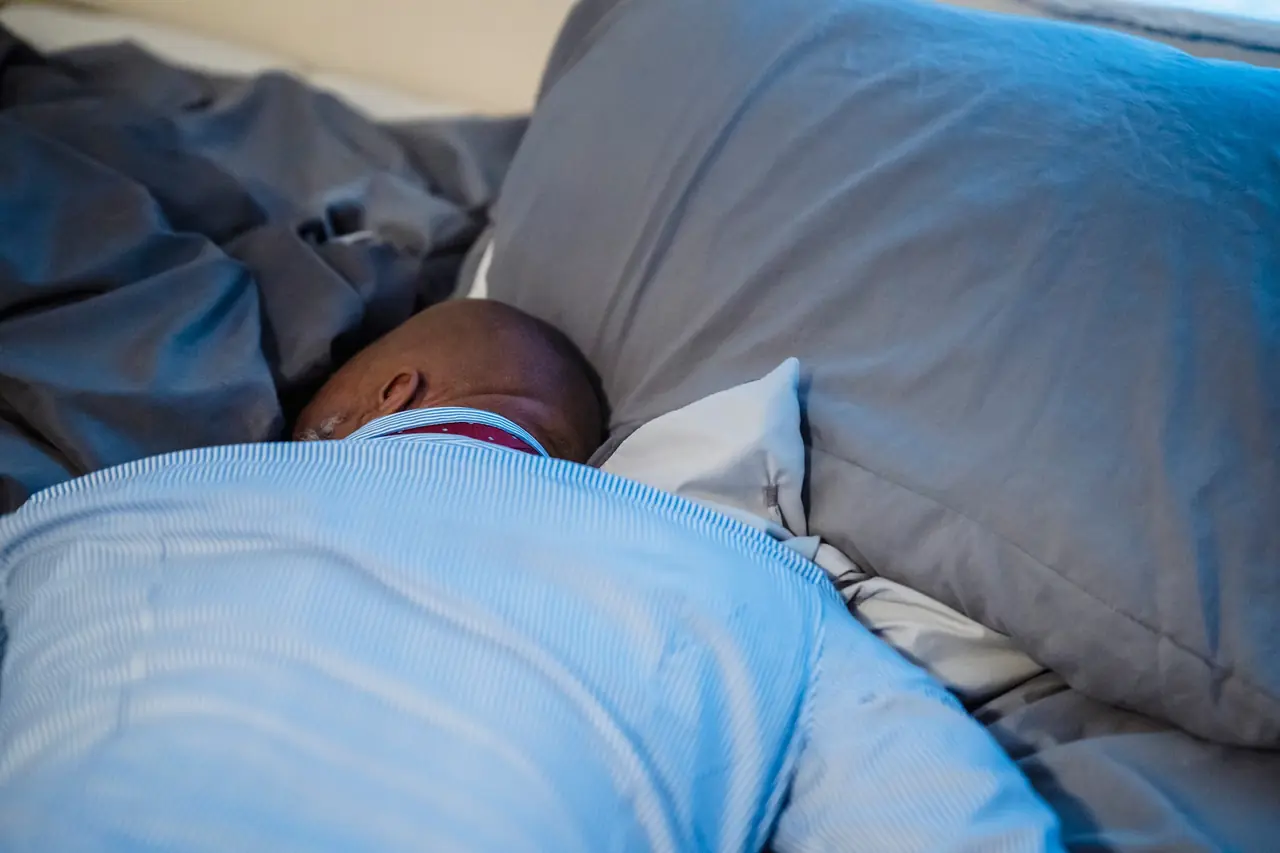
The first night with an ankle sprain is usually the longest: the foot throbs, the swelling pulls at the skin, and any tiny twist in bed reminds you that the joint is injured. Elevating the leg above heart level, avoiding direct pressure, and stabilizing the ankle are the three decisions that most help nighttime rest.
The injury does not disappear while you sleep, but it can stop getting worse. Proper positioning, firm support with pillows, and pain control before bed make a real difference. Sleeping better not only makes the night more bearable: it also helps the swelling go down and the ankle arrive less irritated the next morning.
What happens in the ankle during the night
A sprain is not just a bad movement. The ligaments stretch or tear and, as a result, an inflammatory response appears that can intensify in the hours that follow. Nighttime rest, far from being a neutral moment, often brings the pain to the surface because movement decreases and attention focuses on the injured area. The body, immobilized, stops distracting itself.
That is why some people fall asleep relatively easily and wake up in the middle of the night with a sensation of pressure or a stabbing pain on the outer side of the ankle. That discomfort does not necessarily mean the injury has worsened, but it does indicate that the chosen position is encouraging congestion or that the ankle is too exposed to involuntary movements.
It is also worth remembering that not all sprains carry the same weight. Grade I sprains usually involve mild stretching, while Grade II and III sprains involve greater tears and, therefore, more pain, more swelling, and a higher risk of instability. The greater the injury, the more important it becomes to sleep with the joint protected.
The position that works best
The most useful option is usually sleeping on your back with the injured leg elevated. You do not need to build a tower of pillows or leave the foot at an odd angle; it is enough to place a firm support under the calf and ankle so the limb sits slightly above the trunk. That slight height promotes fluid drainage and reduces swelling accumulated during the day.
The key is for the elevation to be stable. A pillow that is too soft sinks, the ankle loses support, and the body ends up seeking a forced position. By contrast, a firm base keeps the leg still and allows the foot to rest without tension. Stability matters as much as height.
If sleeping on your back is uncomfortable, another alternative is to sleep on your side, always with the injured ankle on top and well supported by a pillow. This avoids compression against the mattress and reduces the risk of the affected area getting trapped between the legs or under the weight of the body. The goal is not to immobilize sleep, but to prevent the injury from being crushed or bent.
By contrast, sleeping on your stomach is usually the worst option. That position forces the natural rotation of the foot, flattens the ankle against the mattress, and encourages awkward movements when changing positions. What may seem comfortable at first ends up creating more pressure and, with it, more pain. In that case, the bed becomes a trap for the joint.
How to use pillows without turning the bed into a battlefield
Pillows should not be placed randomly. The most useful approach is to support the injured leg so the ankle is free of pressure and slightly elevated, with the heel and calf resting securely. The goal is not only to raise the foot, but to distribute the weight so it is not concentrated in a single point.
When only one pillow is used under the ankle, the joint can become unstable and the heel can act as a lever. A better solution is often to place another pillow higher up, under the calf, so the leg stays aligned. That combination prevents the foot from hanging and reduces the pull on the damaged ligaments.
Some people find relief with a pillow between the legs when sleeping on their side. That separation avoids friction, improves hip alignment, and reduces involuntary ankle movement when turning in sleep. It may seem like a minor detail, but with a painful injury every micro-movement counts. Nighttime rest is won through small, specific adjustments.
It is also important that the leg does not hang off the edge of the bed or rest on an unstable lump. A swollen ankle reacts poorly to uneven surfaces, just as an inflamed knee protests when bent too much. A tidy bed, with predictable supports, makes for less fragmented sleep.
What to do before bed to reduce pain
The last hour of the day can tip the balance. Applying cold for 15 to 20 minutes before sleep helps contain inflammation and calm the feeling of local heat. It should be done with a cloth or towel, never with ice directly on the skin, to avoid cold burns. The effect is not magical, but it is useful when the area feels loaded.
If a bandage or ankle brace has been prescribed, nighttime rest may be safer with that support, as long as it does not tighten too much. Compression should be gentle, enough to provide stability and not so much that it numbs the toes or leaves the foot colder. A poorly adjusted bandage can make the night worse instead of helping it.
It is also important to get into bed with the ankle already protected. Going back and forth, bending down many times, or spending long periods on your feet just before sleep fuels inflammation. The night goes better when the ankle has had a few calm hours beforehand, with less load and less bouncing. The body sleeps worse if it arrives agitated.
In some cases, the specialist may have prescribed painkillers or anti-inflammatory medication. These drugs are not taken just to sleep; they are used to control pain and inflammation according to medical advice. The prudent thing is always to follow the recommended dose and schedule. Self-medicating does not speed recovery; sometimes it makes it more complicated.
Signs that the position is not helping
A poorly positioned ankle usually lets you know quickly. If after a few minutes there is more throbbing, more tingling, or a growing sense of pressure, the leg is probably not supported properly. It can also happen that the foot is more swollen in the morning than the night before if it spent the night hanging or being compressed too much. In that case, the rest has only been apparent.
Severe nighttime pain, inability to move the toes normally, or an unusual color in the foot require special attention. Numbness and color change are not minor details; they may indicate that the bandage is too tight or that the injury is more serious than it first seemed. Not everything is solved with more pillows.
There is another very simple indicator: the body wakes up over and over again looking for a different position. If the bed turns into a succession of changes, twists, and jolts, the ankle is asking for more support or less pressure. Sometimes it is enough to adjust the support by a few centimeters; other times, it is wise to have a professional review the injury.
Why rest is also part of recovery
Sleep is not a decorative pause. During the night, repair processes take place that help the injured tissue organize the inflammatory response better. Resting well helps the body manage pain and swelling more effectively, although it does not replace relative rest or later rehabilitation.
When sleep is interrupted, the pain threshold usually drops. The ankle may feel more sensitive the next day, and that makes walking, dressing, or going downstairs more uncomfortable. That is why good nighttime positioning is not only about comfort; it also aims to keep the next day from starting with a more reactive injury.
This relationship between rest and recovery is especially clear in active people or runners. A poorly slept sprain prolongs the feeling of clumsiness and delays getting back to normal. The ankle, like a forced hinge, needs time and reasonable support so it is not irritated every time the body changes position.
When nighttime discomfort deserves a checkup
Not all pain requires a trip to the emergency room, but there are limits worth respecting. If swelling increases noticeably, if the area looks deformed, if the foot loses sensation, or if you cannot bear any weight when trying to walk, medical evaluation should be a priority. What seems like a sprain may hide a fracture or another associated injury.
Pain that does not improve with usual measures or becomes sharper as the hours pass instead of easing also deserves review. In mild injuries, the course usually slowly trends toward less discomfort; if the opposite happens, something is not quite right. In those cases, insisting on sleeping with the same strategy without changing anything can be a mistake.
Complete immobilization, the use of a splint, or a more rigid ankle brace is not always necessary, but when prescribed it makes sense because it limits the involuntary movements that are most bothersome at night. Night is not the time to improvise: the more unstable the ankle is, the more sense it makes to seek well-guided external support.
How improvements are noticed from one night to the next
Proper recovery is usually subtle, almost boring. Less waking from pain, less need to change positions, slightly more controlled swelling on waking, and a greater sense of support when putting the foot on the floor. These are small changes, but they mark the real progress of the injury. The ankle does not improve through heroic gestures, but through consistency.
When the night stops feeling like a fight and starts to resemble reasonable rest, an important step has been taken. The goal is not to sleep perfectly from day one, but to find a setup that keeps inflammation in check and allows the body to work without interruptions. That includes patience, adjustments, and some discipline in positioning.
The best reading of a nighttime sprain is often in the details: if the foot wakes up less tense, if the pain takes longer to appear, and if swelling does not rise as much by the end of the day, the strategy is on the right track. Sleeping with an ankle sprain, in reality, is about that: reducing the noise of the injury so the body can do its work without surprises.
A more bearable night starts by taking pressure off the ankle
The bed does not heal, but it can stop hurting. Elevating, stabilizing, cooling before bed, and avoiding positions that bend or compress the foot are simple measures that noticeably change the nighttime experience. In an injury that is often bothersome and unpredictable, those adjustments are worth more than any improvised gesture.
An ankle sprain that is properly cared for at night usually hurts less the next day and behaves better on the first steps. The joint appreciates not spending hours twisted, crushed, or hanging. The difference between a bad night and a tolerable one often comes down to a few centimeters of height, a firm pillow, and not asking the foot to hold a position it still cannot support.
In injuries like this, rest is not passivity. It is a specific part of treatment, as important as walking carefully or respecting recovery times. And when the ankle stops protesting in the dark, the morning usually begins with at least a little less of a battle.
Rest and a gradual return to training
For runners, an ankle sprain can affect both training and sleep. Keeping the leg raised and the ankle well supported, without direct pressure, may make the night more comfortable and help limit morning swelling. This is a way to ease discomfort, not a guarantee of faster recovery or a substitute for having the injury assessed.
While pain or swelling remains, it is sensible to pause running and avoid testing the ankle with workouts that could irritate it further. A better night’s sleep can support rest, but it does not mean the joint is ready to run again. Return gradually and pay attention to how the ankle responds; if pain or other symptoms persist, consult a healthcare professional.
Medical reference: Ankle sprain self-care, NHS.



How to prevent thigh chafing: causes and real solutions

Women’s running windbreakers: seven jackets and how to choose

Do more workouts get rid of soreness? A guide for runners

Jaén Half Marathon 2026: Record 3,800 Runners Registered

Men’s short running tights: how to choose the right pair

World Triathlon confirms data breach involving medical data

Izan Edo targets podium at Miyazaki World Cup

María Pérez ranks ninth in World Athletics’ 2026 top ten

Dos Santos, Duplantis and Sawe: World Athlete of the Year finalists

San Silvestre Vallecana 2026: 42,000 places, prices and start times

 Races3 months ago
Valencia Half Marathon 2027: date and registration

 Races3 months ago
Valencia Marathon 2026: entry, ballot and course

 Reviews and Comparisons4 months ago
Asics Gel-Roadmiles 3 for men: review and current price

 Reviews and Comparisons4 months ago
Asics Gel Sonoma 8 Gore-Tex: complete analysis for trail and rain

 Sneakers3 months ago
Saucony Endorphin Pro 4: full review and verdict

 News5 months ago
Strava API 2026: what changes for clubs, challenges and runner apps?

 Reviews and Comparisons5 months ago
Nike Alphafly 3: opinions, sensations, and real key points

 Reviews and Comparisons4 months ago
Under Armour running shoes review 2025-2026: models and key features

 Sports Equipment4 months ago
Shoe sizes in cm: a clear guide to getting the right fit for your footwear

 Sneakers3 months ago
Skechers GO RUN Consistent 2.0 analysis: comfort and limits

 News5 months ago
Valencia Marathon 2026 route: key tips to train and run better

 Sneakers4 months ago
Adidas Adizero Boston 13 for men: review and verdict