Health and Nutrition
How to heal an ankle sprain: treatment, timelines, and signs
Treatment, recovery times, and warning signs for a very common injury in runners and athletes.

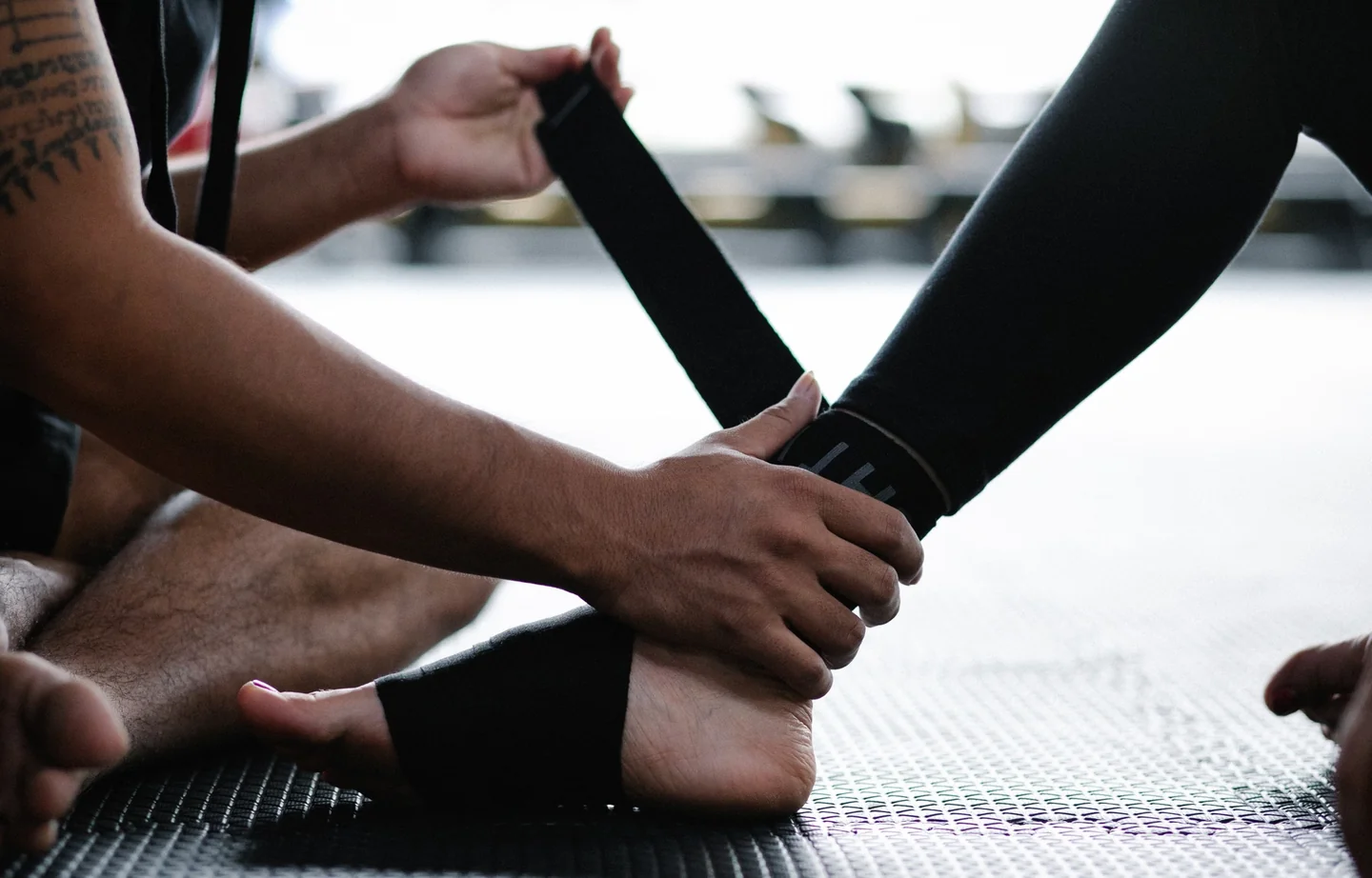
An ankle sprain usually improves with relative rest, control of inflammation, external support, and progressive rehabilitation. In mild cases, recovery may take days or a few weeks; in more severe cases, especially if there is a complete ligament tear or instability, the process takes longer and may require a specialist trauma evaluation.
The key is not only to reduce the pain, but also to recover mobility, strength, and balance to avoid the ankle becoming loose. In runners, a poorly resolved injury is later noticed as insecurity when putting weight on it, clumsiness on uneven terrain, or repeated episodes of spraining, a consequence that can linger for months if training is resumed too soon.
What really happens in an ankle sprain
The sprain occurs when the ankle twists beyond its normal range and stretches or tears the ligaments that stabilize the joint. In practice, most injuries affect the outer side, where the anterior talofibular ligament and other lateral ligaments act like tension cables. A bad step into a ditch, a fast descent, or a turn on uneven ground is enough for those tissues to give way.
The severity of the damage varies greatly from one case to another. A mild sprain may leave pain and some swelling, but still allow walking fairly normally. In a moderate sprain, more inflammation, bruising, and functional limitation appear. In a severe grade, the joint loses stability, the pain is more intense, and the ankle can feel like a hinge without a brake.
Not all sprains are the same, even if the initial movement is similar. That is why diagnosis should not rely only on what is visible from the outside. The clinical examination, the exact location of the pain, and the ability to bear weight provide much more guidance than the ankle’s appearance alone, which sometimes swells as if there were a water balloon under the skin.
The first hours shape part of the recovery
In the acute phase, the goal is to curb inflammation without over-immobilizing. The most widely used current approach combines protection, relative rest, ice, compression, and elevation, with the important nuance that today POLICE is talked about more than RICE: protection, optimal loading, ice, compression, and elevation. The difference is not minor, because the ankle needs calm, but it also needs appropriate stimuli so it does not stall.
That relative rest does not mean staying completely still for days as if the ankle did not exist. It means avoiding the movement that worsens the damage, reducing impact, and using external support if needed, while maintaining prudent activity. In mild injuries, walking moderately may be better than locking the joint into absolute stillness that later leaves it stiff, like a door that rusts from not being opened.
Ice helps relieve pain and control swelling, although it does not heal on its own. It is usually applied in short sessions, with protection to avoid skin damage, and accompanied by elastic compression and raising the leg above heart level when possible. During the first 48 to 72 hours, inflammation tends to rise and fall in waves, and that ebb and flow greatly affects the sensation of internal pressure.
How an ankle sprain heals step by step in medical practice
Conservative treatment is the foundation in the vast majority of cases. It includes pain control, protection of the joint, gentle mobility exercises, balance retraining, and progressive strengthening. The logic is simple: first the irritated tissue must be calmed, then movement must be restored, and finally stability must be rebuilt so the ankle responds when the stride changes or the ground betrays you.
In the first few days, the ankle may need an ankle brace, functional bandage, or short splint, depending on the degree of injury and the pain. That external support is not a punishment or a luxury; it is a way of giving the ligament peace of mind while it begins to heal. When support is used wisely, it reduces the risk of another twist and allows walking with less fear.
Rehabilitation is not an optional add-on. It is the part that turns apparent improvement into a solid recovery. Without mobility exercises, the ankle loses range; without strength, the peroneal muscles and leg muscles do not react in time; without proprioceptive work, the brain does not trust the joint again. The injury may then heal in appearance, yet still behave like a bridge with a loose cable.
How long it takes to heal depending on severity
Recovery time depends on the grade of injury, the response to treatment, and the moment activity is resumed. In a mild sprain, many people improve in 1 to 3 weeks. In a moderate sprain, the typical timeframe is between 3 and 6 weeks. If there is a significant tear or marked instability, the process can take much longer and require a more specialized evaluation.
For runners, haste is misleading. Being able to walk does not mean being ready to jog, jump, or change direction. Running load multiplies the demand on the ligaments and on the stabilizing muscles, so returning too soon can turn an isolated injury into a chain of relapses. It is the classic stumble that stops being an accident and becomes a pattern.
The return to sport should not be guided by the calendar alone. It should depend on functional criteria: absence of significant pain, acceptable range of motion, nearly symmetrical strength, good stability, and the ability to bear weight, jump, and turn without insecurity. An ankle that still gives way on uneven ground is not ready yet, even if several weeks have passed.
When stricter immobilization is needed
Some injuries need more than an ankle brace and patience. If pain is intense, instability is obvious, or a fracture cannot be ruled out, the doctor may prescribe a splint, a walker boot, or even a temporary cast. These measures protect the joint in the most delicate phase and help keep the swelling under control.
Total immobilization is not always a good companion for too long. Once major risks have been ruled out, the ankle usually benefits from orderly movement and progressive loading. The balance lies in protecting without freezing the joint, because too much stillness causes muscle tone to be lost and reduces the agility of walking.
Signs of excessive compression must also be watched for. A sudden increase in pain, tingling, numbness, color change, or difficulty moving the toes means the support should be checked. What was supposed to protect ends up squeezing too tightly, and a poorly tolerated bandage or cast can become another problem on top of the original one.
Diagnosis: why sometimes looking at the ankle is not enough
The clinical examination remains the central part of the diagnosis. The doctor or trauma specialist checks where it hurts, how much swelling there is, whether the joint gives way when moved, and whether an associated injury may exist. In runners and athletes, it is also important to know the exact mechanism, because a twist with weight-bearing, a fall, or a bad landing does not cause the same type of damage.
In some cases, X-rays are requested to rule out fractures, bone avulsions, or more extensive injuries. If pain, locking, instability, or a recovery that is not progressing as it should persists, magnetic resonance imaging can provide information about ligaments, cartilage, tendons, and small internal injuries that are not visible on a simple X-ray.
When the ankle does not fully heal, the problem may hide more than a stretched ligament. There may be syndesmotic injury, osteochondral damage, peroneal tendon involvement, or poor healing. That is one reason some sprains, seemingly routine, end up being more persistent than expected and cause pain while running months later.
Rehabilitation that truly changes the prognosis
Recovering from a sprain is not just about reducing inflammation. The ankle needs to regain full motion, recover strength in the calves and peroneals, and train fine balance. It is a re-education process, almost like teaching the body where the ground is again. If it is not done, the joint remains vulnerable to new sprains and a chronic feeling of insecurity.
Exercises usually progress from gentle, controlled movements to more demanding weight-bearing, short jumps, or changes of direction. The important thing is that the tissue tolerates the progression and that pain does not spike. A little discomfort may be expected; swelling that returns strongly or worsening limping means the load is still too much.
For runners, proprioception matters as much as strength. It is the ability to know where the ankle is without looking at it, to react in time to a change in terrain or an unexpected turn. It is an invisible system, but a decisive one, like the internal shock absorber that keeps every stone in the path from becoming a fall.
When to suspect a poorly healed sprain or chronic instability
An ankle that keeps twisting over and over is not resolving the injury properly. Chronic instability appears when the ligaments do not regain their function or rehabilitation has been insufficient. It is noticed when walking on uneven ground, going downstairs, running around curves, or even standing with a feeling of lack of support.
Persistent swelling, tenderness, and the sense that the ankle is giving way can last much longer than the original injury suggested. Sometimes the pain is located outside the usual ligament area and points to other structures irritated by the initial episode. In those cases, insisting on the same treatment without revisiting the diagnosis usually delays real improvement.
Repeated relapse turns a sprain into a long-term problem. Each twist leaves the support system a little looser and the brain a little less confident. That is why full recovery is not a theoretical luxury, but the best way to break the cycle before it becomes chronic and limits sports activity or daily life.
When surgery is considered for an ankle sprain
Surgery is not the usual outcome, but it does come into play in specific cases. It is mainly considered when there is a complete ligament tear, persistent instability, or failure of well-conducted conservative treatment. In athletes with high demands, the goal is not only to walk without pain, but to return to a stable joint capable of withstanding load and changes in pace.
Surgery may include arthroscopy to inspect the joint and treat associated injuries, as well as repair or reattachment of the damaged ligaments. The criteria vary depending on the injury and the patient profile. A one-time sprain in a low-activity person is not the same as an ankle that fails daily in a runner with weeks of swelling and a feeling of lateral collapse.
Good outcomes depend heavily on selecting the right case. Operating too early may be unnecessary; operating too late, a missed opportunity. Between those two extremes lies careful assessment, the kind that distinguishes between a joint that needs time and one that simply is not recovering as it should.
Getting back to running without carrying the injury along
Returning to running requires more than simply no longer feeling pain while walking. First, normal gait without limping must be restored, then full or near-full mobility, and afterward the ability to absorb small impacts without a later inflammatory reaction. Going up and down stairs, hopping on one leg, or maintaining balance on unstable surfaces are more honest tests than the mere subjective feeling of being almost fine.
For runners, a cautious progression usually leads to better results than enthusiasm. An ankle that still swells at the end of the day, or the day after an easy run, is sending a warning. That signal deserves respect, because ligaments heal more slowly than enthusiasm would like. The body, in this regard, does not negotiate by calendar.
A well-planned return also protects the entire chain. When the ankle fails, the knee, hip, and even the lower back end up compensating. Mechanics become disordered like a row of dominoes, and a small injury can have a wider effect if it is not resolved with patience and good judgment.
What to watch for so the condition does not worsen
There are symptoms that require rethinking the recovery. Pain that does not decrease over the days, inability to bear weight, visible deformity, significant bruising, a feeling of locking, or loss of stability are signs that deserve reassessment. So does swelling that appears again and again after minimal effort, as if the ankle never fully closed the wound.
In active people, the most common mistake is returning to routine before regaining strength and control. The ankle may tolerate daily life, but not repeated impact. That difference, which seems small, separates real improvement from a silent relapse. The pain goes away, but vulnerability remains, and the first serious jump reminds you of it.
Healing does not always equal functional recovery. A ligament may have closed and still not support properly. That is why useful recovery is measured not only by the absence of pain, but by the ability to move, load, and react safely, both on the street and on the track or in a road race.
A well-healed ankle is not noticed: that is the real sign
The best recovery is the one that restores normality without noise. The ankle stops swelling, the step becomes confident again, and the sporting gesture regains fluidity. There are no heroes or shortcuts, only a well-managed process that combines protection, mobilization, strength, and balance until the joint stops being the star of every step.
In running, where every step counts, that difference is enormous. A poorly resolved sprain may seem like an anecdote at the time and later become a chain of twists, lingering pain, or insecurity while running. A well-treated one, on the other hand, usually closes the story without leaving a permanent underline. The real cure is to step with confidence again, not just with less pain.
Medical reference: Ankle sprain treatment and recovery, Mayo Clinic.



How to prevent thigh chafing: causes and real solutions

Women’s running windbreakers: seven jackets and how to choose

Do more workouts get rid of soreness? A guide for runners

Jaén Half Marathon 2026: Record 3,800 Runners Registered

Men’s short running tights: how to choose the right pair

World Triathlon confirms data breach involving medical data

Izan Edo targets podium at Miyazaki World Cup

María Pérez ranks ninth in World Athletics’ 2026 top ten

Dos Santos, Duplantis and Sawe: World Athlete of the Year finalists

San Silvestre Vallecana 2026: 42,000 places, prices and start times

 Races4 months ago
Valencia Half Marathon 2027: date and registration

 Reviews and Comparisons4 months ago
Asics Gel-Roadmiles 3 for men: review and current price

 Races4 months ago
Valencia Marathon 2026: entry, ballot and course

 Reviews and Comparisons4 months ago
Asics Gel Sonoma 8 Gore-Tex: complete analysis for trail and rain

 Sneakers4 months ago
Saucony Endorphin Pro 4: full review and verdict

 News5 months ago
Strava API 2026: what changes for clubs, challenges and runner apps?

 Reviews and Comparisons5 months ago
Nike Alphafly 3: opinions, sensations, and real key points

 Reviews and Comparisons4 months ago
Under Armour running shoes review 2025-2026: models and key features

 Sports Equipment4 months ago
Shoe sizes in cm: a clear guide to getting the right fit for your footwear

 Sneakers3 months ago
Skechers GO RUN Consistent 2.0 analysis: comfort and limits

 News5 months ago
Valencia Marathon 2026 route: key tips to train and run better

 Sneakers4 months ago
Adidas Adizero Boston 13 for men: review and verdict