Health and Nutrition
How to detect an arrhythmia at home without missing key signs
Taking your pulse, monitoring symptoms, and using home devices can detect an abnormal rhythm in time.

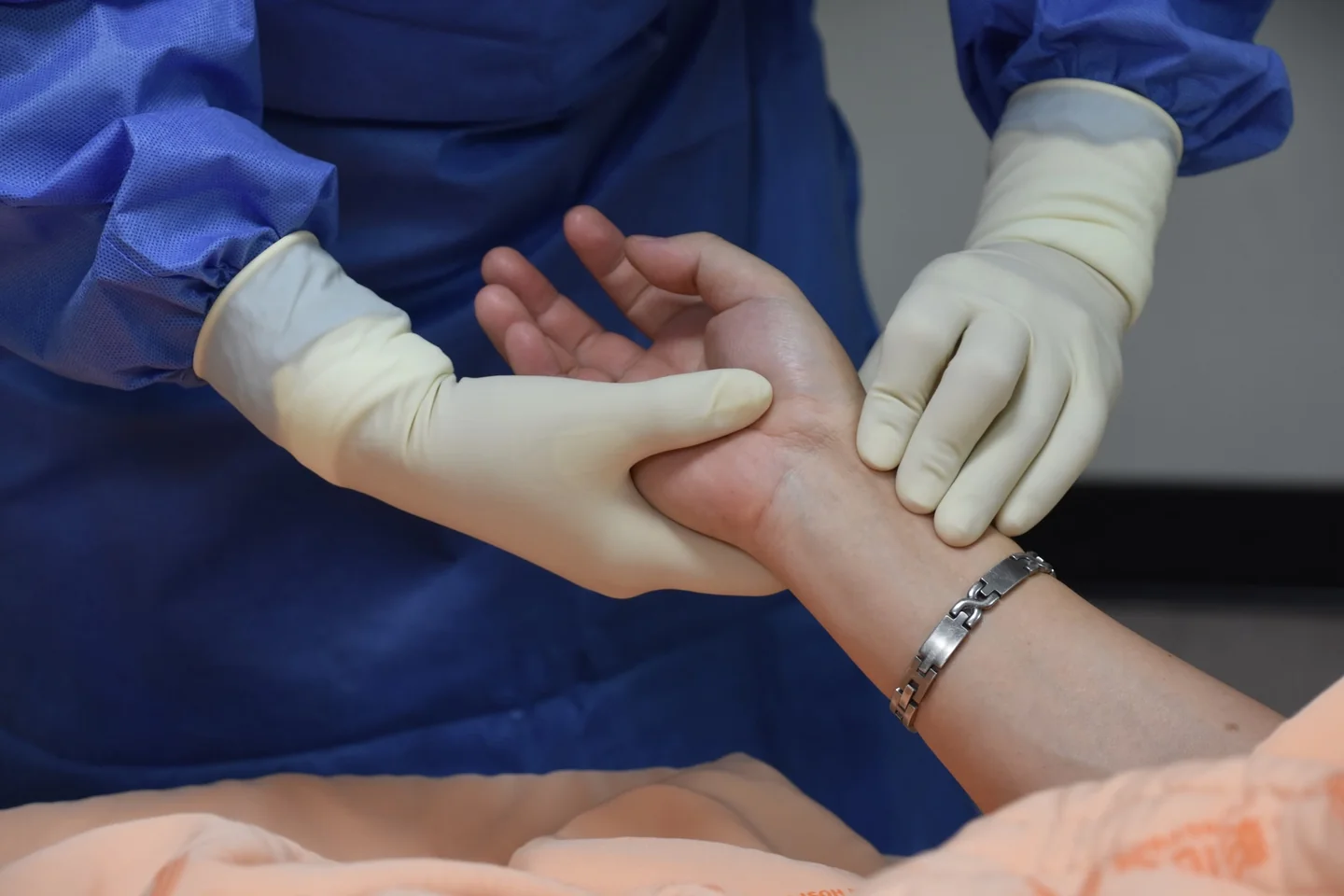
An irregular pulse, an unexpected racing heart, or a drop in energy for no clear reason can be the first clue of a rhythm disturbance. At home, careful observation has value, especially when episodes come and go without leaving a trace in a brief consultation. The key is to distinguish between a temporary variation and a pattern that deserves medical evaluation.
Home detection does not replace an electrocardiogram, but it can provide useful signs. Counting the beats, noticing whether the rhythm is regular or not, and linking those changes with dizziness, shortness of breath, or chest pain helps avoid trivializing a problem that, in some cases, requires prompt attention. In a runner, these warnings can also be confused with fatigue, dehydration, or overexertion, and precisely for that reason it is worth looking at the whole picture rather than just one isolated number.
What an irregular heart usually tells you before the alarm sounds
Arrhythmias do not always announce themselves dramatically. Sometimes they appear as a fluttering sensation in the chest, a beat that seems to skip a measure, or a sudden acceleration at rest. Other times they produce nothing visible and are only discovered by chance when the pulse is measured or when an episode is recorded on a portable device. That mix of silence and disorder is what makes them so deceptive.
Atrial fibrillation is one of the most common disturbances and also one of the most treacherous, because it can be intermittent and, at times, go unnoticed. Other arrhythmias, such as some supraventricular tachycardias or extrasystoles, may be felt intensely without being serious in themselves. The problem arises when the rate shoots up, the rhythm becomes chaotic, or it is accompanied by symptoms that suggest the body is not tolerating it well.
In Spain, atrial fibrillation affects more than one million people over the age of 40, according to the data commonly cited in the OFRECE study, and its prevalence increases with age. It is not a clinical rarity or an exotic finding; it is a relatively common phenomenon that, when properly identified, makes it possible to prevent complications such as stroke or heart failure. That context explains why home monitoring has gained importance in recent years.
The pulse is still the first useful clue
Taking the pulse calmly remains the simplest and most effective at-home tool. The classic resting reference is an approximate range of 60 to 100 beats per minute in adults, although the number alone is not enough. A trained runner may have lower heart rates without any disease being present, and a day of stress, caffeine, or fever can raise them. What matters is not only speed, but regularity.
The point of contact is usually the radial artery in the wrist or the carotid artery in the neck, using the index and middle fingers, never the thumb because it has its own pulse and can confuse the measurement. It is best to be seated, calm, and count for a full 60 seconds, not just 15 or 30, because irregular rhythms easily slip by when the recording is brief. A sequence of uneven beats, with pauses or out-of-sync thumps, deserves attention.
In practice, the attentive reader can notice three basic patterns: fast heartbeat, slow heartbeat, or irregular heartbeat. Tachycardia clearly exceeds the usual range, bradycardia falls below what is expected, and irregularity breaks the rhythm without an obvious explanation. Persistent irregularity is the sign that should most strongly prompt clinical evaluation, because it may point to atrial fibrillation or another rhythm disorder that does not resolve with simple rest.
How to observe an episode at home without confusing sensations
Subjective experience matters, but it needs structure. An episode of palpitations may be described as a strong thump, an internal buzzing, or a kind of engine revving in the chest. If it is mixed with anxiety, heat, recent exertion, or dehydration, the perception intensifies and can lead to mistakes. That is why it is useful to record what was happening before the episode: climbing stairs, a light run, a coffee, a bad night’s sleep, or a heavy meal.
That context is especially valuable in active people. During a workout, the heart normally speeds up; afterward, it should gradually slow down. If the acceleration appears at rest, returns at rest, or persists without relation to effort, it is no longer a simple physiological adjustment. The body often gives very specific clues: cold sweats, chest tightness, disproportionate shortness of breath, dizziness, or a feeling of impending fainting.
It is also worth looking at the time sequence. An isolated irregular beat that lasts a few seconds and disappears does not mean the same thing as a disturbance that lasts several minutes or is repeated over several days. Repetition, duration, and association with symptoms are three pieces that matter more than an isolated impression. In other words, the heart may give a startle, but it may also be leaving a pattern.
Home devices: useful, but with very clear limits
Digital blood pressure monitors, pulse oximeters, and some smartwatches can provide an initial warning. Many blood pressure monitors detect irregular pulses during blood pressure measurement, and oximeters show heart rate alongside oxygen saturation. Watches and bands with a single-lead electrocardiogram make it possible to record a brief tracing that can be useful for documenting an episode. That combination has changed the way the heart is monitored from home.
However, no consumer device replaces a 12-lead ECG or the interpretation of a professional. Home models mainly detect common rhythms, such as atrial fibrillation or certain extrasystoles, but they may miss more complex abnormalities or record an episode poorly if the person moves, talks, or has poor contact with the sensor. A clean tracing requires stillness, dry skin, and correct placement.
Reliability improves when the device is used under similar conditions each time. Sitting for a few minutes beforehand, avoiding crossed legs, not talking during the measurement, and repeating the reading if it is artifact-laden helps obtain clearer data. The most valuable thing is not accumulating measurements, but accumulating comparable measurements. If the device flags irregularity, the prudent thing is to save the recording and not interpret it as a definitive diagnosis.
Which symptoms completely change the level of urgency
An arrhythmia is not assessed the same way if it only causes palpitations as if it is accompanied by poor overall condition. Crushing chest pain, significant shortness of breath, loss of consciousness, sudden confusion, or severe dizziness require treating the episode as an emergency. The heart may be beating fast, but what matters most is how the rest of the body responds.
A very high resting rate also deserves immediate attention, especially if it clearly exceeds 150 beats per minute, or a very low rate with symptoms, especially below 40. The combination of an abnormal pulse and physical discomfort is not something to observe from a distance. In those situations, time matters more than doubt, because some arrhythmias can abruptly destabilize circulation.
By contrast, occasional palpitations, an isolated irregular pulse, or the sensation of a skipped beat without other serious symptoms usually justify a scheduled appointment, not a dramatic reaction. That does not make them unimportant. A mild episode may be the first piece of a broader clinical puzzle. Detecting it early prevents an intermittent disturbance from becoming a silent complication.
Factors that increase the likelihood of finding a real abnormality
Age is one of the most decisive factors. From the age of 60 onward, the frequency of some arrhythmias, especially atrial fibrillation, rises rapidly. Hypertension, diabetes, ischemic heart disease, valvular disease, heart failure, and thyroid disorders also play a role. These are pieces that, when combined, alter the ground on which the heart beats.
There are also modifiable factors that should not be underestimated. Excess alcohol, smoking, poor sleep, sleep apnea, a sedentary lifestyle, and stimulant abuse can act as triggers or facilitators. In people who train regularly, high caffeine intake, overtraining, or lack of recovery can also favor palpitations that are confused with an arrhythmia, even if they are not always one.
Family history matters, especially if there is a history of sudden death, cardiomyopathies, or arrhythmias diagnosed at an early age. When the episode appears in that context, caution should increase several notches. The irregular pulse is no longer seen as an isolated anecdote, but as a signal that deserves review with clinical judgment.
Everyday prevention: less noise for the heart
Prevention does not mean watching your pulse every minute. It means reducing the number of triggers that disrupt the rhythm. Keeping blood pressure under control, sleeping enough, staying well hydrated, and avoiding spikes in alcohol or stimulants are basic, almost invisible, but effective measures. The heart appreciates routine more than heroic gestures.
Regular physical activity remains an ally, as long as it is adapted to the person’s health status and is not used as a bandage to ignore symptoms. In runners, the line between adaptation and excess can be fine. A workout accompanied by palpitations, dizziness, or disproportionate fatigue is no longer within the bounds of normal, even if the sports watch still shows reasonable paces. The human body has a wide margin, but not an infinite one.
It is also worth reviewing medications and supplements that can alter heart rate. Some decongestants, stimulants, and over-the-counter products are not harmless for people predisposed to arrhythmias. Real prevention does not live in a miracle formula, but in the sum of simple, consistent habits. It is fine carpentry, not a lucky spark.
What an electrocardiogram adds once suspicion already exists
The electrocardiogram remains the test that gives the problem a name and surname. In a medical checkup, it can distinguish atrial fibrillation from supraventricular tachycardia, show extrasystoles, or reveal significant bradycardias. An irregular pulse provides direction, but does not diagnose. The ECG puts the pieces in order and avoids interpretation errors that are easy to make at home.
When the episode is not present at the time of the appointment, doctors resort to a Holter monitor or event monitor, which records the rhythm for hours or days. This is especially useful when the arrhythmia is intermittent, because the heart can behave normally for a few minutes and then become disordered, just when the appointment has already ended. Intermittency is one of the reasons many arrhythmias take time to discover.
In recent years, monitoring patches and some wearables have greatly improved the detection of brief episodes. Even so, their reading still needs clinical context. An isolated number on a screen is not the same as a complete medical history. Technology helps, but it does not replace judgment about symptoms, background, and evolution.
How this monitoring fits into the life of someone who runs
The world of running offers very clear examples of why it matters to look at rhythm carefully. A runner may notice palpitations after a long run, during a period of work stress, or in a week of poor sleep. In many cases, the cause will be banal: fatigue, dehydration, too much caffeine, or an effort that was too intense. But not always. The problem is that a trained body tolerates a lot of noise before the symptom becomes obvious.
So, if the heart speeds up without relation to training load, if the effort that used to feel easy causes unusual shortness of breath, or if a repeated irregularity appears at rest, it is worth setting aside overconfidence and looking at the data. Performance can mask warning signs for weeks. An athlete used to ignoring small discomforts can end up confusing a cardiac warning with just a bad day.
Responsible reading does not mean giving up exercise, but understanding that exercise does not explain everything. A healthy heart adapts; a disordered heart keeps sending warnings. And when those warnings come in the form of a strange pulse, caution matters more than training routine.
A small gesture that can change a medical story
Detecting an arrhythmia at home starts with something as simple as looking, counting, and comparing. An irregular pulse, an out-of-range rate, or a repeated episode should not be normalized, especially if it is accompanied by dizziness, shortness of breath, or chest pain. Home is not a clinic, but it can be the first place where the light turns on.
Early detection reduces the margin for serious complications, from stroke to heart failure or sudden loss of consciousness. The sooner an abnormal rhythm is documented, the sooner it can be decided whether it is an innocent variation or a problem that requires follow-up. In medicine, time does not always heal, but it almost always clarifies.
And in everyday life, where the heart lives alongside stress, caffeine, training, and irregular rest, that small gesture of taking the pulse still has enormous utility. It makes no noise, it is not impressive, it promises no miracles. That is precisely why it works: because it provides a clean signal in the middle of everyday noise and allows action before disorder finds its place.
Medical reference: Arrhythmia, MedlinePlus (U.S. National Library of Medicine).



How to prevent thigh chafing: causes and real solutions

Women’s running windbreakers: seven jackets and how to choose

Do more workouts get rid of soreness? A guide for runners

Jaén Half Marathon 2026: Record 3,800 Runners Registered

Men’s short running tights: how to choose the right pair

World Triathlon confirms data breach involving medical data

Izan Edo targets podium at Miyazaki World Cup

María Pérez ranks ninth in World Athletics’ 2026 top ten

Dos Santos, Duplantis and Sawe: World Athlete of the Year finalists

San Silvestre Vallecana 2026: 42,000 places, prices and start times

 Races4 months ago
Valencia Half Marathon 2027: date and registration

 Races4 months ago
Valencia Marathon 2026: entry, ballot and course

 Reviews and Comparisons4 months ago
Asics Gel-Roadmiles 3 for men: review and current price

 Reviews and Comparisons4 months ago
Asics Gel Sonoma 8 Gore-Tex: complete analysis for trail and rain

 Sneakers4 months ago
Saucony Endorphin Pro 4: full review and verdict

 News5 months ago
Strava API 2026: what changes for clubs, challenges and runner apps?

 Reviews and Comparisons5 months ago
Nike Alphafly 3: opinions, sensations, and real key points

 Reviews and Comparisons4 months ago
Under Armour running shoes review 2025-2026: models and key features

 Sports Equipment4 months ago
Shoe sizes in cm: a clear guide to getting the right fit for your footwear

 Sneakers3 months ago
Skechers GO RUN Consistent 2.0 analysis: comfort and limits

 News5 months ago
Valencia Marathon 2026 route: key tips to train and run better

 Sneakers4 months ago
Adidas Adizero Boston 13 for men: review and verdict