Health and Nutrition
How to ease leg soreness quickly after a run
Useful and safe measures to reduce muscle pain after running and recover your legs better.

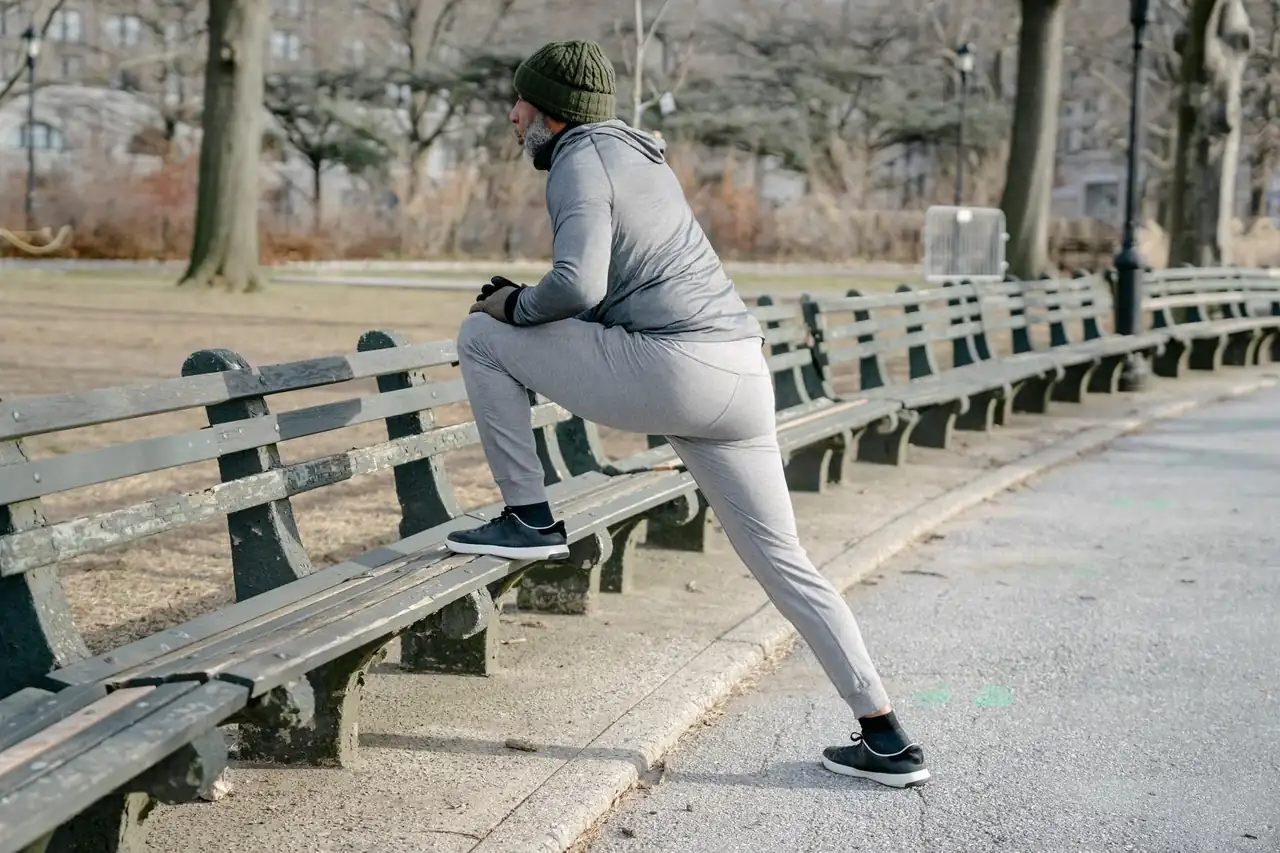
If your legs feel heavy after a run, you wince on the stairs, or a muscle feels hard as a rope, these may be typical signs of delayed-onset muscle soreness, the technical term for post-exercise soreness. It is not caused by poor fitness, but by eccentric effort: movements in which the muscle brakes the load, common on descents, during pace changes, and on long runs. Discomfort usually starts between 12 and 24 hours after exercise and is most noticeable between 24 and 72 hours.
The fastest way to ease it does not involve a miracle remedy, but rather combining gentle movement, hydration, heat or cold depending on the moment, and enough rest. The goal is not to erase the pain in a minute, but to make it subside sooner without adding more punishment to the tissue. For a runner, that margin between tolerable discomfort and overexertion makes the difference between recovering well or dragging the soreness along for several more days.
What happens inside the muscle when they appear
For years, lactic acid was blamed, but that explanation is now outdated. Muscle soreness does not come from an accumulating residue, but from microtears in muscle fibers and the inflammatory response that accompanies that minor damage. The body reacts by repairing, strengthening, and adapting the tissue, which is why the discomfort usually fades on its own over the course of days. It is a moderate-intensity warning, not a major breakdown in most cases.
In running, they are especially noticeable after strength sessions, downhill repeats, abrupt changes in volume, or after returning to training following several days off. They also appear when trying new shoes with a different mechanics, doing plyometric work, or stringing together several days of load. The key is to understand that the muscle does not just get tired: it adapts to the stimulus, and that adaptation can hurt a little at first.
What really speeds up relief
The most useful tool is often the simplest: move without forcing it. A light walk, very easy cycling, or a few minutes of comfortable jogging promote circulation and reduce stiffness. It is not a disguised workout, but a way to keep the muscle warm and prevent it from becoming immobile like a rusty hinge. In many cases, that light activity is more effective than staying completely still on the sofa.
The second pillar is hydration. Drinking water does not eliminate soreness by itself, but it does help muscle function and overall recovery, especially if the effort involved sweat, heat, or long sessions. When fluid loss was significant, replacing electrolytes may also be helpful, especially sodium and potassium, through recovery drinks or everyday foods. The fatigued muscle appreciates that more stable environment.
Heat and cold can help, but they do not serve the same purpose. Cold works better if the area is very sensitive or if the effort left a pronounced inflammatory feeling; a brief 10- to 15-minute application helps reduce the perception of pain. Heat, on the other hand, relaxes and may improve mobility when the leg feels tight and stiff. In both cases, it is best to use a cloth barrier and avoid prolonged direct contact with the skin.
Massage, compression, and measured movement
A gentle massage can be useful because it reduces the sensation of tightness and promotes local blood flow. There is no need for aggressive pressure; in fact, pressing too hard on an already irritated muscle usually worsens the discomfort. A self-massage with your hands, a soft ball, or a foam roller can be enough if used calmly, without chasing the heroic suffering sometimes sold as a synonym for recovery.
Light compression also has its place, especially when the dominant sensation is heaviness. Sleeves or compression socks may provide subjective relief for some runners, especially after long runs or travel. They are not essential and do not cure the problem, but they can help the leg feel more stable and less swollen, as if the tissue had a small scaffold while it repairs.
All of this works better when accompanied by gentle mobility. Bending and straightening the knee, mobilizing ankles and hips, or taking a short walk prevents the body from stiffening up. What you should not do is confuse mobility with aggressive stretching: forcing maximum length on a sore muscle can increase irritation and prolong recovery.
Stretch, yes; push, no
Gentle stretches can provide a feeling of relief, but their role is more modest than is often promised. They help recover range of motion and reduce perceived stiffness, not cure the muscle damage on their own. In practice, a short, sustained stretch without bouncing can be useful at the end of a walk or after a warm shower, when the leg is a bit more receptive.
The rule is simple: feeling of tension yes, sharp pain no. If the calf, quadriceps, or hamstrings respond with a stab, trembling, or guarding, you have gone too far. Recovery rewards subtlety, not heroics. For runners with a heavy training load, a few minutes of controlled mobility usually provides more benefit than a long session of poorly executed intense stretching.
Timing also matters. Right after a hard workout, the muscle may be more reactive; later, when overall tension drops, gentle stretching is better tolerated. In any case, relief usually comes from the sum of small prudent decisions, not from one spectacular maneuver.
What to eat and drink while the soreness subsides
Food does not wipe out soreness in one go, but it does affect the quality of recovery. After demanding efforts, the body needs protein to repair tissue and carbohydrates to replenish energy. A simple plate with rice, potatoes, pasta, yogurt, eggs, legumes, or fish may be more helpful than a long list of supplements out of context. Recovery is also cooked at the table.
Foods with an anti-inflammatory profile, such as berries, extra virgin olive oil, nuts, ginger, or turmeric, can fit into a balanced diet. They are not instant remedies, but they provide micronutrients and compounds that support the repair process. For a runner, that everyday sum matters more than an isolated gesture, just as good shoes do not make up for an entire bad week of habits.
It is wise to be skeptical of overly sweeping promises involving magnesium, creatine, or any supplement presented as a universal answer. In some cases they may help; in others they will not make a meaningful difference. The most sensible approach is to cover sleep, food, and training load first before looking for shortcuts in capsules that, on their own, do not do the whole job.
When it is worth staying still and when to move
Complete rest is usually not necessary, but neither is pushing through a hard session on legs that are already warning you. If the pain is mild or moderate, very gentle activity may help; if it is intense, the reasonable choice is to ease off. The distinction matters because normal soreness tends to be diffuse, bilateral, and related to effort, while stabbing pain, very localized pain, or pain accompanied by obvious swelling deserves a different interpretation.
For the distance runner, this boundary becomes practical. Heavy legs after a long run may tolerate easy cycling, walking, or recovery jogging, but pain that changes your stride calls for caution. Not all post-exercise pain is harmless; if there is bruising, functional inability, pain that worsens when putting weight on it, or a feeling of tearing, we are no longer talking about the usual picture and medical evaluation is advisable.
Attention should also be paid to how it evolves. Soreness usually improves day by day; if the pain stays the same or worsens after that initial 72-hour window, the story may be different. The body usually speaks clearly, even if sometimes it does so in a low voice.
Medications, baths, and home remedies: where they fit
Common pain relievers can ease discomfort, but they should not become the automatic first response. Ibuprofen can reduce pain and inflammation, although frequent use is not free of digestive or kidney risks, especially if taken without food or in people with a history of problems. Paracetamol relieves pain, but does not act on inflammation. In both cases, caution is essential.
Warm baths can relax the muscles and promote a feeling of rest, especially at the end of the day. Epsom salt often comes up in these contexts, but evidence for a specific benefit is limited; what does seem useful is the heat of the bath itself, the time spent being still, and the reduction in overall tension. Sometimes the relief comes as much from the water as from the enforced pause.
Very popular homemade remedies also circulate, from ginger infusions to lemon preparations or mixtures with bicarbonate. Their real value is usually modest, though they can fit into a self-care routine if they do not replace more solid measures. In sports recovery, the secondary only adds value when the primary is already covered.
What prevents the next session from leaving such a mark
The best way to reduce future soreness is not to avoid it at all costs, but to dose the stimulus better. Progressing little by little, increasing volume or intensity gradually, and not jumping from one quiet week to a brutal one allows the muscle to adapt without protesting so much. A proper warm-up also prepares tendons, joints, and the nervous system for what is coming.
In running practice, that means respecting training blocks, not stacking violent downhills without preparation, and giving the muscles time to get used to new loads. Well-structured strength training, far from being the enemy, can reduce vulnerability to delayed soreness in the medium term. A stronger, better-coordinated muscle tolerates repeated work better.
Sleep closes the loop. Sleeping between 7 and 9 hours supports tissue repair and the regulation of accumulated physical stress. One short night does not by itself cause soreness, but it can make it feel worse. Nighttime rest is, in a way, the quiet workshop where the legs become ready again.
The signs that help distinguish normal soreness from a bigger problem
Typical soreness is annoying, but it does not stop you. It usually appears on both sides of the body if the effort was symmetrical, hurts when you move or touch the muscle, and gradually improves over the days. The usual sensation is stiffness, heaviness, or a dull ache, as if the muscle were protesting in a low voice for having worked too hard.
The alarm changes when the pain is very localized, disabling, or appears suddenly during exercise, not afterward. Marked swelling, intense heat, clear loss of strength, or pain that prevents normal walking also deserve attention. In those cases, continuing to look for home remedies may delay a real solution.
That is why quick management of soreness should not be confused with normalizing pain. Easing discomfort does not always mean pushing, and recovery does not always mean doing more. In running, as in almost everything that depends on the body, precision matters more than haste.
Leg soreness after running: how to find relief without overdoing it
For runners, soreness may follow a strength session, a hilly route, faster pace changes, or a longer or harder run than usual. If your legs feel stiff, start with gentle movement: walking or a very easy jog may ease the heavy feeling. Do not turn recovery into another workout. If movement makes the pain worse, you start limping, or you alter your stride to protect the area, stop and rest.
Adjust your training while the soreness is there. Save intervals, hills, and fast descents for another day. If an easy run does not make the symptoms worse, keep it gentle and short; otherwise, choose a walk or take a rest day. Recovery also means getting enough sleep and drinking to thirst, particularly after running in hot conditions or sweating heavily. Stick to your usual, adequate meals rather than expecting a particular food or drink to make soreness disappear straight away.
Heat may feel soothing when stiffness is the main issue; cold may feel better if the area is tender. Keep a layer between your skin and the heat or cold source, and avoid prolonged application. Gentle massage or foam rolling may help you feel more comfortable, but avoid pressing hard or stretching into pain: neither is a shortcut to recovery. Compression is optional and does not replace rest or training adjustments.
Soreness is usually a diffuse muscle ache that develops hours after exercise. Severe or sharply localised pain, marked swelling, unusual weakness, or symptoms that do not improve should be assessed by a healthcare professional. Do not try to make up for a missed session by running through pain; return to harder training when you can run normally.
When the legs ask for patience and not heroics
Soreness is part of the landscape for anyone who runs, especially when changing routine, starting a new load, or pushing a little too far. It usually goes away on its own, but there is room to make the journey more manageable with light activity, hydration, heat or cold, gentle massage, proper food, and rest. Fast relief exists, although it almost always bears the signature of moderation.
The best strategy is to read the body wisely and act accordingly. Sometimes a few hours of active calm are enough; other times, it is better to slow down for a day or two so a passing discomfort does not become a week on the uphill. Legs do not need drama, but smart recovery, the kind that is quiet and works well.
You may also like: Leg soreness in the legs without exercise: causes and when to worry.
Medical reference: Leg pain, Cleveland Clinic.



How to prevent thigh chafing: causes and real solutions

Women’s running windbreakers: seven jackets and how to choose

Do more workouts get rid of soreness? A guide for runners

Jaén Half Marathon 2026: Record 3,800 Runners Registered

Men’s short running tights: how to choose the right pair

World Triathlon confirms data breach involving medical data

Izan Edo targets podium at Miyazaki World Cup

María Pérez ranks ninth in World Athletics’ 2026 top ten

Dos Santos, Duplantis and Sawe: World Athlete of the Year finalists

San Silvestre Vallecana 2026: 42,000 places, prices and start times

 Races3 months ago
Valencia Half Marathon 2027: date and registration

 Races3 months ago
Valencia Marathon 2026: entry, ballot and course

 Reviews and Comparisons4 months ago
Asics Gel-Roadmiles 3 for men: review and current price

 Reviews and Comparisons4 months ago
Asics Gel Sonoma 8 Gore-Tex: complete analysis for trail and rain

 Sneakers3 months ago
Saucony Endorphin Pro 4: full review and verdict

 News5 months ago
Strava API 2026: what changes for clubs, challenges and runner apps?

 Reviews and Comparisons5 months ago
Nike Alphafly 3: opinions, sensations, and real key points

 Reviews and Comparisons4 months ago
Under Armour running shoes review 2025-2026: models and key features

 Sports Equipment4 months ago
Shoe sizes in cm: a clear guide to getting the right fit for your footwear

 Sneakers3 months ago
Skechers GO RUN Consistent 2.0 analysis: comfort and limits

 News5 months ago
Valencia Marathon 2026 route: key tips to train and run better

 Sneakers4 months ago
Adidas Adizero Boston 13 for men: review and verdict