Health and Nutrition
Alternatives to compression socks for better running
Practical options to relieve leg fatigue and gain comfort without relying on traditional stockings.

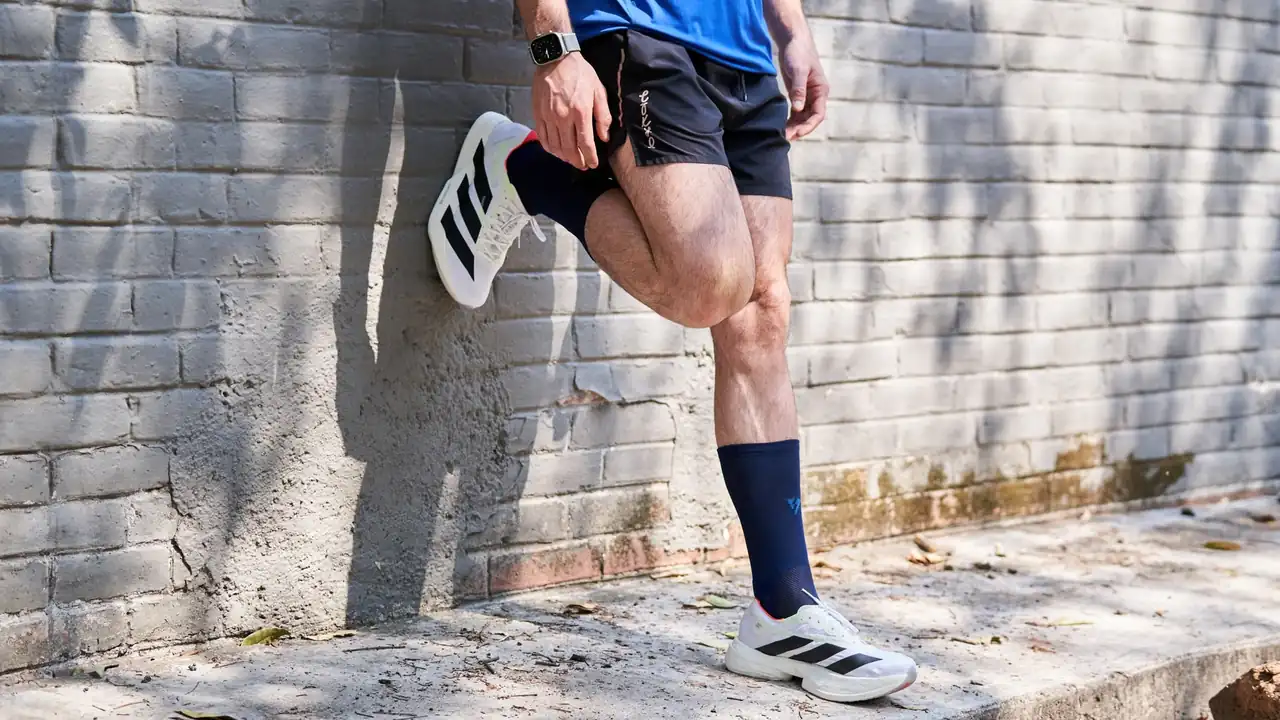
Leg compression stopped being a rare resource years ago. In locker rooms, offices, and city streets, it is increasingly common to see technical socks, sleeves, tight leggings, and compression devices taking the place of traditional stockings. The reason is simple: not everyone tolerates equally a garment that squeezes from the foot to the thigh, especially when the heat rises, the skin gets irritated, or the routine demands freedom of movement.
In running, moreover, the debate often goes beyond aesthetics or comfort. Many runners seek faster recovery, less feeling of heaviness, and a fit that does not distract during workouts or the hours afterward. That is where real alternatives appear, some more athletic, others more clinical, and others designed for everyday use, with different pressure levels and very specific uses.
Which options best replace classic stockings
The right alternative depends on what needs to be solved. A swollen leg after many hours standing is not the same as tight calves after a long run. Nor does a person who needs medical support respond the same way as a runner who just wants a light feeling of support. The value of these options lies in their versatility, not in any supposed universal solution.
In practical terms, the most common substitutes are compression socks, calf sleeves, compression tights and leggings, sports calf sleeves, and, in more medical contexts, pneumatic devices or semi-rigid garments. Each covers a different need and behaves differently during running, at rest, or during recovery.
The key is understanding that compression does not always need to wrap the whole leg. Sometimes it is enough to act on the foot and calf; other times, it is better to leave the ankle free or keep the sole of the foot uncovered. In other cases, the focus is on the entire musculature and a high-waisted garment works better than a long stocking. The point is not to pile on pressure, but to distribute it wisely.
Compression socks: the most logical replacement
For many runners, compression socks are the first natural substitute. They preserve the idea of graduated pressure, but reduce the feeling of confinement by limiting it to the foot and calf. That makes them easier to put on, more comfortable with narrow-last shoes, and less stifling in summer, when a long garment can turn into a small oven.
Their use fits well both in training and on long days standing. In sport, calf compression can be useful for those who feel muscle vibration, accumulated fatigue, or slow recovery after intense efforts. The feeling of support is more specific and less invasive than that of a full stocking, and that explains their popularity.
There is also a practical factor that matters a lot: they are easy to wash and dry, take up little space, and usually offer more variety in sizes, colors, and fabrics. On today’s market, there are many versions with flat seams, breathable fibers, and reinforced areas at the arch of the foot. They do not solve everything, but they do handle the middle ground between a classic stocking and a conventional sports garment quite well.
Sleeves and calf guards for those who want freedom in the foot
Calf sleeves, also called calf guards, eliminate one of the most common discomforts: pressure on the toes, instep, or sole of the foot. Those who use them keep compression in the muscle area most punished by running, but gain freedom to choose socks, footwear, and ventilation level. On hot days, that difference is noticeable, like a breeze when exiting a tunnel.
In running and repetitive-impact sports, these pieces are associated above all with muscle support, a sense of stability, and fatigue control. They are not a medical solution in themselves, but they are a very commonly used tool by runners who want a less conspicuous garment and one that is easier to combine. They also appeal to those who hate the feeling of compressed fabric between the toes or the rubbing of the material around the forefoot.
Their strong point is flexibility. They go on and come off quickly, allow different technical socks depending on the workout, and are useful in humid or warm climates. As a trade-off, they leave out part of the enveloping effect that full stockings do provide, so they make sense when comfort is the priority and not total compression.
Compression tights and leggings for broader support
Compression tights and technical leggings offer a different kind of coverage. Instead of concentrating pressure on the calf, they act on a larger section of the leg, from the ankle or the thigh, depending on the design. For many athletes, that sensation of continuous fit feels more like light armor than a medical garment. Pressure is distributed and the musculature is more contained.
This option works especially well in cold sessions, long runs, or active recovery days. The body appreciates the warmth without losing mobility, and the runner avoids the uncomfortable mix of cold, sweat, and loose fabric. In winter, moreover, many compression tights solve a common problem: loss of sensitivity in the legs at the start of training.
There is also an aesthetic angle that should not be ignored. People who train daily often want a garment that works for running, walking to the gym, or going back home without feeling dressed for treatment. Tights fill that role easily. Even so, it is worth distinguishing real compression from simple tightness. Not every close-fitting garment squeezes equally or provides the same level of support.
Semi-rigid garments and clinical solutions for specific cases
Outside recreational sport, there are options designed for circulation problems, edema, or venous insufficiency that are not solved with a standard garment. Semi-rigid garments and pneumatic compression devices occupy that more specialized space. Their function is not to accompany a stride, but to help control swelling, medical prescriptions, and more persistent symptoms.
Inflatable devices, for example, apply intermittent or programmed pressure to specific areas. They are used in clinical contexts and usually require professional guidance. Their logic is more precise than that of a stocking: they allow pressure intensity, frequency, and location to be adjusted according to the case. They are not meant for aesthetic comfort, but for a measurable therapeutic effect.
These solutions do not replace stockings on a whim. They are reserved for people with specific needs, from pronounced edema to periods of immobility or recovery under medical supervision. At that level, the issue is not personal preference, but effectiveness. And there, the difference between an elastic garment and a compression machine can be enormous.
Compression sportswear: when support goes beyond the leg
Compression does not live only in the legs. Shorts, long tights, tops, and technical shirts provide more evenly distributed pressure over large muscle groups. For runners, that means less bouncing, a better fit, and a more stable experience during intervals, fartlek, or prolonged efforts.
The advantage of these garments is that they fit into the routine without drawing attention. They do not look like an isolated medical solution, but like a normal part of sports equipment. That naturalness helps many people use them consistently. On long training sessions, the body appreciates clothing that supports without getting in the way, like a second skin that does not squeeze too much.
In addition, the market has greatly refined fabrics. Today there are many pieces with strategic ventilation, reinforced zones, and seams that reduce chafing. That does not turn a pair of tights into a compression stocking, but it does open up an interesting range for those seeking support without giving up freedom of movement. In long races, the final feel matters just as much as the theory.
What matters more: comfort, pressure, or ease of use
Choosing between similar options often seems like a technical issue, but in reality it is frequently decided by sensation. How easy they are to put on and take off can make a bigger difference than the exact type of fabric. Someone who goes running early, in a hurry and with legs still cold, does not always want to struggle for several minutes with a garment that is too tight.
Personal tolerance also plays a role. Some runners cannot stand pressure on the foot, others only feel relief in the calf, and some prefer enveloping support in the thigh and glute. That is why the best alternative is not the most sophisticated one, but the one that best fits the real body, the day’s heat, and the training plan. Usefulness comes from fine-tuning, not from the brand name.
One important detail is breathability. In summer, a poorly ventilated garment can turn compression into a constant annoyance. By contrast, a well-designed technical fabric maintains the feeling of support without turning the leg into a heavy wrap. That difference, though it may seem minor, completely changes the experience.
Support for recovery and everyday use
After running, after many hours sitting, or after a long shift standing, the legs want something else. That is where less sporty, more rest-oriented options come into play: soft compression socks, garments with moderate pressure, or even nighttime use in specific contexts. The goal is no longer performance, but to ease the feeling of heaviness and promote venous return.
Some people also seek these solutions for everyday reasons, not for training. Long trips, hospitality shifts, standing jobs, or periods of low mobility can increase the feeling of load in the legs. In those cases, a lighter garment or an intermittent system may be more useful than a high, rigid stocking.
It is worth remembering that recovery does not depend only on the garment. Gentle movement, hydration, elevating the legs, and avoiding prolonged sedentary time remain important pieces. Compression alone does not work miracles; it works better as part of a sensible whole, almost like one more part of a mechanism that was already turning.
When caution is advisable before choosing
Not all swelling is due to exertion, nor does all heaviness come from a temporary issue. If the legs swell persistently, localized pain appears, skin color changes, or unusual heat is noticed, the priority stops being the purchase of a garment and becomes a medical assessment. Alternatives to traditional stockings do not replace a diagnosis.
Caution is also advisable with excessive pressure. Compression that is too intense, poorly positioned, or unsuitable for the shape of the leg can cause discomfort, numbness, or unpleasant marks. In sport, a poorly chosen piece can distract more than it helps. And in clinical contexts, an incorrect selection can fall short or be counterproductive.
For that reason, the most useful criterion is not to look for a fashionable garment, but to understand which specific problem needs to be solved. A sports calf sleeve may work for a long run; a technical sock, for everyday use; compression tights, for a winter session; and a pneumatic system, for a specific medical case. The best alternative is the one that fits the goal, not the one that promises the most as a rule.
Compression changes shape, but not purpose
The current map of options is much broader than it was a few years ago. Where there used to be only a full stocking, now there are garments for almost every scenario: running, working, traveling, recovering, treating edema, or simply avoiding the discomfort of a full fit. That diversity explains why the question is no longer whether a substitute exists, but which one suits each case.
Technical socks, sleeves, leggings, calf guards, and pneumatic systems form a useful and well-differentiated range. Some prioritize mobility, others relief, others stability, and a few are designed for more demanding medical contexts. Together, they draw a clear picture: compression stopped being a single garment and became a family of solutions.
In the end, the change goes beyond the fabric. It speaks of a user looking for less rigidity, more adaptation, and a response better suited to the body and the workout. And that, in running, matters a lot: the legs not only run, they also accumulate hours, cold, heat, asphalt, and fatigue. Choosing the right garment is a discreet way to care for that everyday wear and tear.
Medical reference: Alternative compression options, NHS.



How to prevent thigh chafing: causes and real solutions

Women’s running windbreakers: seven jackets and how to choose

Do more workouts get rid of soreness? A guide for runners

Jaén Half Marathon 2026: Record 3,800 Runners Registered

Men’s short running tights: how to choose the right pair

World Triathlon confirms data breach involving medical data

Izan Edo targets podium at Miyazaki World Cup

María Pérez ranks ninth in World Athletics’ 2026 top ten

Dos Santos, Duplantis and Sawe: World Athlete of the Year finalists

San Silvestre Vallecana 2026: 42,000 places, prices and start times

 Races3 months ago
Valencia Half Marathon 2027: date and registration

 Reviews and Comparisons4 months ago
Asics Gel-Roadmiles 3 for men: review and current price

 Races3 months ago
Valencia Marathon 2026: entry, ballot and course

 Reviews and Comparisons4 months ago
Asics Gel Sonoma 8 Gore-Tex: complete analysis for trail and rain

 Sneakers3 months ago
Saucony Endorphin Pro 4: full review and verdict

 News5 months ago
Strava API 2026: what changes for clubs, challenges and runner apps?

 Reviews and Comparisons5 months ago
Nike Alphafly 3: opinions, sensations, and real key points

 Reviews and Comparisons4 months ago
Under Armour running shoes review 2025-2026: models and key features

 Sports Equipment4 months ago
Shoe sizes in cm: a clear guide to getting the right fit for your footwear

 Sneakers3 months ago
Skechers GO RUN Consistent 2.0 analysis: comfort and limits

 News5 months ago
Valencia Marathon 2026 route: key tips to train and run better

 Sneakers4 months ago
Adidas Adizero Boston 13 for men: review and verdict