Health and Nutrition
Pain behind the knee: causes, warning signs, and what to do
Posterior knee discomfort can range from an overuse injury to a Baker’s cyst or a meniscal injury.

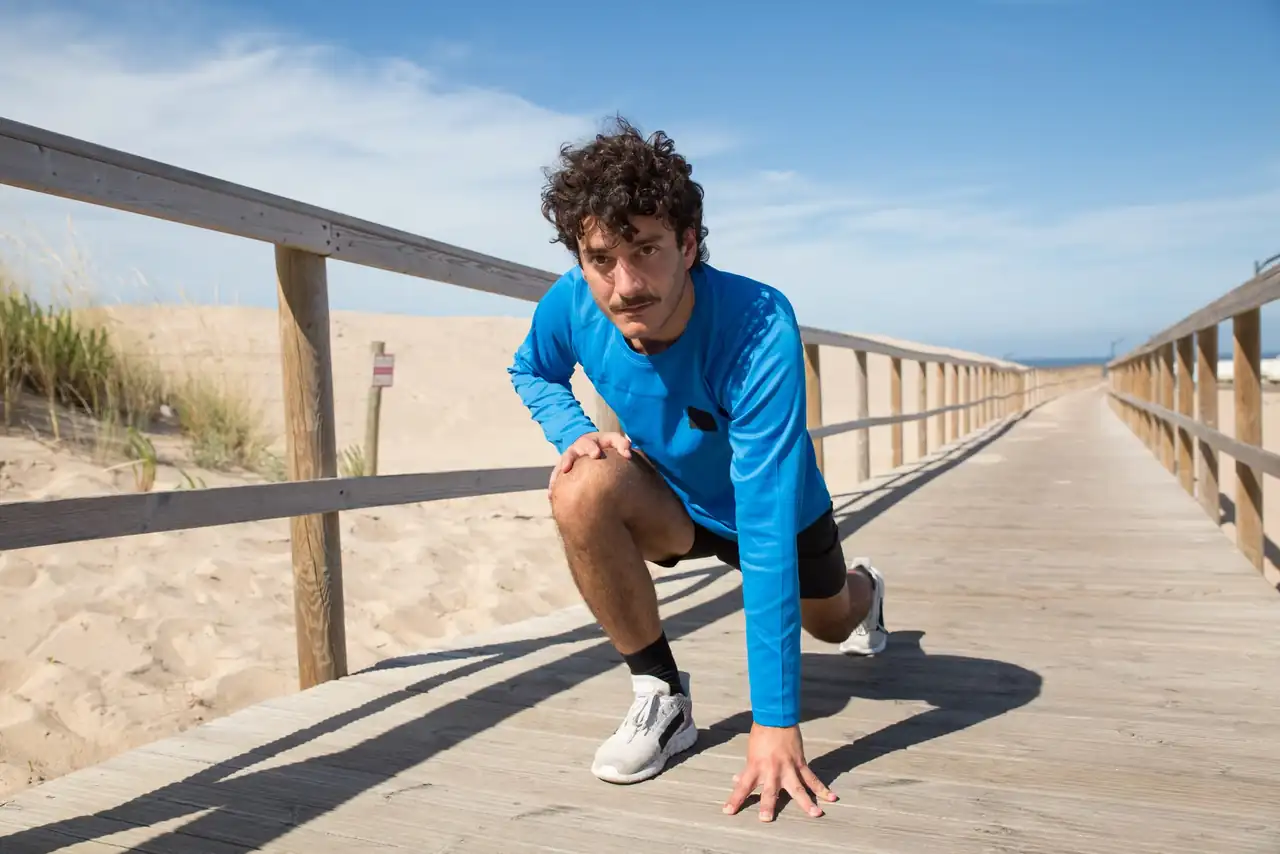
Pain in the back of the knee rarely has a single explanation. Behind that hinge that bends and bears weight when running, climbing stairs, or braking suddenly, tendons, ligaments, bursae, blood vessels, and joint structures coexist and can become irritated by overuse, a blow, or accumulated wear and tear. In sports, and especially in running, this area often reveals poorly distributed load, a technique that punishes the joint, or an injury that is still in its early stage.
The exact location matters. Pain in the popliteal hollow does not feel the same as pain on the inner side, and a discomfort that appears when bending the leg is not interpreted in the same way as one that flares up when getting out of bed in the morning. The good news is that the pain pattern offers useful clues. The bad news is that it should not be trivialized: some causes are mild and temporary, but others require medical evaluation to prevent a small problem from dragging on for weeks.
What that discomfort reveals when it appears behind the knee
The back of the knee functions as a crossroads. Hamstring tendons, stabilizing ligament structures, and a small fluid-filled sac that reduces friction between tissues all pass through there. When something becomes inflamed, tight, or torn, the body usually warns with a very specific signal: pain when bending, stiffness at startup, or a feeling of tightness at the end of the stride. In runners, that warning often comes after increasing mileage, adding hills, pushing pace, or linking several sessions with little recovery time.
Not all posterior pain means a serious injury, but not everything can be explained by simple tiredness either. A muscle overload can ease within a few days with relative rest, while a meniscal injury, a ligament tear, or a popliteal cyst can create a more persistent picture. There is also referred pain from other areas, such as the hip or even the back, which can be misleading because of its location and requires looking at the whole picture, not just the exact spot that hurts.
In sports practice, the pattern is often quite recognizable. If the pain appears when running uphill, accelerating, or fully extending the knee, it is worth thinking about tendons and soft tissues. If the discomfort is accompanied by swelling, locking, or clicking, the focus shifts toward the meniscus or an internal joint problem. And if there is some kind of soft lump behind the knee, with a feeling of pressure, Baker’s cyst enters the clinical conversation strongly.
Common causes and how they usually present
Hamstring overuse is one of the most common explanations in active people. These muscles, located at the back of the thigh, end in tendons that insert near the knee. When they become inflamed, the pain is located in the back area and may be accompanied by discomfort when running, climbing stairs, or flexing the leg against resistance. In athletes, the trigger is usually a mix of excessive volume, technique repeated to exhaustion, and a lack of real rest between efforts.
Bursitis can also be behind that sharp pain or pressure in the popliteal area. The bursa acts as a small shock absorber, a kind of biological cushion that prevents constant friction between bones, tendons, and muscles. When it becomes irritated by bumps, repeated support, or continuously bent positions, the pain often becomes more obvious when squatting, kneeling, or keeping the knee bent. In some cases, very localized tenderness appears, almost as if a spotlight had been turned on beneath the skin.
Baker’s cyst deserves a special mention because it can be seen and felt. It forms from an accumulation of synovial fluid at the back of the knee and is usually associated with other joint problems such as osteoarthritis, rheumatoid arthritis, or a meniscal injury. It may cause no symptoms, or it may present as a soft, mobile, bothersome mass that tightens with movement. When it is large, it limits bending, makes running uncomfortable, and creates an almost mechanical feeling of pressure, as if the joint had too much volume in too little space.
Meniscal injuries also usually enter the differential diagnosis. The meniscus works as an internal shock absorber and suffers both from sudden twisting and from age-related wear. Pain may be felt behind or toward the side of the knee, especially when crouching, turning, walking quickly, or going downstairs. If locking, clicking, or a feeling that the knee gets stuck also appears, suspicion gains weight and medical evaluation becomes more important.
Ligament tears, especially after a bad twist, a fall, or a strong impact, can cause very noticeable pain in the back of the knee. The joint loses stability, swells quickly, and walking becomes clumsy. There is not always a major visible trauma: sometimes a poorly executed change of direction, so typical in field sports, is enough for the ligament to be strained. In these cases, the sensation is usually more severe than a simple strain, with a mix of instability and fear of putting weight on it.
Osteoarthritis and rheumatoid arthritis are not left out. The first wears down cartilage and can cause chronic pain, stiffness, and worsening with load; the second adds inflammation, morning stiffness, and a more generalized pattern. In people over 50, osteoarthritis is a major factor, but it can also appear earlier if there is excess weight, misalignment, or a history of previous injuries. In both cases, the knee tends to complain more when starting movement and less once the joint has warmed up.
Varicose veins, although thought to be far from the knee, can also cause problems. When blood pools and venous circulation becomes sluggish, the back of the knee may ache or feel heavy at the end of the day. It is usually not a sharp sports-injury pain, but a more diffuse discomfort, accompanied by a feeling of heaviness in the legs. Sometimes visible spider veins appear, and it gets worse after standing or sitting for long periods.
Signs that point to the diagnosis without wasting time
The moment the pain appears says a lot. If it starts after a fall, a twist, or a particularly intense session, a traumatic or overuse origin becomes more likely. If it arises in the morning, with stiffness that improves with movement, osteoarthritis or an inflammatory disease become more plausible. If it appears at the end of the day and is accompanied by heaviness, the venous component or prolonged overuse deserves attention. The story of the pain, more than a single word, works like a short film.
What accompanies the pain also matters. Visible swelling, a palpable lump, locking when bending the knee, clicking, local heat, fever, difficulty walking, or a clear feeling of instability do not fit with a simple temporary discomfort. A swollen or locked knee, especially if it prevents normal weight-bearing, changes the scenario. In sports, continuing to run in that context usually worsens the injury and prolongs recovery.
Physical examination and imaging tests help separate what looks similar from what it truly is. An X-ray can show wear and tear or bone abnormalities; an MRI provides a more detailed view of menisci, ligaments, cartilage, and soft tissues. It is not requested routinely, but when the clinical picture justifies it. Medical observation remains the foundation, because many times the body tells the story before an image does.
What is usually done in mild cases and what changes when there is an injury
In mild discomfort or overload, relative rest is usually the sensible first step. That does not mean complete immobility, but rather reducing what triggers the pain: intervals, hills, pace changes, or long sessions. Ice applied for about 15 to 20 minutes, several times a day, can help reduce initial inflammation. It is also advisable to avoid repetitive movements that keep feeding the irritation, even if the discomfort still allows you to move.
When the problem comes from tendons or bursae, physiotherapy often plays a central role in recovery. Progressive work on strength, mobility, and load management helps the joint tolerate effort again. If inflammation persists, the doctor may consider anti-inflammatory medication or injections in specific situations, always with clinical judgment. In some cases, aspiration or surgery is reserved for more complex or resistant situations.
If Baker’s cyst is suspected, the real treatment does not focus only on the fluid sac, but on the cause feeding it. When the underlying condition is controlled, the cyst may shrink or disappear. If it is large, causes a lot of pain, or ruptures, the approach changes and may require drainage, medication, or intervention. In that scenario, trying to ignore it usually does not work: the knee keeps speaking, just louder.
Ligament tears and some meniscal injuries require a more surgical perspective in certain cases. Temporary immobilization, using crutches to unload weight, or even surgery may be part of treatment, depending on severity and the structure affected. Timing matters a great deal here, because an unstable knee or a poorly tolerated torn meniscus does not just hurt; it also alters walking mechanics and makes other areas compensate in an awkward way.
When pain stops being a sports nuisance and requires a medical visit
There are signs you should not wait to go away on their own. If the pain lasts more than three days despite rest and ice, if it is very intense when walking or climbing stairs, if the knee does not bend properly, or if a new sound is heard with each movement, it deserves medical evaluation. The same applies when deformity, fever, tingling, or swelling that clearly increases appears. In those cases, the body is not asking for patience; it is asking for an examination.
For runners, there is a very useful practical line: if the discomfort changes your stride, makes you limp, or is still present in daily life, it no longer seems like simple muscle fatigue. Pain that shows up when standing up from the sofa, carrying weight, or stepping down from a curb suggests that the affected structure is tolerating load poorly. Continuing to accumulate impact on an irritated tissue often turns a small warning into a longer repair job.
Early diagnosis prevents dead ends. A tendinitis treated in time can resolve with unloading and strengthening; a meniscal or ligament injury detected early can be managed better and with fewer sequelae; osteoarthritis or rheumatoid arthritis require a different approach, but the sooner they are identified, the better they are controlled. The knee, after all, is a precision piece wrapped in a very exposed shell. When it complains, there is almost always a specific reason behind it.
The back of the knee as a warning: reading the signal before it becomes chronic
Posterior knee pain is not a diagnosis, but a clue. Sometimes it points to simple overload; other times, to a meniscal injury, a popliteal cyst, bursitis, a venous disorder, or an inflammatory disease. The key is the context: how it started, what makes it worse, what accompanies it, and how much it limits you. In sports medicine, and also in daily life, that context is worth as much as the intensity of the pain.
Listening to the joint in time saves months of dragging it along. The point is not to dramatize every ache, but to distinguish logical fatigue from a persistent signal. A knee can be quiet for days and, nevertheless, have been warning for weeks with a dull ache behind it. Reading that message calmly, without pushing it beyond its limits, is often the difference between a brief scare and an injury that settles in with the patience of winter.
You may also like: Pain Behind the Knee: Causes, Signs, and What to Do and My knee hurts behind the kneecap: causes, warning signs, and what to do.
Medical reference: Pain behind the knee, Cleveland Clinic.



How to prevent thigh chafing: causes and real solutions

Women’s running windbreakers: seven jackets and how to choose

Do more workouts get rid of soreness? A guide for runners

Jaén Half Marathon 2026: Record 3,800 Runners Registered

Men’s short running tights: how to choose the right pair

World Triathlon confirms data breach involving medical data

Izan Edo targets podium at Miyazaki World Cup

María Pérez ranks ninth in World Athletics’ 2026 top ten

Dos Santos, Duplantis and Sawe: World Athlete of the Year finalists

San Silvestre Vallecana 2026: 42,000 places, prices and start times

 Races4 months ago
Valencia Half Marathon 2027: date and registration

 Races4 months ago
Valencia Marathon 2026: entry, ballot and course

 Reviews and Comparisons4 months ago
Asics Gel-Roadmiles 3 for men: review and current price

 Reviews and Comparisons4 months ago
Asics Gel Sonoma 8 Gore-Tex: complete analysis for trail and rain

 Sneakers3 months ago
Saucony Endorphin Pro 4: full review and verdict

 News5 months ago
Strava API 2026: what changes for clubs, challenges and runner apps?

 Reviews and Comparisons5 months ago
Nike Alphafly 3: opinions, sensations, and real key points

 Reviews and Comparisons4 months ago
Under Armour running shoes review 2025-2026: models and key features

 Sports Equipment4 months ago
Shoe sizes in cm: a clear guide to getting the right fit for your footwear

 Sneakers3 months ago
Skechers GO RUN Consistent 2.0 analysis: comfort and limits

 News5 months ago
Valencia Marathon 2026 route: key tips to train and run better

 Sneakers4 months ago
Adidas Adizero Boston 13 for men: review and verdict