Health and Nutrition
Pain in the instep of the left foot: causes and key signs
Discomfort in the top of the foot can range from an overload to nerve or bone injuries.

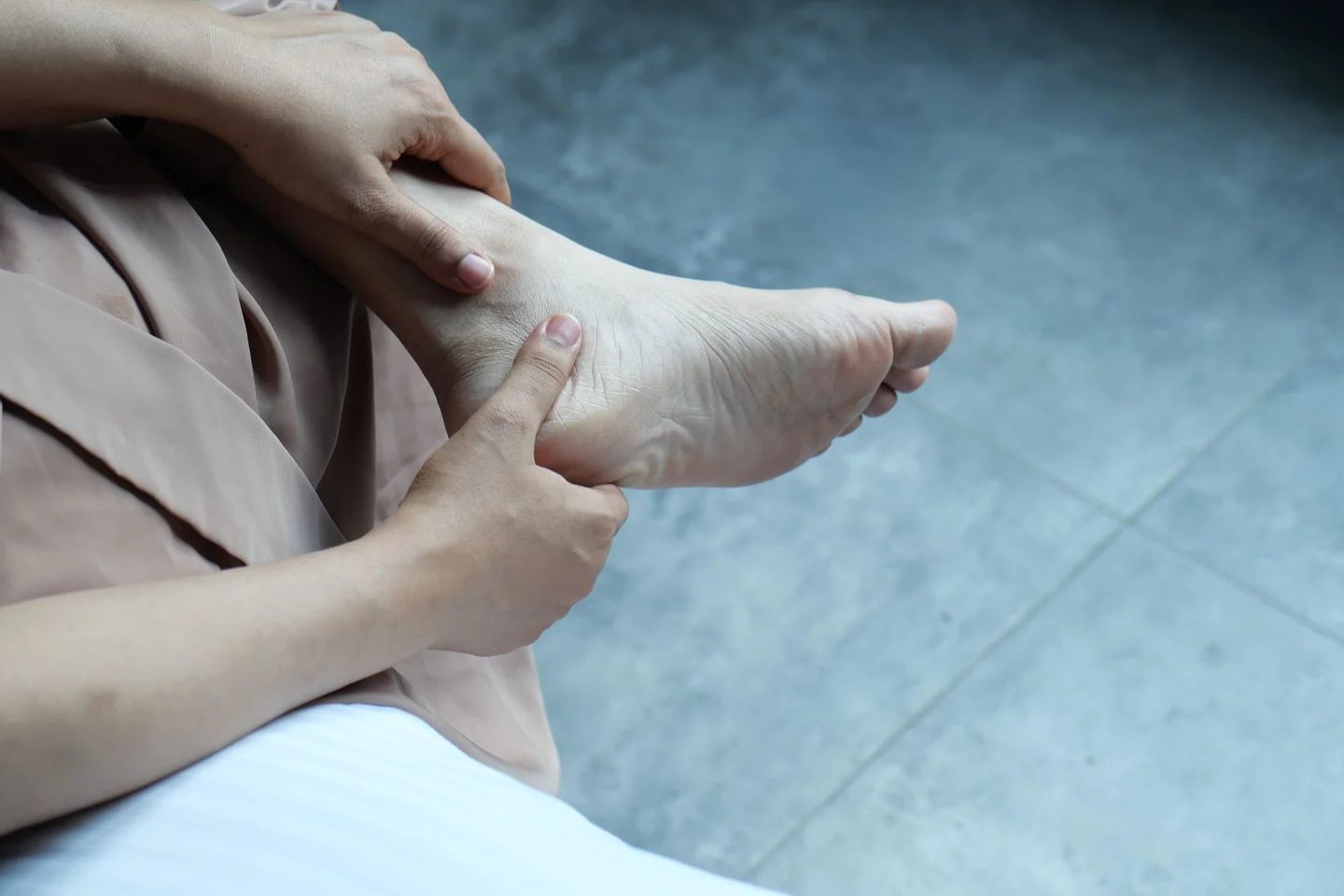
Pain in the instep of the left foot usually appears when a small but heavily used structure begins to fail: an irritated tendon, an overworked bone, a compressed nerve, or a joint that can no longer tolerate the same pace as before. In runners, intensive walkers, and people who spend many hours on their feet, that area acts like fine wiring exposed to continuous pressure, and any poorly distributed rubbing eventually becomes noticeable.
The discomfort does not always have a single cause. It may feel like a stabbing pain, burning, pulling, pressure, or a kind of lump that is tender to the touch. In some cases it appears after changing shoes, increasing mileage, training on hills, or simply spending a long day in tight footwear. In other cases, the origin lies lower in the biomechanical chain: a forced gait, a high arch, flat feet, or an old injury that has altered the way weight is borne.
Common causes that explain the discomfort
Mechanical overload is one of the most common explanations. The instep concentrates extensor tendons, ligaments, small joints, and part of the metatarsals, an area that moves a lot and has little protection when shoes are tight or activity suddenly increases from one day to the next. In a runner, this can happen after a sudden increase in volume, new shoes with a low instep, or lacing too tightly. In someone who walks a lot, it appears after hours of impact, as if the foot were a spring with no rest.
Another very common cause is extensor tendinitis, that is, inflammation of the tendons that lift the toes and stabilize the forefoot. The pain is usually felt on the top of the foot when flexing it, when running uphill, or when pressure is applied to the instep. Sometimes it is accompanied by mild swelling and a feeling of tightness, as if the foot had lost room inside the shoe. The problem is not unusual in impact sports, but it is not exclusive to sport: it also appears because of rigid footwear, walking on uneven terrain, or a repeated movement that irritates the same area every day.
At the same time, a synovial cyst or ganglion can cause a soft or firm lump on the top of the foot. It is usually round, slow-growing, and may hurt more when pressed or when wearing closed shoes. Although it is often not serious, its presence changes the way the foot distributes pressure, and that is enough to generate persistent discomfort. At first glance it may look like an isolated lump, but in reality it often arises from a joint capsule or a tendon sheath that has accumulated fluid.
Bone injuries should also be considered. The instep does not hurt only because of soft-tissue inflammation; sometimes the origin is in the metatarsals, midfoot joints, or a stress reaction. Stress fractures are especially relevant in runners because they can begin with a dull pain and worsen if the load continues. The left foot has nothing special about it in itself, but it can be the one that bears more load if technique, fatigue, or a previous injury has altered weight distribution.
In people with high arches, the arch is higher and the instep tends to work under more tension. With flat feet, on the other hand, the arch collapses and the mechanics change completely, which can lead to compensations in the midfoot. In both cases, the pain does not arise from a single broken part of the system, but from a faulty distribution of forces. The foot protests like a poorly aligned hinge: first it creaks, then it heats up, then it starts to hurt with the slightest movement.
When the pain seems to come from a tendon, a nerve, or a bone
Tendinitis usually causes a clearer discomfort with movement. The runner notices that the pain appears when starting, when going uphill, or when lifting the foot during the stride. Sometimes the area is slightly tender to the touch and there may be mild swelling. If friction from the shoe or pressure from the tongue makes it worse, a tendinous origin becomes more likely. It is usually not an emergency, but it is a sign that the tissue needs less load before the irritation becomes persistent.
When the pain is described as burning, tingling, or an electric shock, the clue may point to a nerve problem. Tarsal tunnel syndrome, certain neuropathies, or local compression can send symptoms toward the instep or the toes. The sensation does not always match a large visible inflammation; sometimes the skin looks normal, but the foot burns from within, especially at the end of the day or at night. It is a more electrical pain than muscular, more like wiring than a hinge.
By contrast, if the discomfort is deep, very localized, and worsens with weight-bearing, one should think of the bone or joint. An overloaded metatarsal, an inflamed joint, or a stress reaction can produce pain that does not ease easily and is sometimes confused with simple overuse. In runners, this type of problem deserves attention because the most common mistake is to keep training at the usual pace while the bone quietly accumulates damage.
The practical difference between these conditions usually lies in the pattern. The tendon hurts with movement; the nerve, with burning or tingling; the bone, with weight-bearing and repeated load. It is not a perfect boundary, but it is useful. In consultation, that distinction helps decide whether a more precise examination, an X-ray, an ultrasound, or even an MRI is needed, depending on what is suspected.
What usually accompanies the pain and helps identify it
Swelling is one of the most useful signs. If the instep is visibly more swollen, the cause may be inflammatory, traumatic, or due to sustained rubbing. The skin sometimes looks tighter and the foot fits worse in the shoe, as if it had swollen in just a few hours. That does not by itself say what is happening, but it does confirm that there is active irritation.
The time of day also matters. Pain that worsens when you first start walking may suggest stiffness or an irritated tendon; pain that increases after hours of loading points to overuse; and pain that flares at night or at rest makes one think of more persistent nerve or inflammatory causes. In veteran runners, it is not uncommon for pain to appear when the adrenaline from training drops and the body stops compensating.
Another useful sign is the relation with footwear. If the problem appears only with certain shoes, with tight laces, or with stiffer boots, the instep may be suffering from direct pressure. Sometimes the trigger is not a serious injury but a very common combination of a narrow shoe last, a high instep, and high mileage. The foot, trapped inside, behaves like a door being hit by the wind: it does not stop moving, but every rub adds up.
In the case of a palpable lump, a ganglion fits fairly well, although it is not the only option. A cyst is usually more round, somewhat elastic, and localized, while a bony prominence feels hard and fixed. The difference on touch is suggestive, but it does not replace medical assessment if the lump hurts, grows, or limits walking.
The role of running, hills, and footwear
Running does not automatically cause pain, but it can reveal a problem that was already developing. Hills require greater foot dorsiflexion; sudden pace changes increase strain on tendons and metatarsals; and intervals on hard surfaces punish an area that works a lot and rests very little. In that context, the instep receives a sum of micro-impacts that are not always noticed during the session, but are felt the next day.
Footwear plays a huge role. Shoes with a rigid upper, models with a very snug fit, laces that are too tight, or choosing the wrong size can turn mild discomfort into real pain. In runners with a high instep, any pressure is magnified. And if the material does not give with use, the foot ends up looking for space at the expense of compressing tendons and soft tissues.
Orthotics or biomechanical adjustments can help in some cases, but they are not a universal solution. They are useful when the root of the problem lies in load distribution, the foot arch, or alignment of support. Without a reasonable diagnosis, an insole may relieve or worsen the problem, depending on the case. The important thing is not to wear a correction out of habit, but to understand why that foot is asking for space.
In runners with a history of sprains, fractures, or changes in gait, pain in the left instep may be an indirect consequence of compensation. The body usually distributes load as best it can, not as it should. If one side protects, the other works harder. And when that strategy lasts for weeks or months, the midfoot ends up paying the price.
What tests and assessments usually clarify the cause
Clinical examination remains the first step. The shape of the pain, the exact point of discomfort, the presence of a lump, heat, tenderness, or movement limitation provide much more guidance than it seems. A professional can palpate, compare both feet, and check whether the pain appears with certain movements, with weight-bearing, or with direct pressure from footwear.
An X-ray is useful when bone involvement, deformity, arthritis, or a fracture is suspected. It does not always explain everything, but it helps rule out structural problems. An ultrasound is valuable when tendons, ganglions, or soft-tissue inflammation are suspected. And MRI is reserved for cases in which the problem persists or does not fit with an initial impression.
In certain cases with more neurological pain, the symptom pattern matters more than the image. Burning, numbness, stabbing pains, and unusual sensitivity to touch suggest that the problem may be in a nerve pathway, even if the foot does not look very altered on the outside. This disconnect between what is seen and what is felt is typical of some neuropathic pains and explains why the foot can hurt so much without showing many external signs.
When pain appears after a blow or a twist, the logic changes: one must think of a post-traumatic injury, even if it seems mild at first. A swollen instep after a fall or a bad step can hide a soft-tissue injury or a small stress fracture that is not immediately visible. In these cases, time does not always heal; sometimes it only masks.
Common measures that usually relieve the foot without forcing it
Reducing load is the most sensible measure at the beginning. If the pain comes from overuse, continuing to accumulate impact usually prolongs the problem. Lowering running volume, avoiding hills, and leaving time between sessions helps the tissue stop fighting every minute. In the foot, as with a taut rope, insisting only increases friction.
Local cold therapy can provide temporary relief when there is inflammation. Applied carefully and without direct contact with the skin, it helps modulate discomfort and reduce the sensation of overload. It is also a good idea to review footwear: a less rigid tongue, a softer fit, or a slightly wider last can make a big difference. Sometimes a small improvement brings great relief because the exact pressure point disappears.
If the pain is related to tendinitis or a troublesome ganglion, treatment may include conservative measures, injections in selected cases, or aspiration if the cyst allows it and the specialist considers it appropriate. In more stubborn cases, and only when clearly indicated, surgery may be considered. It is not the usual path, but it is not rare either when a lesion takes up space, compresses structures, and does not respond to anything else.
For pain with a nerve component, the strategy changes again. Resting or massaging is not enough. Diagnosis and a specific approach are needed, because an irritated nerve does not behave like a tired muscle. That is why it is so important not to confuse burning pain with simple overuse; the foot’s language can be subtle, but not always harmless.
Warning signs that should not be ignored
Persistent pain for several weeks, inability to bear weight, progressive swelling, or the appearance of redness and local heat are signs that deserve evaluation. It is also wise not to delay if the pain wakes you at night, if there is loss of sensation, if the lump grows, or if the discomfort appears after a clear impact. The instep can tolerate quite a lot, but not everything.
In runners, the combination of pain while running and pain while walking is especially relevant. When the discomfort stops being purely sport-related and starts affecting daily life, the problem has usually progressed more than desired. Keeping training by inertia does not help and can turn a weeks-long irritation into a months-long injury.
There is a detail that is often underestimated: pain in only one foot can also be more informative than bilateral pain. If it affects only the left side, the key may lie in gait asymmetry, an old injury on that side, or a technical movement that loads one leg more than the other. The body does not always distribute load symmetrically; the left foot may have been silently supporting for a long time until it can no longer do so.
The good news is that, in many cases, the problem becomes clear with a detailed medical history, a careful examination, and a bit of diagnostic patience. Pain in the instep of the left foot is not a closed label, but a warning with several possible voices. Listening to it in time prevents a manageable discomfort from becoming a stubborn injury, one of those that force you to stop when nobody wants to do so anymore.
A small symptom that sometimes tells a bigger story
The instep speaks of load, mechanics, and space. When it swells, burns, or stiffens, it is usually saying that something is pressing too hard, that a tendon is working without respite, that a bone has not yet finished tolerating impact, or that footwear is leaving too little room for anatomy. It is not a capricious area: it responds to the sum of steps, miles, habits, and small compensations.
In the world of running, that reading is especially useful because pain rarely appears out of nowhere. It almost always comes with context: more training, less rest, a change of shoes, an old injury, uneven gait, or a foot arch that had already been warning you. Looking at the symptom as an isolated piece usually falls short; looking at it as part of a map, on the other hand, explains much more.
That is why the instep deserves clinical respect and some everyday caution as well. Not all pain is serious, but not all pain is trivial either. Between alarm and indifference there is a more sensible middle ground: observe, unload, review the pattern, and look for a solid explanation before the foot starts compensating too much. In such a small area, every millimeter matters.
Medical reference: Pain in the top of the foot, NHS.



How to prevent thigh chafing: causes and real solutions

Women’s running windbreakers: seven jackets and how to choose

Do more workouts get rid of soreness? A guide for runners

Jaén Half Marathon 2026: Record 3,800 Runners Registered

Men’s short running tights: how to choose the right pair

World Triathlon confirms data breach involving medical data

Izan Edo targets podium at Miyazaki World Cup

María Pérez ranks ninth in World Athletics’ 2026 top ten

Dos Santos, Duplantis and Sawe: World Athlete of the Year finalists

San Silvestre Vallecana 2026: 42,000 places, prices and start times

 Races4 months ago
Valencia Half Marathon 2027: date and registration

 Races4 months ago
Valencia Marathon 2026: entry, ballot and course

 Reviews and Comparisons4 months ago
Asics Gel-Roadmiles 3 for men: review and current price

 Reviews and Comparisons4 months ago
Asics Gel Sonoma 8 Gore-Tex: complete analysis for trail and rain

 Sneakers4 months ago
Saucony Endorphin Pro 4: full review and verdict

 News5 months ago
Strava API 2026: what changes for clubs, challenges and runner apps?

 Reviews and Comparisons5 months ago
Nike Alphafly 3: opinions, sensations, and real key points

 Reviews and Comparisons4 months ago
Under Armour running shoes review 2025-2026: models and key features

 Sports Equipment4 months ago
Shoe sizes in cm: a clear guide to getting the right fit for your footwear

 Sneakers3 months ago
Skechers GO RUN Consistent 2.0 analysis: comfort and limits

 News5 months ago
Valencia Marathon 2026 route: key tips to train and run better

 Sneakers4 months ago
Adidas Adizero Boston 13 for men: review and verdict