Health and Nutrition
Top-of-foot tendonitis in runners: causes and treatment
Pain in the upper part of the foot can hinder activity. This is how it is identified and treated without it becoming chronic.

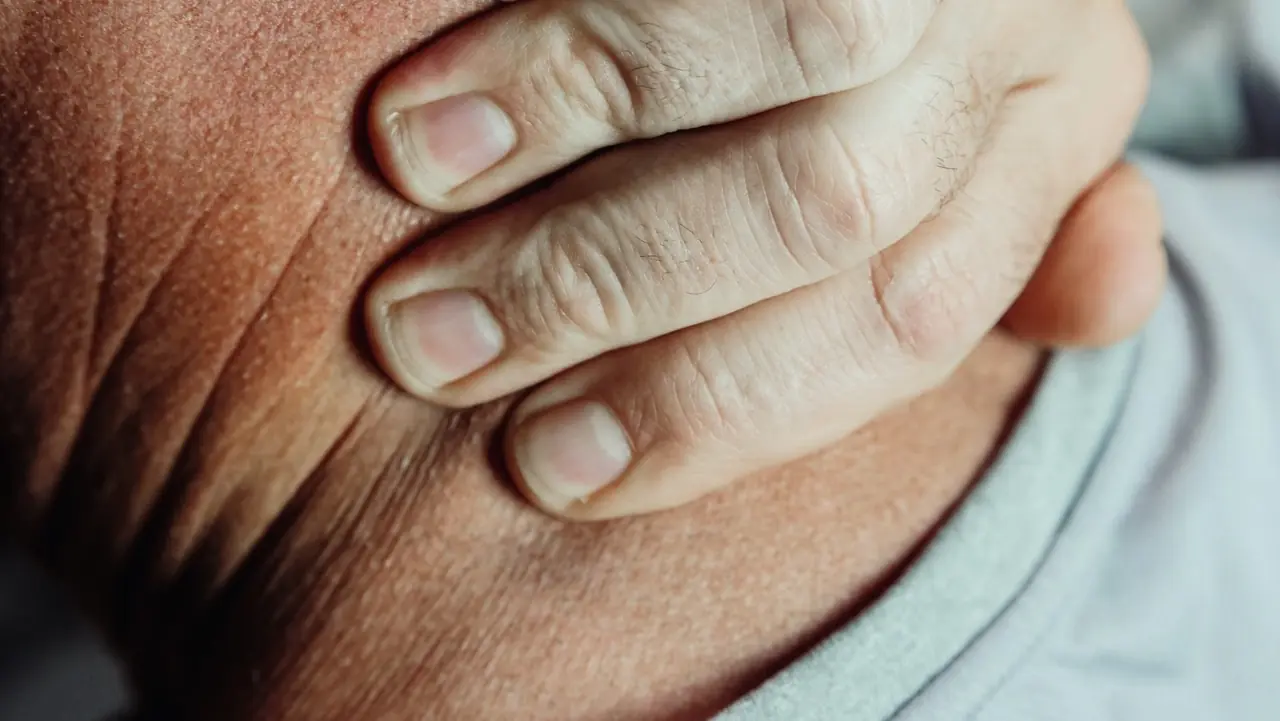
Pain on the top of the foot often starts as a mild discomfort and can make everyday movements such as walking, climbing stairs, or tying your laces uncomfortable. Extensor tendon irritation is commonly linked to overuse, tight footwear, or a sudden increase in activity, so it can affect runners as well as people who spend long hours on their feet.
It is not usually a serious injury, but it is a functional warning sign. When the tissue becomes irritated, the problem is not just the immediate pain, but the loss of load tolerance: every step rubs a little more, every workout adds more friction, and every day without adjusting the effort can lengthen recovery. Effective management combines relative rest, progressive exercise, and a review of the mechanical factors that keep the overload going.
What really happens on the top of the foot
Several tendons run across the upper side of the foot and help to lift the toes and stabilize the stride. The ones most often involved are the tibialis anterior, the extensor digitorum longus, and the extensor hallucis longus. These are thin, strong, highly active structures during walking, but they are also sensitive to repeated pressure from footwear or excessive impact.
When people speak of tendinitis in this area, what is really being described is tendon irritation due to overuse. The term is still useful for readers, although in modern clinical practice tendinopathy is emphasized more, because there is often no classic inflammation, but rather a tendon response to a poorly tolerated load. This distinction matters: not everything is solved with rest, and even less with prolonged immobilization.
The top of the foot is not an isolated compartment. What happens there can be influenced by the ankle, the shape of the foot, stiffness in the midfoot, or an inefficient running technique. In runners, for example, a sudden increase in mileage, changes in surface, or shoes that are narrower than usual can turn a quiet area into a very specific pain point.
How the problem shows up when it begins
The most common symptom is localized pain on the top of the foot, which appears when walking, running, or flexing the toes upward. In early stages, it may only be noticed at the start of activity and then ease after a few minutes, as if the tissue needed to warm up. If the overload continues, the pain tends to start sooner and last longer.
Tenderness to touch, tightness, and some swelling may also appear. Shoes feel more uncomfortable than usual, especially when the laces press on the top of the foot. In some cases, the skin may look slightly red or feel warm, although visible signs are not always present. In fact, a painful instep without major inflammation does not rule out a tendon injury; it simply suggests the problem may be more functional than external in appearance.
In athletes, the condition often becomes noticeable when the pace increases, intervals change, or sessions involve many starts and stops. In less active people, a long day of walking or a stiff shoe is enough to trigger discomfort. The most useful clue is usually this: if the pain repeats with the same movement and improves when the load is reduced, the tendon is asking for less friction and more adaptation.
Why it appears and what factors favor it
The most common cause is repeated overload. The tendon is exposed to more repetitions than it can currently tolerate, and the area becomes sensitive. This mismatch may arise from training more, resting less, or a seemingly small change such as a new shoe model, a poorly fitted insole, or laces that are too tight over the instep.
Biomechanics also matter. A high-arched foot, for example, usually distributes load less effectively and leaves less room for shock absorption, so the top of the foot may experience more stress. The same happens if the ankle loses mobility, if there is stiffness in the midfoot, or if after a sprain the way you bear weight changes and forces other tissues to compensate. Sometimes the problem does not start in the tendon, but it ends up affecting it.
It is worth adding an important note: not every pain on the top of the foot is tendinitis. A stress fracture, a midfoot injury, nerve irritation, or osteoarthritis can cause similar symptoms, though with different nuances. The context matters: deep pain, inability to bear weight, bruising, deformity, or progressive worsening mean you should think beyond simple overuse.
How diagnosis is guided without losing sight of other causes
Clinical examination is usually enough to suspect it when the pain is reproduced by moving the foot, pressing on the tendons, or wearing tight footwear. The clinician checks exactly where it hurts, which movement triggers it, and whether there is inflammation, stiffness, or a change in gait. That map of symptoms is more valuable than a quick label.
If the picture does not quite fit or signs of greater severity appear, imaging tests may be needed. X-rays help rule out fractures or bone changes; ultrasound allows the tendon and soft tissues to be seen in motion; and magnetic resonance imaging is useful when deeper lesions are suspected, such as bone edema or a stress fracture that is not visible at first.
This distinction is not a minor technicality. A painful top of the foot treated as if it were always the same thing can end up being poorly managed. The top of the foot is a small area, yes, but anatomically complex, which is why the correct diagnosis requires combining symptoms, medical history, and mechanical load. Precision avoids useless treatments and, above all, wasted time.
The treatment that usually works best
The most useful approach is conservative and progressive. First, the activity that causes pain is reduced, but not necessarily to complete rest. Relative unloading allows the tissue to stop receiving the irritating stimulus while still moving enough to avoid deconditioning. In an injury like this, stopping completely does not always speed recovery; often it makes it worse.
The second focus is footwear. A stiff, narrow shoe or a tongue and laces that are too tight can become a press on the top of the foot. Adjusting the closure, choosing models with more dorsal space, or using a less aggressive last can significantly relieve pressure. It also matters to check whether insoles are increasing the internal height of the shoe and rubbing exactly where they should not.
The third pillar is therapeutic exercise. The tendon needs to regain load tolerance, and that is achieved with a carefully graded progression of mobility, strength, and control. There is no need to turn the process into a mechanical table to understand the idea: tissue improves when it is given enough work, neither too little nor too soon. That is the difference between healing and going around in circles.
Why physiotherapy makes a difference
Physiotherapy brings something essential: structure. In a case of pain on the top of the foot, it is not enough to silence the symptom; you need to understand what is keeping the irritation going and how to restore the tendon’s working capacity. That is why ankle mobility, weight-bearing pattern, foot muscle strength, and the pain response to load are all assessed.
In early stages, some manual techniques may help improve mobility and relieve tense nearby structures, but the real core of treatment remains exercise. Passive therapies may support, but they do not replace. When the condition is more persistent, some tools such as shockwaves may be considered in selected cases, always as support and never as a standalone solution.
The great advantage of well-planned rehabilitation is that it reduces relapses. Many top-of-foot pains disappear for a few days and return when running or long walks are resumed. That happens because the tendon has not regained enough capacity. Physiotherapy, when properly focused, aims precisely for that middle ground where activity stops being an enemy and becomes a normal part of life again.
How long it really takes to improve
There is no universal timeframe, but mild cases usually improve in 2 to 4 weeks if the load is adjusted from the start. When the irritation has been present longer or the person keeps training through the pain, the process can extend to 4 to 8 weeks, and in persistent cases it can go beyond 8 or 12 weeks.
However, time does not depend only on the calendar. It depends on how much the tendon has suffered, whether the problem was detected early, and whether the causes that sustain it are corrected. A runner who changes shoes, reduces volume, works on strength, and returns cautiously usually gets out of the slump sooner than someone who waits still for the pain to disappear on its own.
The best reference is not the clock, but functional response. If walking no longer hurts, the shoe no longer bothers you, and effort is tolerated without a rebound the next day, the tissue is progressing. If pain returns with the slightest increase in activity, the load still needs adjusting. That back-and-forth is normal and part of the process.
What happens if it is ignored and the strain continues
Continuing to train through pain does not make the injury dramatic overnight, but it can make it long-lasting, stubborn, and prone to recurrence. The irritated tendon starts to complain earlier, tolerates repetitions less well, and eventually forces changes in gait. From there, the chain moves: ankle, calves, knee, hip.
Compensations in the way of walking can also appear. The body, which always tries to avoid discomfort, redistributes load differently and creates a new problem to protect the old one. That change in strategy is usually more costly than the initial injury. Hence the importance of acting in time, before the pain becomes part of the landscape.
When the top of the foot becomes chronic, it is not only harder to return to sports activity. Fear of weight-bearing, protective stiffness, and a constant feeling of tired feet can also appear. In injuries like this, persistence usually comes more from the accumulation of small overloads than from one large isolated injury.
How to tell it apart from other similar pains
Tendon pain is usually more superficial, more mechanical, and more closely linked to movement. A stress fracture, on the other hand, causes deeper, more pinpoint, and progressively worsening pain, which may even get worse at rest if the bone is already very irritated. If there is also pain when hopping on one foot or bearing weight, the suspicion changes.
Midfoot involvement or a significant ligament injury usually leaves a different mark: more pronounced swelling, instability, bruising, and the feeling that the foot is not responding as before. Osteoarthritis tends to cause stiffness, especially after rest, and nerve irritation can add burning, tingling, or numbness. The location of the pain gives clues, but the behavior of the pain completes the picture.
In runners, a quick and simplistic reading of any pain on the top of the foot can lead to a classic mistake: assuming everything is overuse and continuing to rack up mileage. That is not always the case. The pattern of progression, the type of discomfort, and the response to unloading provide very valuable clues to refine the diagnosis.
The role of footwear, gait, and small everyday habits
The top of the foot is affected more easily than it seems. New, slightly stiffer shoes, overly tight lacing, or a hard tongue can cause friction exactly at the sensitive point. Changes in training volume, especially when moving from quiet weeks to intense sessions without a transition, can also trigger discomfort.
Gait is not a biomechanical decoration. It is how the foot negotiates body weight, impact, and forward motion. If the support is inefficient, if the arch is very high, or if the ankle does not move well, the top of the foot may take more strain than it should. That is why sometimes the real solution is not chasing the pain, but reviewing the whole system that produces it.
Even everyday details, such as spending many hours on your feet, going up and down stairs, tightening footwear out of habit, or carrying weight during long days, can keep the condition active. The injury rarely lives alone; it usually grows from the sum of small habits.
What signs mean something more serious should be considered
Pain that prevents normal weight-bearing, clear swelling, bruising on the sole, visible deformity, or discomfort that worsens despite reducing activity all deserve a more thorough assessment. So do night pain, fever, numbness, or the inability to carry on with normal life for several days.
It is important not to downplay a painful top of the foot if it appeared after a blow, a twist, or a sudden change in training. The area can hide midfoot injuries that initially go unnoticed. The sooner the important things are ruled out, the sooner the treatable conservative issues can be organized.
Most of the time the prognosis is good, but that good prognosis depends on not forcing the interpretation. The foot warns you before total silence is broken; the key is to read that warning with judgment, not haste.
How to adjust your training when your instep hurts
For runners, irritation of the extensor tendons on the top of the foot may hurt when pushing off, lifting the toes, or picking up the pace. It can follow a sudden increase in mileage, adding intervals or hills, switching surfaces, or wearing a narrower pair of shoes. Notice whether the pain returns in the same spot, worsens during a run, or lingers when you walk afterwards. These patterns can indicate that your current training load is more than your foot can comfortably handle.
While the pain is present, reduce or pause the sessions that bring it on; do not try to run through symptoms that keep getting worse. You can use another form of exercise only if it does not cause pain during or afterwards. Check your footwear too: loosen the laces over the tender area and make sure the shoe is not pressing on your instep. Note any recent changes in mileage, intensity, terrain, and footwear to help identify possible triggers, and avoid jumping straight back to your usual training load.
Return to running gradually once everyday activities feel comfortable and running does not bring the symptoms back. If pain returns, reduce the load again. Recovery does not follow a fixed timetable, so base your progression on how your foot responds rather than a set date. If the pain persists, worsens, limits your ability to bear weight, or comes with significant swelling, consult a healthcare professional to assess the cause and guide your return to training.
A small discomfort that changes the way you move a lot
Tendon irritation on the top of the foot sums up a frequent idea in sports medicine well: the smallest injuries can disrupt routine more than much more dramatic ones. They do not always prevent walking, but they do make everyday actions that once went unnoticed feel clumsy. Pain on the top of the foot forces a closer, more honest look at footwear, load, technique, and recovery.
Recovery is usually favorable when it is understood as a problem of effort tolerance rather than a simple passing discomfort. Adjusting activity, respecting adaptation times, and rebuilding strength and mobility usually make the difference between a brief episode and a succession of relapses. In running, as in almost everything that wears down, the details matter more than they seem.
The foot does not ask for miracles; it asks for space, well-measured load, and enough time to respond again. That simple logic is almost always where the solution lies.
Medical reference: Tendinitis, MedlinePlus (U.S. National Library of Medicine).



How to prevent thigh chafing: causes and real solutions

Women’s running windbreakers: seven jackets and how to choose

Do more workouts get rid of soreness? A guide for runners

Jaén Half Marathon 2026: Record 3,800 Runners Registered

Men’s short running tights: how to choose the right pair

World Triathlon confirms data breach involving medical data

Izan Edo targets podium at Miyazaki World Cup

María Pérez ranks ninth in World Athletics’ 2026 top ten

Dos Santos, Duplantis and Sawe: World Athlete of the Year finalists

San Silvestre Vallecana 2026: 42,000 places, prices and start times

 Races4 months ago
Valencia Half Marathon 2027: date and registration

 Races4 months ago
Valencia Marathon 2026: entry, ballot and course

 Reviews and Comparisons4 months ago
Asics Gel-Roadmiles 3 for men: review and current price

 Reviews and Comparisons4 months ago
Asics Gel Sonoma 8 Gore-Tex: complete analysis for trail and rain

 Sneakers4 months ago
Saucony Endorphin Pro 4: full review and verdict

 News5 months ago
Strava API 2026: what changes for clubs, challenges and runner apps?

 Reviews and Comparisons5 months ago
Nike Alphafly 3: opinions, sensations, and real key points

 Reviews and Comparisons4 months ago
Under Armour running shoes review 2025-2026: models and key features

 Sports Equipment4 months ago
Shoe sizes in cm: a clear guide to getting the right fit for your footwear

 Sneakers3 months ago
Skechers GO RUN Consistent 2.0 analysis: comfort and limits

 News5 months ago
Valencia Marathon 2026 route: key tips to train and run better

 Sneakers4 months ago
Adidas Adizero Boston 13 for men: review and verdict