Health and Nutrition
Foot points to relieve pain without confusion
Key areas of the sole of the foot, their relationship to common discomfort, and signs to avoid confusing relief with injury.

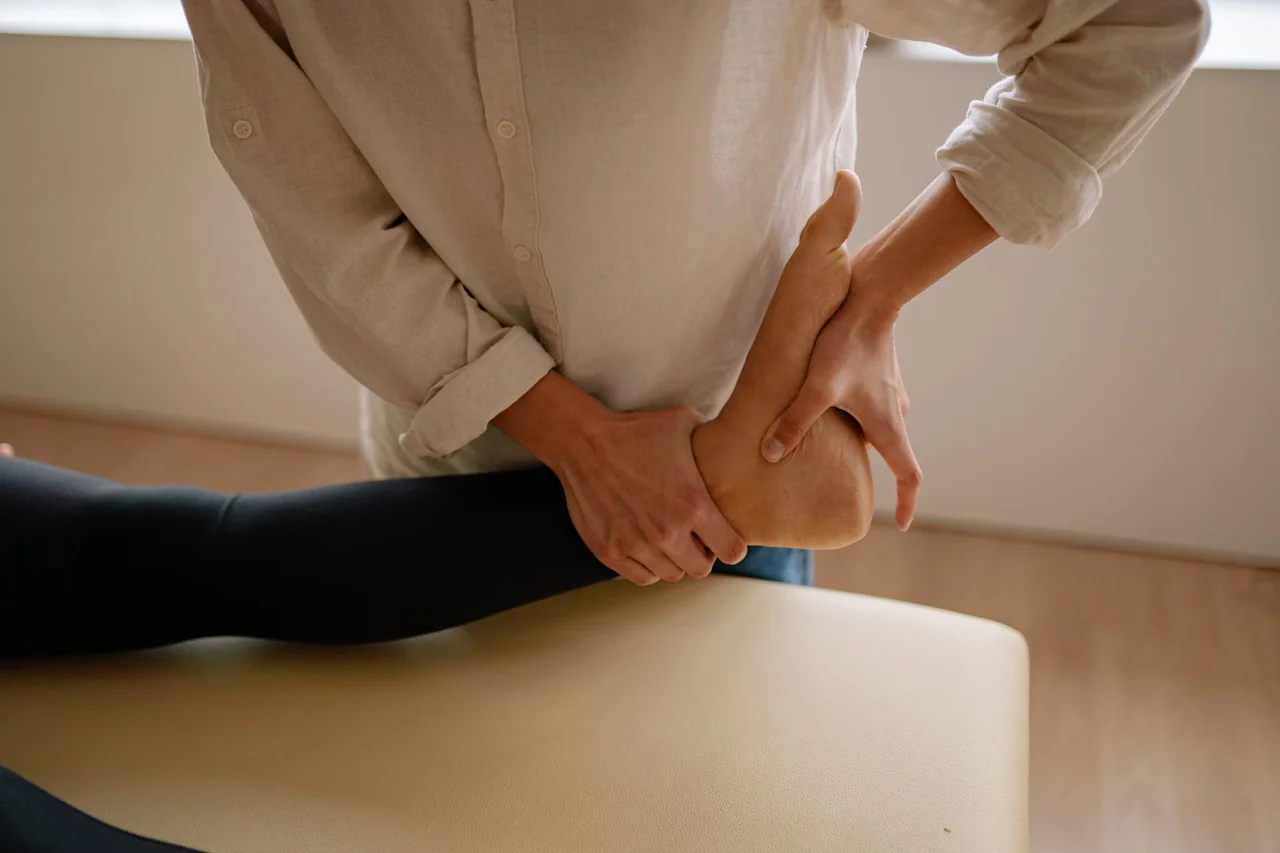
Pain relief in the sole of the foot does not depend on a single spot, but rather on specific areas that bear load, strain the plantar fascia, and receive a great deal of nerve input. In runners, walkers, and people who spend hours standing, those areas often respond with stiffness, burning, or sharp twinges, especially when getting up or after a long effort. The discomfort may be felt in the heel, the arch, or under the base of the toes, and each distribution points to a different origin.
Manual stimulation can provide a very immediate sense of relief, but it does not act as a universal cure. Massaging the sole of the foot helps more when the pain comes from muscle overload, fascial tension, or tissue fatigue than when there is an acute injury, a stress fracture, or significant inflammation. That is why it is worth distinguishing between relief and diagnosis: the same area can be tender because of accumulated fatigue or because of a problem that requires rest and clinical evaluation.
The areas of the foot that most often bring relief
The inner part of the heel often concentrates part of the tension in the plantar fascia, that firm tissue that acts like a bowstring between the calcaneus and the toes. When that structure becomes irritated, gentle pressure on the inner edge of the heel can offer a feeling of decompression. The goal is not to press hard, but to seek progressive, brief, and tolerable contact, as if loosening a cord that is too tight.
Farther forward, the medial arch also accumulates tension, especially in those who overpronate when running or spend long hours in poorly supportive footwear. That area responds well to slow work with the thumb or with a soft ball, because it contains small muscle insertions and a network of connective tissue that can stiffen. The arch does not appreciate abrupt movements; it usually improves with sustained pressure and short motions that follow the foot’s natural shape.
The base of the big toe and the front part of the support area are other relevant regions. In running, that part absorbs impulses when the foot lifts off the ground, and in everyday life it bears much more load than it seems. When pressure lands there too intensely, discomfort appears under the forefoot, a feeling of a stone in the sole, or fatigue after walking. A gentle stimulus in that area can release some tension, although the result depends on the type of pain and the condition of the tissue.
What explains pain in the heel, arch, and forefoot
Heel pain, especially in the first steps of the morning, is often associated with plantar fasciitis or a very similar condition. The fascia behaves like a support band that loses elasticity with excess load, and that is why it hurts more when movement begins than after a few minutes of activity. In these cases, moderate stimulation of the inner heel area can relieve stiffness, but the benefit is usually temporary if the loads that irritate it are not corrected.
The arch, for its part, becomes strained when the foot’s intrinsic muscles work beyond what they can sustain. This happens in runners who increase mileage abruptly, in people with flexible flat feet, or in those who use soft footwear without enough structure. The typical sensation is diffuse tension or a slight burning, rather than a specific stab. Here massage can provide relief because it improves the area’s perception, but the real key is usually to distribute the effort better.
The forefoot has issues for a different reason. Under the metatarsal heads, weight concentrates as if the support were narrowing into a small strip, and that favors metatarsalgia, painful calluses, and, in some cases, Morton’s neuroma. If the pain is located just under the toes or appears when pushing off, pressure on the sole may only be useful very gently and always while avoiding recreating the same point of maximum load that is already irritated.
How to stimulate the sole of the foot without making it worse
Correct pressure is more like an examination than a pounding. The foot clearly signals when something feels good or bad, and the goal is for the discomfort not to go beyond a manageable threshold. The ideal intensity is usually low to moderate, never aggressive, with calm breathing and brief pauses to notice whether the area relaxes or braces. If the pain increases, the foot stiffens, or irritation appears afterward, the technique has been too much.
A small, somewhat soft ball can be used to roll the sole of the foot from front to back, not chasing the pain but sweeping across the surface. In people with plantar fasciitis, the most tolerable movement is usually a slow pass along the arch and inner edge, avoiding insistence on the heel if it is highly reactive. The idea is to wake the tissue up, not punish it. One or two minutes are enough to notice a change in many cases.
Using the fingers is also useful, especially for very localized areas. The thumb allows short presses on the inner edge of the heel or near the base of the big toe, while the other hand stabilizes the top of the foot. This manual work has a clear advantage: it makes it possible to adjust the force second by second. If the area responds with a kind of pleasant warmth and a slight feeling of looseness, that is usually a good sign.
Two common mistakes should be avoided. The first is chasing a painful point as if it were a knot that must be destroyed; the second is working for too long in one stretch. The sole of the foot is very sensitive and saturates quickly. A brief, precise stimulus repeated in moderation is usually much more useful than a long, uncomfortable session.
Which areas are associated with specific discomfort
Pain located on the inner edge of the heel is usually related to an irritated plantar fascia, especially when it intensifies when starting to walk. Gentle contact in that area can provide temporary relief because it reduces the sensation of stiffness and improves body awareness. Even so, if the pain is sharp or appears even at rest, we are no longer dealing with simple mechanical overload and other causes should be considered.
When the discomfort settles in the center of the arch and extends toward the midfoot, fatigue of the plantar muscles and excess tension in connective tissue are often behind it. In runners, this pattern is typical after long sessions, hills, or hard surfaces. Working the arch with slow movements and controlled pressure can help the foot regain a more stable sense of support.
If the pain is concentrated under the head of the first metatarsal, near the big toe, the area usually complains more from push-off overload than from fascial tension. In that case, stimulation should not be too persistent, because continuous rubbing can aggravate the irritation. It is often wise to alternate very gentle contact with rest and review footwear, since a narrow toe box or a worn-out sole can worsen the problem.
In the central forefoot area, where several metatarsals are grouped together, pain on weight-bearing may come from metatarsalgia or poor pressure distribution. There, self-massage does not always solve much; sometimes it even bothers more. The sole of the foot does not respond the same in all its regions, and that difference completely changes the strategy.
Why running puts those areas to the test
Running multiplies load cycles in a short time. Each stride pushes the fascia, stretches the intrinsic muscles, and compresses the forefoot against the ground. If the volume increases too quickly, the foot does not have time to adapt and the bill appears in the form of dull pain, morning stiffness, or sensitivity to rubbing. The problem often starts small, almost like a bit of grit in the shoe, and then becomes more persistent.
Running technique and footwear type matter a lot. A runner with a very forefoot-heavy landing overloads the forefoot sooner; another with a long stride punishes the heel and arch more. The foot does not work alone, but within a chain that includes the calves, ankle, hip, and posture. That is why local relief can help, but it is not always enough if the rest of the system keeps pushing in the same direction.
The surface also matters. Asphalt, compact dirt, treadmills, and uneven terrain do not demand the same thing. A long run on hard ground leaves the sole more fatigued than a short outing on soft terrain, and that is especially noticeable in people with a high arch or little strength in the foot muscles. Stimulation of the sole can work as a small sensory reset after the load, never as a substitute for rest.
When relief is no longer enough
There are signs that should not be ignored. Very localized, sharp pain, visible swelling, bruising, inability to bear weight, or discomfort that worsens over the days point to something more serious than simple overload. Pressure on the sole should not be used as an excuse to keep training on an injury. In the foot, pushing too hard often turns a manageable problem into a much longer one.
Night pain, a persistent tingling sensation, or loss of strength when pushing off also deserve attention. Those symptoms may be related to nerve irritation, entrapment, or injuries in the metatarsals and nearby structures. When the foot changes color, becomes warmer, or grows especially sensitive to touch, caution should prevail over the automatic impulse to massage.
People with diabetes, sensory changes, vascular problems, or a history of foot fractures should be especially cautious. Not every foot tolerates the same pressure, and in some cases a well-intentioned gesture may go unnoticed by local sensation but still be inappropriate for the tissue. The sole of the foot is resilient, yes, but it also requires judgment.
The role of footwear, load, and recovery
The best manual work loses value if the shoe keeps compressing the forefoot, if the heel lacks stability, or if the sole is too worn out. The foot needs a reasonable base to distribute forces. A shoe without enough support can make the arch work too hard, while a narrow last squeezes the front of the foot and turns support into a trap. Recovery starts on the ground the runner steps on, not only on the table or in the chair.
Recovery also depends on the loading rhythm. An irritated tissue improves faster when intensity is reduced for a few days, sessions are alternated, and the same stimulus that caused the pain is avoided. Local relief in the sole can serve as a bridge, a kind of brief truce, but the body needs room to reorganize the effort. In running, that means accepting that volume does not always rise in a straight line.
Ankle mobility and calf strength influence more than it seems. If the calf is stiff, the fascia works too much; if the ankle loses range, the foot compensates; if the arch muscles do not support, the forefoot pays the price. Plantar pain is rarely an isolated issue. It is almost always the visible part of a chain of tensions that is worth looking at as a whole.
Useful relief, but not a simplistic reading of pain
Stimulating the most sensitive areas of the sole of the foot can provide real relief when the main cause is overload, stiffness, or mechanical fatigue. Done well, gentle pressure improves the sense of support and loosens the feeling of tension in the heel, arch, or forefoot. Even so, its value lies in supporting recovery, not replacing it. The foot improves when its map is understood, not when it is reduced to a point.
That is the difference between a useful tool and an empty promise. The sole of the foot does respond, yes, but it does so within a context: training, footwear, age, weight, mobility, hours on your feet, and type of injury. The same gesture can relieve one person and bother another. That is why pain should be read as a complex message, not as a simple switch that turns off by pressing one exact point.
For the regular runner, for someone who walks a lot for work, or for anyone chaining together weeks of heavy load, local relief can be the first step in a more sensible recovery. The key is to treat the foot with precision, without violence and without mythologizing it. The sole of the foot does not ask for heroics, it asks for judgment.
Medical reference: Pain in the bottom of the foot, NHS.



How to prevent thigh chafing: causes and real solutions

Women’s running windbreakers: seven jackets and how to choose

Do more workouts get rid of soreness? A guide for runners

Jaén Half Marathon 2026: Record 3,800 Runners Registered

Men’s short running tights: how to choose the right pair

World Triathlon confirms data breach involving medical data

Izan Edo targets podium at Miyazaki World Cup

María Pérez ranks ninth in World Athletics’ 2026 top ten

Dos Santos, Duplantis and Sawe: World Athlete of the Year finalists

San Silvestre Vallecana 2026: 42,000 places, prices and start times

 Races4 months ago
Valencia Half Marathon 2027: date and registration

 Races4 months ago
Valencia Marathon 2026: entry, ballot and course

 Reviews and Comparisons4 months ago
Asics Gel-Roadmiles 3 for men: review and current price

 Reviews and Comparisons4 months ago
Asics Gel Sonoma 8 Gore-Tex: complete analysis for trail and rain

 Sneakers4 months ago
Saucony Endorphin Pro 4: full review and verdict

 News5 months ago
Strava API 2026: what changes for clubs, challenges and runner apps?

 Reviews and Comparisons5 months ago
Nike Alphafly 3: opinions, sensations, and real key points

 Reviews and Comparisons4 months ago
Under Armour running shoes review 2025-2026: models and key features

 Sports Equipment4 months ago
Shoe sizes in cm: a clear guide to getting the right fit for your footwear

 Sneakers3 months ago
Skechers GO RUN Consistent 2.0 analysis: comfort and limits

 News5 months ago
Valencia Marathon 2026 route: key tips to train and run better

 Sneakers4 months ago
Adidas Adizero Boston 13 for men: review and verdict