Health and Nutrition
Pain in the big toe: causes, signs, and relief
Discomfort in the big toe can hide bunions, osteoarthritis, gout, or overuse. These are the keys to identifying it.

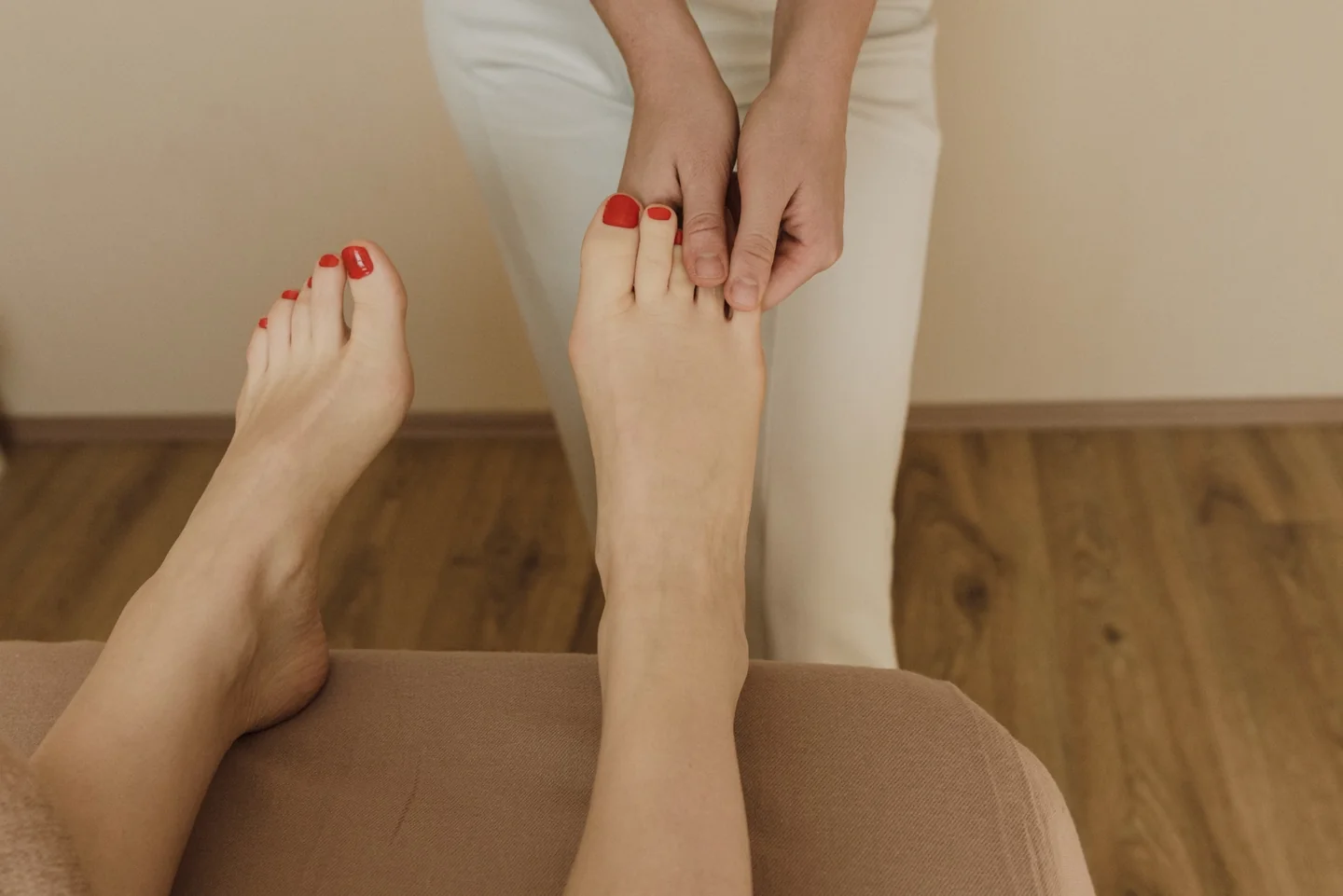
The big toe carries much of the propulsion in every stride, so when it starts to hurt, the simplest gesture becomes clumsy: walking, stepping off a curb, changing pace, or finishing a workout. In running, that discomfort is usually not a minor detail; it is often the first sign that something is being loaded too much, rubbing badly, or losing mobility.
The cause may lie in the joint, in a sesamoid bone, in the nail, or even in systemic inflammation. It can also appear because of tight footwear, a sudden increase in mileage, or a stride that drives the foot strike forward too forcefully. That is why pain in this area requires looking at the whole picture, not just the isolated symptom.
What pain reveals when the foot begins to fail
The base of the first toe works like a high-load hinge. With each step, that joint takes part in the final phase of walking and in toe-off. When it becomes inflamed, stiff, or deformed, the body compensates almost immediately: it changes the way it bears weight, shortens the stride, or avoids propulsion. The result is often discomfort that first appears after activity and then also shows up at rest.
In runners, that signal deserves attention because the forefoot works like the last wheel of a machine. If one piece jams, the rest keeps trying to turn, but with noise. The heel, arch, ankle, and even the knee can end up absorbing effort that was once distributed more evenly. That is where an apparently localized pain starts to have broader effects.
The key is to observe how it hurts, when it hurts, and the exact part of the toe where the discomfort is concentrated. A stabbing pain under the head of the first metatarsal is not the same as stiffness when pushing off or a red, swollen area beside the nail. Each pattern points to different problems and completely changes the interpretation of the condition.
Signs that help distinguish the source
Visible inflammation, redness, and local heat usually point to an active process, although they do not always mean the same thing. Sometimes the onset is sudden, as in gout; other times it is more silent and progresses slowly, as in big toe osteoarthritis or hallux limitus, which gradually reduces mobility without making much noise at first.
When the discomfort appears when pushing off strongly, rising onto the toes, or finishing a long run, the foot is usually talking about mechanical overload. If, on the other hand, the pain is concentrated when touching a specific spot under the toe, suspicion shifts toward the sesamoids or toward small stress injuries. And if the problem is located at the edge of the nail, the picture changes completely.
Morning stiffness, difficulty bending the toe, or the sensation that the joint locks under load are valuable clues. So are visible changes in foot shape, the appearance of calluses, and the need to alter weight-bearing to avoid pain. The body rarely improvises: it adapts the gait, but it leaves traces.
The most common causes behind the discomfort
A bunion, medically known as hallux valgus, remains one of the most common causes. The deviation of the toe toward the others shifts the joint and forms a prominence on the inner base of the foot, which is very sensitive to shoe friction. Over time, repeated pressure can inflame the area and make it painful even with wider shoes or everyday activities.
Osteoarthritis of the first toe, especially in the form of hallux rigidus or hallux limitus, causes a different problem: the joint loses range of motion and movement becomes rough, limited, almost mechanical. The foot tries to push off, but the hinge does not open enough. In runners, that loss of mobility can go unnoticed until propulsion starts to take more effort than it should.
Gout presents a much more abrupt picture. The big toe becomes red, hot, and very painful within hours, often at night. Excess uric acid in the blood promotes the formation of crystals that deposit in the joint and trigger intense inflammation. It is not a capricious ache or a simple poorly healed bruise: it is an inflammatory response of a different order.
There are also overuse injuries such as sesamoiditis, well known among runners. The sesamoids are two small bones under the base of the first toe that help distribute load and improve propulsion. When they become irritated, the pain is usually felt on the sole, just below the toe, as if there were a stone hidden inside the shoe. In more advanced stages, even a stress microfracture may be behind the symptoms.
We should not forget ingrown toenails, painful calluses, and local infections. Although they may seem minor compared with osteoarthritis or gout, they can make every step hurt like a splinter. In people who train frequently, a poorly cut nail or shoes with a narrow toe box can become a very persistent trigger.
Why pain appears when walking or running
Walking and running put the first toe at the center of the work. In the last part of stance, the big toe acts as a lever. If the joint is stiff, inflamed, or misaligned, propulsion breaks down. What was once a smooth transition becomes a small battle against the ground.
In running, the problem is amplified. Every kilometer adds thousands of impacts and repetitions of the same movement. A slight functional limitation may not bother you at rest, but it can show up when the load increases. That is why some runners feel the pain only at the end of a session, on hills, or when changing pace, as if the foot were protesting when it is asked for the most.
Footwear can act as either an amplifier or a shield. A narrow toe box, a very stiff forefoot, or a model with little room for the toes increases pressure. By contrast, a proper fit, with a roomier last and enough forefoot space, usually reduces friction and compression. It is not a solution on its own, but it is a decisive piece.
Running form also matters. Those who land very heavily on the forefoot, those who have suddenly increased weekly distance, or those who train on hard surfaces without progressive adaptation accumulate more risk. The foot does not distinguish between an elegant movement and an aggressive one; it only receives load.
When the toe loses mobility and the body compensates
Limited hallux movement is one of the most deceptive warning signs. Sometimes a person can bend the toe while seated, but when body weight is applied the joint locks up. That difference between unloaded and loaded movement reveals an altered function that is not always obvious in a superficial examination.
When that loss of mobility becomes established, the body compensates through other segments. The heel may lift off earlier, the foot may rotate differently, and the load shifts outward. The consequence does not always stay in the toe: pain may appear in the plantar fascia, in the instep, or in the calf because of the chain of adjustments.
In sports, this type of compensation is often more relevant than the initial pain. A runner may live with mild discomfort for weeks, but if biomechanics change, the risk of secondary injury increases. The stone is not always in the toe; sometimes it is in the whole system trying to avoid it.
Which treatments are used most often
Treatment depends on the cause, not on a single recipe. In acute inflammatory processes, relative rest, ice, and commonly used anti-inflammatory medications can temporarily relieve the area. In gout, uric acid also needs to be controlled, and it must be understood that the pain reflects a general problem, not only a local one.
For mechanical discomfort, changing footwear is often very important. A shoe with more room in the toe box, a sole that does not punish forefoot flexion, and, in some cases, insoles or offloading elements can distribute pressure better. They do not correct a deformity on their own, but they do reduce daily stress.
Short-term immobilization can be useful if there is a stress injury or severe sesamoiditis. In selected cases, a boot or a period without impact helps calm the irritated tissue. After that, returning to activity should be cautious, because tissue that flares up quickly tends to protest again if it is asked to do too much too soon.
When the source is a painful bunion, advanced osteoarthritis, or a fixed deformity, surgery enters the picture as a last resort. Procedures aim to correct alignment, remove bony prominences, or, in some cases, fuse the joint to eliminate mechanical pain. It is not a minor path, but it is a real option when conservative treatment is no longer enough.
Physiotherapy and mobility work can contribute a lot in functional or overload-related cases. It is not just about stretching. It also matters to restore foot control, improve load tolerance, and refine propulsion mechanics. Often the problem is not a lack of brute force, but the loss of fine coordination in a very small space.
What can be done in daily life without making it worse
Reducing load for a few days is not the same as giving up movement. In practice, it usually means cutting volume, avoiding hills, or temporarily replacing running with less demanding activities for the forefoot. That rest window makes it possible to see whether the discomfort eases or persists with the same intensity.
Ice may help in the acute phase, always with common sense and without applying it directly to the skin. It also helps to review everyday habits: spending many hours standing, wearing narrow shoes, or walking long distances on hard surfaces can keep the pain active even when you are not training. The foot works even when no one is looking.
Trimming the nail properly, drying the skin carefully, and watching for rubbing may seem basic, but it prevents problems that often escalate. In a runner, a small nail injury can ruin several sessions and change the gait purely as a protective reflex. Sometimes the solution does not require major measures, but rather stopping pressure where there is already enough of it.
When the condition needs medical assessment
Pain that does not improve within one or two weeks, or that worsens despite rest, deserves clinical evaluation. It is also wise to seek care if there is marked redness, fever, inability to bear weight, visible deformity, or a history of trauma with persistent pain. Time does not always heal these cases; sometimes it simply lets the problem take root.
Physical examination and, depending on the case, imaging tests help separate mechanical from inflammatory problems and acute from chronic ones. An X-ray may show osteoarthritis, deviations, or fractures, but it does not always provide the full picture. In subtle injuries, ultrasound or MRI may offer more insight.
The value of early evaluation is that it avoids misinterpretation. Sesamoiditis treated as if it were simple friction does not improve in the same way; gout mistaken for overload can drag on; an ignored stress fracture can enlarge. The first toe is small, but mistakes in diagnosis in that area quickly become big.
How this problem behaves in runners
In running, the big toe has both a spring and a braking function at the same time. It lifts the body off the ground and, at the same time, stabilizes the final support. That is why any discomfort in this area affects performance before endurance. It does not just hurt: it changes running economy.
Runners usually first notice a feeling of stiffness, a twinge at takeoff, or discomfort that appears at distances they used to tolerate. Then compensation sets in. One foot rotates less, the ankle pushes differently, and the stride becomes more cautious. The runner does not always feel injured; sometimes they just feel that they are running strangely.
A sudden increase in load, worn-out shoes, or an overly aggressive forefoot strike can act as the spark. The foot responds with inflammation, joint irritation, or pain under the metatarsal head. In training season, that warning is often mistaken for fatigue. And fatigue, in the big toe, may only be the first mask of a clearer problem.
Prevention starts with respecting the shape of the foot
The best ground for preventing this discomfort is footwear that leaves space, protects, and does not squeeze. The toe box should allow the toes to spread, not compress them as if they were chips in a narrow box. In sport, it is also important that the shoe does not force violent forefoot flexion or increase friction at the base of the first toe.
It also helps to pace the load. Increasing mileage, intervals, or hills gradually reduces the risk of repetitive overload. The foot tolerates steady work very well when progression is reasonable; what it tolerates worst is a sudden jump, like a door opening abruptly against a wall.
Mobility of the first toe and the ankle deserves attention because it conditions the quality of propulsion. If one of those segments is limited, another compensates and the pressure ends up concentrated in the same area again and again. In sport, that redistribution is rarely free.
In addition, reviewing small habits makes a real difference: not letting a nail grow too long, alternating shoes when they are worn down, not extending workouts once pain is already present, and listening to how the discomfort evolves instead of masking it. Pain in the big toe often starts as a low note; ignoring it only makes it louder.
A small symptom with a broad clinical map
What seems like a localized ache may hide osteoarthritis, gout, sesamoiditis, a stress fracture, or a progressive deformity. It can also be a combination of causes, which is much more common than it appears. A bunion does not always come alone, and sustained overload can end up irritating more than one structure.
In runners, the problem matters because of its domino effect. A toe that does not propel well alters the stride, changes calf tension, and makes the whole stance more fragile. In daily life, something similar happens, though less visibly: walking becomes worse, weight-bearing turns cautious, and fluidity is lost. The body, being very practical, tries to protect itself even if that means adapting the movement poorly.
Treating it early does not mean dramatizing it, but rather reading the foot’s language correctly. When the big toe complains, it almost never does so capriciously. It is usually warning of excessive pressure, inflammation, wear, or an injury that needs a proper name in order to be understood.
Medical reference: Toe pain, NHS.



How to prevent thigh chafing: causes and real solutions

Women’s running windbreakers: seven jackets and how to choose

Do more workouts get rid of soreness? A guide for runners

Jaén Half Marathon 2026: Record 3,800 Runners Registered

Men’s short running tights: how to choose the right pair

World Triathlon confirms data breach involving medical data

Izan Edo targets podium at Miyazaki World Cup

María Pérez ranks ninth in World Athletics’ 2026 top ten

Dos Santos, Duplantis and Sawe: World Athlete of the Year finalists

San Silvestre Vallecana 2026: 42,000 places, prices and start times

 Races3 months ago
Valencia Half Marathon 2027: date and registration

 Reviews and Comparisons4 months ago
Asics Gel-Roadmiles 3 for men: review and current price

 Races3 months ago
Valencia Marathon 2026: entry, ballot and course

 Reviews and Comparisons4 months ago
Asics Gel Sonoma 8 Gore-Tex: complete analysis for trail and rain

 Sneakers3 months ago
Saucony Endorphin Pro 4: full review and verdict

 News5 months ago
Strava API 2026: what changes for clubs, challenges and runner apps?

 Reviews and Comparisons5 months ago
Nike Alphafly 3: opinions, sensations, and real key points

 Reviews and Comparisons4 months ago
Under Armour running shoes review 2025-2026: models and key features

 Sports Equipment4 months ago
Shoe sizes in cm: a clear guide to getting the right fit for your footwear

 Sneakers3 months ago
Skechers GO RUN Consistent 2.0 analysis: comfort and limits

 News5 months ago
Valencia Marathon 2026 route: key tips to train and run better

 Sneakers4 months ago
Adidas Adizero Boston 13 for men: review and verdict