Health and Nutrition
Lump on the top of the foot when running: causes and signs
A hard lump on the top of the foot may be normal or may indicate an injury. These are the most common causes and warning signs.

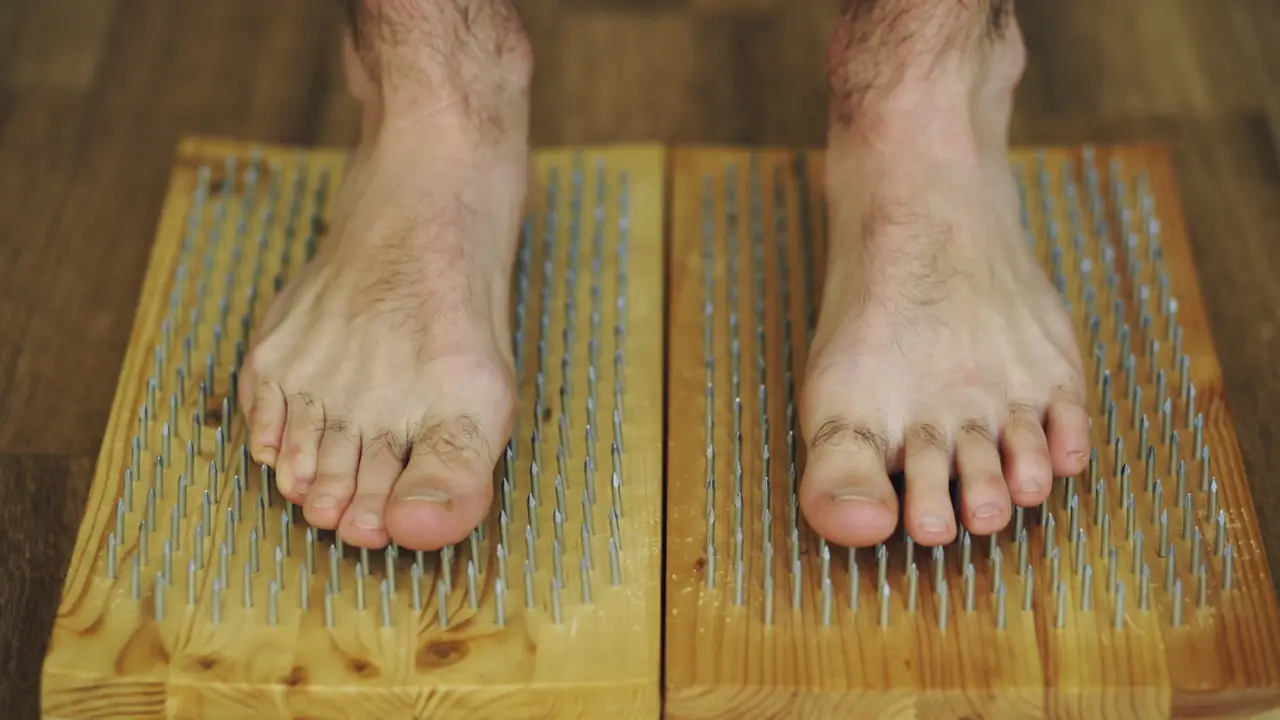
A hard lump on the top of the foot may be a normal anatomical prominence that is simply more visible, or it may relate to a stress fracture, tendon inflammation, a cyst, or an arch deformity. For runners, the area can become noticeable when training volume, footwear, or running mechanics start to take their toll. The lump’s texture, pain, progression, and relationship to training load can help distinguish a minor annoyance from a problem that needs medical evaluation.
In that area converge metatarsal bones, small joints, extensor tendons, ligaments, and vessels. That is why a bump on the instep does not have just one possible explanation. Sometimes the bone looks more prominent because the foot is cavus or because there is less soft tissue; other times, the hardness appears after a blow, inflammation, or an overuse injury. In runners, the pattern matters almost as much as the appearance: if it shows up with exertion, hurts when pressed, gets worse with shoes, or wakes you up at night, the scenario changes completely.
What may really be behind a prominence on the instep
Not every lump is bone. The sensation of a bone sticking out on the instep may correspond to a normal prominence of the tarsus or metatarsals, especially in feet with high or very pronounced arches. It may also be an inflamed area that gives the impression of bulging, when in reality what stands out is irritated soft tissue. The foot, moreover, adapts poorly to sudden changes in load: a few weeks of extra mileage, hills, or shoe changes are enough for a prominence to appear that had previously gone unnoticed.
Among the most common causes are extensor tendinitis of the foot, irritation from tight shoes, metatarsal stress fractures, synovial cysts, and certain deformities such as cavus foot. On the instep, the tendons work like fine, taut cables that lift the toes and stabilize gait; if they become inflamed, they leave a sensitive area, sometimes warm, that can be mistaken for a bony protrusion. In contrast, a stress fracture usually causes more focal, increasing, and deep pain, almost always triggered by repeated effort.
It is also worth bearing in mind that some prominences are anatomical and not pathological. The top of the foot can clearly show the lines of bones and tendons, especially in thin people or after weight loss. What marks the boundary between normality and a problem is whether that prominence is new, changes in size, or is accompanied by pain, redness, limitation, or swelling. A foot that has always been that way does not behave like one that suddenly starts complaining with every step.
Signs that point to an injury rather than a simple prominence
Pain is the most useful clue. A stable bony prominence usually causes little or no discomfort, whereas an active injury tends to produce symptoms with walking, jogging, or putting on shoes. If the pain appears when pressing the shoe tongue, suspicion usually falls on a tendon irritation or mechanical compression. If the discomfort is more stabbing, very localized to one point on the metatarsal, and worsens when jumping or running, a stress fracture becomes more likely.
Swelling is also informative. A swollen instep, with skin that feels tighter or tender to the touch, may point to tendinitis, a bruise, or even a more complex injury. If there is also local heat or the pain wakes you at night, it deserves more attention. In runners, a condition that starts insidiously and worsens over time is usually related to repeated overload; the foot can cope for a long time, but it is not made of stone. Excess mileage, a rapid increase in intensity, and hard surfaces form a decidedly unfriendly combination for that area.
The value of the symptom also changes depending on the context. Pain that appears only when going uphill or at the end of interval sessions does not suggest the same thing as pain that already makes it hard to walk barefoot at home. When the prominence is accompanied by tingling, burning, or an electric sensation, other possibilities come into play, from nerve irritation to compression by the footwear itself. The instep has little margin for error: an over-tight lace or a narrow shoe can turn a normal run into a small mechanical torture.
The role of footwear, gait, and overload
In running, a large part of dorsal foot discomfort comes from a simple equation: more load, less margin, more friction. Shoes with a low instep, narrow lasts, or tight laces can press directly on tendons and bones. If the foot is also cavus, the high arch distributes loads poorly and concentrates tension in the forefoot and the top of the foot. It is not uncommon for the runner to first notice mild discomfort and, over time, see the area become more prominent or tender to the touch.
Running technique and terrain type also have an influence. Downhills, uneven paths, and abrupt changes of pace force the foot to stabilize more. The extensor tendons work overtime, and the tissue becomes irritated. In people with flat feet, compensations can also appear that load the muscles and joints of the top of the foot. The body seeks balance with the efficiency of a hallway full of boxes: it compensates on one side, squeezes on the other, and ends up showing the bill in the least expected place.
There is another detail that often goes unnoticed: wear and tear on the equipment. Deformed shoes or ones with a worn-out midsole not only cushion worse, they also alter support and pressure on the top of the foot. In runners with many miles behind them, the problem is not always a single gesture, but the sum of small factors that keep adding tension. What initially seems like a simple little bump can end up being the visible face of a sustained mechanical overload.
Common injuries that can look like a bone sticking out
Extensor tendinitis is one of the most common explanations. It causes pain on the top of the foot, sometimes with slight swelling and a rubbing sensation under the shoe tongue. It usually improves with rest and worsens with brisk walking, running, or movements that pull the foot upward. Sometimes the area hurts when pressing exactly where the tendons cross the instep, as if the foot no longer tolerated any contact.
Metatarsal stress fracture deserves special mention because of its frequency in athletes. It does not appear suddenly like a traumatic fracture, but rather develops gradually through accumulated microdamage. It usually hurts in a very localized way, with clear tenderness when touching the affected point and progressive worsening when running or walking for a long time. There may be subtle swelling at first and more obvious swelling later. If the bump coincides with pain that keeps growing week after week, caution is warranted.
Another possibility is a synovial cyst or ganglion, a kind of fluid-filled sac that may be noticed as a firm or elastic little ball on the top of the foot. It does not always hurt, but because it is in such an exposed area, it can become bothersome with footwear. There may also be bone spurs, bony prominences due to degenerative changes, or sequelae of old injuries that make the top of the foot more prominent. In people with bunions, misaligned toes, or altered arches, pressure distribution favors any small prominence becoming noticeable.
When the lump calls for prompt medical evaluation
Progress matters more than the static image. A stable prominence, painless and present for years, rarely has the urgency of an acute injury. By contrast, if the lump appeared after a blow, if it is increasing in size, if it is red or warm, if it prevents normal weight-bearing, or if the pain is persistent at night, evaluation is advisable. In a runner, continuing to train on a bone injury out of pride often ends badly: a small fracture can become a larger one if the impact keeps being repeated.
Attention should also be paid to neurological or circulatory signs. Burning, tingling, color changes, numbness, or pain radiating to the toes do not fit well with a simple bony prominence. Nor is it reassuring when pain persists despite relative rest and basic measures for more than one or two weeks. When the foot is injured, it often warns like a leaky faucet: first a few drops, then the whole wall is wet.
Medical evaluation is usually based on physical examination and, if necessary, imaging tests. X-rays help rule out obvious fractures or bone deformities; ultrasound can show tendons, cysts, and superficial inflammation; and magnetic resonance imaging provides more detail when suspicion points to a stress fracture or deep soft tissue injury. Not every discomfort requires all three, but it does require a reasoned decision, especially if the runner cannot explain why the pain no longer eases as before.
What is usually done while the diagnosis is being clarified
Initial measures are usually simple, but that does not make them trivial. Reducing load is the first one, because an irritated tissue needs to stop receiving the same stimulus that triggers it. Temporarily replacing running with low-impact activity, loosening the laces, wearing a shoe with more room over the instep, and applying brief cold therapy can provide considerable relief when the issue is tendon irritation or a mild contusion. If the pain decreases with rest and returns when load is resumed, the message is fairly clear.
In cases of pain localized over a bone or suspected stress fracture, relative rest should be more serious. Sometimes immobilization, partial unloading, or even stopping running is needed until it is confirmed what is going on. Pushing through a painful spot not only delays recovery; it also changes gait and can spread the problem to the calves, knees, or hip. The runner who protects the instep by limping often ends up paying the price somewhere else in the chain.
If the cause is mechanical, adjusting the equipment matters a great deal. A wider last, less compressive lacing, or a change of model can immediately reduce pressure on the top of the foot. In cavus feet or feet with support abnormalities, insoles or a podiatric evaluation may be useful, always within a broader strategy that takes training load and ankle mobility into account. The goal is not to hide the problem, but to take away its fuel.
A lump on the top of the foot: how runners can respond
For runners, a new prominence on the top of the foot may become more noticeable after an increase in mileage, hill work, or a change of shoes. Laces or a shoe tongue pressing on the area can also cause discomfort. Don’t assume it is just a normal bump: note whether it changes, whether there is swelling or warmth, and whether pain is focused in one spot or gets worse when walking, jogging, or hopping.
If it hurts during a run, adjust your training rather than trying to push through. Stop speed work, hills, and long runs; if walking is painful too, avoid running until you have medical advice. You may be able to stay active with activities that do not cause discomfort, but don’t use pain as a test to see whether the foot is ready. Check that your shoes are not pressing on the top of the foot and try adjusting the lacing. A roomier fit should not be used to mask pain that continues.
Symptoms that worsen with each run, persist at rest or overnight, or come with redness, marked swelling, or pronounced tenderness warrant medical assessment. Seek prompt care if pain is severe, the foot becomes very swollen, or you cannot bear weight. Until the cause is clearer, avoid jumping straight back to your usual mileage. Return to running gradually, and only if everyday activities do not make symptoms worse. If the lump or pain persists, consult a healthcare professional.
The runner’s instep, that small area where a large part of the problem is concentrated
The top of the foot has a very running-specific paradox: it looks fragile, but it withstands a great deal. Every stride demands stability, flexion, tension, and tolerance to friction from it. When something goes wrong, the symptom may seem insignificant at first, almost like a capricious annoyance, until it becomes a serious limitation. That is why a bone sticking out on the instep should not be judged only by its appearance, but by its recent history and by how it responds to load.
In practice, runners usually first notice that something is off when the foot starts complaining about very specific things: the lace is tight, downhill hurts, the foot takes longer to loosen up at the start of a run, or the area becomes sensitive even when the blanket touches it at night. Those small but persistent details describe the injury better than any technical name. In a body that runs, the instep functions like fine, visible wiring; when it becomes inflamed, swollen, or prominent, the signal is usually not ornamental, but functional.
The key is not to confuse an anatomical prominence with an active injury, nor to dismiss pain that changes the way you walk. A foot that only has a striking shape can coexist with sport without further drama. A foot that hurts, swells, or loses load-bearing capacity is speaking a different language. And in that language, caution, impact reduction, and professional assessment matter more than the habit of continuing to run blindly.
Medical reference: Foot pain, MedlinePlus (U.S. National Library of Medicine).



How to prevent thigh chafing: causes and real solutions

Women’s running windbreakers: seven jackets and how to choose

Do more workouts get rid of soreness? A guide for runners

Jaén Half Marathon 2026: Record 3,800 Runners Registered

Men’s short running tights: how to choose the right pair

World Triathlon confirms data breach involving medical data

Izan Edo targets podium at Miyazaki World Cup

María Pérez ranks ninth in World Athletics’ 2026 top ten

Dos Santos, Duplantis and Sawe: World Athlete of the Year finalists

San Silvestre Vallecana 2026: 42,000 places, prices and start times

 Races3 months ago
Valencia Half Marathon 2027: date and registration

 Reviews and Comparisons4 months ago
Asics Gel-Roadmiles 3 for men: review and current price

 Races3 months ago
Valencia Marathon 2026: entry, ballot and course

 Reviews and Comparisons4 months ago
Asics Gel Sonoma 8 Gore-Tex: complete analysis for trail and rain

 Sneakers3 months ago
Saucony Endorphin Pro 4: full review and verdict

 News5 months ago
Strava API 2026: what changes for clubs, challenges and runner apps?

 Reviews and Comparisons5 months ago
Nike Alphafly 3: opinions, sensations, and real key points

 Reviews and Comparisons4 months ago
Under Armour running shoes review 2025-2026: models and key features

 Sports Equipment4 months ago
Shoe sizes in cm: a clear guide to getting the right fit for your footwear

 Sneakers3 months ago
Skechers GO RUN Consistent 2.0 analysis: comfort and limits

 News5 months ago
Valencia Marathon 2026 route: key tips to train and run better

 Sneakers4 months ago
Adidas Adizero Boston 13 for men: review and verdict