Health and Nutrition
Pain on the top of the foot: causes, signs, and relief
Pain in the top of the foot is usually due to overuse, irritated tendons, bone injuries, or pressure from footwear.

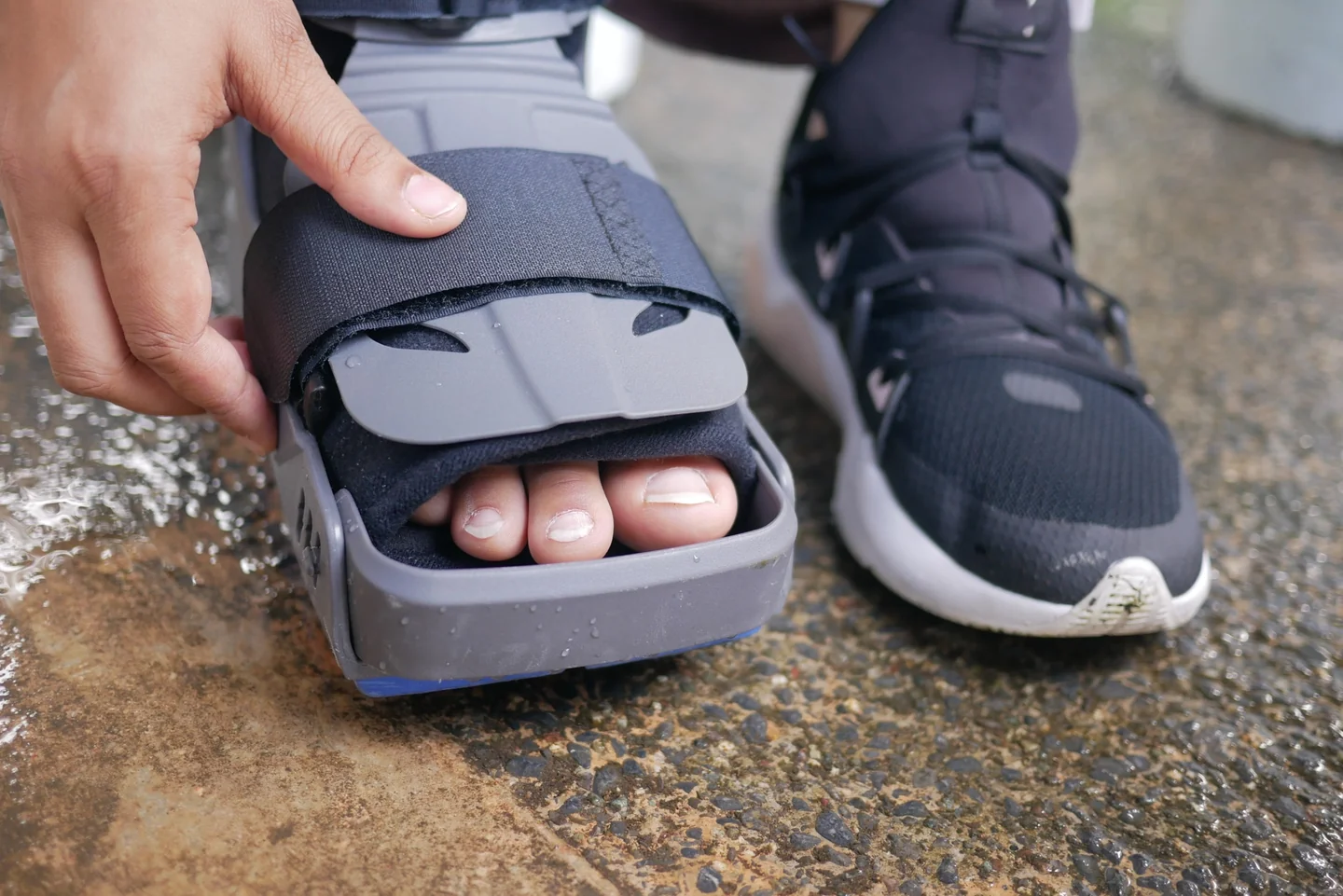
The top of the foot concentrates tendons, small bones, and joints that work against the clock with every step. When that area becomes irritated, pain can appear while walking, running, or even when fastening a pair of too-tight shoes. It is not always a serious injury, but it is a discomfort that deserves attention because it alters the way weight is borne and changes the entire mechanics of walking.
In runners, frequent walkers, and people who spend many hours on their feet, the most common cause is usually overuse. There may also be inflamed tendons, a poorly resolved knock, a stress fracture, or sustained pressure from footwear on the top of the foot. The exact location, intensity, and the moment when the discomfort appears usually provide useful clues about the origin of the problem.
What lies behind pain in the upper part of the foot
The top of the foot is not a single structure, but rather a transition area where several delicate parts coexist. The extensor tendons that lift the toes and the foot run through it, along with the metatarsal bones, the midfoot joints, and small superficial nerves. This mix explains why the pain can feel like tightness, stabbing, burning, or a dull pressure depending on the tissue affected.
The sensation changes a lot depending on the source. An irritated tendon usually hurts more with movement and weight-bearing, while a bone injury may leave a more localized discomfort, almost exact when touching a point. When the cause is mechanical, such as a hard or tight shoe, the pain often worsens at the end of the day, after accumulating miles of support, or as soon as the laces are tightened.
In runners, this area functions like a hinge subjected to constant repetition. Every push-off, every stride, and every change of pace increases stress on a small area. That is why a mild discomfort can turn into a persistent problem if training continues with the same movement pattern, the same footwear, and the same load.
Where the discomfort is located and what each area suggests
The location matters almost as much as the pain itself. If the discomfort appears in the central part of the top of the foot, the extensors or the midfoot joints are usually suspected. If it is located near the toes, it may involve the forefoot area and the metatarsals. When pain rises toward the ankle, the front lower-leg muscles or the path of the tendons crossing the top of the foot may sometimes be involved.
A very specific pain, as if it could be marked with the tip of a finger, calls for thinking about bone or a very specific overload. In contrast, a more diffuse discomfort that appears after a while walking or when wearing certain shoes usually fits better with tendon irritation, external pressure, or biomechanical changes. If there is also visible swelling, the soft tissue may be involved too.
In runners, a classic clue is pain that increases when speeding up or when lifting the foot to move forward. In people who do not run, the clue may be simpler: a long day, a change of footwear, or a walk with elevation changes. The foot warns with almost uncomfortable precision, and the answer is rarely found in a single factor.
Signs that often accompany the pain
The way the pain presents itself helps organize the diagnosis. Some people notice discomfort at the start of walking and then a certain improvement with movement; others feel the opposite, a progressive load that keeps digging in with every step. Morning stiffness when lifting the foot, tenderness when touching the area, and discomfort when moving the toes upward are also common.
Inflammation does not always appear, but when it does it is worth observing. A somewhat swollen, warm, or reddened top of the foot may signal an inflammatory process, a strain, or a more recent injury. If the pain comes with bruising, suspicion of a knock or sprain increases. If, in addition, it is accompanied by tingling or burning, there may be nerve irritation on the top of the foot.
There is one detail that should not be minimized: night pain or pain at rest. It does not necessarily mean something serious, but it does deserve closer attention, especially if it wakes you up, progresses, or prevents normal weight-bearing. The body is usually quite clear when the load on a structure has exceeded its tolerance.
Common causes and how they behave
Extensor tendinopathy is one of the most common explanations. It happens when the tendons that lift the toes and the foot receive more friction or load than they can handle well. It usually appears after a sudden increase in activity, higher running volume, technique changes, hills, or footwear that rubs the top of the foot. The pain shows up when moving the toes or pulling the foot upward.
A stress fracture is also on the radar, especially in active people. These are small cracks in the bone caused by repeated impacts, not by a single blow. The metatarsal is often one of the bones affected. The discomfort tends to be precise, worsens with weight-bearing, and does not fully improve after a few hours of rest. If the effort continues, the pain can become more and more obvious, like a crack that stops being silent.
A sprain or strain of the top of the foot appears after a twist, a bad step, or a sudden landing. It may be accompanied by swelling and bruising, especially if soft tissue has been injured. In some cases, pain is triggered when the foot is placed on the ground or when pushing off during walking, and the person begins to walk protectively, almost on tiptoe, to avoid the discomfort.
Structural changes in the foot can also overload the area. A high-arched foot, for example, distributes forces less well and can concentrate pressure on specific points. Midfoot stiffness or small joint changes, such as those seen in degenerative conditions, can generate pain on the top of the foot when moving it or wearing inflexible footwear. Sometimes bone on the top of the foot is mentioned to describe a bony prominence or an area that sticks out and rubs easily.
Footwear alone can be the spark that ignites the discomfort. Shoes with a low instep, very tight laces, narrow lasts, or hard materials exert pressure right where sensitive structures pass. In runners, this detail becomes even more important because the foot swells during effort, and what seems acceptable in the morning becomes a small vice by the end of training.
When it usually appears and why context matters
The moment the pain appears says a lot about its cause. If it starts when walking and eases later, there may be stiffness or mild joint irritation. If it appears during exercise and grows over the minutes, overuse is more likely. If it shows up the day after a hard session, recovery may not have been enough for the accumulated load.
In runners, changes in training are a nearly textbook clue. Increasing distance, speed, elevation, or frequency without a transition usually takes a toll on the feet and ankles. Weight distribution also changes when the stride is altered by fatigue, and the top of the foot can unexpectedly absorb some of the punishment. In regular walkers, the pattern is usually quieter: many hours, little rest, and unfriendly footwear.
There are pains that appear only with certain shoes, which points to external pressure. Others are present even barefoot, at rest, or when moving the toes. That difference helps separate a mechanical conflict from a deeper injury. In sports medicine and podiatry, listening to when it hurts is often as useful as feeling where it hurts.
What to do in the first hours or days
The first step is to reduce the load that triggered the discomfort. That does not mean immobilizing the foot by default or stopping all movement for days, but rather reducing what makes it worse: running, long walks, hills, jumps, or impact sessions. Sometimes a few days of adjustment are enough for irritation to settle and the tissue to tolerate exertion again.
Footwear should be checked right away. Loosening the laces, choosing a wider fit, or switching to a less rigid shoe can bring major relief if the problem is pressure-related. In some cases, simply removing the rubbing on the top of the foot changes the outlook because the tissue stops receiving the stimulus that keeps it inflamed.
Cold can be useful if there is inflammation or recent pain. Applied briefly and with a barrier between the skin and the cold source, it helps reduce the feeling of irritation. Elevating the foot during rest can also be helpful if swelling is present. These are simple measures, but they do not replace an evaluation when the pain does not improve or when weight-bearing becomes difficult.
Gentle mobility is usually better than prolonged complete rest, as long as it does not increase pain. Moving the toes, flexing and extending the ankle without forcing it, and walking short distances can keep the foot active without overloading the area. The goal is to make recovery prevent the top of the foot from becoming a rusty part through lack of use.
Exercise, load, and recovery in active people
For runners, the key is to modulate load, not chase heroics. The foot responds well when it is allowed to adapt. If the discomfort is due to overuse, pushing through with the same volume usually prolongs the problem. A temporary reduction in intensity, distance, or frequency is often more effective than a full week off followed by a sudden return.
Recovery usually depends on the structure involved. An irritated tendon may improve in days or weeks with good effort management, while a stress fracture requires more caution and, in some cases, more time without impact. Not all pains on the top of the foot are the same, nor do they progress at the same speed. Treating all of them as if they were simple overuse is a common mistake.
When the discomfort decreases, the return to exercise should be progressive. Walk, jog, alternate rest and work, and only increase again if the foot’s response remains stable. Very hard surfaces, intense intervals, and pace changes are left for later. Tissue appreciates patience more than pride.
When to seek medical evaluation
There are signs that mean you should not let it go. Persistent pain lasting more than one or two weeks, swelling that does not subside, inability to walk normally, increased pain at rest, or pain after a knock all deserve professional evaluation. It is also wise to have it checked if the pain is very precise, if weight-bearing is clearly impossible, or if deformity appears.
Suspicion of a stress fracture changes the approach. In athletes, discomfort that does not improve with reduced load and that is very precisely localized should be investigated. Imaging tests, such as an X-ray, ultrasound, or MRI, may be necessary depending on the clinical course and the specialist’s judgment. Not everything is always visible on an early scan, and that is why context matters so much.
In people with diabetes, sensory changes, or poor circulation, any pain or change in color in the foot deserves closer monitoring. Feet do not warn in the same way in every body. When sensation decreases, the problem can progress without the classic warning of strong pain, which makes review even more important.
What physiotherapy and podiatry usually contribute
Conservative treatment is often the first path in many cases. Physiotherapy works on mobility, strength, load control, and functional recovery. Manual therapy can help if there is joint stiffness or tense tissues, and therapeutic exercise makes it possible to restore capacity to the foot without rushing the return to impact. The goal is not to speed things up for the sake of speed, but to get the area back to tolerating what real life demands of it.
Podiatry adds a very useful biomechanical perspective. Assessing gait, arch shape, and the support pattern helps explain why the top of the foot is receiving more pressure than it should. In certain profiles, an insole or a footwear modification can distribute loads better and unload the top of the foot. This is especially relevant in high-arched feet, stiff forefeet, or people who repeat the same impact pattern thousands of times a week.
When irritation persists, the approach may include complementary techniques depending on the case, always with clinical judgment. But the core of the problem is usually load, movement, and the space given to the tissue to recover. If that is not corrected, no single technique works miracles.
How the problem changes in runners and frequent walkers
In running, the top of the foot works like a tense cable that stabilizes and transmits force. Every stride combines support, push-off, and foot flexion. If the shoe presses, the technique changes, or the volume increases too quickly, the top of the foot receives more friction and more tension than it should. The runner usually notices the pain first during pace changes and later even while walking normally.
For people who walk a lot for work or by habit, the wear is quieter but just as real. No training is needed to irritate a structure; hours on your feet, long distances, and shoes that do not support movement are enough. That is why pain on the top of the foot is not limited to the sports world. It also appears in offices, shops, hospitality, and any routine that accumulates continuous weight-bearing.
The good news is that, once properly identified, it usually has a favorable course. The foot is not a capricious mechanism; it responds to load, rest, and space. When what is irritating it is corrected, most cases improve without major complications.
A useful closing to read pain with judgment
Pain in the top of the foot does not tell just one story. It may speak of overloaded tendons, a bone stressed by repeated impacts, a knock, a stiff joint, or a shoe that is too aggressive. The key is to observe where it hurts, when it appears, what triggers it, and what relieves it. That map is usually worth more than a quick interpretation.
Treating the discomfort early prevents the body from starting to compensate. When the foot hurts, the ankle, knee, hip, and even the back may take on a less efficient pattern. What starts as a sensitive area often ends up, quite frequently, affecting the entire movement chain. That is why the top of the foot should be read as a sign of load, not as a simple passing annoyance.
In running, as in daily walking, the foot is the first contact with the ground and also the first filter for what comes next. If that part becomes irritated, the rest of the system notices. Listening to it in time often makes the difference between a fleeting discomfort and an injury that lasts for weeks.
You may also like: Itching on the top of the foot: causes, signs, and treatment.
Medical reference: Pain in the top of the foot, NHS.



How to prevent thigh chafing: causes and real solutions

Women’s running windbreakers: seven jackets and how to choose

Do more workouts get rid of soreness? A guide for runners

Jaén Half Marathon 2026: Record 3,800 Runners Registered

Men’s short running tights: how to choose the right pair

World Triathlon confirms data breach involving medical data

Izan Edo targets podium at Miyazaki World Cup

María Pérez ranks ninth in World Athletics’ 2026 top ten

Dos Santos, Duplantis and Sawe: World Athlete of the Year finalists

San Silvestre Vallecana 2026: 42,000 places, prices and start times

 Races4 months ago
Valencia Half Marathon 2027: date and registration

 Races4 months ago
Valencia Marathon 2026: entry, ballot and course

 Reviews and Comparisons4 months ago
Asics Gel-Roadmiles 3 for men: review and current price

 Reviews and Comparisons4 months ago
Asics Gel Sonoma 8 Gore-Tex: complete analysis for trail and rain

 Sneakers4 months ago
Saucony Endorphin Pro 4: full review and verdict

 News5 months ago
Strava API 2026: what changes for clubs, challenges and runner apps?

 Reviews and Comparisons5 months ago
Nike Alphafly 3: opinions, sensations, and real key points

 Reviews and Comparisons4 months ago
Under Armour running shoes review 2025-2026: models and key features

 Sports Equipment4 months ago
Shoe sizes in cm: a clear guide to getting the right fit for your footwear

 Sneakers3 months ago
Skechers GO RUN Consistent 2.0 analysis: comfort and limits

 News5 months ago
Valencia Marathon 2026 route: key tips to train and run better

 Sneakers4 months ago
Adidas Adizero Boston 13 for men: review and verdict