Sports Equipment
Garmin Forerunner 70 and 170: launch, price, and key features for running
Garmin Forerunner 70 and 170 bring AMOLED display, GPS, and training metrics closer to the everyday runner with more human prices.

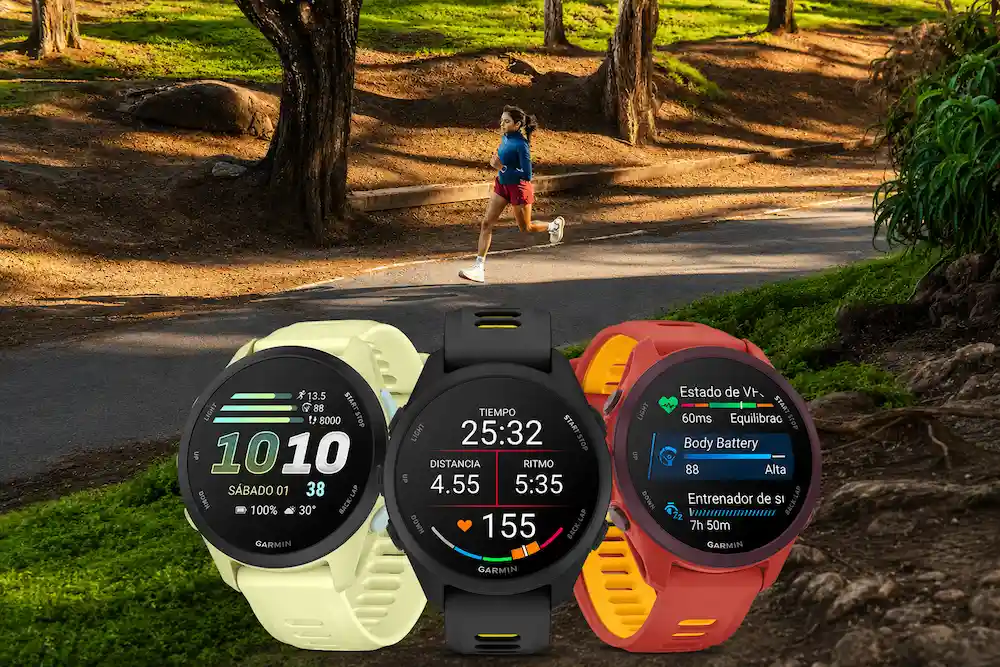
Garmin lanza los Forerunner 70 y 170
Garmin has made a move in a part of the market that seemed a bit forgotten: the one for the runner who wants a serious GPS watch for running, but has absolutely no intention of paying what a weekend getaway costs. The new Garmin Forerunner 70 and Garmin Forerunner 170 arrive with a pretty clear idea: to bring training, health, and sports tracking functions to a more down-to-earth price within the Garmin universe. Cheap, yes, though it’s worth saying it without fanfare: cheap for Garmin doesn’t mean free.
The news is especially interesting for the popular runner because these watches aren’t born to dress up the elite showcase or to brag about impossible maps, titanium bezels, or metrics you look at three times and then forget. Their territory is another one. That of the person who goes out running three or four days a week, is preparing for a 10K, a half marathon, maybe their first marathon, and needs to know pace, distance, load, recovery, and sleep without fighting with a device smarter than its owner. The Forerunner 70 starts as the more affordable option, while the Forerunner 170 adds convenience: wrist payments, more sensors, and, in the Music version, music without a phone. That’s the picture. Pretty clear.
Garmin lowers the entry barrier to serious training
For years, the cheap GPS watch for running was almost a survival tool: it marked the distance, calculated pace, measured heart rate with more or less luck, and not much else. It did the job. It was like that roadside bar with good coffee: there was no marble, but you left served. Garmin’s new move changes the landscape a bit because it brings functions that used to smell like mid-range or outright expensive watches closer to the entry level.
The Forerunner 70 and the Forerunner 170 share a very recognizable base: a 1.2-inch AMOLED display, touchscreen control, five physical buttons, and a design made for running without having to earn a master’s degree in menus. The buttons matter more than they seem. On a run with sweat, rain, or clumsy fingers at seven in the morning, the button is still the old reliable friend. The touchscreen is fine for browsing the watch in calm conditions; the button, on the other hand, saves workouts.
The commercial reading is obvious. Garmin wants to defend the territory of runners who are just starting out, but also of those who already run and don’t want to move up to a higher Forerunner. That runner exists. A lot. It’s the one who is no longer satisfied with a fitness band, but also doesn’t need a space station on the wrist. They want useful data, not a sermon. They want the watch to tell them if they’re going too fast, if they’re building fatigue, if they sleep like a bear or like a politician during a control session. And they want it to work.
The price puts the Forerunner 70 at around 249.99 euros, the Forerunner 170 at around 299.99 euros, and the Forerunner 170 Music at 349.99 euros. That’s where the real conversation begins, the one the runner has before buying: “Is the 70 enough for me, or do I pay for the jump to the 170?” It’s not a minor question. Fifty euros isn’t a disaster, but it’s not pocket change either if you’re coming from new shoes, a race entry, and the physio lurking in your calendar.
What the Forerunner 70 brings for someone starting to run
The Forerunner 70 is the model that makes the most sense for anyone looking for a Garmin running watch without getting into spending fever. It has built-in GPS, distance, pace, time, and wrist-based heart rate measurement. The basics, but the real basics, not that word sometimes used as an excuse to sell something stripped down. For running along the old Turia riverbed, the Valencia seafront promenade, an athletics track, or secondary roads on a cool Sunday, those data points are still the bread and butter.
The difference compared with older entry-level watches is in the training layer. The Forerunner 70 includes functions such as training status, training readiness, wrist-based running power, and running dynamics. In less lab-like language: the watch tries to interpret how you’re absorbing the effort, not just count kilometers like someone counting coins. You won’t always have to obey it blindly, of course. A watch doesn’t know if you slept badly because your neighbor decided to drill at eleven at night. But it helps.
Suggested workouts and Garmin Coach plans also come into play. For the popular runner, this can be more useful than a collection of exotic metrics. There are days when you don’t know whether to do intervals, an easy run, or just stare at your shoes with guilt. The watch suggests. It doesn’t replace a coach, but it brings order to the chaos. And in amateur running, bringing order to the chaos is already half the battle.
The stated battery life also gives it weight as an everyday watch. Garmin talks about up to 13 days in smartwatch mode for the Forerunner 70, a figure that, although it will always depend on real use, allows for a less neurotic relationship with the charger. For anyone coming from a smartwatch that needs plugging in every night, this is almost rural life: clean air, less anxiety, fewer cables crawling across the nightstand.
The quiet new feature: quick workouts and data that used to be a luxury
One of the most interesting features is less flashy than the AMOLED screen, but more useful for many runners: Quick Workouts. The idea is to generate sessions with just a few adjustments, based on time and desired intensity. It sounds like a small thing until you think about the real user. Not the athlete with a monthly plan, but the person who has 35 minutes between work, family, heat, and traffic. That runner doesn’t want to program a session like they’re launching a satellite.
The watch suggests something manageable. And that’s where Garmin gets it right. Not everyone needs complex workouts with blocks, reps, recovery, zones, and millimetric alerts. Sometimes a reasonable guideline is enough: run easy, push a bit, recover, don’t act like an animal. Minimal wrist poetry.
The Forerunner 70 also includes sleep tracking, heart rate variability, Pulse Ox where available, Body Battery, and general health metrics. They have to be taken with common sense. They’re not medical diagnosis or the Oracle of Delphi. They’re useful for spotting trends, not for panicking because one morning the watch says you’re low on energy. The human body is still more complex than a graph, no matter how pretty the graph is.
On the sports side, the presence of more than 80 profiles broadens its use beyond running. Swimming, cycling, strength, gym activities. The popular runner is no longer just a runner, even if their Instagram bio says so. They do strength because the physio recommended it, swim when they’re injured, hop on the bike to loosen the legs, and sometimes walk because running every day doesn’t fix everything. Having it all on the same watch is no small luxury.
Forerunner 170: the 50-euro jump that buys convenience
The Forerunner 170 starts from the same philosophy, but adds functions that can be decisive depending on the type of user. The most visible one is Garmin Pay, contactless payment from the watch. It may sound like an extra until you go out running without your phone, the run gets longer, thirst shows up, and the water machine looks at you like “card only.” That’s when the detail becomes useful. Technology, when it works, is usually like that: discreet until it saves your morning.
The 170 also improves the experience for those who want more tools on the wrist, with a barometric altimeter, compass, and some additional sports modes. The altimeter doesn’t change the life of someone who always runs on flat ground, but it does add precision for those training in hilly areas, climbing slopes, or mixing asphalt with trails. In Valencia city it may not be the decisive argument; in the interior of the Comunitat, on easy trail runs or mountain getaways, it changes the tune.
And then there’s the Forerunner 170 Music version, which lets you download music, podcasts, or compatible playlists to listen to with Bluetooth headphones without carrying your phone. This divides people a lot. There are runners who never go out without their phone because they want safety, photos, WhatsApp, and that digital umbilical cord we all deny needing. Others prefer to run light, without a rectangular screen bouncing in their pocket. For the latter, the Music version makes sense.
Battery life drops compared with the Forerunner 70: up to 10 days in smartwatch mode for the 170 and the 170 Music. It’s still a solid figure, although use with GPS, always-on display, and music will reduce it quite a bit. There’s no magic. Music drains battery; the pretty screen does too. Physics, that austere lady, doesn’t negotiate.
Music, payments, and altimeter: small details, big use
The comparison between the Forerunner 70 and 170 shouldn’t be framed as a fight between good and bad. The 70 isn’t “worse” in the essentials; the 170 is more convenient for some profiles. That distinction is worth repeating because the tech market always pushes users toward the more expensive version with the smile of an encyclopedia salesman. Not everyone needs more.
For a runner who’s just starting, runs in the city, trains with the phone nearby, and wants to control pace, sleep, load, and recovery, the Forerunner 70 seems enough. It’s the sensible watch. The one that doesn’t brag, but delivers. For someone who wants to pay on the go, leave the phone behind, measure elevation more precisely, or use music from the wrist, the Forerunner 170 starts to justify its higher price.
The Music version is another conversation. Going up to around 349.99 euros brings the watch into a zone where interesting alternatives appear, even within Garmin, depending on specific deals. Here it’s worth looking not only at the official price, but at the real market. Previous-generation watches go down in price. The Forerunner 165, the 265, or even models from other brands can show up discounted and complicate the decision. The informed buyer doesn’t buy the headline; they compare the display.
Even so, there’s a favorable nuance to the new 70 and 170: they arrive with a clean, updated proposal focused on the runner who wants to start well. There’s no need to inherit old menus or less attractive screens. The AMOLED display makes everything look better, day and night, although it also brings the eternal dilemma between beauty and battery. Seeing the data clearly while you run is not posing. It’s safety, pace, control. And a bit of pleasure, which is fine to admit too.
What a popular runner should look at before buying it
The real search intent behind a cheap running GPS watch isn’t just “how much does it cost.” It’s “which one suits me without wasting money.” That’s where the Forerunner 70 has a strong position. It offers the important metrics for running, access to plans, recovery tracking, and a more generous battery. For preparing a 5K, a 10K, a half marathon, or running for health, it’s more than enough. More than enough, even.
The runner who should look at the Forerunner 170 is a different one. Someone who knows they’ll use Garmin Pay, who wants to go out without a phone, who appreciates the altimeter, or who combines running with activities where those extras add up. Also someone looking for a more complete sports smartwatch experience, without moving into higher ranges. The 170 sits in that middle ground where it doesn’t seem essential, but may end up being the one used most because of pure convenience.
You have to be careful with the word “cheap.” In the general market, 250 euros for a watch is not little. There are cheaper options, some with decent GPS and long battery life. But Garmin sells something else: ecosystem, sports analysis, reliability, integration with Garmin Connect, and a huge user community. That costs money. Sometimes too much, let’s be honest. But it’s also true that few manufacturers have built such a solid relationship with popular runners, cyclists, and triathletes.
The critical point will be accuracy in real-world conditions. The spec sheet tells one part; the asphalt tells another. Narrow streets, tall buildings, tree-lined parks, sharp turns, track intervals, workouts with pace changes. That’s where the pretty watch separates from the useful one. The entry-level Forerunners are not Garmin’s most advanced models in positioning, and anyone who needs maximum precision in difficult environments may have to look higher up. For most people, however, the margin will be enough.
The heart rate sensor also matters. Optical wrist-based measurement has improved a lot, but it still has limitations: cold, skin, strap fit, sweat, sudden intensity changes. For easy runs it can work very well; for hard intervals, a chest strap is still more reliable. The watch doesn’t work miracles. And it doesn’t need to, if the user understands what it measures and what it doesn’t.
A cheap range, yes, but not a toy
What’s interesting about the Garmin Forerunner 70 and 170 is not that they’re “watches for beginners,” but that they no longer treat the beginner as someone who only deserves the basics. That’s an important difference. The runner who’s just starting also wants to understand their body, measure progress, and avoid overdoing it. In fact, they may need it more than anyone. The veteran already knows how to listen to certain signals; the newcomer often runs easy runs like they’re being chased by the tax office.
The inclusion of training readiness, training status, and daily suggestions can help contain that dangerous enthusiasm. Not because the watch is always right, but because it introduces a pause. Look at how you are. Look at how you slept. Look at whether you’re carrying fatigue. In a sport where cheap heroics have done a lot of damage, having a device remind you to rest has something of civilization about it.
There’s also a cultural reading. Popular running has matured. It’s no longer just about burning calories or collecting race T-shirts. Many people train better, alternate intensities, work on strength, watch their sleep, and talk about thresholds and zones the way people used to talk about the weather. Sometimes with excess, yes. There are bar conversations that sound like physiology conferences. But the change is there. Garmin knows it and places these models right at that new center of gravity.
For RunningValencia.com, the interest is also local. Valencia is a city with a very strong running culture, an attractive calendar, and perfect terrain for pace training. In a flat, fast, and bright city, a watch like the Forerunner 70 makes a lot of sense: it lets you control pace easily, prepare for popular races, and follow a routine without needing advanced mountain functions. The 170, on the other hand, fits those who mix city, getaways, and more varied training.
They shouldn’t be sold as definitive watches. They aren’t. They don’t have the premium aura of higher-end Forerunners, nor do they aim to compete with higher-tier multisport watches. Their virtue lies elsewhere: bringing down to earth functions that many runners will actually use. Not maps that look like abstract paintings. Not metrics to show off in an unbearable conversation. Useful data, a clear screen, reasonable battery life, and a friendly learning curve.
The watch that wants to live on your wrist Monday through Sunday
The Garmin Forerunner 70 and 170 arrive at a time when the popular runner wants more without always wanting to pay more. That tension defines the market. The Forerunner 70 seems like the most logical model for most people: cheaper, better battery life, and more than enough functions to run with purpose. The Forerunner 170 adds comfort, payments, music in its higher version, and details that can matter a lot in daily use. It doesn’t win by a landslide; it wins on convenience for those who will really use those extras.
The best reading of this range is simple: Garmin has understood that the entry-level watch can no longer be a poor watch. The runner who’s just starting doesn’t want a glorified fitness band. They want a device that goes with them without treating them like a tourist. They want to look at the wrist and understand what’s happening: pace, heart rate, load, sleep, recovery. They want to run better, not feel like an astronaut.
On that ground, the Forerunner 70 and 170 have a clear opportunity. The first aims at the runner who wants to spend just enough within the Garmin ecosystem. The second appeals to the one looking for something more rounded for everyday use. Both confirm one thing: the cheap GPS watch for running is no longer a minor device. It is, more and more, the gateway to training with common sense. And that, in a time when there’s plenty of data but not enough judgment, is no small thing.
Este artículo contiene enlaces de afiliado: si compras a través de ellos, se genera una pequeña comisión sin coste adicional para ti. Más información.



How to prevent thigh chafing: causes and real solutions

Women’s running windbreakers: seven jackets and how to choose

Do more workouts get rid of soreness? A guide for runners

Jaén Half Marathon 2026: Record 3,800 Runners Registered

Men’s short running tights: how to choose the right pair

World Triathlon confirms data breach involving medical data

Izan Edo targets podium at Miyazaki World Cup

María Pérez ranks ninth in World Athletics’ 2026 top ten

Dos Santos, Duplantis and Sawe: World Athlete of the Year finalists

San Silvestre Vallecana 2026: 42,000 places, prices and start times

 Races3 months ago
Valencia Half Marathon 2027: date and registration

 Races3 months ago
Valencia Marathon 2026: entry, ballot and course

 Reviews and Comparisons4 months ago
Asics Gel-Roadmiles 3 for men: review and current price

 Reviews and Comparisons4 months ago
Asics Gel Sonoma 8 Gore-Tex: complete analysis for trail and rain

 Sneakers3 months ago
Saucony Endorphin Pro 4: full review and verdict

 News5 months ago
Strava API 2026: what changes for clubs, challenges and runner apps?

 Reviews and Comparisons5 months ago
Nike Alphafly 3: opinions, sensations, and real key points

 Reviews and Comparisons4 months ago
Under Armour running shoes review 2025-2026: models and key features

 Sports Equipment4 months ago
Shoe sizes in cm: a clear guide to getting the right fit for your footwear

 Sneakers3 months ago
Skechers GO RUN Consistent 2.0 analysis: comfort and limits

 News5 months ago
Valencia Marathon 2026 route: key tips to train and run better

 Sneakers4 months ago
Adidas Adizero Boston 13 for men: review and verdict