Sports Equipment
Headlamp for running: how to choose the best one for your nighttime workouts
Power, battery life, fit, and weight: that’s how you choose a running headlamp that’s truly useful, without overspending.

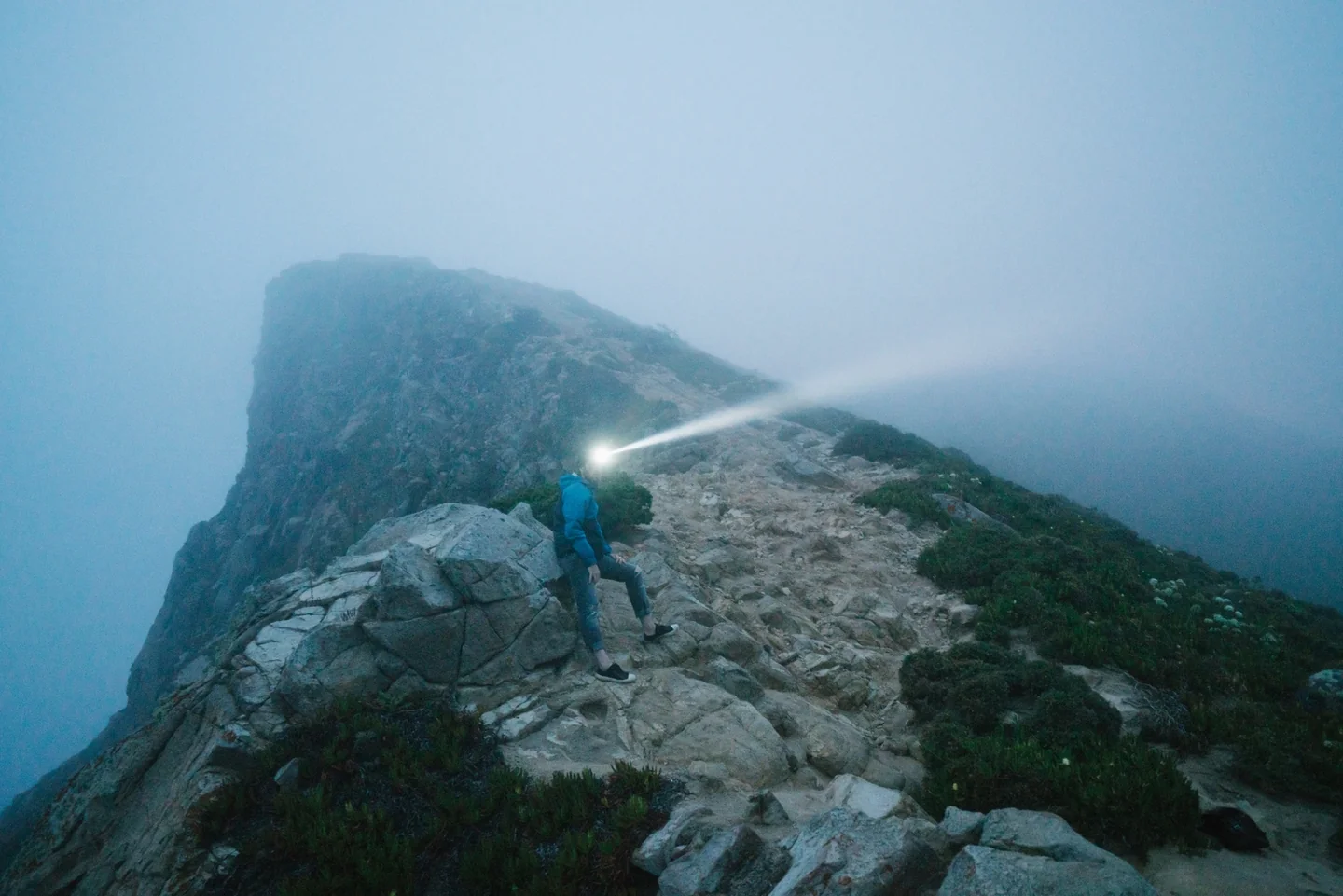
A running headlamp needs to illuminate the ground for the whole outing and stay stable with every stride. On streets with streetlights, a setting of 100 to 300 lumens can be a useful starting point; on dark, technical trails, having 400 to 700 lumens or more available may be helpful, depending on pace, terrain and beam pattern.
Maximum output alone is not enough to make a choice. Battery life at the setting you will use, weight with the battery, fit and water protection matter too. Basic models cost roughly €20 to €40, while specialised equipment can exceed €150.
How many lumens you need for your route
Lumens measure the total amount of visible light emitted by a lamp. They do not by themselves tell you how far away you will spot a root: beam shape, lamp angle and contrast also matter. Two headlamps with the same output can illuminate a route very differently.
On an urban route with continuous street lighting, 100 to 300 lumens can supplement the streetlights and help reveal kerbs or uneven pavement. In dim parks and on unlit tracks, having 300 to 500 lumens available gives you more room to adjust the output.
In the mountains, particularly on descents and technical terrain, models capable of 400 to 700 lumens or more can be useful. Some reach 1,200 or 1,500 lumens, but there is no need to use maximum output all the time. These ranges are guides: a wet surface, a sharp bend or a faster pace may call for slowing down.
Beam pattern and range shape what you see
A wide beam lights the ground nearby and to the sides, while a focused beam sends more light ahead. The former helps reveal the edges of a trail; the latter gives you more warning on an open track or when approaching a distant bend.
For varied routes, a mixed beam combining close-range light with a longer-reaching central area is practical. A tilting lamp also matters: pointing it too high can dazzle others, while directing it only at your feet leaves less time to react.
A dim front red light is useful for checking equipment during a stop and may affect dark adaptation less than a bright white light. It does not replace white light for running on uneven ground. A rear red light serves a different purpose: making the runner visible.
Eight headlamps for different types of runner
These options range from urban runs to long mountain outings. The figures relate to specific versions declared by their manufacturers; they are not the results of our own tests. Specifications, accessories and availability can change between generations.
Petzl IKO CORE: rechargeable battery or disposable cells
The Petzl IKO CORE is rated at 500 lumens for 2 hours and 30 minutes on its maximum setting with the CORE battery; at 100 lumens, the stated duration is 9 hours. It also accepts three AAA batteries. Petzl lists a weight of 79 grams and an IPX4 rating for this version.
Its design places the power source at the back and combines wide illumination with a mixed beam. The dual power options are useful for travel or longer outings, although the published weight does not specify which components it includes and cannot be directly compared with every model.
BioLite HeadLamp 330: a low-profile road option
The BioLite HeadLamp 330 is rated at a maximum of 330 lumens and weighs a stated 69 grams, with an integrated battery at the rear. Claimed battery life is around 3.5 hours on high and up to 40 hours on low; it charges via micro-USB.
Its slim design looks well suited to urban runs and easy paths on paper. It has a front red light and reflective rear band, but no rear red light. It is an older model and may have been discontinued.
Black Diamond Sprinter 500: rear light and flexible power
The Black Diamond Sprinter 500 accepts a rechargeable BD 1800 battery or three AAA batteries and has a flashing rear red light. With the rechargeable battery, Black Diamond states 3.5 hours at 500 lumens and 7 hours at 250 lumens, plus a reserve period.
It has IPX4 protection and a removable top strap, which can help distribute the load. The published weight is given as 88 plus 35 grams, without a sufficiently clear breakdown to compare it with figures that exclude the power source.
Ledlenser NEO5R: also wearable on the chest
The Ledlenser NEO5R advertises 600 lumens in boost mode, although the duration of that setting is not specified. Power mode provides a stated 300 lumens for 4 hours and Mid mode 100 lumens for 8 hours. Its listed weight is 104 grams and its rating is IP54.
It includes a flashing rear red light and a strap for chest mounting. Its magnetic contact charging means keeping the compatible cable safe, a consideration when travelling or looking for a replacement.
Nitecore NU25 MCT UL: low weight for shorter outings
The Nitecore NU25 MCT UL is rated at 47 grams with its bracket and strap, a maximum of 400 lumens and IP66 protection. It has a built-in 700 mAh battery with USB-C charging, several white-light colour temperatures and an auxiliary red light.
The 45 hours advertised for the NU25 MCT family refer to the 6-lumen ultralow setting. Without a stated duration for higher modes, that figure cannot establish battery life on a dark trail.
Silva Trail Runner Free 2: mixed beam and rear battery case
The basic Silva Trail Runner Free 2 is rated at 450 lumens with AAA batteries and combines close-range light with reach. Silva states 1.5 to 2 hours on maximum and 4 to 5 hours at 200 lumens with that power source.
The lamp and case are rated IPX5, and the case includes a red light. The basic case is sold without the three AAA batteries or the optional Hybrid battery. Stated weight is 60 grams without a battery, 122 grams with disposable cells and 113 grams with the Hybrid; the Hybrid and Ultra variants have different equipment.
Petzl Actik: a mid-range option
The Petzl Actik is an option for runners seeking a versatile headlamp without moving up to more advanced mountain equipment. A 450-lumen version costs roughly €48 to €55, although price and output vary by edition and retailer.
Its appeal lies in the balance between size and features for regular training. When comparing offers, distinguish it from the Core version and check the power source and accessories included with each.
Petzl Nao RL: power for the mountains
The Petzl Nao RL, with a stated maximum of 1,500 lumens, belongs to a range aimed at demanding outings. Its price can be around €140, although it varies between retailers. It has reactive lighting that adjusts output to the surroundings.
Automation reduces the need to change settings manually while running. Its maximum output and sensor are more relevant to nighttime mountain routes than to a well-lit urban circuit.
Battery life: compare hours and output at the same setting
A stated duration of 40 or 45 hours may refer to a very dim light, enough to look through a bag but not to run along a dark path. A useful comparison pairs hours and lumens at the same setting and distinguishes any reserve period from the main output.
The ANSI/PLATO FL 1 standard sets test procedures for output, range and battery life. A runtime measured under this standard does not promise that initial brightness will remain constant throughout: the test uses a light-output threshold.
Cold, battery ageing and high-power settings can shorten the available time. For an outing expected to last three hours, a lamp rated for exactly three hours at the required setting leaves little margin. On long or remote routes, a compatible spare battery, disposable cells or a second light provide an alternative if the main lamp fails.
Rechargeable, disposable or hybrid power
A rechargeable battery is convenient for frequent training and avoids replacing disposable cells after every run. Before buying, check whether it is removable, whether replacements are available and which connection it uses: USB-C, micro-USB and proprietary connectors are not interchangeable.
AAA batteries can be replaced away from a socket, although they add weight and create waste. Hybrid headlamps accept both systems but do not always include a rechargeable battery and disposable cells; output and runtime can also change with the power source installed.
Mountain race rules may require a headlamp, a spare light or additional batteries. Compatibility with mandatory equipment should be checked for the specific event, as should the ability to charge the lamp while it is on, which is not available on every model.
Weight and fit: a test that can prevent a poor purchase
Lightweight headlamps can weigh around 50 to 60 grams, while others exceed 100 or 140 grams. Figures are comparable only when they include the same components: a lamp advertised without its battery weighs more once it is ready to use.
The band should hold securely without excessive pressure. A rear battery can balance the assembly and a top strap can help distribute the load on bulkier designs. Even a lightweight model, however, can bounce if it does not fit properly.
A short run or a few jumps can reveal whether the lamp moves. Trying it with a cap or hairband, if you normally wear one, can reveal changes in fit. It is also worth checking that the buttons work with gloves and that the lamp keeps its angle while running.
Anyone who already owns a hiking headlamp can first test its stability in motion. There is no need to buy another simply because it is not labelled for running; a change makes sense if it bounces, causes discomfort or cannot last through your usual outings.
What IPX4, IPX5 and IP66 mean
An IP rating describes tested protection against dust and water. In IPX4, the X means dust protection is not specified and the 4 indicates resistance to splashes. IPX5 covers water jets and IPX6 more powerful jets.
In IP66, the first 6 indicates dust protection and the second protection against powerful water jets. IPX7 refers to temporary immersion under test conditions; it does not by itself establish dust protection or compliance with every jet test.
After a wet outing, removing dirt and drying the exterior helps preserve the equipment. If the manufacturer permits the compartment to be opened, it can be left to dry before storage. Do not charge it with a wet connector; seals and covers also deserve inspection after impacts or prolonged use.
Head or chest: two ways to light the route
On the head, the beam follows your gaze, which is useful when looking for a sign or towards a bend before turning your body. In a group, aiming the lamp carefully helps avoid dazzling people running towards you.
A compatible chest light shines from a lower position: shadows behind stones and roots can help reveal the shape of the ground, without adding weight to the forehead. The trade-off is that the light follows your torso, not your eyes, and can be less convenient at junctions or when looking sideways.
Not every headlamp should be attached to a vest. A harness or mount designed for that purpose makes it easier to assess how stable the setup is. Both positions can also be combined on long outings, provided each light’s power supply is managed.
How much a headlamp costs and what is included
As a guide, basic options cost €20 to €40, mid-range models roughly €45 to €90 and advanced equipment more than €100, with some specialised models exceeding €150 or €200. The bands overlap and do not guarantee a particular feature.
Higher-priced models may offer replaceable batteries, sensors, better weight distribution or greater water protection. For occasional city use, those features may add less value than a comfortable band; in the mountains or for frequent training, the extra cost may address specific needs.
The displayed price is not always the full cost. An offer without a rechargeable battery or disposable cells can look cheaper until the power source is added. Checking the exact version and included accessories makes a fair comparison possible.
Seeing the route and being seen are different tasks
A headlamp mainly shines forwards. Someone approaching from behind or from the side may not see it clearly, so a rear light and reflective items serve a different purpose. Reflective material needs incoming light; an active light emits its own.
In Spain, the General Traffic Regulations require pedestrians using the carriageway or hard shoulder of roads outside built-up areas, between sunset and sunrise or in reduced-visibility conditions, to carry an approved light-emitting or retroreflective item visible to approaching drivers from at least 150 metres.
Placement matters too: a backpack or jacket can cover a small light. No accessory means you can assume others have seen you. On a nighttime outing, route choice and attention to traffic remain part of staying safe.
Este artículo contiene enlaces de afiliado: si compras a través de ellos, se genera una pequeña comisión sin coste adicional para ti. Más información.



How to prevent thigh chafing: causes and real solutions

Women’s running windbreakers: seven jackets and how to choose

Do more workouts get rid of soreness? A guide for runners

Jaén Half Marathon 2026: Record 3,800 Runners Registered

Men’s short running tights: how to choose the right pair

World Triathlon confirms data breach involving medical data

Izan Edo targets podium at Miyazaki World Cup

María Pérez ranks ninth in World Athletics’ 2026 top ten

Dos Santos, Duplantis and Sawe: World Athlete of the Year finalists

San Silvestre Vallecana 2026: 42,000 places, prices and start times

 Races3 months ago
Valencia Half Marathon 2027: date and registration

 Races3 months ago
Valencia Marathon 2026: entry, ballot and course

 Reviews and Comparisons4 months ago
Asics Gel-Roadmiles 3 for men: review and current price

 Reviews and Comparisons4 months ago
Asics Gel Sonoma 8 Gore-Tex: complete analysis for trail and rain

 Sneakers3 months ago
Saucony Endorphin Pro 4: full review and verdict

 News5 months ago
Strava API 2026: what changes for clubs, challenges and runner apps?

 Reviews and Comparisons5 months ago
Nike Alphafly 3: opinions, sensations, and real key points

 Reviews and Comparisons4 months ago
Under Armour running shoes review 2025-2026: models and key features

 Sports Equipment4 months ago
Shoe sizes in cm: a clear guide to getting the right fit for your footwear

 Sneakers3 months ago
Skechers GO RUN Consistent 2.0 analysis: comfort and limits

 News5 months ago
Valencia Marathon 2026 route: key tips to train and run better

 Sneakers4 months ago
Adidas Adizero Boston 13 for men: review and verdict