News
Night running lights: safety for training as the sun goes down already
Power, autonomy, and fit make the difference when running at night. Key points for choosing the right gear and gaining visibility.

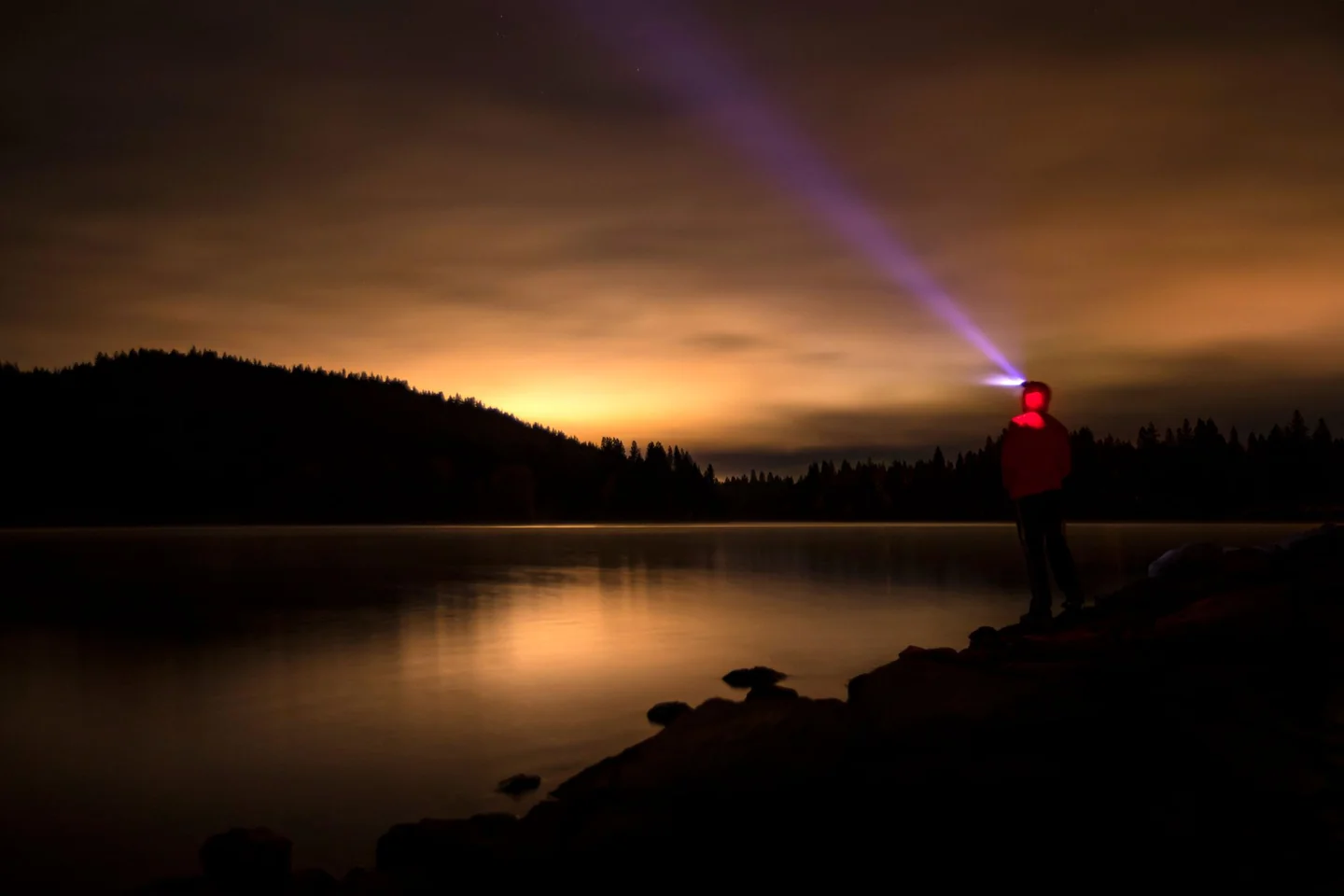
Imagen: Stephen Leonardi / Pexels
Darkness completely changes the way you run. An asphalt road that by day seems flat suddenly hides potholes; a familiar forest track can turn into a sequence of shadows; and a simple turn of the head starts to demand more than habit. In that setting, lighting stops being an accessory and becomes a basic safety piece. Lights for running at night not only let you see the ground: they also make the runner visible to cars, bicycles, and other path users.
In practice, the difference between heading out with just any light and carrying a well-chosen system is noticeable in the first few minutes. A headlamp that is too weak forces you to slow down, one that is too heavy bothers you with every stride, and one that is poorly adjusted bounces as if the effort were doubled. That is why, in night running, lumens matter just as much as battery life, beam type, weight, water resistance, and stability on the head or chest.
Real visibility: what changes when you run after dark
Running at night is not just running with less light. The perception of distance, the reading of the ground, and the ability to react to obstacles change dramatically. The brain fills in gaps when the scene is incomplete, and in a workout that can translate into a worse foot placement or a bad decision when it comes to dodging a curb, a branch, or a loose stone.
A proper light creates a kind of safety corridor in front of the athlete. In the city, that strip of light helps distinguish pedestrians, cars pulling out of a garage, and poorly lit crossings. On trails and dirt paths, the headlamp draws out relief where there were once dark patches. That reading of the terrain is especially valuable at faster paces, when there is no room to improvise every step.
There is also a being seen component that is often underestimated. A red rear light, a reflective band, or a headlamp with elements visible from behind reduces risk in areas shared with traffic. In a night workout, safety does not depend on a single bright point, but on a set of signals that make the runner’s presence recognizable from different angles.
How many lumens you need depending on the type of outing
There is no single number that works for everything. Useful power depends on the environment, the speed, and the level of detail the route demands. For streets with partial lighting or urban parks, between 200 and 400 lumens is usually enough for relaxed outings. On dark paths or mixed trails, the reasonable range rises from 400 lumens upward. When the terrain gets technical, with roots, elevation changes, or fast descents, it is common to move into the 600 to 1,200 lumen range.
More power does not always mean a better experience. A 1,500-lumen headlamp may look unbeatable on a spec sheet, but if it is too heavy or drains the battery too quickly, it stops making sense for a gentle one-hour run. The key is balancing intensity with real use. For short urban workouts, comfort matters more than the raw number; for night trail running, breadth and the ability to anticipate come to the forefront.
The best solutions on the market no longer just throw light forward. Some combine a long beam and a wide beam, so the eye does not have to alternate between tunnel vision and the periphery. That mix, very common in mid-range and high-end models, lets the runner see the immediate ground and, at the same time, make out what is coming a few meters ahead. It is a subtle difference in the hand, but enormous on the ground.
Headlamp, chest light, or rear light: each format serves a purpose
The headlamp is still the most versatile option for running at night. It moves with the head, lights up wherever the runner looks, and leaves the hands free. That freedom explains its dominance in running and trail, but it does not mean it is the only useful solution. On urban routes, a red rear light adds visibility without interfering with the stride. In some chest-mounted models, the light sits lower and more stable, which can reduce beam movement for certain runners.
Lightweight headlamps work especially well on asphalt or simple paths. When the terrain gets demanding, the whole setup needs to hold firmly, without pressing too much or shifting with sweat. On technical routes, a top strap or a second band helps distribute the weight. Models with a rear battery, more common in powerful ranges, move part of the load to the back of the neck and leave the front area clearer.
Rear lights, for their part, do not replace the headlamp, but they do close the safety loop. A red rear light makes the runner more legible to cars and cyclists, and it is especially useful on avenues, bike lanes, and shared sections. In the city, that detail can make the difference between going unnoticed and being detected in time.
What to look at before buying a light for running at night
The technical sheet matters, but ergonomics decide. Two headlamps with the same power can feel completely different if one bounces, dazzles, or gets too hot. The first filter should be weight, because beyond a certain number of grams the accessory stops feeling like part of the body. In long sessions, just a few extra grams can turn into constant pressure on the forehead or a sway that distracts more than it should.
Battery life is the second point. It is not enough to look at how many hours it lasts at maximum power; you also need to see what happens in medium or low mode. Many models offer an intelligent profile that reduces output when they detect less need for light. That management is useful on long outings, because it extends battery life without forcing the runner to live at maximum intensity all the time. The charging type also deserves attention: USB-C now dominates in newer models, although some headlamps with older solutions or replaceable batteries are still around.
Water resistance is another decisive criterion. Night running does not care about ideal weather, and light rain or heavy sweat can put any casing to the test. A reasonable level of protection for regular training avoids annoying failures. It is also worth checking the beam angle and the transport lock system, two modest details on paper but very practical in everyday use.
Models and price ranges that shape the market
The market has settled into three main tiers. At the entry level, there are simple headlamps, usually between 200 and 500 lumens, with prices that in specialty stores usually range around 30 to 60 euros. These are options designed for urban runners, beginners, or those who only go out at night occasionally. Within that range, models like the Petzl Actik, the Silva Smini, or the Fenix HL16 represent the idea of lightness and easy use very well.
In the mid-range, you find headlamps that already allow you to tackle darker or longer routes with confidence. Here it is common to see outputs of 500 to 800 lumens, rechargeable batteries, and better weight distribution. Prices usually sit roughly between 60 and 100 euros. In this bracket fit options like the Petzl Actik Core, the Silva Discover, the Silva Trail Runner Free 2, or the Fenix HL32R-T, which combine performance and comfort without blowing the budget.
Above that comes the high end, where models of 1,000 lumens or more enter the picture, designed for demanding trail, intense training, or runners who prioritize a wide field of view and well-managed battery life. There you’ll find references like the Petzl Swift RL, the Petzl Nao RL, the Silva Free 1200 S, the Fenix HM65R-T V2.0, or the Moonlight Bright As Day 1300S. These are headlamps in another league in terms of power and refinement, with prices that can range from just under 100 euros to well over 150 euros.
Battery life, battery, and charging: the detail that separates a good outing from an uncomfortable one
Battery life should not be read as an isolated number. A headlamp that promises many hours in the lowest mode can drop quickly as soon as sustained power is required. That is why it is worth understanding the battery as a reserve that is divided between immediate need and total usage time. Short outings handle modest models better; long workouts appreciate larger batteries or hybrid setups.
Rechargeable systems have gained ground because they simplify use and avoid depending on loose batteries. However, AAA batteries are still present in several popular headlamps because they offer a familiar solution, easy to replace and useful on trips or races where a plug is not always at hand. In some ranges, the external or interchangeable battery gives a clear advantage to those who string together many hours away from home or in the mountains.
Thermal management matters too. A very powerful light not only consumes more, it can also heat up and reduce sustained performance. The more advanced models solve that problem with electronics capable of modulating output and protecting the device. That detail is especially noticeable in winter, when the cold air helps, and in summer, when the body is already busy enough trying to dissipate heat on its own.
Comfort in motion: the headlamp should disappear while you run
A good headlamp should not feel like an alien device. If it bounces, squeezes, or slips, it interrupts the running motion and steals attention. The strap should adjust precisely, without leaving excessive marks or relying on uncomfortable tension. On trail, sweat can also work against you, so breathable materials and designs that distribute the load better are clearly superior.
The balance between the head and the battery is another point that changes the experience a lot. Some lightweight headlamps, designed for city use or easy workouts, have the battery integrated into the main body and offer a compact feel. Others, more powerful, separate the battery and place it at the back or in an external compartment. That solution reduces front pressure, although it adds some complexity and bulk to the setup.
In quality sessions, where you run at a fast pace, any oscillation is amplified. That is why stability comes before raw power more often than it seems. The ideal headlamp is the one that follows the movement without demanding attention, like an obedient light that simply opens the way and disappears from your thoughts.
Front lights and road safety: the urban stretch deserves its own logic
The city does not forgive poor visibility. On streets with traffic, crosswalks, and intersections, the problem is not only seeing the ground, but being detected in time. A well-aimed white front light, combined with a red rear element, improves the way cars, scooters, and bicycles read you. It also helps avoid that classic last-second scare when a vehicle pulls out of a parking space or turns from a side street.
In urban settings, less can also be more. A front light that is too aggressive dazzles other runners and reduces comfort in enclosed or narrow spaces. That is why, on asphalt, the practical recommendation usually leans toward moderate power, clean beams, and adjustable modes. The goal is not to light up half the avenue, but to move forward clearly without turning every outing into a little roaming lighthouse.
Reflective bands, lightweight vests, and clothing with visible details complement a main light very well. In winter, when training reaches dusk or full night, that set of signals creates a much clearer presence. Road safety, in this context, works better when it is built in layers and not with a single isolated gesture.
Trail, mountains, and dark paths: when the beam needs to read the terrain
In the mountains, light is for anticipating, not just illuminating. Roots, wet stones, tight turns, and changes in slope force the runner to read two or three meters beyond their feet. A short beam forces late reactions; a wide beam with poor reach leaves you without references in the background of the scene. That is why the most interesting headlamps for trail combine both and offer adjustments depending on the type of route.
In this kind of outing, adaptive lighting technology also comes into play. Some models automatically adjust the beam according to ambient light and terrain, which avoids constant manual changes and helps preserve battery life. It is a particularly useful solution in long races or runs where attention is already busy enough with breathing, elevation gain, and controlling foot placement.
Durability and reliability matter as much as lumens. A headlamp that fails with moisture, mud, or cold loses value precisely when it is needed most. That is why established brands still lead this segment: they have refined closures, buttons, battery durability, and behavior in the rain better. On a mountain night, the feeling of confidence is worth almost as much as the light itself.
Brands that have earned runners’ trust
Petzl, Silva, and Fenix dominate much of the serious conversation about lighting for running. Petzl has earned a solid reputation in lightweight, well-balanced headlamps, with models like the Actik, Swift RL, Swift LT, or Nao RL covering everything from urban outings to very demanding trail. Its strength lies in the combination of intuitive design and well-resolved lighting solutions.
Silva, for its part, has built a very broad catalog, with entry-level models like the Smini or Discover and more ambitious options like the Free 1200 S or Trail Runner Free 2. The Swedish brand has worked especially well on the balance between weight, battery life, and comfort, something that is very noticeable in long races. Fenix completes the trio with robust and powerful headlamps, from the HL16 and HL18R-T to the HM62-T and HM65R-T V2.0, as well as very interesting models in medium and high power ranges.
There are also lesser-known options that can be valid for specific uses, but in night running the manufacturer’s accumulated experience still matters. A headlamp is not judged only by the spec sheet on the box; its real behavior matters when you sweat, in the rain, after several hours, and when the runner already has miles in their legs. That is where the brands with more experience usually show an advantage.
How to match lighting to the type of runner
The best lighting system is the one that fits the real routine of each outing. A city runner who goes out two or three times a week does not need the same gear as someone training on dark trails or heading out for long winter runs. Nor do those who prioritize maximum lightness share the same needs as those who prefer to feel fully covered even if the headlamp weighs a bit more.
For short, regular sessions, a simple, comfortable, easy-to-wear model is usually more useful than an oversized machine. For trail, on the other hand, it pays to step up a level and go for a light that gives you room to read the terrain, especially on descents and technical sections. In both cases, the right choice feels almost invisible when it works well; the wrong one is noticeable from the very first kilometer.
The red rear light, although it sometimes seems secondary, makes particular sense for runners who share lanes or train at dusk in traffic areas. It is a small piece, cheap compared with the main headlamp, and very effective at increasing external perception. In the language of safety, it is a discreet underline that does not bother and can prevent scares.
A well-chosen light changes the runner’s night
The right lighting does not turn darkness into day, but it does restore control. That is the real value of lights for night running: allowing the runner to see enough, be seen in time, and keep a stable stride when night closes in around the scene. A good headlamp not only provides visibility, it also reduces mental tension, because the body runs better when the eye trusts what is ahead.
More things influence that choice than first meet the eye. Weight, beam shape, fit quality, real battery life, and water resistance build a complete experience. Raw power is impressive, but what supports outing after outing is the whole package. And in night running, where the landscape narrows and every detail matters more, that whole package translates into something simple and valuable: running with more clarity, fewer surprises, and much firmer safety.
You may also like: Women’s LED running shoes for night: buying guide.
Este artículo contiene enlaces de afiliado: si compras a través de ellos, se genera una pequeña comisión sin coste adicional para ti. Más información.



How to prevent thigh chafing: causes and real solutions

Women’s running windbreakers: seven jackets and how to choose

Do more workouts get rid of soreness? A guide for runners

Jaén Half Marathon 2026: Record 3,800 Runners Registered

Men’s short running tights: how to choose the right pair

World Triathlon confirms data breach involving medical data

Izan Edo targets podium at Miyazaki World Cup

María Pérez ranks ninth in World Athletics’ 2026 top ten

Dos Santos, Duplantis and Sawe: World Athlete of the Year finalists

San Silvestre Vallecana 2026: 42,000 places, prices and start times

 Races3 months ago
Valencia Half Marathon 2027: date and registration

 Races3 months ago
Valencia Marathon 2026: entry, ballot and course

 Reviews and Comparisons4 months ago
Asics Gel-Roadmiles 3 for men: review and current price

 Reviews and Comparisons4 months ago
Asics Gel Sonoma 8 Gore-Tex: complete analysis for trail and rain

 Sneakers3 months ago
Saucony Endorphin Pro 4: full review and verdict

 News5 months ago
Strava API 2026: what changes for clubs, challenges and runner apps?

 Reviews and Comparisons5 months ago
Nike Alphafly 3: opinions, sensations, and real key points

 Reviews and Comparisons4 months ago
Under Armour running shoes review 2025-2026: models and key features

 Sports Equipment4 months ago
Shoe sizes in cm: a clear guide to getting the right fit for your footwear

 Sneakers3 months ago
Skechers GO RUN Consistent 2.0 analysis: comfort and limits

 News5 months ago
Valencia Marathon 2026 route: key tips to train and run better

 Sneakers4 months ago
Adidas Adizero Boston 13 for men: review and verdict