Sports Equipment
Snowshoe boots: how to choose them well
Keys to choosing the right winter footwear: height, waterproofing, fit, and real use in snow.

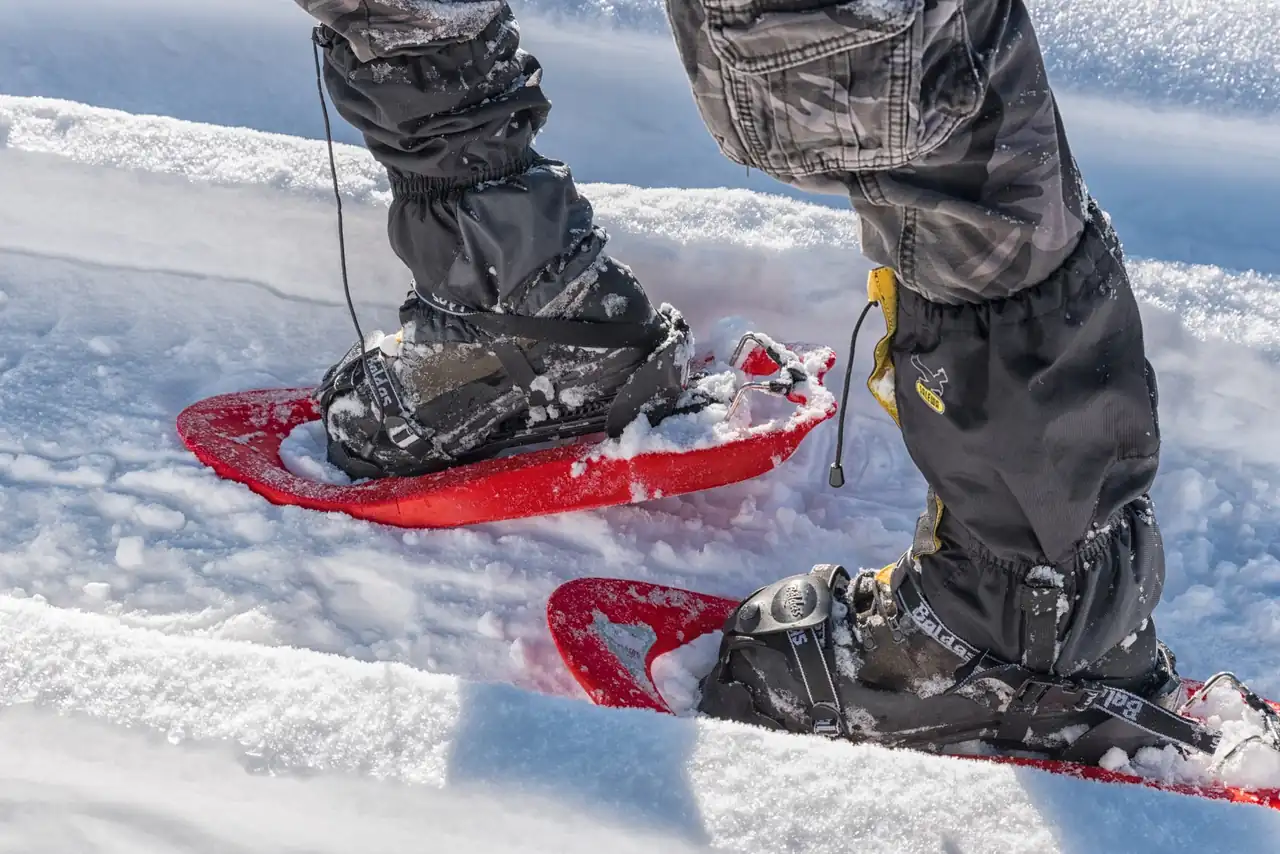
The footwear chosen for snowshoeing decides more than it seems. It not only affects thermal comfort; it also changes stability, the grip of the binding, and the way the foot responds when the snow sinks, compacts, or hardens in the cold. The right model prevents chafing, limits snow entry, and reduces the risk of sprains on terrain where every step rests on an unstable surface.
On a short outing across a snowy plain, a sturdy trekking boot may be enough, but as soon as the route becomes longer, steeper, or colder, the margin for error narrows. That is where the high cuff, waterproofing, breathability, and ankle support come into play. The combination of those four factors separates an enjoyable excursion from a day in which the foot ends up wet, cold, and battered by friction.
What a good winter boot should offer
Boot height is one of the first useful filters. In soft snow, especially when the fresh layer is not packed down, the surroundings can rise above the instep and seek out the opening of the boot collar. A high cuff helps keep that intrusion contained, better protects the lower leg, and adds an extra measure of ankle firmness. That additional support is especially noticeable when the stride becomes uneven, when crossing small slopes, or when turning with the snowshoe on.
Waterproofing, for its part, is not a catalog detail but a practical necessity. A boot that lets in water or fine snow quickly becomes a thermal trap: the foot gets damp, the sock loses insulating ability, and the cold multiplies. Membranes known as Gore-Tex or equivalent solutions serve a clear purpose, but they do not work miracles if snow enters from above or if the fit is loose. The boot protects, but the fit completes the job.
Breathability also matters, even if it is mentioned less often than waterproofing. The effort of a snowshoe trek makes you sweat more than expected, even in low temperatures. When that vapor cannot escape, moisture stays inside and soaks the sock from within. The result is similar to a wet glove in the middle of winter: it loses insulating capacity and the cold becomes persistent. On long routes, that difference between wicking sweat away or trapping it changes the experience completely.
Mountain boots, winter boots, and specific models
Not every outing calls for the same boot. For short routes, with compact snow and stable weather, a mid-to-high trekking boot can work without problems, provided it usually has a waterproof membrane and a proper fit. That type of boot tends to offer an interesting balance between lightness and protection, something valuable when the terrain does not require more rigid gear.
By contrast, multi-hour outings, routes with elevation gain, or days of dry cold and wind call for a more serious boot. In those cases, soles with better traction, a more stable collar, and thermal insulation become more important. In winter mountains, the boot is not just a wrapping for the foot; it acts as one more support piece, almost like a hinge between the body and the snowshoe. If that link fails, the stride loses precision.
Models designed specifically for snow usually include a design better prepared for demanding bindings and for continuous use on icy surfaces. There are also mountaineering boots that work for technical traverses, especially when crampons or icy sections may come into play in addition to snowshoes. The harsher the environment, the less sense there is in improvising with a soft or urban-use shoe.
Waterproofing, warmth, and foot breathability
Warmth does not depend on thickness alone. A heavily padded boot may seem warmer, but if it does not breathe well it will end up creating uncomfortable moisture as soon as the pace increases. In snow and cold, the balance is delicate: too much insulation without ventilation creates sweat; too much ventilation without protection leaves the foot exposed to cooling. The good news is that today’s market offers intermediate options designed for walking, not for standing still.
The conditions on the route also matter. A sunny outing with hard snow and moderate wind does not require the same protection as a traverse in shade, with powder snow and subzero temperatures. In the second case, the boot faces more moisture; in the first, the main enemy may be accumulated sweat. That is why it is worth reading the actual use and not just the technical label. Thermal comfort is the sum of climate, effort, and duration.
An often overlooked detail is changing socks. When the foot becomes damp during a long excursion, changing socks at the end prevents the cold sensation from lingering and speeds up the return of comfort. It does not fix a poor boot choice, but it does reduce the punishment. In winter, that small precaution makes the difference between finishing in good shape or ending up with numb toes.
The support a snowshoe demands
The snowshoe binding works better when the boot has enough volume and firmness. A boot that is too soft or too low can allow the foot to move inside the binding, reduce precision, and force the straps to be tightened more. That extra tension does not improve grip; it often just creates pressure points and fatigue. The idea is not to compress the foot, but to keep it stable on a wide base that already adds instability to the step.
High-cuff boots usually offer a better relationship with the binding because they allow more confident closure around the ankle and distribute tension better. That translates into a cleaner stride, especially on slopes or when the snow forces you to lift the foot more to avoid dragging the toe. In deep tracks, every energy saving counts, and proper support avoids constant corrections.
It is also worth thinking about compatibility with the rest of the equipment. Some bindings accept wide trekking boots well; others work better with more rigid footwear with a defined profile. Ultimately, the boot and the snowshoe form a single system, not two independent pieces. Choosing one without thinking about the other usually ends in poor fit and clumsy movement.
What happens on short, long, and technical routes
An outing of one or two hours does not require the same level as a full-day trip. On short routes, with settled snow and moderate elevation gain, a sturdy trekking shoe may be enough if the weather cooperates. It offers lightness, flexes better while walking, and does not burden the foot with a structure that is too rigid. But that margin disappears as soon as the activity goes on longer or the snow changes texture.
When the excursion lasts more than three or four hours, the priority is no longer just lightness. Ankle fatigue, accumulated cold, and the wear of each step appear. In that case, a boot that protects more, reduces snow entry, and keeps the foot firm without becoming an uncomfortable suit of armor is appreciated. On more serious traverses, that combination of protection and stability is worth more than a few grams less on the scale.
In technical settings, where the mountain becomes harsher and the snow can hide ice, specific boots or mountaineering boots make sense. They are usually stiffer, with better traction response and a sole designed for demanding surfaces. They are not the most comfortable for a leisurely walk through a snowy forest, but they are the most sensible when the route demands precision. The right boot is the one that matches the terrain, not the one that looks most impressive on paper.
How to read a technical sheet without getting lost
Technical terms only matter if they are translated into real sensations. Waterproof means it resists external moisture better; breathable means it tries to release internal vapor; insulating means it retains heat better. Read together, they form a kind of map of how the footwear behaves in snow. However, the spec sheet does not tell the whole story: a boot may sound perfect and fail because of size, last shape, or excessive stiffness.
The comfort temperature, when stated, is quite useful, although it should not be taken as an exact limit. Each person perceives cold differently, and the body responds unevenly depending on effort. Someone walking continuously will tolerate less insulation than someone who stops often to photograph the landscape or check the route. Use matters more than the printed number.
It is also useful to look at the sole construction. An aggressive tread pattern does not always mean better performance on snow, but it often helps in mixed conditions, especially when the surface alternates between compact sections, thin ice, and patches of dirt. In practice, the best sole is the one that combines reasonable grip with a flex that does not punish the stride. Not too soft, not a board.
Footwear for women, men, and children
Needs do not change only because of size. For women, men, or children, what really matters is the combination of fit, weight, intended use, and level of protection. Even so, women’s models often offer slightly narrower lasts or different proportions, while children’s models prioritize lightness, easy on-and-off, and safety. For children, too, ease of putting the boot on and taking it off weighs almost as much as grip.
At younger ages, it is best not to complicate the gear. A boot that is too rigid can make walking uncomfortable and reduce the desire to move in snow, which already adds effort on its own. The ideal is to seek stability without excessive stiffness, with a simple closure and enough protection against moisture. For family outings, easy-to-adjust footwear is almost as important as the snowshoe itself.
In adults, the choice usually splits between those who want to walk regularly and those who only go out occasionally. The former appreciate more support and durability; the latter, immediate comfort and a less demanding fit. There is no universal boot, only a different response for each pace of use.
Common mistakes that make a simple outing more expensive
The most common mistake is using urban footwear or something too flexible. It may seem comfortable at first, but it fails as soon as the snow hardens or the snowshoe binding demands more firmness. The foot starts to move around inside the boot, chafing appears, and walking becomes less efficient. Cheap in winter ends up costing more in discomfort.
Another common mistake is breaking in the boot on a long route. The material may have small stiffness points or pressure spots that are not noticeable at home. In the cold, those imperfections are felt more. That is why it is wise to test the footwear before a demanding outing, even if only on a short walk. A new boot should not be met for the first time halfway through a traverse.
Overtightening the snowshoe straps to compensate for the wrong size does not help either. That move may seem like a quick fix, but it ends up distorting foot support and increasing fatigue. When the equipment does not fit, the body pays for it in ankles, calves, and the sole of the foot. Proper adjustment, quiet and evenly distributed, is always more effective than brute force.
What careful buyers look at
Price matters, but real value lies in the combination of performance and intended use. There are winter boots meant for occasional walks that do well in light snow, and others in a higher range that justify their cost on long routes, harsher temperatures, or winter mountaineering. The key is not to pay for stiffness you will never use or to fall short on protection just to save too much.
Ease of maintenance also matters. A boot that dries poorly, retains moisture, or requires excessive care ends up reducing enjoyment in winter. The right material should allow mud, snow, and salt residue to be cleaned without too much trouble. In this terrain, durability is measured in full seasons, not in the first flawless outing. The best footwear is the one that still performs when winter gets serious.
In a market full of brands, colors, and technical names, the sensible decision is usually less flashy than it seems: look for a waterproof boot, with enough cuff height, good support, some ability to breathe, and a sole that combines grip and comfort. That five-part combination is quiet, but it supports the excursion from start to finish. And in snow, where everything changes with the light and the condition of the ground, that consistency is worth gold.
Winter mountains begin at the foot
Snowshoeing is a way of reading snow with the whole body, and the foot is the first line of that reading. Every step reveals the hardness of the ground, the depth of the layer, and the fatigue that accumulates silently. That is why footwear cannot be treated as a secondary accessory. It is part of the moving mechanism, just like the binding, balance, or route choice.
On a well-resolved outing, the boot hardly gets noticed. It does not pinch, it does not get wet, it does not chill, it does not slip. It simply accompanies. That discretion, which in other contexts would be unremarkable, is here the best sign. When the foot stops being news, the excursion flows. And in snow, flowing means moving safely, keeping warm, and reaching the end without the footwear having imposed its own story on the day.
You may also like: Snow boots: key tips to get it right for real.



How to prevent thigh chafing: causes and real solutions

Women’s running windbreakers: seven jackets and how to choose

Do more workouts get rid of soreness? A guide for runners

Jaén Half Marathon 2026: Record 3,800 Runners Registered

Men’s short running tights: how to choose the right pair

World Triathlon confirms data breach involving medical data

Izan Edo targets podium at Miyazaki World Cup

María Pérez ranks ninth in World Athletics’ 2026 top ten

Dos Santos, Duplantis and Sawe: World Athlete of the Year finalists

San Silvestre Vallecana 2026: 42,000 places, prices and start times

 Races3 months ago
Valencia Half Marathon 2027: date and registration

 Reviews and Comparisons4 months ago
Asics Gel-Roadmiles 3 for men: review and current price

 Races3 months ago
Valencia Marathon 2026: entry, ballot and course

 Reviews and Comparisons4 months ago
Asics Gel Sonoma 8 Gore-Tex: complete analysis for trail and rain

 Sneakers3 months ago
Saucony Endorphin Pro 4: full review and verdict

 News5 months ago
Strava API 2026: what changes for clubs, challenges and runner apps?

 Reviews and Comparisons5 months ago
Nike Alphafly 3: opinions, sensations, and real key points

 Reviews and Comparisons4 months ago
Under Armour running shoes review 2025-2026: models and key features

 Sports Equipment4 months ago
Shoe sizes in cm: a clear guide to getting the right fit for your footwear

 Sneakers3 months ago
Skechers GO RUN Consistent 2.0 analysis: comfort and limits

 News5 months ago
Valencia Marathon 2026 route: key tips to train and run better

 Sneakers4 months ago
Adidas Adizero Boston 13 for men: review and verdict