Sports Equipment
How to choose a sports knee brace for running
A guide to choosing support, compression and stability without turning a minor complaint into a bigger problem.

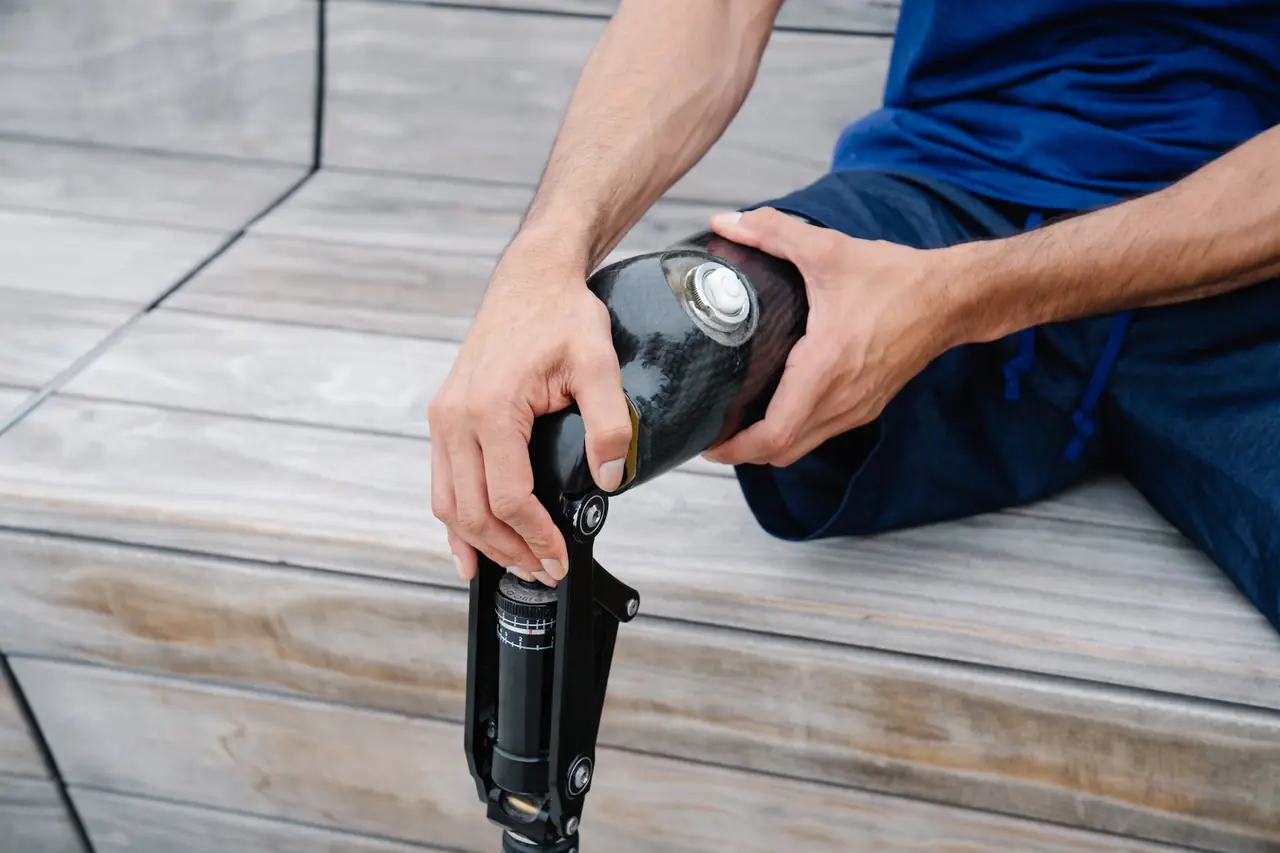
A sports knee brace for running can provide compression, stability and a feeling of security, but it does not turn an injured knee into a healthy joint. The choice depends on the specific problem, the type of running and the level of support required; a patellar strap does not serve the same purpose as a brace with side hinges.
For a knee without a diagnosis and without persistent symptoms, a brace should not replace progressive training, strengthening or medical assessment when pain appears. The purpose of a knee brace is to support a specific indication, reduce certain loads or limit movements that the joint does not tolerate well, not to hide warning signs so that mileage can continue to increase.
What a brace can provide during running
Elastic models apply even pressure to the joint and surrounding soft tissues. This compression may improve the feeling of stability and provide warmth, something some runners particularly value during easy sessions or in cold weather. It may also help control mild swelling, although compression does not repair a meniscus, ligament or cartilage.
Other designs include a pad around the kneecap, flexible side supports or materials that distribute some of the pressure during bending and straightening. The feeling of support can be useful during a return-to-running phase, provided the knee tolerates the load. However, immediate relief after putting on the brace does not prove that the injury has healed or authorise an increase in training volume.
More rigid braces, with hinges or lateral components, have a different purpose. They are used to control specific instability, protect ligaments or restrict certain movements, and should match the diagnosis and activity. The greater the mechanical restriction, the more important it is for the indication to come from a health professional, because an unsuitable brace can alter the stride and overload other areas.
Which type of support fits each situation
A tubular compression sleeve is the simplest option. It normally has no complex adjustments and provides light pressure, freedom of movement and little bulk under clothing. It may make sense for a stable knee with mild load-related discomfort, but it is not a specific solution for a ligament injury or a kneecap that dislocates.
A patellar strap sits below the kneecap and concentrates pressure on the patellar tendon. Its small format is comfortable for training where local support is desired, although it does not stabilise the whole joint. A patellar tendon strap should not be confused with complete knee protection; they are different products for different problems.
Open or patellar-ring braces aim to guide the kneecap and distribute contact around it. They may be useful when there is anterior pain compatible with a patellofemoral problem, but the cause of the pain must be clear. Patellofemoral pain, patellar tendinopathy and a meniscal injury can be located in nearby areas and do not respond to the same support.
Models with flexible side supports provide moderate stability without markedly blocking knee flexion. They are often more suitable for dynamic activities than a rigid brace, although they do not replace rehabilitation. When confirmed ligament instability exists, hinges may provide greater control, but their use during running should be approved and tested first in a controlled setting.
Knee pain while running: the brace is not the diagnosis
Anterior pain around the kneecap may appear while running, going downstairs or sitting with the knee bent. Lateral pain can be related to overload of outer structures, while inner pain may involve tendons, the meniscus or other joint tissues. The location of pain provides clues, but does not identify the injury by itself.
Discomfort that increases with mileage may reflect a change that was too rapid in volume, intensity, hills or surface. Insufficient recovery, reduced hip and thigh strength or a stride that changes with fatigue may also play a role. A brace may make a session more manageable, but it does not automatically correct any of these factors.
Repeated swelling, locking, painful clicking, a clear feeling that the knee gives way or an inability to bear weight require stopping the progression and seeking assessment. Running through increasing pain to find out how far it can tolerate is not a recovery strategy. The absence of pain during the first few minutes does not rule out a relevant injury.
When using one may make sense
Use may be justified during a gradual return to running after an injury, surgery or period of inactivity, provided loading has been authorised and the knee responds well. In that setting, the brace can act as temporary support while strength, coordination and confidence return. A knee brace should be part of a return-to-running plan, not replace it.
It may also be used for a stable chronic injury when a professional has defined which movements should be limited and for how long. The period of use does not have to be indefinite. If the knee remains stable and symptom-free, strengthening and gradual adaptation may reduce the need to wear it in every session.
By contrast, buying a random brace to prevent every possible injury in a healthy knee is usually not reasonable. There is no basis for claiming that wearing a brace during every run prevents injuries by itself. Prevention mainly relies on properly managed training load, sufficient strength, recovery and suitable equipment, not on adding support without a specific need.
Materials, breathability and comfort during long sessions
Neoprene retains heat and offers a firm feeling of support, but it can trap sweat, particularly in summer or during long workouts. Three-dimensional technical fabric often breathes better and adapts with less bulk, although its durability depends on the design and manufacturer. The choice should consider climate, session length and skin sensitivity.
During trail running, an overly bulky brace can collect mud, shift while walking or rub behind the knee. On asphalt, heat build-up and slipping due to sweat are usually greater concerns. A good brace stays in place without requiring excessive tightening; if it rolls, pinches or leaves deep marks, the fit is not right.
Seams, edges and closure systems deserve as much attention as the main material. Poorly protected hook-and-loop fasteners can irritate the skin and a rigid hinge can press during flexion. Try the product while walking and performing gentle movements before running, check that it does not alter your stride and inspect the skin after the first uses.
How to get the size and fit right
Size is not determined by height or weight. Each manufacturer may request the circumference of the thigh, knee or calf, measured in a particular position. Taking measurements according to the model’s size chart is essential for even compression and to prevent the brace from shifting during running.
A brace that is too large loses its function and may create folds that irritate the skin. One that is too small can cause tingling, colour changes, excessive pressure or increased swelling below the edge. The support should hold without restricting circulation and allow natural flexion, particularly when climbing or running on uneven ground.
Placement also matters. The kneecap should sit centrally in the intended opening or pad, the side supports should follow the joint axis and the straps should be closed without forcing them. Fit is checked through movement, not only while standing in front of a mirror. A model that seems perfect at home may become uncomfortable after half an hour of running.
Common mistakes when buying a knee brace
The first mistake is choosing the stiffest support because it appears to offer more protection. A hinged brace or one that restricts movement may be necessary for specific instability, but it is unnecessary for mild overload and can alter running mechanics. More structure does not automatically mean more safety.
Another mistake is looking for a brand or model as if there were one universal option for every knee. The injury, size, duration of use and sport all change the decision. A patellar strap may be enough for a well-controlled tendinopathy, while a cruciate ligament injury may require a different level of protection and specialist assessment.
It is also common to tighten the product until numbness appears, wear it all day without instruction or sleep in it. Unless specific health advice says otherwise, the brace should be used during the activity for which it was recommended and removed if it causes pain, tingling, colour changes or irritation. Comfort is not a cosmetic detail: it is a safety criterion.
Training and habits that protect more than a brace
Mileage should increase gradually, especially after an injury or several weeks without running. Alternating walking and running makes it possible to observe the knee’s response without suddenly subjecting it to a complete session. Intensity, hills and surface should be progressed separately where possible, because changing every stimulus at once makes it harder to identify what triggered discomfort.
Strengthening the quadriceps, glutes, calves and hamstrings helps control the load received by the knee. This is not about isolating one area as if it worked independently, but about improving the whole leg’s ability to absorb and transmit force. A strong knee needs a coordinated muscular chain, not just a well-positioned brace.
Recovery is also part of training. Poor sleep, consecutive hard days and continuing to run despite persistent swelling can delay recovery. Shoes should be in good condition and suitable for the surface and running style, but no model compensates for excessive progression or a pending diagnosis.
When to stop and seek assessment
Severe pain after a twist, fall or impact requires assessment, particularly if rapid swelling, instability or difficulty straightening the knee appears. Assessment is also advisable when discomfort returns over several sessions, wakes you at night or limits everyday activities such as walking, climbing stairs or sitting.
A knee brace may reduce the feeling of insecurity, but it should not be used to ignore a knee that gives way or locks. In those cases, continuing to run may worsen the problem or delay diagnosis. The priority is identifying the cause before choosing the level of support, not finding an accessory that makes pain tolerable.
The final decision should consider the diagnosis, physical examination, progression and sport. A light compression support may be enough for an easy session; a ligament injury or postoperative recovery may require something very different. Between those extremes there are many options, and choosing well means respecting the joint’s limits while it regains its ability to run.



How to prevent thigh chafing: causes and real solutions

Women’s running windbreakers: seven jackets and how to choose

Do more workouts get rid of soreness? A guide for runners

Jaén Half Marathon 2026: Record 3,800 Runners Registered

Men’s short running tights: how to choose the right pair

World Triathlon confirms data breach involving medical data

Izan Edo targets podium at Miyazaki World Cup

María Pérez ranks ninth in World Athletics’ 2026 top ten

Dos Santos, Duplantis and Sawe: World Athlete of the Year finalists

San Silvestre Vallecana 2026: 42,000 places, prices and start times

 Races3 months ago
Valencia Half Marathon 2027: date and registration

 Races3 months ago
Valencia Marathon 2026: entry, ballot and course

 Reviews and Comparisons4 months ago
Asics Gel-Roadmiles 3 for men: review and current price

 Reviews and Comparisons4 months ago
Asics Gel Sonoma 8 Gore-Tex: complete analysis for trail and rain

 Sneakers3 months ago
Saucony Endorphin Pro 4: full review and verdict

 News5 months ago
Strava API 2026: what changes for clubs, challenges and runner apps?

 Reviews and Comparisons5 months ago
Nike Alphafly 3: opinions, sensations, and real key points

 Reviews and Comparisons4 months ago
Under Armour running shoes review 2025-2026: models and key features

 Sports Equipment4 months ago
Shoe sizes in cm: a clear guide to getting the right fit for your footwear

 Sneakers3 months ago
Skechers GO RUN Consistent 2.0 analysis: comfort and limits

 News5 months ago
Valencia Marathon 2026 route: key tips to train and run better

 Sneakers4 months ago
Adidas Adizero Boston 13 for men: review and verdict