News
Beer runners: the movement that brings together running, beer, and community
Relaxed rides, neighborhood bars, and community: this is how this movement that has crossed borders works.

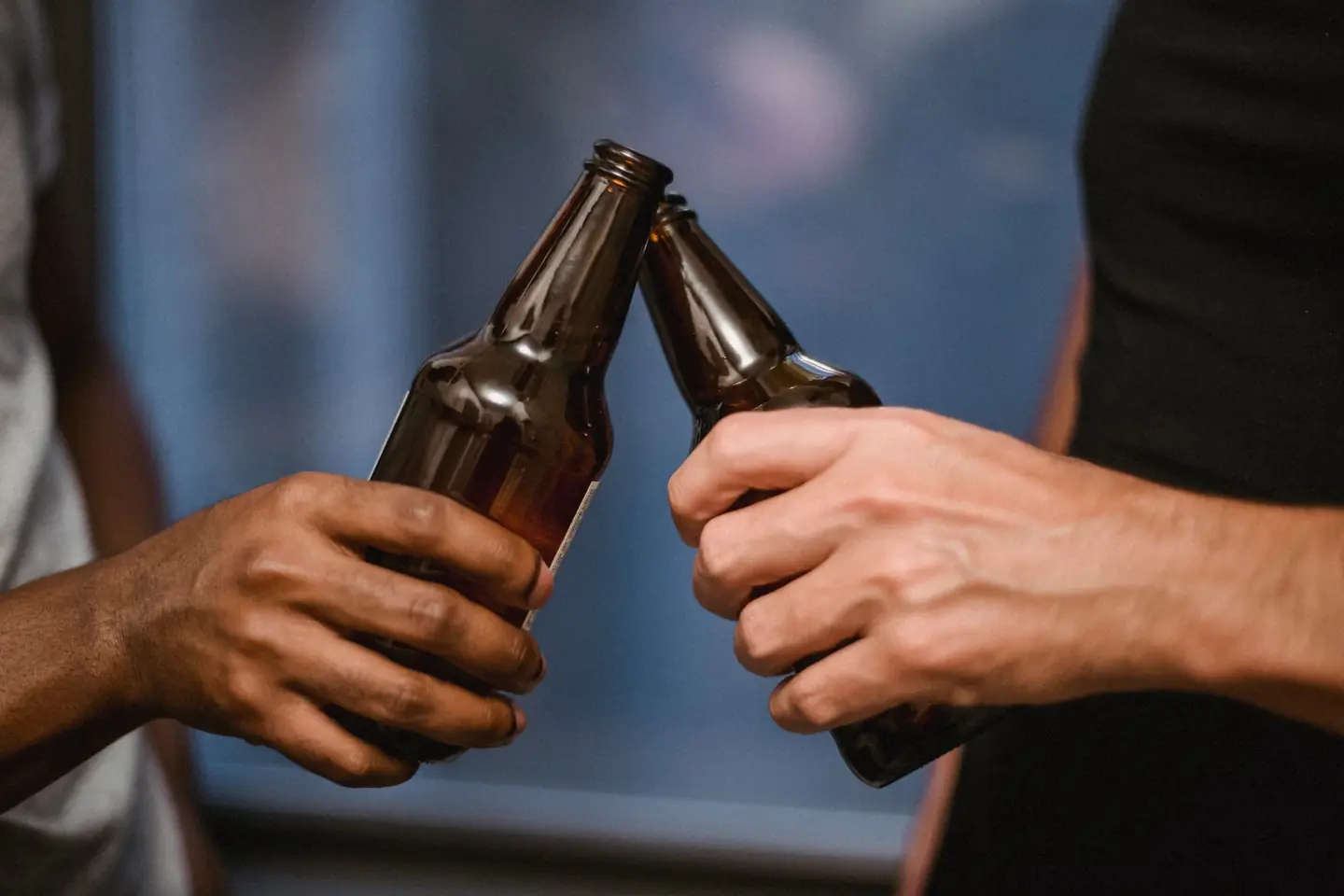
Beer runners have turned a simple idea into an urban ritual: running at a comfortable pace, stopping afterward at a bar, and putting conversation ahead of the stopwatch. Born in Philadelphia and popularized from a scientific anecdote in Granada, the movement has expanded with the same naturalness with which a chat among friends unfolds at the end of an easy run. It does not chase times or follow the narrow line of competitive training; it seeks something else, lighter and more social, where sport becomes part of the routine without any stern demeanor.
Its success is understood through that blend of exercise, community, and responsible leisure. The groups that follow this philosophy usually meet once a week, cover between 3 and 5 miles, and finish at a neighborhood spot to have a beer, eat something, and go home with the feeling of having done two things at once: moving and belonging. In an ever broader running landscape, with speed, trail, health, and hiking clubs, this formula stands out for its almost home-like simplicity.
An origin that brings together science, neighborhood, and an easy-to-replicate idea
The story usually cited begins in 2007, in Fishtown, a neighborhood in Philadelphia. David April and Eric Fiedler went out for a run, talked about a study on rehydration, and ended up having a beer at New Wave Café. That stop did not remain a private anecdote. Over time, it gave shape to Fishtown Beer Runners, the group credited with driving the phenomenon in the United States and beyond. Their first official outing brought together four runners and took place on December 20, 2007.
The concept’s strength came from a basis that sounded almost too good to be true: a study by Professor Manuel Castillo of the University of Granada on the rehydrating effects of a moderate amount of beer, compared with the same amount of water. The popular interpretation was immediate, though it is worth adding nuance. This is not about turning beer into a sports drink, but about understanding that, in contexts of moderate effort and with common sense, the social gesture surrounding training can be part of the experience without breaking it.
That detail explains why the movement has not grown like a passing fad, but as a flexible custom. There is something very recognizable in its mechanics: leaving the sofa, walking or jogging a few kilometers, working up just enough sweat, and ending at a shared table. It works in a big city, in a small neighborhood, and also in groups that do not take themselves too seriously but do take seriously the fact of maintaining an active routine.
How a run of this kind is organized
The most repeated pattern is easy to identify. Meetings are usually held in the afternoon, often on Thursdays, with a fixed start and a short or medium distance. In some cases, participation is open to adults of all ages, with no registration fee or obligation to consume alcohol. That last point is not minor: beer is a social symbol, not a condition for entry. You can attend, run or walk, and then decide whether or not to have a drink.
Most groups operate with a practical, almost neighborhood-style code. People run at different paces, sometimes grouping by blocks, and nobody expects the route to turn into a race. The idea of going together for a few meters and then easing off the pace allows people with different fitness levels to coexist. For those coming from traditional running, the proposal has something relieving about it. For those approaching from the social life of a bar, sport stops seeming like foreign territory.
There is also a clear ethic of moderate consumption that is worth emphasizing. The more serious groups insist on water, prudence, and not mixing alcohol and driving. Safety is not improvised, especially when the meeting ends after dark or on busy streets. In fact, the logic of these clubs is closer to a neighborhood get-together in running clothes than to a party disguised as physical activity.
Why this format fits so well with running today
Today’s running lives with a familiar tension: on one side, the obsession with pace, heart rate, and plans; on the other, the need to sustain the habit for months without everything feeling like an obligation. Beer runners occupy that middle space with a less demanding and more social proposal. They do not promise to improve a personal best, but they do offer something that is often harder to maintain: consistency.
The psychology of habit explains part of their appeal. Many people find it easier to go running if they know there will be conversation afterward, a reserved table, or a shared beer. The expectation of the end acts as a small hook. It is not aggressive marketing; it is human behavior in its purest form. Effort becomes more tolerable when it has an immediate and visible reward.
There is also a very clear sense of belonging. In a club of this kind, the novice runner is not exposed to the pace of the fast runners, nor does the veteran seem trapped in their own record. Conversation levels things out. Speed loses prominence in favor of connection, and that is an important difference from other, more competitive formats. In times of digital loneliness and individualized training, that detail matters.
The relationship with beer: symbol, habit, and limits
Beer, in this context, works as a cultural ending. It is the glass that marks the end of the route, the meeting point, and the shared language of those who accept that running can also end at a bar. But that presence should not be interpreted as an indiscriminate recommendation. The available evidence on sports recovery distinguishes between hydration, salt replacement, effort, and volume. A beer does not replace water or proper recovery, even though in an easy run and within a reasonable life it can coexist with it without controversy.
That is why responsible etiquette has been so important to the movement’s survival. The best-organized groups usually make it clear that there is no obligation to drink, that water is available, and that coexistence matters more than the bottle. That point broadens the potential audience: runners, walkers, people who come only to socialize, and others who prefer a non-alcoholic drink. The club thus becomes an open room, not a filter.
Moderation also avoids a common mistake: confusing a social ritual with an excuse to trivialize consumption. Running already carries enough weight as a healthy activity for no one to need to dress it up with excess. Beer runners survive precisely because they do not force that limit. The gesture is clear, almost minimalist: run, share, go home. Nothing more, and nothing less.
From Philadelphia to other cities and the Spanish case
The movement did not take long to spread from Philadelphia to other U.S. cities and then to other countries. Two factors helped that expansion: the ease of the format and the power of a good story. Anyone can gather a group, set a time, and finish at a friendly local spot. No complex infrastructure, bib numbers, stopwatches, or logistics that might discourage first-timers are needed.
Spain occupies a unique place on that map because the intellectual origin of the story is linked to Granada. That connection gave the phenomenon a kind of round trip: a scientific observation born in academia ended up fueling a popular club in Philadelphia, and from there it was recognized again on Spanish soil as part of a shared story. The idea traveled better than any promotional campaign.
Moreover, the format connects well with Mediterranean social culture. The bar is not an appendage to the route, but part of neighborhood life. Conversation after running has something of a short sobremesa, a moral and physical digestion of effort. The movement therefore does not sound strange in Spanish cities; it sounds familiar, almost natural.
What it adds compared with a conventional running club
A traditional club is usually organized around measurable goals: improving the 10K, preparing a half marathon, adding weekly mileage, or fine-tuning technique. A group inspired by beer runners changes the focus. Training matters, yes, but the visible goal is different: maintaining the connection with sport without losing the social dimension. That changes the tone of the activity completely.
In practice, that change lowers barriers to entry. Many people are intimidated by not being up to the standard of a too-structured group. Here, the short route, the absence of a stopwatch, and the possibility of walking reduce the pressure. There is room for those going out for the first time, for those returning after an injury, for those who just want to move a little during the week, and for those looking for a different plan from the gym.
The value of this format is not in replacing serious training, but in broadening the running map. It can coexist with more technical plans, quality sessions, or long weekend runs. It works as a parallel layer, a kind of social coat that makes the discipline more pleasant. And that, in many cases, is enough to turn an intermittent hobby into a stable habit.
Group culture and the role of neighborhood bars
There is an urban element that explains much of the phenomenon: small bars, nearby businesses, and spaces willing to receive a group of runners without turning everything into a spectacle. In the most established clubs, the arrival venue is not a backdrop, but an unwitting partner in the routine. It serves as a destination, a meeting point, and a place where the community recognizes itself.
That exchange also benefits the local fabric. People arrive after running, spend money, talk, and often come back another day with family or friends. Neighborhood economics quietly comes into play. There are no major sponsors or heavy structures; there is a simple reciprocity between physical activity and commercial hospitality.
That is why some clubs take such care with their relationship with the venues. They ask for water, indicate timings, give an approximate group size, and recommend quick service for the arrival rush. That coordination does not take away spontaneity; on the contrary, it makes it possible. A meeting that ends badly at the bar can ruin the experience. One that is well handled leaves the feeling that the city, for a few hours, works better.
A way of running that is less solemn and more sustainable
The success of beer runners does not come from nostalgia or extravagance. It comes from a simple truth: many people find it easier to sustain a routine when sport does not arrive alone. A short route, a friendly group, and a final stop can matter more than a perfect plan that is never carried out. Consistency is usually built with modest gestures, not epic feats.
In a sporting landscape full of metrics, apps, and goals, this current offers a pause. It does not deny the value of performance, but it takes the drama out of it. It also does not turn beer into a magical prize or a health argument; it simply places it where it usually works best, as a pretext for conversation after moving. That conceptual restraint is part of its charm.
That is why the movement has survived the label of fad. Because it does not depend on novelty, but on a combination that almost never fails: light exercise, company, neighborhood, and a shared ending. It may sound small, but in practice it is just the right size to last. And in running, lasting is often worth more than dazzling.
A ritual that says a lot about how we want to run today
The popularity of this format reveals something broader about contemporary sports culture. More and more people are looking for activities that do not entirely separate health and pleasure, discipline and conversation, body and social life. Beer runners condense that aspiration into an easy-to-understand gesture. They do not present themselves as a method, but as a scene: sneakers, street, a short walk, a bar in the background, and people talking again.
Perhaps that is where its power lies. The runner is not forced to choose between training and socializing, between self-care and going out, between effort and lightness. The movement brings those pieces together in a single afternoon. And it does so without solemnity, without promising miracles, and without requiring emotional allegiance to any doctrine. It only asks for one quite reasonable thing: go out for a run for a while and come back with others.
In an age when so many experiences come packaged and overexplained, this remains one of the simplest formulas in the running ecosystem. Once a week, a short route, a conversation, and a beer at the end. Little, apparently. Much more than it seems.
Este artículo contiene enlaces de afiliado: si compras a través de ellos, se genera una pequeña comisión sin coste adicional para ti. Más información.



How to prevent thigh chafing: causes and real solutions

Women’s running windbreakers: seven jackets and how to choose

Do more workouts get rid of soreness? A guide for runners

Jaén Half Marathon 2026: Record 3,800 Runners Registered

Men’s short running tights: how to choose the right pair

World Triathlon confirms data breach involving medical data

Izan Edo targets podium at Miyazaki World Cup

María Pérez ranks ninth in World Athletics’ 2026 top ten

Dos Santos, Duplantis and Sawe: World Athlete of the Year finalists

San Silvestre Vallecana 2026: 42,000 places, prices and start times

 Races3 months ago
Valencia Half Marathon 2027: date and registration

 Races3 months ago
Valencia Marathon 2026: entry, ballot and course

 Reviews and Comparisons4 months ago
Asics Gel-Roadmiles 3 for men: review and current price

 Reviews and Comparisons4 months ago
Asics Gel Sonoma 8 Gore-Tex: complete analysis for trail and rain

 Sneakers3 months ago
Saucony Endorphin Pro 4: full review and verdict

 News5 months ago
Strava API 2026: what changes for clubs, challenges and runner apps?

 Reviews and Comparisons5 months ago
Nike Alphafly 3: opinions, sensations, and real key points

 Reviews and Comparisons4 months ago
Under Armour running shoes review 2025-2026: models and key features

 Sports Equipment4 months ago
Shoe sizes in cm: a clear guide to getting the right fit for your footwear

 Sneakers3 months ago
Skechers GO RUN Consistent 2.0 analysis: comfort and limits

 News5 months ago
Valencia Marathon 2026 route: key tips to train and run better

 Sneakers4 months ago
Adidas Adizero Boston 13 for men: review and verdict