
News
Why running clubs are filling the cities
This is how running groups work, what they bring to training, and how to choose the one that fits you.

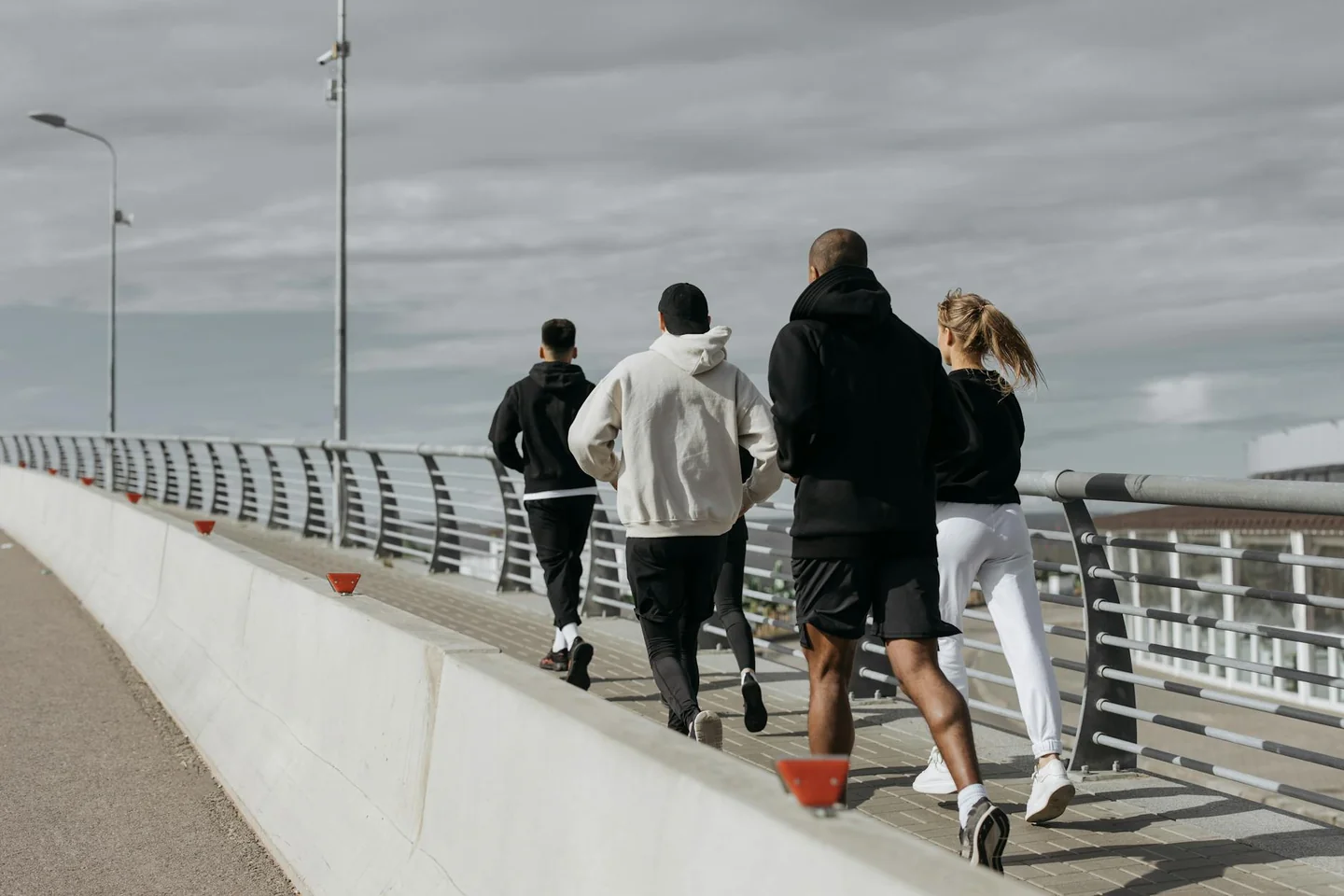
Imagen: cottonbro studio / Pexels
Running groups have gone from being a social add-on to becoming a key part of the popular practice of running. In Spain, and also in the Valencian Community, more and more enthusiasts train in community because they find something that is hard to replicate alone: consistency, pace references, safety, and a motivation that does not depend only on willpower. The idea is no longer simply to go out for a run, but to do it within a simple structure that organizes training and lowers the entry barrier for those who are just starting out.
Their appeal is not limited to competing or preparing for a race. A well-organized group can serve to learn how to pace effort, discover urban or natural routes, share gear, and better understand how a sustainable routine is built. It also helps the amateur runner not turn every outing into a personal exam. The environment changes the movement, the mood, and even the perception of fatigue; that is why these groups have gained weight in neighborhoods, private clubs, municipal schools, and communities linked to popular races.
What a running group really is and why it works
Not all running groups are federated clubs. Some have a formal structure, a fee, set training sessions, and a presence in competitions. Others are born from a specialty store, a neighborhood group, a gym, or a simple weekly meet-up. The essential thing, in any case, is that there is a shared dynamic: a meeting point, a time, some basic rules of coexistence, and a training proposal that gives order to the practice. That simplicity explains a good part of their success.
The logic is similar to that of a well-tuned clock. When a person knows that on Tuesday at seven they run with others, the chance of going out decreases less because of tiredness or discouragement. The appointment works as an anchor. Added to that is a very powerful element in amateur sport: the group reduces the feeling of improvising all the time. For many runners, training alone for months can be useful, but also heavy and not very stimulating. The community offers rhythm, conversation, and a kind of invisible contract with the others.
That contract usually translates into more stable habits. The novice runner learns to warm up, to respect pace changes, and not to go out too hard in the first minutes. The more experienced runner finds an environment where they can share experience, push others, and keep the spark alive. That is why these groups work better when they feel less like a rigid class and more like a sports support structure with a clear identity.
Advantages that explain their growth in Spain
The first advantage is training adherence. Most amateurs do not quit because of a lack of talent, but because of mental wear, excess ambition, or simple disorganization. Running with other people creates a routine that is harder to break. If it rains, if it is hot, or if the day gets long, the shared commitment acts as a safety net. It does not eliminate the off days, but it makes them more bearable and less decisive.
The second is practical learning. In a good group, you learn by observing. You see how someone who has been running for years warms up, how they handle long runs, when they ease off and when they push, or how they recover after a heavy week. That informal transmission is very valuable because it turns theory into concrete gestures. It does not replace professional guidance when needed, but it does shorten the path between doubt and accumulated experience.
There is also a safety component worth highlighting. Running at night, on little-traveled paths, or in urban areas with traffic is more comfortable and predictable in company. In cities like València, Castelló, or Alicante, where runners combine seafront promenades, parks, asphalt, and stretches of bike lane, the group adds visibility and reduces the feeling of isolation. For someone coming back from an injury, for someone just starting, or for someone training with some caution, that detail matters more than it seems.
The social dimension is not just decoration either. Running can be a solitary activity physically and very demanding mentally. A group softens that solitude without taking away autonomy. There are conversations, shared references, and, at times, friendships that go beyond the sport. That part explains why many people stay for years in the same group, even when they no longer need the training structure as much as the sense of belonging.
Types of groups that coexist in the running ecosystem
It is worth distinguishing between club, informal group, and training section. A club usually has organization, a fee, sporting goals, and, sometimes, federative licenses or a presence on the track and in the regional calendar. The informal group, on the other hand, can function without paperwork or hierarchies, with a logic that is almost like a sports crew. Between both extremes there are hybrid formulas: communities linked to stores, brands, races, or gyms that offer regular sessions and a certain level of technical support.
There are also groups defined by distance or level. Some bring together those preparing for 5K and 10K races; others focus on half marathon or marathon; others prefer easy outings compatible with any age. That segmentation helps make the experience more coherent. Someone looking to improve their time does not always fit into a purely recreational group, just as someone who is just starting may feel out of place in a very aggressive interval session. Compatibility matters more than the prestige of the name.
In the Valencian Community, neighborhood groups and communities linked to popular events are also abundant. That makes sense in a region with favorable weather, an intense calendar, and a very widespread urban culture of going out to run in parks, promenades, and along the coast. Many groups are born around a specific race, a running store, or a network of friends, and over time they become small neighborhood institutions. Their value does not depend on the number of bibs they gather, but on the regularity with which they sustain the habit.
What a good group should offer to be worth it
The first thing is not the logo or the shirt, but coherence. A serious group explains when it trains, what levels it accepts, who sets the pace, and how the session is adapted if very different people show up. That clarity avoids frustration. If the group promises all levels but then only works for very fast people, the result is usually people dropping out. Organizational honesty is much more important than any marketing gesture.
A second key trait is the quality of the welcome. A beginner needs simple instructions and the feeling of not being an intruder. An advanced runner, on the other hand, expects discipline and a certain level of demand. The best environment manages to balance both things without falling into paternalism or elitism. When that happens, the group becomes a ladder and not a revolving door. Each person knows where they stand and what they can expect from the next session.
Variety of paces also matters. A good group does not force everyone to move the same way, because real running is rarely homogeneous. There are easy run days, technique days, interval days, and long run days. If everything is reduced to going out for a jog and nothing more, the proposal may be pleasant but limited. If, on the contrary, every session turns into a punishment, the group stops being sustainable. The balance lies in offering structure without rigidity.
Finally, it is worth paying attention to the internal culture. There are groups that understand sport as an open conversation and others that live it like a small court. The first ones usually last longer, because they integrate different people without demanding a single identity. The second ones can be intense at first, but often end up pushing out anyone who does not fit. In an amateur sports environment, coexistence matters as much as training.
How the group influences the runner’s improvement
Improvement does not come by magic, but it can be accelerated. Training with other people helps adjust effort and avoid two very common mistakes: going out too fast and always falling too short. The group offers mirrors. If a runner overdoes the pace on every outing, they will see it sooner. If another always hides behind the brake, that too. That comparison, when understood well, works as a gentle and constant correction.
There is a particularly useful effect in quality sessions. Intervals, progression runs, or controlled-pace blocks become more bearable when shared. The group reduces the perception of suffering because it spreads the attention. One person looks at the route, another sets the pace, and another reminds everyone that there are two reps left. That small mental support does not replace the workout, but it makes it less harsh and more doable.
Improvement also depends on consistency. People who run in community usually miss fewer sessions, even if they do not always run more kilometers. That consistency is, in practice, one of the factors that best explains the evolution of the recreational runner. Often it is worth more to add months of reasonable work than to chain together bursts of enthusiasm followed by blank weeks. The group encourages precisely that continuity, which is the basis of real progress.
Even when there is no very sophisticated plan, the simple exposure to the habit already has an effect. Seeing others get ready, warm up, and head out creates positive inertia. Sport stops being a vague intention and takes a concrete place in the week. That transformation seems small, but it is decisive. The amateur runner does not need grand rituals; they need a structure that does not break at the first excuse.
Risks and common mistakes when joining one
The main mistake is thinking that all groups work for everyone. They do not. Some are geared toward leisure, others toward sporting improvement, and others toward competition. If someone joins expecting a relaxed experience and finds brutally hard sessions, disappointment is guaranteed. Likewise, someone looking for specific preparation may feel frustrated in an environment that is too informal. Before committing, it is worth reading the real dynamic beyond the sales pitch.
Another common mistake is confusing belonging with permanent obligation. There are runners who join a group and, out of fear of losing their place, end up training beyond their means. The group should not impose absurd pressure. Good judgment remains personal: listening to the body, respecting rest, and adjusting effort to the physical condition of the moment. The community adds value, but it does not erase individuality.
There is also the risk that social motivation masks signs of fatigue. Sometimes the atmosphere pushes people to run more than they should, especially when there are faster people around. That can lead to discomfort, overload, or an unhealthy relationship with training. The best group culture does not celebrate only the one who pushes hardest, but also the one who knows when to back off. In running, knowing when to pull out in time is a form of sporting intelligence.
Finally, some groups fall into empty routine. Repeating the same outing, the same route, and the same conversation every time can be comfortable, but it limits learning. Controlled variety helps keep interest alive and stimulates different adaptations. There is no need to turn every session into something new, but it is worth avoiding the feeling that the group exists by inertia and not by purpose.
The Valencian reality: climate, city, and a culture of shared running
The Valencian Community has especially favorable ground for this kind of practice. The climate allows people to go out consistently for much of the year, and that makes it easier for groups to maintain a steady frequency without depending so much on the weather. Added to that advantage is a network of very usable spaces: the Turia Gardens, beaches, seafront promenades, urban parks, and peri-urban routes that make it possible to combine flat terrain, dirt, and asphalt. The runner finds variety without going too far from home.
In cities like València, collective practice fits into a very visible sporting culture. Popular races, 10Ks, half marathons, and marathons attract very different profiles, from those who just want to finish an event to those looking for a personal best. That ecosystem feeds varied groups, because there is always a reason to train with others. In a flat, open, and very walkable city, going out to run in community feels almost natural.
In addition, the neighborhood dimension remains very strong. Many runners are not looking for a big structure, but for a stable reference close to home or work. A weekly meet-up can be enough to sustain months of training and turn an individual hobby into a shared routine. Proximity matters: it reduces excuses, makes sports friendships easier, and means commitment does not depend on long commutes or impossible schedules.
That context explains why the conversation about running in the region is not only about times and shoes. It also talks about community, about spaces used again and again, and about a very Mediterranean way of understanding sport: outdoors, with human contact, and without excessive solemnity. In that mix, running groups occupy an increasingly visible place.
What they reveal at the core about running today
Their rise says a lot about how amateur sport has changed. It is no longer enough to pile up kilometers in silence. People want purpose, context, and a smarter relationship with effort. Running groups offer exactly that: they turn a repetitive activity into an experience with rhythm, story, and company. They do not replace individual discipline, but they make it more bearable and, in many cases, longer lasting.
They also reflect a search for balance. Faced with a fragmented work life and increasingly irregular days, shared training acts as a small island of order. There is something comforting about repeating a sports appointment, greeting the same people, and making progress quietly. That kind of stability does not make noise, but it holds things together. And in popular sport, holding things together matters as much as standing out.
That is why these spaces have stopped being a rarity and have become part of the urban landscape. In an era of screens, rush, and schedules that fall apart easily, going out to run with others remains one of the simplest ways to build consistency. A pair of shoes, a set time, and a familiar street are enough to begin. The rest, almost always, is provided by the group.