Routes
Route of the Fortresses 2025 Ranking: results and key points
Results, winners and context of the 2025 edition in Cartagena, with times, categories and the key features of the route.

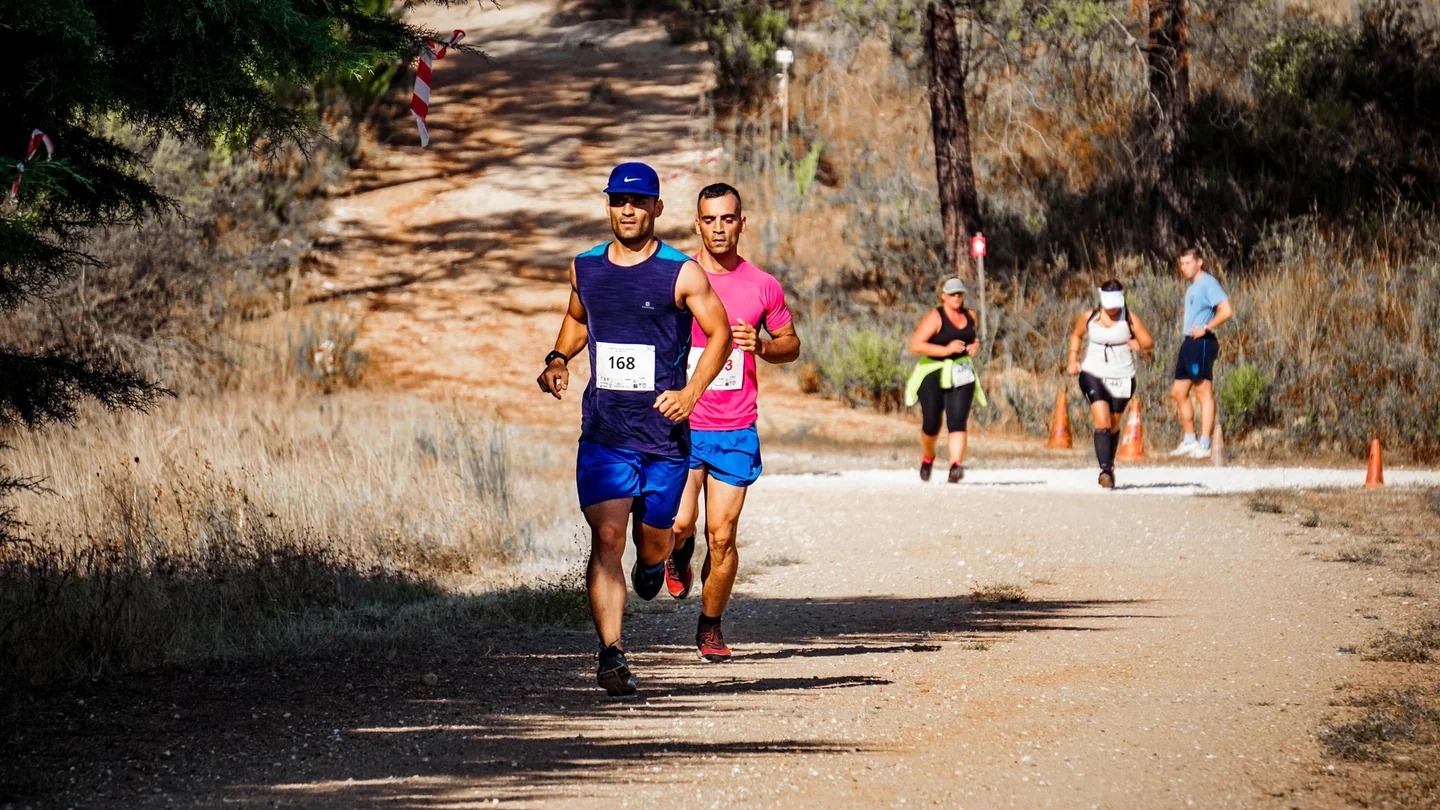
Imagen: RUN 4 FFWPU / Pexels
The classification of the Ruta de las Fortalezas 2025 left two names at the forefront of an event already firmly established in Cartagena: the Cantabrian Francisco González and Cartagena’s own María del Carmen Martínez. The race, held on April 5, once again brought together thousands of runners on a route as demanding as it is symbolic, with its fortifications, its seaside climbs, and the constant interplay between the city and the mountain.
The 2025 edition confirmed the sporting and popular weight of a race that blends endurance, scenery, and heritage. In the full distance, 53 kilometers with 1,666 meters of positive elevation gain, victory was once again decided as much by legs as by effort management, on a day marked by heat, elevation gain, and an organization that introduced changes to the course to ease bottlenecks at critical points.
Winners, times, and a very representative podium
Francisco González won the men’s overall race and María del Carmen Martínez dominated the women’s race, in an edition that produced images of great tension at the top of the standings and also a notable local presence among the leading places. The victory of the Cantabrian runner reinforced the national appeal of a race that, year after year, attracts specialists in long-distance, trail, and mountain running alongside runners seeking a unique challenge in southeastern Spain.
The most visible information for the general public was precisely that final photo at the Cartagena finish line, but the classification of the Ruta de las Fortalezas 2025 is better understood when viewed as a whole. The absolute race remained the event’s competitive benchmark, with a start at Plaza Mayor del Puerto and a finish at the General Albacete y Fuster Marine Infantry School, in Tentegorra. In between, the route passed through such recognizable areas as Calvario, San Julián, Santa Lucía, Sierra del Orfeo, Cala Cortina, Parque Torres, Molinete, Fajardo, Galeras, and Atalaya.
That design meant the classification was decided not only by speed, but by the ability to read the terrain. In a race with so many pace changes, the difference between winning and falling behind often lies in small details: entering a climb feeling fresh, not paying for it on a technical descent, or arriving with enough reserve for the final urban stretch, where the legs no longer respond the same and every street turn weighs like a slab of stone.
A route that shaped the race from the very first meter
The organization adjusted the 2025 edition to avoid the usual congestion in the Sierra Gorda area. Instead, the route left the port center and first tackled Calvario on a track, descending via the Via Crucis, before linking up with San Julián, Santa Lucía, and the sequence of mountain and coastline that carried runners toward the midpoint of the race. That change was decisive in sorting out the pack, distributing effort more evenly, and offering a clearer reading of the race.
The second half preserved the historic essence of the event. Passing through the Port of Cartagena, Parque Torres, and the city center opened a faster but also more deceptive section, because accumulated fatigue turns every false flat into a trap. Then came Molinete, Fajardo, Galeras, and the final climb to Atalaya, a finish that usually separates those who have managed their energy well from those who paid too high a price for the early push.
The 1,666 meters of positive elevation gain was one of the figures that best summed up the day’s toughness. We are not talking about an Alpine ultratrail, but neither is it a road race with a few ramps. It is an intermediate and very distinctive terrain, with the smell of Mediterranean hills, stony sections, fast tracks, and an urban setting that turns every climb into a showcase of endurance. That is why the classification cannot be explained by the stopwatch alone: it requires context.
The numbers that explain the sporting impact
The Ruta de las Fortalezas 2025 offered 4,500 bibs for the race, with interest far exceeding the available places. Demand once again easily doubled the race’s capacity, a constant in an event that combines running, a lottery, and a very recognizable identity on the national calendar. The entry fee for the main race was 45 euros, while the promo race cost 25 euros, the cadet-youth race 20 euros, and the children’s race 10 euros.
The distances also helped define the event’s hierarchy. The full race kept its 53 kilometers, the promo race was around 26 kilometers, and the youth race was set at 16 kilometers. In addition, the program included children’s races on April 4, with routes adapted for minors, a decision that gives generational continuity to a race that is not limited to the endurance elite, but opens itself to a broader range of ages and profiles.
In terms of classification, that diversity matters. Public attention usually focuses on the overall winner, but the heart of the Ruta de las Fortalezas also lies in the battle of age groups, in the close finishes of the middle-distance races, and in the participation of runners tackling a mountain route for the first time. The race works as a mirror of modern endurance running: competitive at the top, popular at the base, and highly demanding in preparation.
What changed in 2025 and why it affected the reading of the classification
One of the most important elements of the edition was the strict technical adjustment of the route. Removing Sierra Gorda from the first part of the race aimed to reduce bottlenecks and improve flow. These kinds of changes, though they may seem minor on paper, alter the dynamics of the group and, consequently, the final classification. Where there used to be a more congested climb, in 2025 there was more room for each runner to find their rhythm before the day’s major decisions.
There were also new developments around the intermediate checkpoint linked to the Carthago Mountain League. An official statement explained that, due to technical problems, the planned timing mat could not be installed at kilometer 20.1, with 568 meters of positive elevation gain. Instead, the league set a new scoring segment at kilometer 27.0, located at Castillo de la Concepción, and increased the reference positive elevation gain to 779 meters. That adjustment affected the sporting interpretation of the participants linked to that parallel competition.
The organization also reminded participants that only those who completed the full main race would score in the Carthago Mountain League. That clarification, important for runners and teams, underscores a key feature of the Ruta de las Fortalezas: its classification is not just a finish-line snapshot, but also a sum of checkpoints, regulations, and technical conditions that order the result with precise criteria.
Cartagena as a competitive and emotional stage
There are races that are run and races that are remembered. The Ruta de las Fortalezas belongs to the second category because it turns the classification into a kind of map of the city. Every place in the standings comes with a very specific geography, from the port to the fortresses surrounding Cartagena, passing through neighborhoods, hills, and coastal stretches that paint a portrait of collective effort. Victory here tastes like territory, not just performance.
The official poster for the 2025 edition reinforced that idea of shared effort and collective progress. The organizational structure, with sponsors, partners, and public institutions, also strengthened the event’s identity as a major local happening. The Navy, the Cartagena City Council, Local Police, Civil Guard, Red Cross, 061, and Civil Protection were part of the framework that makes it possible for thousands of runners to cross the city safely and in order.
That context helps explain why the classification of the Ruta de las Fortalezas 2025 had significance beyond the podium. It was not just the outcome of a race, but the culmination of an urban and sporting operation that mobilizes volunteers, sponsors, and support services. In races like this, the final result is also written off the road: at the start, at aid stations, at bib control, and in managing an enormous human flow.
Middle distance, youth development, and the role of categories
The promo and youth races played a central role in the edition, even if media attention almost always focuses on the main race. The 26-kilometer distance offered a more accessible challenge without losing the mountainous character, while the youth race allowed younger runners to approach the Ruta de las Fortalezas format with a route that was still demanding but more contained. Youth development matters because it feeds the race’s future and gives it a sense of continuity that few events possess.
Meanwhile, the children’s race on April 4 completed a program that is not limited to pure performance. The three-mile races for children under 13 and the one-mile race for the youngest worked as a playful and sporting prelude. That gesture should not be underestimated: many long-distance events build their identity solely around the elite, but here the organization has managed to turn the entire weekend into a citywide sporting experience.
From the classification standpoint, this age-and-distance structure allows the event to be read as a complete system. The main race sets the prestige, the promo expands participation, the youth race connects with the next generation, and the children’s race seeds the habit. The sum of all these layers results in a race with its own weight on the national running calendar, and especially on the Murcian one.
What the times say, beyond first place
The times in an edition like 2025’s do more than crown winners. They also reveal how the pack responded to the day’s toughness, which sections were the most punishing, and where the biggest pace changes occurred. In a 53-kilometer race with significant elevation gain, minutes are built on small decisions. A poorly managed aid station, too much confidence on a descent, or a bad transition in the urban stretch can cost more than a brief dip in form.
The full classification usually tells very different stories. Some runners start cautiously and move up in the final part; others hold steady with machine-like consistency; some go out too hard in the first half and fade in the last third. That variety makes the race rich to interpret and ensures that each edition leaves a new snapshot, even if the overall frame repeats.
In 2025, with a more orderly opening route and a classic finish in Cartagena’s hills and streets, the race gave the impression of having sharpened its identity. The classification, in that sense, was not just a list of names, but the visible result of a race designed to be demanding without losing competitive clarity. That also explains its appeal: the runner knows that every meter counts, and the fan understands where the race was won and where it was lost.
An event that now goes beyond the local calendar
The Ruta de las Fortalezas has established itself as one of the most distinctive trail and long-distance events in Spain thanks to its blend of toughness, urban scenery, and institutional backing. Participation figures, the presence of top-tier sponsors, and the stability of the format place it in a league of its own. It is not just any race dressed up as an adventure; it is an event with identity, with memory, and with a classification that each year fuels comparisons, analysis, and sporting conversation.
In 2025, moreover, the race once again highlighted the link between Cartagena and its defensive geography. The fortresses, the hills, and the city center are not just scenery, but an essential part of the effort. The final classification is better understood when viewed in that relationship: the runner is not only competing against rivals, but against the sequence of the terrain, accumulated fatigue, and the ability to sustain a strategy for hours.
That is why interest in the classification of the Ruta de las Fortalezas 2025 does not end with the winner’s name. The important thing is the whole picture: a renewed course, massive participation, a clearly defined category structure, and an entire city committed to a race that is already part of Cartagena’s sporting heritage. In an increasingly crowded calendar, that combination still makes a difference and explains why this race retains such strong drawing power.



How to prevent thigh chafing: causes and real solutions

Women’s running windbreakers: seven jackets and how to choose

Do more workouts get rid of soreness? A guide for runners

Jaén Half Marathon 2026: Record 3,800 Runners Registered

Men’s short running tights: how to choose the right pair

World Triathlon confirms data breach involving medical data

Izan Edo targets podium at Miyazaki World Cup

María Pérez ranks ninth in World Athletics’ 2026 top ten

Dos Santos, Duplantis and Sawe: World Athlete of the Year finalists

San Silvestre Vallecana 2026: 42,000 places, prices and start times

 Races3 months ago
Valencia Half Marathon 2027: date and registration

 Races3 months ago
Valencia Marathon 2026: entry, ballot and course

 Reviews and Comparisons4 months ago
Asics Gel-Roadmiles 3 for men: review and current price

 Reviews and Comparisons4 months ago
Asics Gel Sonoma 8 Gore-Tex: complete analysis for trail and rain

 Sneakers3 months ago
Saucony Endorphin Pro 4: full review and verdict

 News5 months ago
Strava API 2026: what changes for clubs, challenges and runner apps?

 Reviews and Comparisons5 months ago
Nike Alphafly 3: opinions, sensations, and real key points

 Reviews and Comparisons4 months ago
Under Armour running shoes review 2025-2026: models and key features

 Sports Equipment4 months ago
Shoe sizes in cm: a clear guide to getting the right fit for your footwear

 Sneakers3 months ago
Skechers GO RUN Consistent 2.0 analysis: comfort and limits

 News5 months ago
Valencia Marathon 2026 route: key tips to train and run better

 Sneakers4 months ago
Adidas Adizero Boston 13 for men: review and verdict