News
Inclusive running in Valencia: bibs, paces and shared challenges
Clubs, races, and adapted programs are changing local athletics with greater accessibility and community.

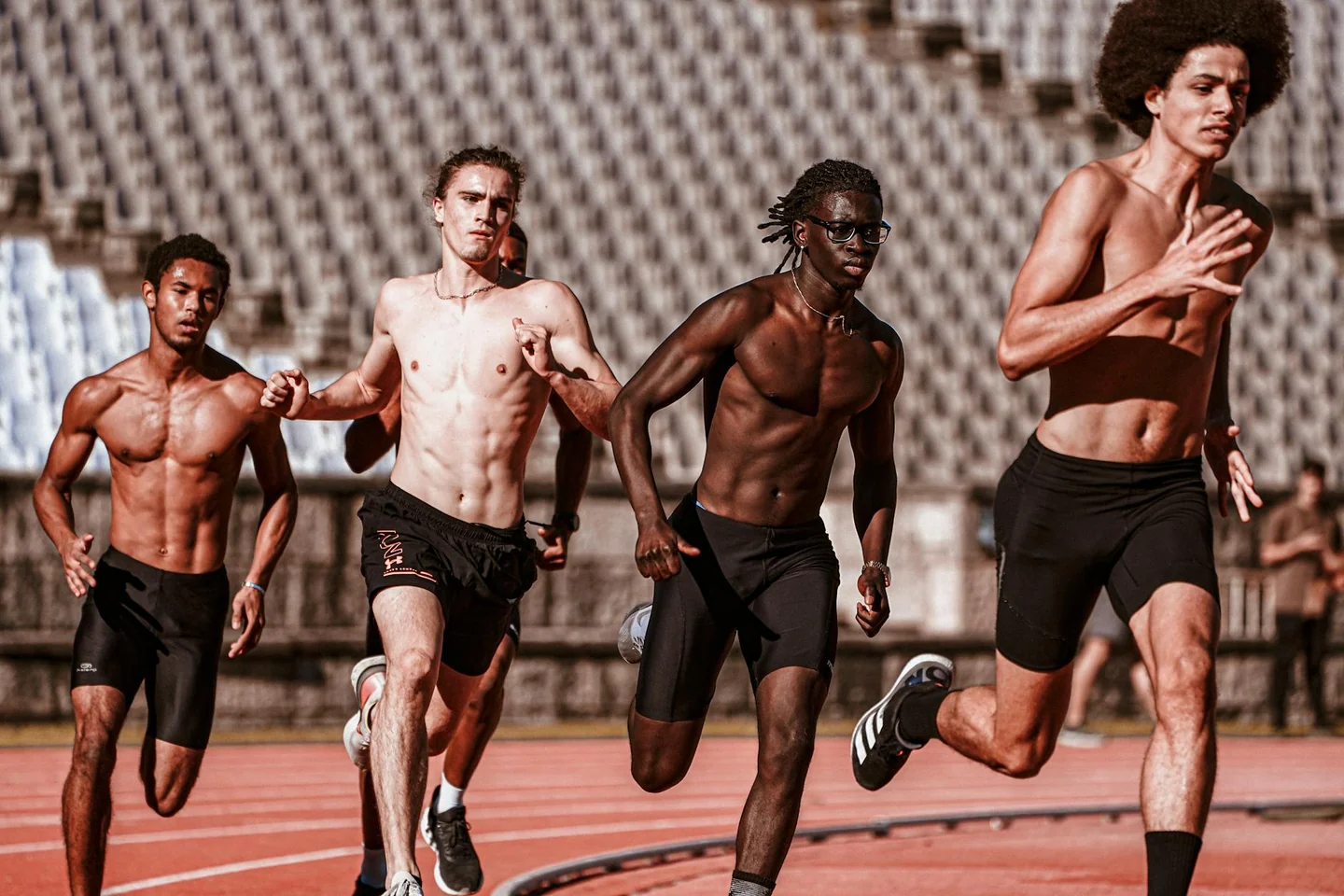
Imagen: RUN 4 FFWPU / Pexels
Valencia has made inclusive sport one of its most visible hallmarks: from adapted neighborhood training sessions to popular races with specific categories, the city has moved from talking about accessibility in theoretical terms to offering real spaces where people can run, share and compete without leaving anyone out. The change is not understood only by the sum of initiatives; it is also due to a sporting culture that, in recent years, has gained sensitivity, resources and presence in the streets.
The result is an increasingly broad ecosystem in which clubs, associations, university campuses, charity races and adapted sport programs coexist. For someone starting from scratch, for someone who runs with a disability, for families that need to balance everything, or for runners looking for company and safety, Valencia today offers options that not long ago seemed scattered and are now beginning to fit together like pieces of the same map.
A city that has made the asphalt a shared space
Inclusive running in Valencia does not come from a single entity, but from a sum of layers. There are the big events that reserve space for adapted categories; there are the clubs that train by pace and needs; and there are the public facilities that have gradually incorporated accessibility and specific programs. That combination has helped normalize something as simple, and at the same time as powerful, as going out to run alongside other people without physical condition, age or personal situation marking the entry door.
In a city with such a strong culture of popular athletics, inclusion has found fertile ground. The Turia Garden, municipal tracks, urban circuits and nearby beaches form a setting that makes it easy to train outdoors for much of the year. That environment, as Mediterranean as it is practical, has made it possible for running to stop being seen only as performance and to also be understood as coexistence, health and access.
The key is adaptation. It is not about lowering the bar or turning sport into a simplified version of itself. It is about adjusting paces, support, routes, schedules and accompaniment so that the sporting experience is safe and realistic. That logic runs through both private clubs and events promoted by social organizations or public institutions, and it is the reason why the inclusive offer has become more solid and less merely symbolic.
Clubs that open the door to beginners and to those who need support
Inclusive clubs have gained weight because they respond to a very specific need: many people want to run, but not alone, not without basic guidance and not in an environment where they feel watched or out of place. In Valencia, proposals have emerged that combine training, community and pace adaptation for people with and without disabilities, with different levels and also different goals. That mix makes it possible for no one to get trapped in a group that does not suit them.
The value of these initiatives is not only in the training session, but in the atmosphere they create around it. There are adult groups, mini clubs for children, social outings and spaces where work is done from initiation to technical improvement. In practice, that means sport stops being an exam and becomes a shared language. A novice runner can learn to sustain short efforts; a more experienced person can maintain continuity; a child can discover play, discipline and routine without pressure.
Conciliation also matters. In several local proposals, sporting activity coexists with a playroom, school support or other services that allow families to organize themselves better. That detail, which is sometimes overlooked, is decisive in understanding why inclusive sport is not only a matter of physical accessibility, but also of time, care and logistics. The barrier is not always in the legs; many times it is in the schedule.
In that context, initiatives such as those working in Campanar or in other parts of the city with mixed groups, functional training, community outings and attention to different realities are easier to understand. The underlying message is clear: running can be a tool for social integration if the environment stops demanding uniformity and starts accepting diversity as a natural part of the group.
Popular races with adapted categories and events designed for coexistence
The Valencian calendar has incorporated events that go beyond traditional competition. The city has seen races grow with categories for different disabilities, participatory formats and routes designed to make it easier for people with very diverse profiles to take part. A good example is the Volta a Peu per la Discapacitat, which recently brought together around 4,000 participants on a 5-kilometer circuit through Sant Pau, with start and finish on Maestro Rodrigo Avenue.
That kind of event does not just measure times. It organizes a sporting coexistence where federated athletes, popular runners, associations, families and volunteers all have a place. The existence of specific categories for intellectual, sensory, physical, organic disabilities or wheelchair participation makes possible something more important than statistics: it offers conditions so that each person can find their competitive or participatory space without being left out by design.
At the same time, events like the AVAPACE Corre I+D Challenge have reinforced a very valuable idea in the city: you can run with a clear social purpose without losing the sporting character. In that format, 10-kilometer relays in the river area were combined with the presence of athletes pushing carts with AVAPACE participants, in a non-competitive proposal focused on solidarity, visibility and coexistence. The image is powerful because it neatly sums up the spirit of this current: shared effort also builds community.
These races have another effect that is less visible, but very important. They force sports organization to think about showers, refreshments, access, volunteers, signage and waiting times from a broader perspective. When logistics are well designed, the event stops being an obstacle and becomes an open invitation, with an impact that goes beyond race day.
The university and public facilities as a silent engine
The Universitat Politècnica de València has been a relevant piece in the expansion of adapted sport. Its inclusive sport program, managed through the Sports Chair, has made available facilities and adapted modalities for people with functional diversity, with disciplines such as a ball, wheelchair cycling, Valencian pilota in a wheelchair, padel, adapted tennis and wheelchair or intellectual basketball. That variety shows that inclusion is not limited to running, but can extend to the entire sporting ecosystem.
The importance of this type of program lies on two levels. On the one hand, it normalizes the presence of people with different abilities in everyday sports facilities. On the other, it offers visible references, something essential so that new families, athletes and associations can see that there are entry paths. Accessibility, when it becomes established on a campus or in a public network, stops being a one-off gesture and becomes part of the architecture of sport.
Valencia also has a base of popular events and urban circuits that make participation easier. The fact that sport unfolds in open, nearby and recognizable spaces helps break down the perception that adapted athletics belongs to a separate circuit. In reality, it is increasingly integrated into the city, as a visible layer of the same fabric that supports the rest of the popular activities.
Social organizations have also pushed that change. Associations linked to cerebral palsy, autism or other realities have found in sport a tool for visibility and well-being. When an inclusive warm-up, a shared outing or a participatory event is organized, the message goes far: access to movement should not depend on a single physical condition or on one unique way of understanding performance.
Health, nutrition and support: the less visible side of inclusive sport
Inclusive running is also sustained by services that rarely make it into the photo. Nutrition, physiotherapy and psychology are part of the framework that makes it possible to sustain sporting practice over time, especially when there are special needs, adaptation processes or a history of injury. In several local projects, these areas coexist with training as complementary pieces, not as separate compartments.
Preventive physiotherapy, for example, is key when talking about adapted sport. It is not enough to move the body; it has to be done safely, progressively and with attention to signs that, in people with disabilities or less sporting experience, may go more unnoticed. Psychology, for its part, helps work on motivation, frustration and confidence, three variables that influence as much as pace or distance.
Nutrition also comes into play more often than it seems. Not only because of performance, but because of everyday habits, energy, rest and recovery. In inclusive settings, food education takes on added value: it is not about imposing menus, but about translating recommendations into possible practices for families, adults and children with diverse routines. Care, here, is not an accessory; it is the ground on which people run.
That holistic view fits with a broader trend in the city: sport is no longer understood only as an hour of physical activity, but as a network of supports that affects mental health, conciliation and community life. In that map, running works as a simple, affordable and very flexible backbone for structuring broader inclusion processes.
Children, teenagers and families: the relay that ensures continuity
The future of inclusive running in Valencia also depends on childhood. Mini clubs and programs for minors serve a dual function: they bring sport closer at an early age and ease the organizational burden on families. When a child runs in an adapted environment, they are not only exercising; they are learning to coexist with different rhythms, to listen to instructions, to respect turns and to accept effort as part of the game.
The existence of school support, playroom services or specific support for minors with functional diversity adds a very valuable layer of realism. Sport does not compete with education or care, but can coexist with them if the project is well designed. That coexistence, which seems so obvious on paper, requires careful organization and a broad vision of what it means to take part in a sporting activity in a sustainable way.
For many families, the appeal is not only sporting. It is also social. Finding a place where one child can train while another studies, or where you can meet other people living similar situations, reduces isolation and encourages continuity. Loneliness, which in other contexts can be silent and persistent, finds a practical response here: belonging to a group that does not demand fitting into a single mold.
That effect is especially noticeable in neighborhoods and districts where grassroots sport has deep roots. The city, with its mix of public infrastructure, associations and private clubs, has made it possible for generational continuity not to depend only on a major institution. It comes from proximity, word of mouth, school and the park. And that is where its strength lies.
Schedules, access and small details that make the difference
Real accessibility is measured in concrete details: schedules compatible with work and school, locations that are easy to reach, clear information, groups by level and spaces where people feel safe. In Valencia, many inclusive programs have understood that the barrier is not always the total absence of offer, but the lack of clarity in how to enter it. A published schedule, a recognizable venue or a WhatsApp group can change more than it seems.
The relationship with the physical environment also matters. Campanar, the river, municipal tracks and university spaces offer different but complementary settings. Some groups work during the week late in the afternoon; others reserve Saturday for social outings; others expand online support in areas such as nutrition. That flexibility is not a luxury. It is the condition that allows inclusion to be not a discourse, but a constant practice.
Technology, without taking center stage, also helps. Contact forms, social media updates, messaging groups and digital calendars make organization easier and reduce friction. In an environment where families, people with disabilities, beginners and regular runners all take part, too much complexity can push people away more than any hill. The simpler the entry, the more diverse the outcome.
That is why inclusive sport should not be measured only by the number of places or by the photo of a race. Its value lies in continuity: in a child coming back the following week, in an older person daring to repeat, in someone with an injury finding a way back, and in a runner with a disability having a track where their presence is not exceptional, but normal.
A model that is already part of the city’s sporting identity
Valencia has made inclusive running a natural extension of its athletic culture. What used to be a sum of isolated initiatives is now beginning to look like a system with its own logic: clubs that adapt paces, races that incorporate specific categories, universities that open sporting modalities and associations that sustain the human side of the process. All of that shapes a city that is more livable also for those who run.
Progress does not mean everything is solved. Challenges remain in accessibility, visibility, funding and coordination between entities. But the movement is clear: inclusive sport has stopped occupying a token corner and is already influencing how a race is organized, how a training session is planned and how citizen participation in public space is understood.
And that is where its real strength lies. Not in the slogan, but in normality. In seeing a person in a wheelchair cross a finish line, a child run with support, a group of adults alternating levels without excluding anyone, a family finding conciliation while their children learn healthy habits. Valencia, with its mix of sea, river and asphalt, is drawing a model where running is also a way of belonging.
In that final image, the city does not appear as a closed setting, but as a network of open paths. The track, the promenade, the park and the street stop being borders and become bridges. And in a sport as simple and as old as running, that changes everything.



How to prevent thigh chafing: causes and real solutions

Women’s running windbreakers: seven jackets and how to choose

Do more workouts get rid of soreness? A guide for runners

Jaén Half Marathon 2026: Record 3,800 Runners Registered

Men’s short running tights: how to choose the right pair

World Triathlon confirms data breach involving medical data

Izan Edo targets podium at Miyazaki World Cup

María Pérez ranks ninth in World Athletics’ 2026 top ten

Dos Santos, Duplantis and Sawe: World Athlete of the Year finalists

San Silvestre Vallecana 2026: 42,000 places, prices and start times

 Races3 months ago
Valencia Half Marathon 2027: date and registration

 Races3 months ago
Valencia Marathon 2026: entry, ballot and course

 Reviews and Comparisons4 months ago
Asics Gel-Roadmiles 3 for men: review and current price

 Reviews and Comparisons4 months ago
Asics Gel Sonoma 8 Gore-Tex: complete analysis for trail and rain

 Sneakers3 months ago
Saucony Endorphin Pro 4: full review and verdict

 News5 months ago
Strava API 2026: what changes for clubs, challenges and runner apps?

 Reviews and Comparisons5 months ago
Nike Alphafly 3: opinions, sensations, and real key points

 Reviews and Comparisons4 months ago
Under Armour running shoes review 2025-2026: models and key features

 Sports Equipment4 months ago
Shoe sizes in cm: a clear guide to getting the right fit for your footwear

 Sneakers3 months ago
Skechers GO RUN Consistent 2.0 analysis: comfort and limits

 News5 months ago
Valencia Marathon 2026 route: key tips to train and run better

 Sneakers4 months ago
Adidas Adizero Boston 13 for men: review and verdict