News
Plantar fasciitis: how much walking avoids worsening pain
Activity does not have to disappear, but it should adapt to your pain and your foot’s progress.

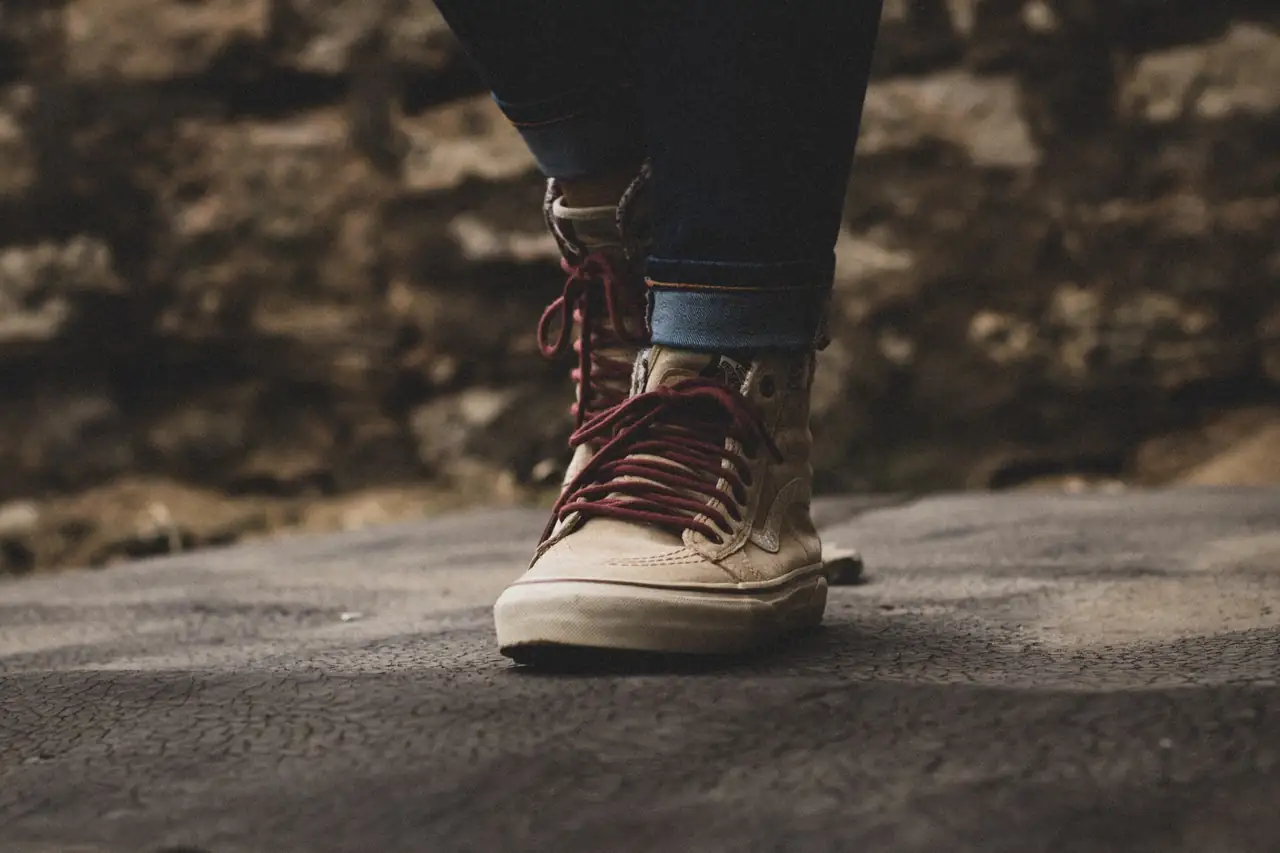
Walking with plantar fasciitis is not automatically forbidden. In many cases, the best option is to temporarily reduce load while maintaining tolerable movement, rather than spending several days completely still. The decision depends on pain intensity, the way you walk and how your foot responds during the following hours.
The most useful reference is not an exact step count, but the tissue’s response. Mild discomfort that does not alter your stride and fades quickly may allow short walks; sharp pain, limping or a clear worsening the next day suggest that the activity was excessive. This distinction helps avoid both unnecessary rest and persistence that prolongs the injury.
Walking can fit into recovery
The plantar fascia is a strong band beneath the foot, running from the heel to the base of the toes. It helps stabilise the arch and absorbs some of the forces created during weight-bearing. When it receives more load than it can tolerate, it becomes painful and stiff, especially during the first steps after sleeping or sitting.
Complete rest may seem logical, but it does not always speed recovery. Prolonged inactivity can increase stiffness in the calf, ankle and sole, making weight-bearing more uncomfortable. A short, slow walk in stable footwear can preserve mobility without exposing the foot to the same demand as running, jumping or walking for hours.
This does not mean walking cures the condition by itself. Plantar fasciitis is often linked to a combination of overload, sudden activity changes, muscle stiffness, foot characteristics and unsuitable footwear. A walk can be part of a well-managed recovery, but it cannot offset a routine that repeats the stimulus that caused the pain.
Pain intensity sets the limit
A simple scale from zero to 10 can help guide decisions without turning every walk into a test of endurance. If discomfort remains low, does not change your stride and does not increase while walking, the load may be reasonable. The goal is not to feel absolutely nothing, but to prevent pain from progressing or changing your mechanics.
Pain during the first steps in the morning is common, but its pattern provides useful information. If the foot loosens after a few minutes and feels the same or better at the end, there may be room for gentle activity. If discomfort grows with every block of steps, makes you load the foot sideways or leaves the heel throbbing throughout the afternoon, shorten the distance and review the cause of that response.
The most important test comes afterwards, not only during the walk. A noticeable increase in pain that evening or the next morning shows that the load exceeded the tissue’s current capacity. The next walk should then be shorter, take place on an easier surface or be temporarily replaced by a lower-impact activity. The response over the following 24 hours is a practical indicator of tolerance.
When to reduce walking substantially
There are situations in which continuing to walk is not a good strategy. Visible limping, sharp stabbing pain, inability to bear weight normally or discomfort that steadily intensifies are reasons to stop the walk. Pain at rest, night pain or significant swelling also deserves attention.
During a very painful phase, it may be necessary to limit walking to essential trips for a few days without confusing that measure with staying still all day. Reducing load means removing the activities that trigger pain while preserving gentle movements the foot tolerates. Walking around the house for a few minutes is not the same as taking a long asphalt route, climbing hills or spending an entire day standing.
Severe pain may also have other causes, including a bone stress injury, nerve irritation, Achilles tendon problems or an issue involving the heel pad. A presumed diagnosis should therefore not remain unreviewed for months. If pain worsens, fails to improve after several weeks of adjustments or prevents normal weight-bearing, seek assessment from a healthcare professional.
How to adapt walks without stopping movement
The first adjustment is to reduce total time and divide it into several short trips. Someone who normally walks for an hour may tolerate three 15- or 20-minute walks better, provided the later response remains stable. There is no universal step count: the right dose is the most activity that does not cause sustained worsening.
Speed also matters. Walking fast, lengthening the stride or climbing slopes increases demand on the fascia and calf. A slightly shorter stride, with the foot landing naturally beneath the body, is often more comfortable than reaching forward. There is no need to walk on tiptoes or completely avoid heel contact, since both strategies can overload other structures.
The surface can greatly change how the foot feels. Concrete pavements and asphalt repeat impact, while a smooth, even compact dirt surface may feel kinder. Uneven grass and loose sand are not always better alternatives: instability makes the foot work harder and may increase tension in the arch. Steep hills, stones and rough paths are best saved until level walking is comfortable.
Footwear matters more than step count
Suitable shoes do not remove the injury, but they may reduce the load reaching the heel. During a painful phase, a shoe with a firm but not rigid sole, enough cushioning, a stable heel and room for toe movement is often preferable. Footwear should hold the foot without squeezing it and retain its support properties.
Thin flip-flops, worn-out trainers, ballet flats and some completely flat models may feel uncomfortable because they offer little protection or require the toes to grip the ground. The issue is not that one shoe type is right for everyone, but that a model that increases pain is not a good choice at that moment. High heels also keep the calf shortened and change pressure distribution.
Insoles can improve comfort for some people, but they are not essential and should not be treated as a stand-alone correction. A prefabricated insole may be enough to improve comfort, while a custom device is reserved for specific needs assessed individually. If a support causes more pain, numbness or local pressure, remove it and reassess the fit.
What to do before and after walking
The first steps after getting up are often particularly uncomfortable because the foot has been still for hours. Before walking, moving the ankle slowly, flexing and extending the toes and gently mobilising the calf may reduce stiffness. Preparing the tissue with calm movements is better than forcing an intense stretch while cold.
Calf and soleus stretches may be part of regular management if they do not reproduce sharp pain. Progressive exercises to strengthen the foot and calf are also used, such as controlled heel raises or toe movements. Progress should be gradual: doing many repetitions on a painful day can have the same effect as taking an excessively long walk.
After walking, observing the foot for several hours is more useful than automatically applying a remedy. Cold wrapped in cloth may temporarily ease pain, but it is not compulsory and does not replace load management. A foot that feels hot, more sensitive or clearly worse after finishing calls for relative rest and a reduction in the next stimulus, not another session to test its limits.
Alternatives for staying active
Reducing walks does not mean abandoning all exercise. Stationary cycling, swimming and some pain-free strength exercises can maintain fitness with fewer repeated impacts on the heel. Each activity still has demands: cycling with too much resistance can tighten the calf, and walking in water may be uncomfortable if the bottom is uneven.
The choice should be guided by symptoms rather than by the label low impact. An alternative is appropriate when it allows movement without increasing pain during the session or worsening the later response. Upper-body work, mobility training and hip strength can often continue with modifications while running, jumping and sudden changes of direction are temporarily limited.
For runners, returning should not mean increasing mileage and speed at the same time. First, daily life and short walks should be tolerable. Then a gradual return, with rest days and attention to the next morning, provides more useful information than an abrupt return to the old routine. A lack of pain for a few minutes does not guarantee that the tissue can yet tolerate a full running session.
Daily mistakes that can maintain pain
Moving from many hours on your feet to several days of complete rest is a common swing. So is walking barefoot on tile or concrete when the foot is already sensitive, especially after getting out of bed. A household floor may not seem demanding, but hundreds of repeated steps can add a considerable load.
Another mistake is using pain medication to hide symptoms and complete an activity that is normally not tolerated. Medicines have indications, contraindications and doses that should be assessed with a professional, and reducing pain is not the same as restoring the tissue’s capacity. Treating temporary relief as permission to increase load can delay improvement.
Recent changes are also worth reviewing: more mileage, a hillier route, a new job requiring prolonged standing, different shoes or weight gain may have altered demand on the foot. Poor sleep and inadequate recovery do not cause every case by themselves, but they can make recovery harder. Identifying what changed before the pain appeared allows a more precise adjustment of the routine.
When to seek medical assessment
Plantar fasciitis often improves with conservative measures and appropriate load management, but timing varies. Some people notice progress within a few weeks, while others need several months. Persistence does not necessarily mean a serious injury, although it does justify checking the diagnosis and reviewing whether activity remains too demanding.
Seek assessment if pain prevents normal walking, follows a blow, involves loss of sensation, marked redness, fever or pronounced swelling. Assessment is also sensible when pain is severe in both feet, is focused on a very specific bony point or does not change despite reducing activity. These signs do not always fit typical plantar fasciitis and require clinical evaluation.
An examination may include questions about the course of symptoms, observation of walking and assessment of mobility and strength. Imaging is not needed in every case, but it may be considered when the course is unusual or another injury is suspected. The goal is not to find a striking image, but to understand which structure hurts and what load it can tolerate.
Measured activity protects better than complete rest
Limiting walking can be sensible when pain increases, your stride changes or the following morning is clearly worse. Otherwise, maintaining short, comfortable and progressive walks is usually more reasonable than eliminating all movement. The key is to adjust distance, speed, surface and footwear to the foot’s current capacity.
Recovery does not move in a straight line. Better and worse days can occur, especially after a long day or an activity change. What matters is the trend over several days and avoiding a sharp increase every time symptoms improve. Walking should act as a dose of movement, not as a test to prove that pain has disappeared.
A foot that bears weight naturally, tolerates daily movement and does not worsen the next day provides a reasonable basis for gradually increasing activity. If the opposite occurs, reducing the stimulus and seeking professional assessment is safer than continuing blindly. With plantar fasciitis, moving slowly does not mean stopping; it means giving the tissue time to recover its tolerance.
Este artículo contiene enlaces de afiliado: si compras a través de ellos, se genera una pequeña comisión sin coste adicional para ti. Más información.



How to prevent thigh chafing: causes and real solutions

Women’s running windbreakers: seven jackets and how to choose

Do more workouts get rid of soreness? A guide for runners

Jaén Half Marathon 2026: Record 3,800 Runners Registered

Men’s short running tights: how to choose the right pair

World Triathlon confirms data breach involving medical data

Izan Edo targets podium at Miyazaki World Cup

María Pérez ranks ninth in World Athletics’ 2026 top ten

Dos Santos, Duplantis and Sawe: World Athlete of the Year finalists

San Silvestre Vallecana 2026: 42,000 places, prices and start times

 Races4 months ago
Valencia Half Marathon 2027: date and registration

 Races4 months ago
Valencia Marathon 2026: entry, ballot and course

 Reviews and Comparisons4 months ago
Asics Gel-Roadmiles 3 for men: review and current price

 Reviews and Comparisons4 months ago
Asics Gel Sonoma 8 Gore-Tex: complete analysis for trail and rain

 Sneakers4 months ago
Saucony Endorphin Pro 4: full review and verdict

 News5 months ago
Strava API 2026: what changes for clubs, challenges and runner apps?

 Reviews and Comparisons5 months ago
Nike Alphafly 3: opinions, sensations, and real key points

 Reviews and Comparisons4 months ago
Under Armour running shoes review 2025-2026: models and key features

 Sports Equipment4 months ago
Shoe sizes in cm: a clear guide to getting the right fit for your footwear

 Sneakers3 months ago
Skechers GO RUN Consistent 2.0 analysis: comfort and limits

 News5 months ago
Valencia Marathon 2026 route: key tips to train and run better

 Sneakers4 months ago
Adidas Adizero Boston 13 for men: review and verdict