News
Sunscreen for running: protection, sweat and common mistakes already
Key for training outdoors: lightweight texture, high protection, and good sweat resistance.

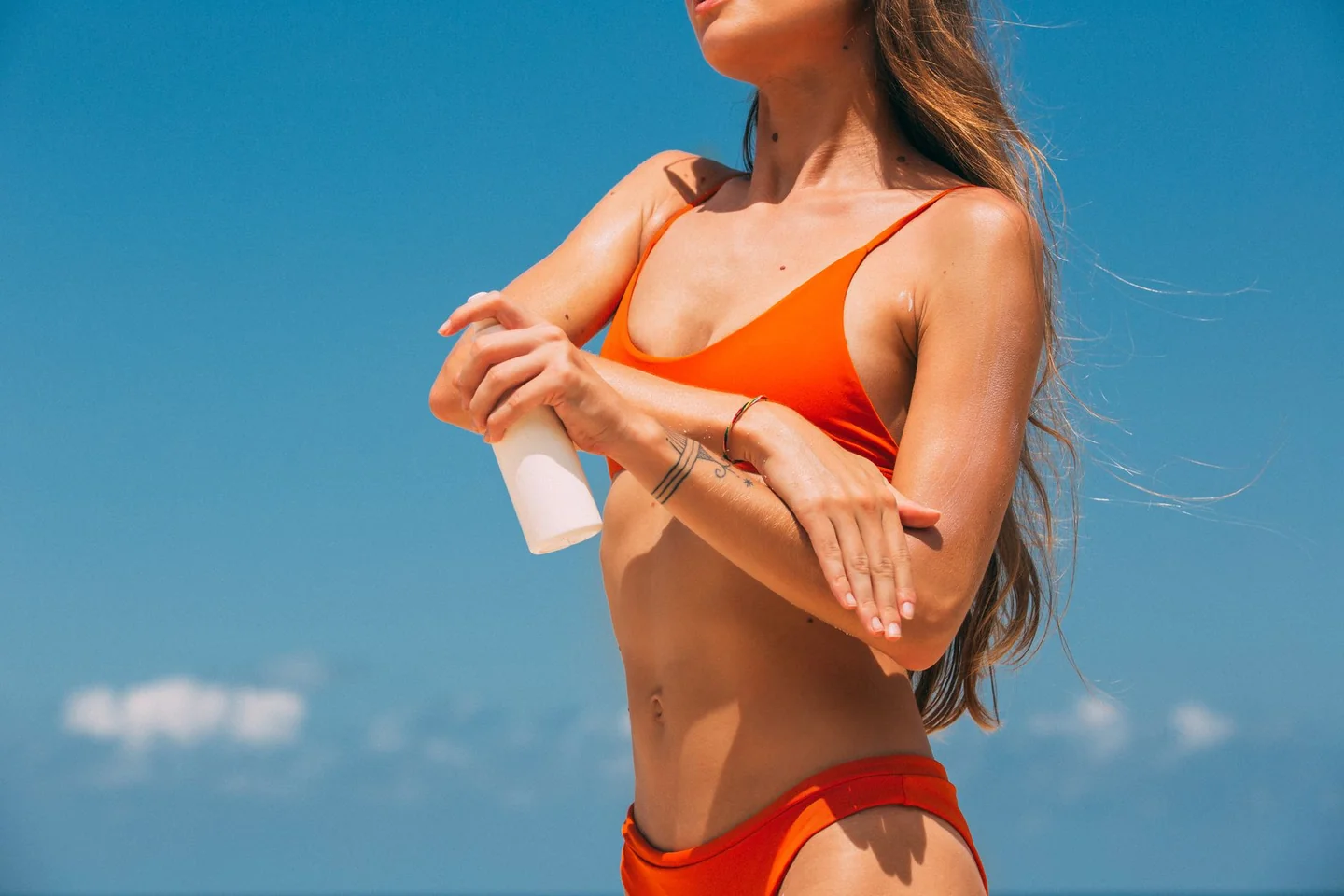
Imagen: Mikhail Nilov / Pexels
The sun punishes more than it seems when the pace picks up and the shirt sticks to the skin. On a long run, a track session, or a summer run along the coast, facial and body protection is not a cosmetic detail: it is part of the basic gear, just like a pair of comfortable shoes or a breathable cap. The combination of sweat, friction, and ultraviolet radiation makes an ordinary sunscreen fall short for running outdoors with any regularity.
The real difference lies in the formulation. A good protector for physical activity has to withstand sweat, spread easily, dry quickly, and not migrate into the eyes with effort. In practice, that means less stinging, fewer white marks, less greasy feeling, and more continuity in training. The skin, moreover, does not negotiate: the accumulated exposure of spring and summer adds up to more damage than is usually perceived at first glance.
What the body demands when you run under intense radiation
Running outdoors does not subject the skin to static exposure, but to a constant back-and-forth of heat, humidity, and movement. The forehead sweats, light bounces off asphalt, concrete, sand, or water, and the rubbing of clothing disrupts the protective film. That cocktail explains why sunscreens designed for daily use, however good they may be, can feel uncomfortable during a long run or a quality workout.
The facial area usually takes the worst of it. Forehead, cheekbones, nose, ears, and neck receive direct radiation for longer than people think. In addition, sweat carries product away and opens small pathways through which the skin is left more exposed. That is why the ideal for running is not just high protection, but a formula that remains stable even when the effort spikes and the body tries to cool itself down however it can.
UVA and UVB radiation matter all year round, even if it is more noticeable in summer. UVB rays are the ones that burn more easily; UVA penetrates more deeply and is associated with photoaging. In training, the problem is not only the visible burn at the moment, but the silent accumulation of micro-aggressions. In a sunny city like Valencia, that accumulated effect can be felt both in the skin and in the heat tolerance of someone who spends hours training outside.
What a good sports formula should have
The practical standard for running outdoors is SPF 50 or, at the very least, a well-formulated high protection. That number does not solve everything, but it does offer a more solid margin against an application that is often too sparse. Most specialists agree that people apply less than the necessary amount, so starting from a high filter compensates part of that common mistake without turning the skin into a heavy or greasy area.
Water and sweat resistance is almost a mandatory condition. Sweat does not just dilute the sunscreen; it also affects how long it stays on and makes it more likely for the product to move toward the eyes or the corners of the nose. That is why sports formulas usually rely on fluid textures, gels, mists, sticks, or sprays designed to stay put without leaving an uncomfortable layer. The running experience improves a lot when the product stops being noticeable after ten minutes.
It is also worth looking at eye tolerance and texture. A sunscreen that stings the eyes can ruin a long run with constant, annoying irritation. Products labeled as non-stinging to the eyes, non-comedogenic, or with an invisible finish usually work better for runners with combination, oily, or sensitive skin. When sweat runs down the temple, the goal is for the protector not to behave like one more obstacle.
Compact formats have gained ground for a very simple reason: they work better in motion. A stick fits in a belt, a waist pack, or a vest and allows reapplication without getting your hands dirty. The mist is convenient for the body or for quick touch-ups, while the gel or invisible fluid usually wins out on the face because of its lightness. There is no universal solution; there is the most sensible one for each type of outing and each skin.
The formulas that best fit each type of outing
In short urban workouts, lightness usually matters more than extreme durability. An invisible fluid or a fast-absorbing gel works well when running on asphalt, with brief stops and enough time to apply the product calmly before heading out. The priority here is that it leaves no residue, does not shine, and does not interfere with the feeling of freshness that is often sought in spring and summer.
For long runs, trail, or days with more exposure, the balance changes. In the mountains, on the beach, or on long routes where reapplication may be delayed, a more resistant formula and a format that can be touched up without breaking rhythm become valuable. Transparent sticks have become popular precisely for that reason: they are discreet, practical, and less likely to leave visible residue on the nose, cheekbones, or eye contour.
Those with sensitive skin usually appreciate fragrance-free formulas with a soothing finish. Reactive skin responds worse to friction, heat, and heavily perfumed cosmetics. In those cases, the ideal protector is not the most eye-catching one, but the most predictable: few unnecessary ingredients, good tolerance, and a texture that does not turn sticky as the kilometers go by.
Oily or acne-prone skin needs extra care when choosing. A non-comedogenic finish helps avoid clogged pores and breakouts in an area that already suffers enough from sweat, the cap brim, straps, or the friction of clothing. In that context, the product should disappear into the skin instead of sitting on top like a dense film that weighs more at the end than at the beginning.
How it fits into the pre-run routine
Application should not be done in a rush, as if it were a last-minute gesture before heading out the door. The most sensible thing is to spread it with enough time for it to settle properly on the skin. Many products need between 15 and 30 minutes to set with some stability, and that reduces the risk of the initial sweat carrying it away too soon. On the face, a generous and even amount makes more difference than a shiny, thin layer.
Ears, nape, neck, and the backs of the hands often stay off the radar. These are areas that receive direct sun and yet are often forgotten in the pre-run ritual. On long outings, the lips also appreciate specific SPF protection. It is not an exaggeration: a small burn at the corner of the mouth or the edge of the ear can be surprisingly annoying for several days.
Reapplying remains the most uncomfortable part, but also the most important when training goes on longer. Sweat, the rubbing of the bib, a towel, or the simple friction of the air end up weakening the product. That is why, in sessions longer than two hours, or if exposure is intense, a second application really changes the picture. It is not about obsession, but consistency; the sun does not turn down the volume because the workout has gotten hard.
The time of day also changes the risk. Training early in the morning or at sunset reduces the intensity of radiation and makes the effort more bearable. By contrast, the central hours, especially in June, July, and August, multiply the impact on the skin and on the thermal sensation. In the Valencian Community, where the light can feel sharp from very early on, that time window is not a whim: it is a sensible decision in terms of heat and skin load.
Which formats have won the race in the sports market
The stick has become the most appreciated format for quick touch-ups. Its advantage is obvious: it goes on without dirtying your hands, fits in any pocket, and allows you to insist on the nose, cheekbones, and orbital area with precision. For runners doing intervals, popular races, or mountain sessions, that localized control is very practical, especially when the skin is already warm.
The spray remains useful when speed and broad coverage are the goal. It is convenient for the body, legs, or arms, and can be useful on hot days when the idea is to simplify the process as much as possible. That said, it requires more attention to avoid leaving missed spots and usually works better as a complement than as the only solution for the face. In motion, the advantage is speed; the risk is less even coverage if applied poorly.
Invisible fluids still hold a very strong position on the face because of their clean finish. They are the preferred option for those who cannot stand greasy feeling or a whitish residue. They also work well under a cap or visor, because they do not overload the skin and tend to coexist better with sweat and heat. In popular races with an early start and several hours of exposure, that comfort is appreciated much more than it seems.
Mists have gained ground, although they do not completely replace a main protector. They work well for express reapplication on short trips or over large areas of the body, but their effectiveness depends a lot on the amount and the way they are applied. In practice, they are more useful as support than as a base of protection. Their real advantage lies in ease, not in some magic that does not exist.
The mistakes that cost the most in summer
The first mistake is thinking that a light layer is enough because you are going to sweat right away. That idea, very common among runners, reduces real protection precisely when it is needed most. The film has to be sufficient from minute one, even if sweat later puts it to the test. An excellent protector applied badly offers less than a decent one used properly.
The second common mistake is trusting that one application covers the whole session. In easy half-hour runs, it may hold up reasonably well; in a quality workout in the heat, it will not. Time, the friction of the shirt, the passing hours, and the effort itself all degrade protection. On long days, the problem is not only the sun: it is the sum of sun, heat, and mechanical wear.
The third mistake is ignoring that cool weather does not mean low radiation. A cloudy, windy, or seemingly mild day can hide significant exposure, especially in spring and in winter with reflections on light surfaces. The skin does not interpret the sky the way thermal sensation does. That is why sports photoprotection should not be reserved only for August or beach days.
It is also costly to choose a product that is too perfumed or too heavy for the face. When sweat and fragrance mix, the result can be uncomfortable, even irritating. In runners prone to acne or sensitive skin, a bad product first shows up as discomfort and then as abandonment. Consistency depends a lot on the protector not feeling like a burden.
Why regular use changes the experience of training
The best virtue of a good sunscreen is not only preventing burns; it is making it easier to repeat the workout the next day. Skin, when irritated, responds with tightness, redness, or sensitivity to the touch, and that affects even a very moderate outing. Taking care of it is not an isolated aesthetic issue, but a way to sustain the habit without adding small invisible injuries.
In endurance sports, sun protection is very much like hydration: you notice it more when it is missing than when it is there. When it is absent, the run gets harder. When it is well handled, it disappears from the radar and leaves the runner focused on what matters: pace, breathing, the sensations in the legs, the hydration strategy. That is precisely the best sign that a product fits.
Brands have refined formulas a lot in recent years. Today it is common to find broad-spectrum filters, ultra-light textures, invisible finishes, and options adapted to sensitive skin or intense sport. The evolution of the market has not erased the differences between products, but it has expanded the options so that each runner can find something that does not get in the way and protects seriously.
Choosing well also avoids impulse buys that end up at the back of the drawer. A useful sports sunscreen is the one that is actually used. If the texture is unpleasant, if it stings the eyes, if it leaves shine, or if it requires too many detours, the runner ends up abandoning it. The best product, in practice, is the one that fits quietly into the pre-run routine and comes back without drama whenever it is needed.
The sun does not negotiate with training and the skin does not forget either
Repeated exposure leaves a silent mark that is not always visible when the session ends. That is why sunscreen for running should not be treated as a seasonal extra, but as part of a prevention logic that makes sense from the first sunny outing to the last run of autumn. Radiation does not ask about the training plan; it is simply there.
The right choice combines practical judgment and skin tolerance. High protection, sweat resistance, light texture, a good finish, and easy reapplication form a set that matters much more than any flashy promise on the packaging. When those elements fit together, protection stops being a nuisance and becomes a discreet, almost invisible, but decisive ally.
For the runner who takes the outdoors seriously, protecting the skin is part of the rhythm. Just as the watch is adjusted, the calves are stretched, or the bottle is checked, it also matters to choose a sunscreen that can withstand real effort. The skin, after all, runs with us and accumulates kilometers even if it does not appear on the training sheet.
The good news is that today there are formulas designed for that: to sweat, last, and not bother. That is the basis of sensible protection for anyone heading out to run with high sun, sticky humidity, and asphalt blazing underfoot. More than a beauty gesture, it is a decision about everyday performance and long-term health.



How to prevent thigh chafing: causes and real solutions

Women’s running windbreakers: seven jackets and how to choose

Do more workouts get rid of soreness? A guide for runners

Jaén Half Marathon 2026: Record 3,800 Runners Registered

Men’s short running tights: how to choose the right pair

World Triathlon confirms data breach involving medical data

Izan Edo targets podium at Miyazaki World Cup

María Pérez ranks ninth in World Athletics’ 2026 top ten

Dos Santos, Duplantis and Sawe: World Athlete of the Year finalists

San Silvestre Vallecana 2026: 42,000 places, prices and start times

 Races3 months ago
Valencia Half Marathon 2027: date and registration

 Races3 months ago
Valencia Marathon 2026: entry, ballot and course

 Reviews and Comparisons4 months ago
Asics Gel-Roadmiles 3 for men: review and current price

 Reviews and Comparisons4 months ago
Asics Gel Sonoma 8 Gore-Tex: complete analysis for trail and rain

 Sneakers3 months ago
Saucony Endorphin Pro 4: full review and verdict

 News5 months ago
Strava API 2026: what changes for clubs, challenges and runner apps?

 Reviews and Comparisons5 months ago
Nike Alphafly 3: opinions, sensations, and real key points

 Reviews and Comparisons4 months ago
Under Armour running shoes review 2025-2026: models and key features

 Sports Equipment4 months ago
Shoe sizes in cm: a clear guide to getting the right fit for your footwear

 Sneakers3 months ago
Skechers GO RUN Consistent 2.0 analysis: comfort and limits

 News5 months ago
Valencia Marathon 2026 route: key tips to train and run better

 Sneakers4 months ago
Adidas Adizero Boston 13 for men: review and verdict