News
Where are there more trail running races in Spain
The Spanish calendar spreads the trail racing load between the Pyrenees, the Canary Islands, and southern mainland Spain, with very different profiles.

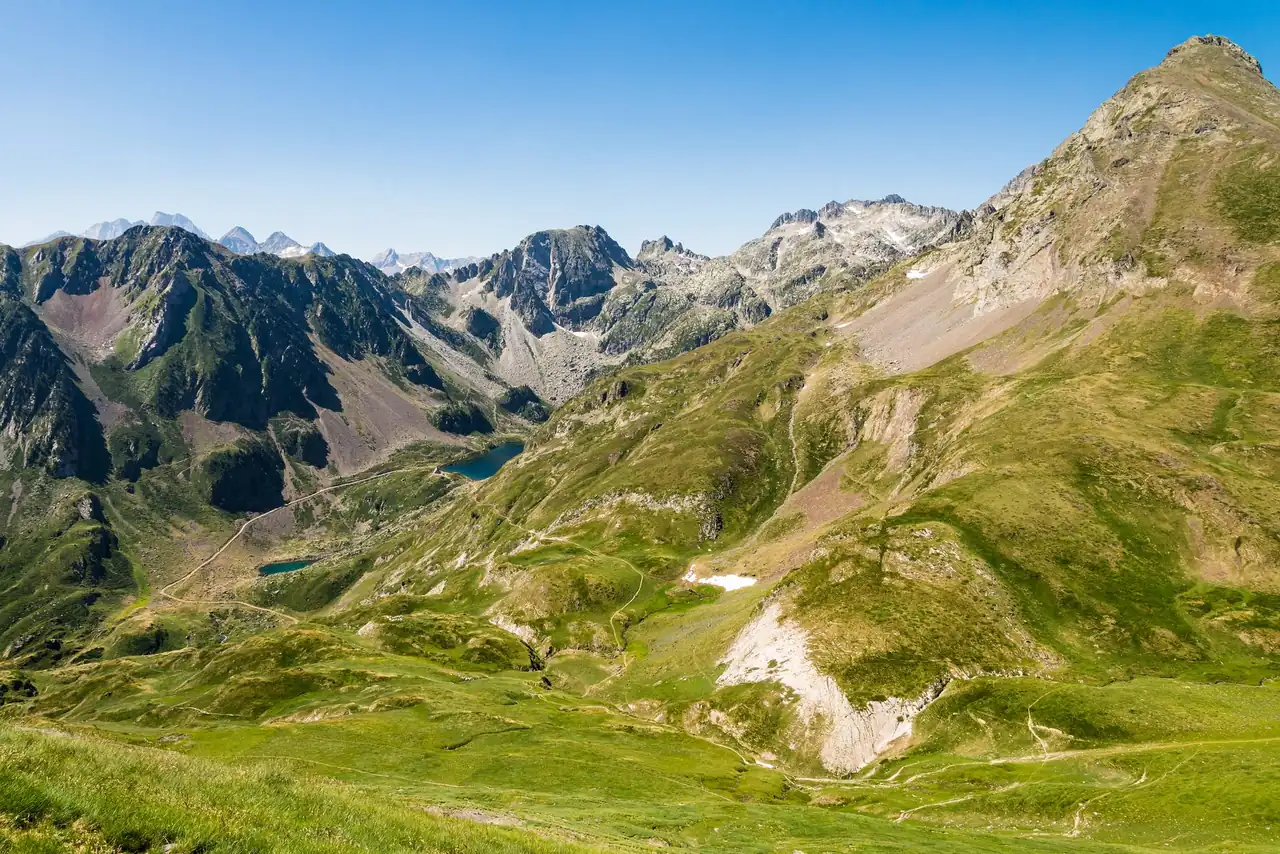
Spanish trail running does not grow uniformly. There are provinces and archipelagos where the calendar thickens like a low mist in a mountain pass, while other areas barely maintain one or two events of any real weight. The true map of mountain races is drawn above all in the Pyrenees, the Canary Islands, Andalusia, and the Mediterranean arc, with Catalonia, Aragon, the Valencian Community, and the Balearic Islands as territories of constant presence.
The concentration is not only about geography. Organizational tradition, institutional support, the club network, the ease of attracting runners from outside, and the commercial pull of certain brands and circuits also matter. That is why, when talking about the most active areas, it is not enough to look at high mountains: you have to observe where race bibs are repeated, where registrations fill up first, and which territories have turned the trail into a mass event.
The Pyrenees, the great backbone of the calendar
The Pyrenees lead in volume, variety, and prestige. In the Catalan and Aragonese stretch, a large share of the country’s most visible races are concentrated, from international events to mid-sized races that sustain the regional calendar. There, 10-kilometer formats coexist with ultras of more than 100, a range that feeds both recreational runners and the elite. Bagà, Vielha, Canfranc, Benasque, and the Vall d’Aran area are names that recur each season like stations along the same mountain range.
The Pyrenean strength has a simple explanation: the mountains are there, but so is the sporting culture. The local runner forms a broad base, municipalities understand the tourism value of a well-run event, and organizers have learned to work with entry caps, safety, and international communication. In that ecosystem, Ultra Pirineu, Val d’Aran by UTMB, or Canfranc-Canfranc are not oddities, but the visible showcase of a much denser network of smaller races.
Aragon also maintains its own identity, strongly marked by technical terrain and by the historical weight of the calendar in Huesca. Catalonia, meanwhile, blends mountain tradition with the ability to attract foreign runners, which increases the number of events and multiplies pressure on bibs. Altogether, the Pyrenees do more than just add races: they organize the Spanish trail map and set much of its international prestige.
The Canary Islands, density and volcanic magnetism
The Canary Islands occupy a disproportionate place relative to their size. Tenerife, Gran Canaria, and La Palma have built a block of mountain races capable of attracting thousands of participants in very different formats. Volcanic terrain, steep elevation changes, and mild weather for much of the year turn the archipelago into a kind of natural laboratory for long-distance trail running.
The spotlight is shared by races such as Transvulcania, Tenerife Bluetrail, and Transgrancanaria, three events that not only fill the calendar but also sustain a recognizable sporting narrative. Each represents a different way of understanding the mountains: the volcanic epic of La Palma, the toughness and variety of Tenerife, or the mass, almost festive character of Gran Canaria. It is no coincidence that runners return island after island, because each edition leaves a mix of landscape and challenge that is hard to replicate on the mainland.
Canary density is also explained by continuity. It is not about an isolated race that makes headlines once a year, but about a network linking clubs, institutions, and organizing companies with accumulated experience. The result is a calendar in which major events coexist with mid-sized and popular races, and where the bib becomes a coveted item even beyond the long distances.
Andalusia and the south, a mass phenomenon
The southern part of the mainland has built a very distinctive participation culture. Andalusia does not compete only on the beauty of the terrain or on toughness; it competes above all on loyalty. Ronda, Almería, Ceuta, and Melilla have turned their races into references that go beyond sport and approach a social phenomenon. In this part of the map, trail running is not limited to technical runners: it also mobilizes hikers, teams, volunteers, and a highly engaged local community.
The 101 of Ronda, La Desértica, Cuna de la Legión, and La Africana represent a model very different from that of the Pyrenees. Here the pull does not come from Alpine imagery or an international label, but from a very strong collective identity. These are races that sell out quickly, with large entry caps and demand that nearly every year overwhelms supply. The strength lies in the popular culture of effort, in word of mouth, and in the feeling of belonging to an event with its own rules and symbols.
That pattern explains why the south always appears in any conversation about where there are the most races. It is not only a question of raw numbers, but of intensity. Some territories do not stack up as many dates on the calendar, but they do concentrate events capable of mobilizing thousands of people and generating loyalty that lasts for years. In the mass-event analysis, Andalusia is a central piece.
The Mediterranean arc and the Valencian Community, constant presence
The Mediterranean coast does not live off a few big names, but off continuity. The Valencian Community, Catalonia, Murcia, and the Balearic Islands sustain a broad network of short, medium, and long races that fills almost every weekend of the year. It is a type of trail that is less monumental than the Pyrenean one, but more evenly distributed and, in many cases, closer to the recreational runner.
In the Valencian Community, the landscape rules in a very specific way: coastal mountain ranges, ravines, limestone ridges, and natural parks that allow fast, technical, and highly accessible events from urban centers. That proximity to cities encourages the repetition of events and the appearance of very dense calendars in Castellón, Valencia, and Alicante. La Serranía, La Marina Baixa, and the inland area of Castellón appear frequently on the schedule, as do mountain stretches in the province of Alicante with a strong club tradition.
The Mediterranean arc also has a clear logistical advantage. Events can attract local runners without requiring major travel and, at the same time, draw participants from other regions by road or train. It is not all about headline ultras: success here is measured by the number of weekends with a start line, by the rotation of formats, and by a base of athletes who see trail running as part of their annual calendar, not as an exceptional event.
Why some areas fill more bibs than others
Geography is only part of the story. There are very mountainous territories with little competitive offering and others that are less spectacular but have nevertheless woven an enormous calendar. The difference usually lies in organization and in the ability to turn a race into a recognizable event. When a race manages to repeat its route, care for the experience, and consolidate its own identity, runners return and the map grows denser.
Accessibility also matters a great deal. A destination well connected by road or air has more chances of attracting participants from outside, especially if it combines distances for different profiles. Races with different formats usually generate more volume because they allow elites, recreational runners, and first-timers to coexist. That is why events like Transgrancanaria, Tenerife Bluetrail, or Val d’Aran by UTMB have become so powerful: they do not depend on a single distance or a single audience.
Another decisive factor is the sporting culture of each area. Where there is a tradition of hiking, mountain sports, or endurance, trail running finds a community sooner. Clubs drive registrations, local councils understand the economic impact, and the race stops being an isolated act and becomes an eagerly awaited event. At that point, calendar density no longer depends on altitude, but on habit.
The events that set the pace of Spanish trail running
The ranking of races with the most bibs sold outlines a country with two major engines. On one side are the events with strong commercial and international pull, where brands, major circuits, and the ability to attract outside participants matter. On the other are the popular southern races, sustained by a very loyal community that responds quickly when registration opens. Between these two poles, the core of Spanish trail running is formed.
Recent figures help explain this. Val d’Aran by UTMB has reached more than 6,000 bibs sold in 2026; Transgrancanaria, 5,300 runners; 101 of Ronda, also 5,300; Cuna de la Legión, 4,900; La Desértica, 4,000; Ultra Pirineu, 3,800; Tenerife Bluetrail, 3,200; and Transvulcania, 3,000. This is not just a list of names, but a map of very clear concentrations, with the Catalan, Canary, and Andalusian mountains as poles of maximum activity.
Further down the scale appear Mallorca by UTMB, Costa Blanca Trails, Penyagolosa Trails, Reventón El Paso, Valle de Tena, and Canfranc-Canfranc, all of them with notable capacity to mobilize runners and keep the circuit alive. The message is clear: Spanish trail running is not spread randomly, but organized into high-density geographical corridors, where a few reference brands pull along a much broader ecosystem.
How to read the map without confusing popularity with quality
More races does not mean better races, or the other way around. An area may host many events and yet offer very different routes in terms of difficulty, atmosphere, or technical demands. The point of the map is to distinguish quantity, prestige, and format. There are very mass-participation events that function like endurance festivals, and others much smaller that are extraordinary because of their course or their mountain purity.
This nuance matters because runners usually want different things depending on the time of season. Those seeking atmosphere and logistics will probably look toward the Canary Islands or Andalusia; those wanting altitude, technical difficulty, and a high-mountain feel end up in the Pyrenees; those needing proximity and a frequent calendar find more options in the Mediterranean. The abundance of races does not create a single culture, but several, each responding to a different runner profile.
It is also worth keeping crowding in mind. The areas with the most events usually manage wear and tear better, but they also concentrate more pressure on trails, permits, and entry caps. The growth of trail running has forced organizers to refine routes, stagger starts, and protect natural spaces. In that balance, success is no longer just about filling up, but about sustaining the race without draining the mountain of meaning.
What the calendar reveals about the future of trail running
Spanish trail running is no longer a niche sport. The distribution of races by province and region shows a mature phenomenon, with specialized territories and increasingly segmented calendars. The areas that gather the most events do so not by chance, but because they have learned to combine landscape, logistics, community, and external reach.
In the immediate future, everything points to a coexistence between major events and medium-scale races that sustain the system’s base. The big names will continue to attract attention, but the real muscle of Spanish trail running lies in that intermediate band that fills every weekend on the agenda. That fabric is what turns a fad into a structure; a cardboard fad falls apart with the first rain, while a structure leaves its mark year after year.
That is why, when looking at where there are the most trail races, the answer cannot be pinned to a single point on the map. It is spread across Pyrenean mountains, volcanic islands, Andalusian sierras, and Mediterranean corridors. Spain has built such a diverse calendar that the phenomenon can be measured from several angles at once. And in all of them, the same journalistic conclusion appears: trail running thrives where there is community, relief, and continuity, not only where the mountain looks tallest in the photo.



How to prevent thigh chafing: causes and real solutions

Women’s running windbreakers: seven jackets and how to choose

Do more workouts get rid of soreness? A guide for runners

Jaén Half Marathon 2026: Record 3,800 Runners Registered

Men’s short running tights: how to choose the right pair

World Triathlon confirms data breach involving medical data

Izan Edo targets podium at Miyazaki World Cup

María Pérez ranks ninth in World Athletics’ 2026 top ten

Dos Santos, Duplantis and Sawe: World Athlete of the Year finalists

San Silvestre Vallecana 2026: 42,000 places, prices and start times

 Races4 months ago
Valencia Half Marathon 2027: date and registration

 Races4 months ago
Valencia Marathon 2026: entry, ballot and course

 Reviews and Comparisons4 months ago
Asics Gel-Roadmiles 3 for men: review and current price

 Reviews and Comparisons4 months ago
Asics Gel Sonoma 8 Gore-Tex: complete analysis for trail and rain

 Sneakers4 months ago
Saucony Endorphin Pro 4: full review and verdict

 News5 months ago
Strava API 2026: what changes for clubs, challenges and runner apps?

 Reviews and Comparisons5 months ago
Nike Alphafly 3: opinions, sensations, and real key points

 Reviews and Comparisons4 months ago
Under Armour running shoes review 2025-2026: models and key features

 Sports Equipment4 months ago
Shoe sizes in cm: a clear guide to getting the right fit for your footwear

 Sneakers3 months ago
Skechers GO RUN Consistent 2.0 analysis: comfort and limits

 News5 months ago
Valencia Marathon 2026 route: key tips to train and run better

 Sneakers4 months ago
Adidas Adizero Boston 13 for men: review and verdict