News
Women’s Race Madrid 2025 route: map and details
The Madrid route brought together thousands of female runners on an urban circuit starting on Castellana, passing through Gran Vía, and finishing in Parque del Oeste.

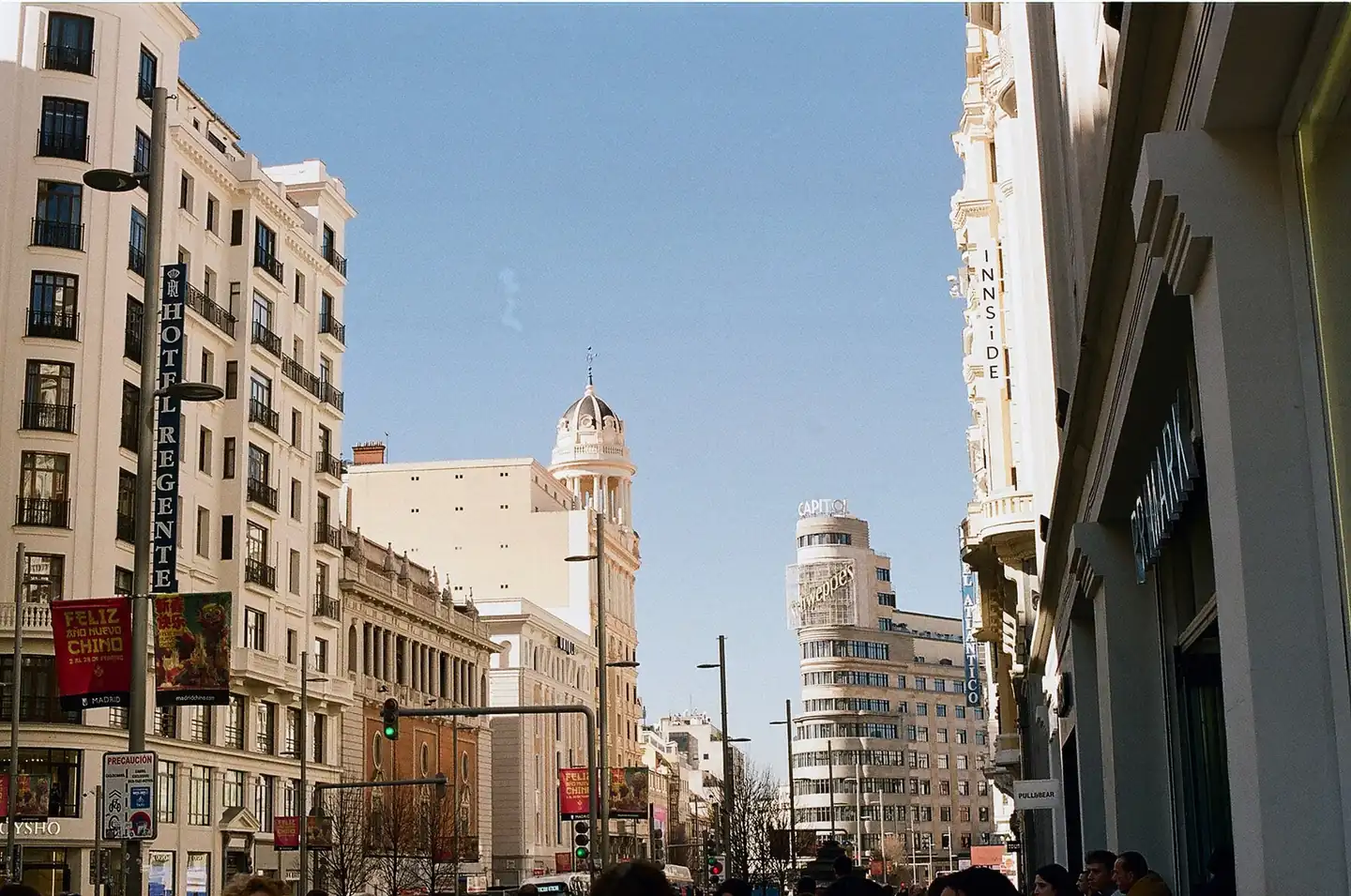
Madrid Women’s Race 2025 once again turned the center of the capital into a pink wave stretching over more than 6 kilometers, with the start on Paseo de la Castellana, passage through Gran Vía, and finish in Parque del Oeste. The route drew much of the edition’s interest for one clear reason: it combined emblematic avenues, fast stretches, and a finish with the atmosphere of a major popular event.
The official course was 6.4 kilometers and started on Sunday, May 11 at 9:00 a.m., with a route designed to spread tens of thousands of participants through the heart of Madrid. In addition to its sporting side, the event maintained its charitable profile and mass-participation character, with an organization that required traffic changes on several central routes during the morning.
An urban route with Gran Vía as the big new feature
The most talked-about point of the route was the inclusion of Gran Vía, a change that gave the race an even more recognizable image. The start was located on Paseo de la Castellana, at the height of Nuevos Ministerios, one of the widest and most functional spaces for absorbing a large volume of runners in the first few minutes.
From that start, the route headed down toward Plaza de Colón and continued to Cibeles, where the urban landscape narrows and becomes denser. The turn onto Calle de Alcalá opened the door to the most photogenic and symbolic stretch of the race, before entering Gran Vía, which for a few minutes became a pink corridor crossing the city’s nerve center.
The race continued toward Plaza de España and then linked up with Calle Princesa, a stretch that usually draws crowds and allows for a slightly steadier pace after the visual intensity of the center. The finish was set in Parque del Oeste, a friendlier and more open ending, with space for cheering and for the festive close of the day.
How the race was laid out across the city
Madrid’s route was not just a map; it worked as a choreography of streets, rhythms, and monumental spaces. Castellana, Colón, Cibeles, Alcalá, Gran Vía, Plaza de España, Princesa, and Parque del Oeste formed a sequence that condensed the city’s most recognizable postcard into a single morning. In events of this kind, the route is also a story: it explains the scale of the event and the way Madrid lends itself to popular athletics.
The fact that the route passed through Gran Vía was not just about visual notoriety. It also reinforced the idea of a race that wants to occupy public space with a massive, orderly, and highly recognizable image. In an event with so many participants, the choice of course is crucial for distributing flows, ensuring safety, and creating an experience that works both for runners and for those cheering from the sidewalk.
The official distance, 6.4 kilometers, places it in an accessible range for runners of different levels, although the size of the start and the atmosphere in the center mean that the real pace depends more on the density of the group than on the demands of the elevation profile. It is not a course with major climbs, but it is one of constant visual stimulation, with a succession of open avenues and areas where the pink mass sets the rhythm.
Start, finish, and the points that drew the most attention
Nuevos Ministerios once again served as the operational heart of the start. Choosing that area makes it easier to gather participants beforehand and partly avoids the bottleneck that a narrower starting point would create. There, the feeling of a major event is already present before the first meter: warm-up, photos, final bib adjustments, and that growing buzz that accompanies mass starts.
The finish in Parque del Oeste offered a useful contrast to the dense core of the route. After passing through Princesa, the ending opened up more space to cross the finish line without the pressure of major commercial and administrative arteries. In organizational terms, that ending helps the day feel more like a celebration than a simple finish. The park also provides room for music, socializing, and post-race services.
Between the two ends, the stretch through Cibeles and Alcalá concentrated much of the visual and media interest. This is no coincidence: these are points where the city recognizes itself and where the event’s imagery gains particular strength. Major popular races are not only run; they are also narrated through their settings, and in Madrid that script carries obvious weight.
Schedule, participation, and the nature of the event
The 9:00 a.m. start time fit the classic profile of the Women’s Race: an early hour, suitable for minimizing some of the heat impact and for making logistics easier in a city that begins moving on Sunday. The morning format also helps sustain the atmosphere of the gathering, with staggered arrivals of runners, families, and companions.
The organizers expected more than 30,000 women on Madrid’s streets, a figure that places the race among the largest popular events on the national calendar. In 2025, the event once again reinforced its social and charitable dimension, with part of the proceeds going to cancer research and projects related to women’s health.
In practice, that level of participation turns the route into a great human band several kilometers long. It is not just a pack: it is a broad flow, compact at the start and more breathable as gaps open up. For those who follow this kind of event, the participation figure matters as much as the route, because it affects times, sensations, and even the perception of the course itself.
The bib, the expo, and the children’s races were also part of the event
The Women’s Race is not limited to Sunday. Bib collection was scheduled in the days leading up to the race, with an expo-style space that usually serves as a prelude to the festive atmosphere. That setup beforehand is important because it organizes the collection of materials, concentrates practical information, and builds the sense of a major event before the clock starts.
There was also room for the so-called mini pink wave, the children’s activity that brings together boys and girls from 0 to 12 years old as part of the expo. This addition is not part of the main course, but it does complete the event’s image as a broad participation day, in which the adult race coexists with a more playful and family-friendly format.
In editorial terms, these elements help explain why the event carries so much weight in Madrid: it is not just an asphalt circuit, but an urban experience organized around running. The main route draws the spotlight, but the event expands around it with activities, activations, and a schedule that spans more than one day.
What changed compared with other editions in the capital
The addition of Gran Vía was the big difference in this edition compared with previous routes. In a city where popular routes often alternate between wide avenues and tighter passages, adding that axis brings visual power and also a symbolic nuance: the race goes straight into one of Spain’s most recognizable settings.
That change affected not only the aesthetics. It also forced a reorganization of how regular runners read the course, since they often pay less attention to the exact distance than to the sequence of turns, gentle inclines, and areas of greater crowding. The start on Castellana and the finish in Parque del Oeste remained a stable anchor, but the central stretch gained a different importance with the entry into Gran Vía.
Madrid, because of its layout and the scale of the race, is a city that allows this kind of adjustment without losing its identity. The Women’s Race thus keeps a recognizable base while also finding small changes that refresh its image year after year. The route is part of the appeal, not merely a technical detail.
Traffic restrictions and mobility during Sunday morning
The scale of the event required traffic to be cut or restricted in several central areas from early morning. Paseo de la Castellana, Plaza de Colón, Cibeles with Calle de Alcalá, Gran Vía, Plaza de España, Ventura Rodríguez-Argüelles, and Calle Princesa were among the stretches affected by the race and the associated logistical preparations.
In a city like Madrid, where Sunday also concentrates shopping, leisure, and occasional travel, these closures are not only felt by car. Public transport usually sees changes in routes or frequencies, which is why the practical recommendation is to check official Metro and EMT information before moving through the central area. The sporting route thus becomes a piece of urban mobility.
This aspect is not secondary. In major-format events, the route extends beyond the start line and the finish line; it affects access, crossings, parking, and travel times. Madrid hosted the race with the relative normality of a large city accustomed to living alongside mass events, but the impact on traffic was visible for much of the morning.
Why this route fits the event so well
Madrid’s Women’s Race needs a course that mixes openness, image, and control, and the 2025 route responded exactly to that. Castellana offers starting space; Colón and Cibeles bring monumentality; Alcalá and Gran Vía multiply the visual impact; Plaza de España and Princesa return the group to a more open area before a comfortable finish in the park. It is an urban design meant to work both as a race and as a showcase.
The choice also fits the event’s popular nature. This is not a race designed for pure timekeeping, but to bring people together, raise visibility, and mobilize. That is why the route matters so much: because it translates those goals into specific streets. Each avenue serves a different function, as if the city were acting at once as stage, loudspeaker, and container.
In that sense, Madrid 2025’s route left a clear image: a great pink column moving through some of the capital’s most emblematic spaces, with complex but recognizable logistics and a finish that reinforced the event’s festive tone. The route was, in itself, part of the message.
An event that turns the center into a sporting postcard
The most powerful popular races do more than fill streets; they change the way the city is seen for a few hours. Madrid Women’s Race 2025 turned the center into a large-scale sporting postcard, with a route that combined organizational usefulness with the visual force of Madrid’s major arteries. That combination explains much of its success.
The start on Castellana, the passage through Gran Vía, and the finish in Parque del Oeste drew a path that is easy to understand and very powerful for spectators. Between those two ends, the race passed through areas that summarize Madrid’s identity with almost cinematic clarity. The result was a route that was as functional as it was symbolic, well suited to a day marked by mass participation and a shared feeling of citywide event.
Madrid once again saw itself running. And on a course like this, that image is worth as much as the kilometers covered.



How to prevent thigh chafing: causes and real solutions

Women’s running windbreakers: seven jackets and how to choose

Do more workouts get rid of soreness? A guide for runners

Jaén Half Marathon 2026: Record 3,800 Runners Registered

Men’s short running tights: how to choose the right pair

World Triathlon confirms data breach involving medical data

Izan Edo targets podium at Miyazaki World Cup

María Pérez ranks ninth in World Athletics’ 2026 top ten

Dos Santos, Duplantis and Sawe: World Athlete of the Year finalists

San Silvestre Vallecana 2026: 42,000 places, prices and start times

 Races4 months ago
Valencia Half Marathon 2027: date and registration

 Races4 months ago
Valencia Marathon 2026: entry, ballot and course

 Reviews and Comparisons4 months ago
Asics Gel-Roadmiles 3 for men: review and current price

 Reviews and Comparisons4 months ago
Asics Gel Sonoma 8 Gore-Tex: complete analysis for trail and rain

 Sneakers4 months ago
Saucony Endorphin Pro 4: full review and verdict

 News5 months ago
Strava API 2026: what changes for clubs, challenges and runner apps?

 Reviews and Comparisons5 months ago
Nike Alphafly 3: opinions, sensations, and real key points

 Reviews and Comparisons4 months ago
Under Armour running shoes review 2025-2026: models and key features

 Sports Equipment4 months ago
Shoe sizes in cm: a clear guide to getting the right fit for your footwear

 Sneakers3 months ago
Skechers GO RUN Consistent 2.0 analysis: comfort and limits

 News5 months ago
Valencia Marathon 2026 route: key tips to train and run better

 Sneakers4 months ago
Adidas Adizero Boston 13 for men: review and verdict