Races
100×100 Half Empuriabrava 2026: complete triathlon guide
Empuriabrava brings together middle distance, sprint, and relays in a very fast triathlon, with key information, schedules, and prices.

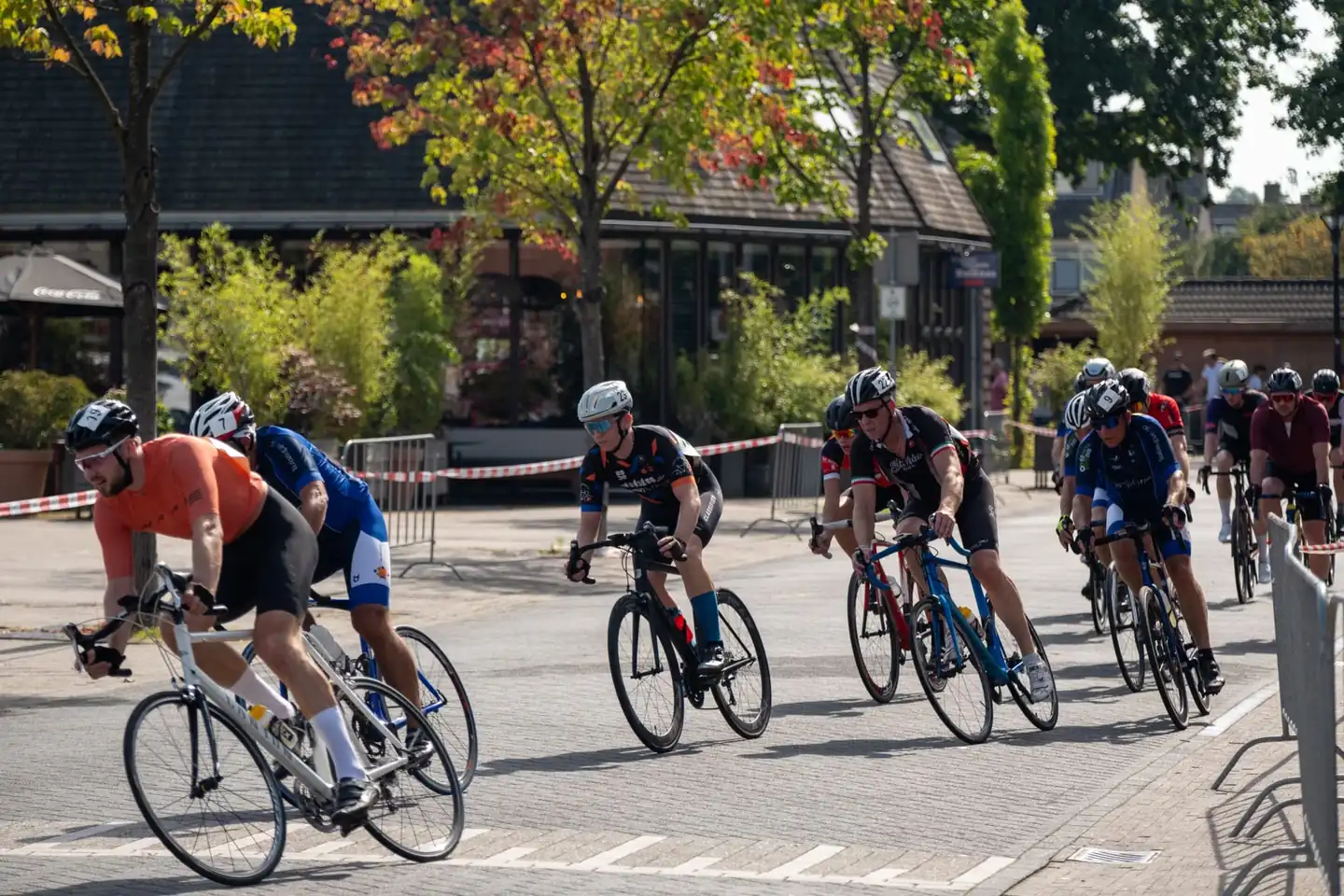
Empuriabrava is once again putting Spanish triathlon on the map with an event that combines speed, scenery, and logistics designed for racing by the sea. The 100×100 Half Empuriabrava brings together distances for very different profiles over the same weekend, from the sprint to middle distance, with a flat course, a coastal atmosphere, and a route that runs between the beach, the seafront promenade, and the natural surroundings of the Girona area.
The 2026 edition will take place on May 16 and 17 and keeps the character of a circuit that has made the absence of drafting, attention to the triathlete, and tourist settings its hallmarks. The middle-distance race adds up to 1.9 km of swimming, 90 km of cycling, and 21 km of running, but the event offering expands with shorter formats, turning the race into a long day of competition, pace control, and effort management.
A fast triathlon on the Costa Brava
Empuriabrava is not just any triathlon venue. Its geography, open to the sea and at the same time embraced by canals, natural areas, and urban sections, offers a recognizable and highly photogenic setting, but also an efficient one for racing. The course takes advantage of an almost flat profile, with very moderate elevation gains on the bike and a run marked by asphalt and firm paths along the Muga and the seafront promenade.
That terrain explains why so many participants see it as an opportunity to perform consistently, without the abrupt pace changes imposed by other, tougher courses. In practice, the circuit rewards those who know how to sustain effort, refine their bike position, and reach the final transition with legs still alive. In a race like this, the feeling is not of climbing a mountain, but of running on a ribbon stretched along the coast.
The surroundings also matter in the experience. Empuriabrava, in the municipality of Castelló d’Empúries, is known for its large residential marina and for a landscape closely linked to the Aiguamolls de l’Empordà natural park. That gives the event an unusual mix: sea, marshland, canals, wide streets, and low horizons. For the triathlete, that combination has sporting and visual value. For the spectator, it creates a competition that is easy to follow and has clear cheering spots.
The distances that structure the day
Middle distance is the main reference of the program, but not the only one. The 100×100 Half Empuriabrava offers several options to match the challenge to each athlete’s fitness and goal. The Half race includes 1.9 km of swimming, 90 km of cycling, and 21 km of running, while the Short format adds 750 meters of swimming, 60 km on the bike, and 10 km of running. The Olympic is set at 1.5 km in the water, 40 km by bike, and 10 km on foot, and the Sprint reduces the effort to 750 meters of swimming, 20 km of cycling, and 5 km of running.
The Aquabike removes the running segment and leaves the day at 1.9 km of swimming and 90 km of cycling, an option that usually attracts those who want to race hard without completing the run. In addition, there is a relay format in the middle-distance race, which broadens the event’s appeal and allows the workload to be split among several athletes. That variety is not just a commercial logic; it also makes the event function as a small showcase of paces, profiles, and expectations.
In the middle-distance race, the cycling is organized into three 30 km laps, with an advertised cumulative elevation gain of 276 meters. This is not a climbing course, but rather one of control and efficiency. The swim takes place in two 0.95 km laps, which fits the idea of a technical but not extreme race. The run, meanwhile, is completed over four 5.25 km laps, a format that makes it easy for spectators to follow and forces the athlete to maintain focus when fatigue is already biting.
There are also notable differences between distances in the schedules and cutoffs. In the sprint, for example, time control is shorter; in middle distance, by contrast, there is more room for management and it must be approached as a long sequence. This architecture of laps and cutoffs has a very concrete effect: anyone who goes out too hard usually pays for it before the final transition, because the course, though friendly, does not forgive tactical disorder.
Schedule, bib pickup, and start times for each format
The organization splits activities between Saturday and Sunday. On Saturday, May 16, 2026, part of the bib pickup and the logistics related to the Olympic are concentrated. Between 2:30 p.m. and 5:00 p.m., bib numbers and race bags are handed out for that distance, while from 6:00 p.m. to 7:45 p.m. bib pickup takes place for Half, Sprint, and Short. Also that Saturday, the Olympic starts and is managed, with its closing scheduled for 9:30 p.m.
Sunday, May 17, becomes the event’s main day. Early in the morning, the race bag and bib are handed out for Half and Short, with middle distance still very much present as the Seafront Promenade begins to fill with wetsuits, bikes, and equipment checks. The Short start is scheduled for 7:30 a.m., while Half, Aquabike, and relays begin at 7:45 a.m. The Sprint, meanwhile, closes the morning with a 12:30 p.m. start.
The mechanics of the boxes and check-in require attention, because the organization sets specific time windows for dropping off equipment and entering transition. In the Half, check-in opens from 6:00 a.m. to 7:15 a.m.; in the Sprint, box access is later, between 11:30 a.m. and 12:15 p.m. These are details that do not always make the headlines, but they determine the triathlon experience: arriving with time to spare, understanding the sequence, and not fighting the clock before the start.
Trophies are awarded on the Seafront Promenade, with prizes for overall and age-group standings. The race includes male and female categories, as well as age subcategories ranging from AG 16-24 to AG 65+. In a race like this, that structure is not a mere formality; it organizes the competition and gives visibility to athletes with very different profiles, from young first-timers to seasoned veterans.
Prices, ages, and limits worth keeping in mind
Registration does not have a single fee, but rather tiers that vary according to the purchase date and the chosen distance. For 2026, the observed reference places the Sprint at 58.75 euros plus 5 euros in handling fees in the most favorable tier, the Olympic at 79.75 euros plus 6 euros, the Short at 119.75 euros plus 6 euros, the Aquabike at 155.75 euros plus 6 euros, and the individual Half at 209.75 euros plus 6 euros. In the second pricing tier, those amounts rise significantly, reaching 64.75 euros plus 5 euros in Sprint, 89.75 euros plus 6 euros in Olympic, 129.75 euros plus 6 euros in Short, 180.75 euros plus 6 euros in Aquabike, and 254.75 euros plus 6 euros in individual Half.
The minimum age also changes depending on the distance. For the Short, Aquabike, and individual and relay Half, the reference is 18 years old. The Olympic accepts participants from age 16, and the Sprint from age 12. That scale clearly reflects the spirit of the event: not everything revolves around middle distance, but there is a clear hierarchy among formats, with different demands in endurance, experience, and equipment management.
Time cutoffs add another layer of realism. In the Sprint, the swim must be completed in 25 minutes, the bike in 45 minutes, and the run in 35 minutes. In the Olympic, the limits are 45 minutes in the water, 1 hour and 30 minutes on the bike, and 1 hour and 10 minutes on foot. The Short sets 30 minutes for the swim, 2 hours and 15 minutes for the bike, and 1 hour and 15 minutes for the run. The Aquabike allows 1 hour for swimming and 3 hours and 30 minutes for cycling. In the Half, the margins extend to 1 hour in the water, 3 hours and 30 minutes on the bike, and 2 hours and 30 minutes in the run segment.
Those cutoffs are not just bureaucratic formality. In triathlon, they set the pace of the day, define the relationship between goal and reality, and force athletes to assess the race honestly. Someone who arrives with an overly aggressive plan can quickly run into the limits of effort management; someone who understands those limits, by contrast, usually moves more intelligently between ambition and conservation.
Services that make the day more comfortable
The event includes a package of services designed for participants and for everything surrounding a triathlon of this size. There is aid station support with water, non-alcoholic drinks, isotonic drinks, energy bars, fruit, nuts, and sweets. Private security is also provided in the box area, chip timing, medical support on land, and physiotherapy service at the finish line, provided by the EUSES university center team. All of this shapes a race that takes care of both performance and immediate recovery.
The race bag includes the bib number, gym bag, finisher T-shirt, windbreaker in the Short, Aquabike, and Half distances, as well as a cap and promotional products. These items, beyond their material value, help define the tone of the event. The finisher T-shirt and the medal awarded to those who cross the finish line function as a physical record of a long and demanding day, almost like a mark of salt on the skin after a day by the coast.
Safety has a visible place in the organization. Access control to the box area, baggage security, and the presence of a medical team reduce the noise around the competition. In middle- and long-distance races, these details matter because the athlete spends many hours outside their comfort zone. A well-run event does not just measure times; it also reduces friction.
Physiotherapy at the finish line, moreover, adds an interesting nuance. In a 113 km total race, the finish is not a clean and silent ending, but an intense physical transition. Having an immediate care point helps frame the experience within a basic care logic, something especially relevant for those who arrive carrying many kilometers and hours of accumulated effort.
How to race on a no-drafting circuit
The philosophy of the 100×100 Half Empuriabrava is based on no drafting, a rule that prevents taking advantage of another cyclist’s slipstream to reduce aerodynamic resistance. That decision changes the nature of the bike leg and forces a more individual form of racing. In events like this, the bike becomes more than just a passage between two segments and turns into an exercise in posture, cadence, fueling, and a cool head.
On such a flat venue, no drafting further reinforces the importance of one’s own pace. With no major climbs to hide on and no long descents to recover for free, effort management resembles a metronome: constant, almost mechanical, but with enough tension to avoid losing even an inch of margin. That is one of Empuriabrava’s sporting attractions. It does not reward disorderly impulse; it rewards discipline.
The run completes the picture with a mixed course, asphalt and dirt, between the promenade and the banks of the Muga. The change of surface does not turn the race into a trail event or a technical circuit, but it does add a different texture to pure asphalt. The legs feel the ground, the stride becomes a little more deliberate, and the midday heat, if present, weighs more on open and exposed sections.
It is a setup that favors athletes capable of running economically, without excessive cadence or surges off the bike. In triathlon, the foot hitting the ground after 90 km on the bike is nothing like a fresh run. That is why Empuriabrava’s middle distance usually demands more than endurance: it calls for control, patience, and a fine reading of one’s own fatigue.
Services, rules, and the experience around the race
The importance of the race does not end at the finish line. The event is accompanied by triathlete guides, start lists, results, photos, and an official information space, an ecosystem that is now common in major competitions, but here is integrated with a very recognizable identity. The use of official communication channels and the publication of results and lists provide transparency and allow the race to be followed from several angles.
The experience also extends into the tourist surroundings. Empuriabrava and its immediate area make it possible to combine competition with the coastal and wetland landscape, something that has been part of the circuit’s appeal since its earliest promotional arguments. That mix of sport and territory is not decorative: it helps explain why the event has so much traction among those looking for a fast race, but also for a destination with character.
On the map of triathlon events in Spain, this race occupies a unique space. It does not aim to stand out through extreme toughness, but rather through balance between course, organization, and context. The premier distance, middle distance, retains the prestige of the middle Ironman, but the full program allows the day to be broader than a single finish line. There are escape routes into shorter formats, relay possibilities, and options without a run segment. That broadens participation without diluting the event’s identity.
The presence of sponsors, partners, and institutions gives the race an organizational base that extends beyond the appointed day. In races like this, infrastructure does not happen by accident: it shows in the pace changes of the program, in the layout of the boxes, and in logistics that must absorb hundreds of bikes, transitions, and athletes in just a few hours. Empuriabrava, by calendar and format, has earned its place as a fast, well-oiled race.
Empuriabrava and the value of a well-shaped middle distance
Interest in this race depends on more than its distances. It also depends on what it represents within the calendar: a May event, with normally pleasant weather, a coast that invites running by the sea, and a course that offers real opportunities to chase a fast time. The perception of speed is not born from a slogan, but from the combination of flat terrain, wide straightaways, and transitions that are relatively comfortable for those who arrive with their gear in order.
That context helps explain why middle distance continues to be such a magnet. The Half preserves the epic feel of a long day, but places it in a less harsh environment than one might imagine when thinking of triathlon. Empuriabrava puts in front of the athlete a serious challenge, though without the ruggedness of other, tougher profiles. It is a triathlon decided as much in the legs as in the head.
The image the race leaves behind is that of a clean, fast, and very Mediterranean circuit. Salt water, seafront promenade, canals, asphalt, compact dirt, and a final run stretched out between fatigue and determination. In the end, it leaves behind a race that has managed to build its own identity within Spanish triathlon: competitive, scenic, and very attentive to those seeking a technically clear middle distance that is demanding in execution.
That is why Empuriabrava continues to draw attention on the calendar. It is not just a beautiful venue or just a fast race. It is an event that links scenery and performance without breaking the balance, and in triathlon that combination is worth almost as much as the stopwatch.



How to prevent thigh chafing: causes and real solutions

Women’s running windbreakers: seven jackets and how to choose

Do more workouts get rid of soreness? A guide for runners

Jaén Half Marathon 2026: Record 3,800 Runners Registered

Men’s short running tights: how to choose the right pair

World Triathlon confirms data breach involving medical data

Izan Edo targets podium at Miyazaki World Cup

María Pérez ranks ninth in World Athletics’ 2026 top ten

Dos Santos, Duplantis and Sawe: World Athlete of the Year finalists

San Silvestre Vallecana 2026: 42,000 places, prices and start times

 Races3 months ago
Valencia Half Marathon 2027: date and registration

 Races3 months ago
Valencia Marathon 2026: entry, ballot and course

 Reviews and Comparisons4 months ago
Asics Gel-Roadmiles 3 for men: review and current price

 Reviews and Comparisons4 months ago
Asics Gel Sonoma 8 Gore-Tex: complete analysis for trail and rain

 Sneakers3 months ago
Saucony Endorphin Pro 4: full review and verdict

 News5 months ago
Strava API 2026: what changes for clubs, challenges and runner apps?

 Reviews and Comparisons5 months ago
Nike Alphafly 3: opinions, sensations, and real key points

 Reviews and Comparisons4 months ago
Under Armour running shoes review 2025-2026: models and key features

 Sports Equipment4 months ago
Shoe sizes in cm: a clear guide to getting the right fit for your footwear

 Sneakers3 months ago
Skechers GO RUN Consistent 2.0 analysis: comfort and limits

 News5 months ago
Valencia Marathon 2026 route: key tips to train and run better

 Sneakers4 months ago
Adidas Adizero Boston 13 for men: review and verdict