Races
Alaska Salmon Runs Marathon: date, distances and route
Cordova brings together a marathon, half marathon, 10K, 5K, and a mile in a setting of rivers, glaciers, and roads almost at sea level.

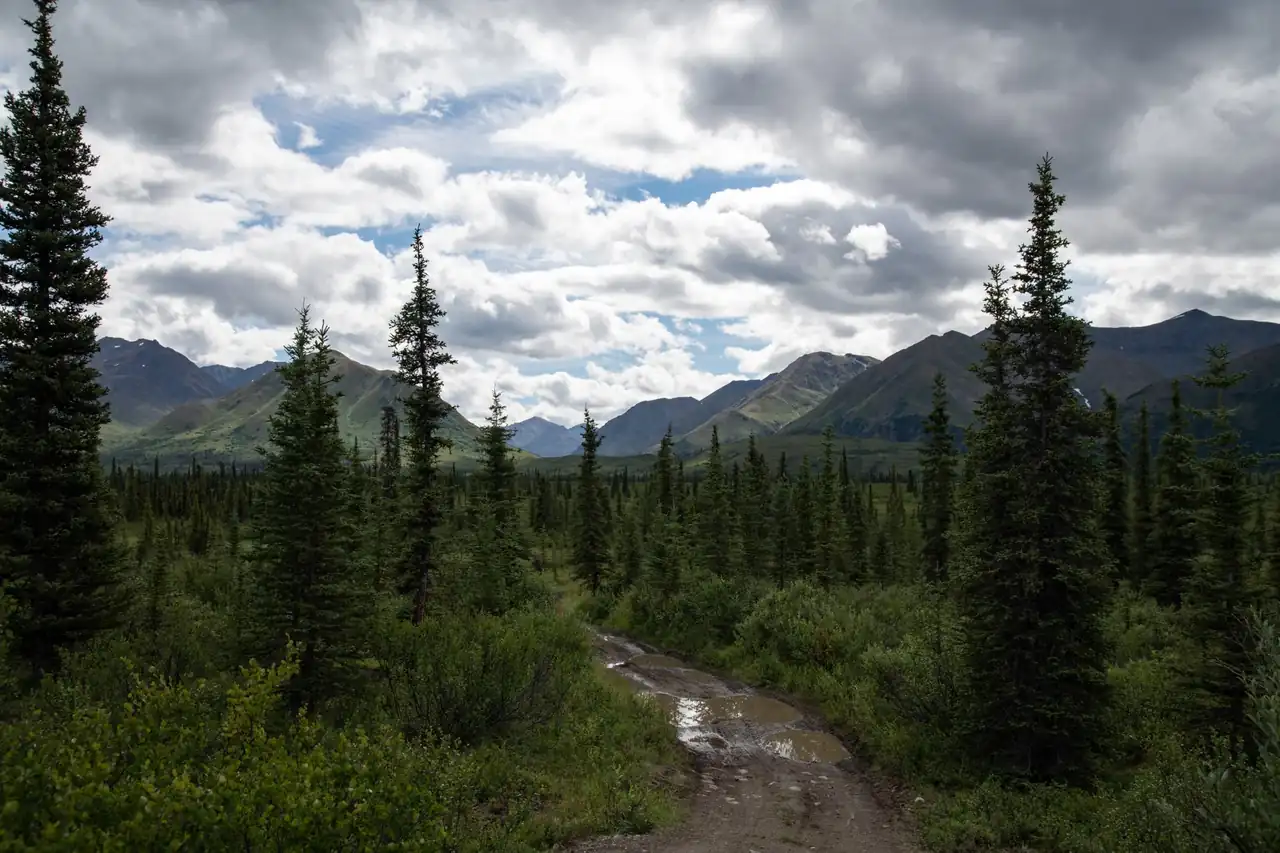
The Alaska Salmon Runs Marathon will be held on Saturday, July 18, 2026, in Cordova, Alaska, with a program that combines a marathon, half marathon, 10K, 5K, and a fun mile run. The event is set on a very flat, sea-level course and in a setting that rarely leaves anyone indifferent: the Copper River delta, with mountains, glaciers, and waterways in blue tones that seem straight out of a Nordic postcard.
The main race starts at 7:00 in the morning, while the half marathon starts at 9:30, the 10K at 10:30, the 5K at 10:45, and the one-mile fun run at 11:15, always Alaska time. The organizers set prices of $70 for the marathon and half marathon, and $25 for the 10K, 5K, and mile, with different fee changes and registration deadlines depending on the distance.
A race born alongside the salmon festival
The identity of this event is tied to the Salmon Jam weekend festival, a weekend that blends music, activities for children and families, and celebrations around salmon, the central element of local life. This is not a mass marathon or an event designed for urban noise; its logic is different. In Cordova, the bib shares space with a territory where the river, fishing, and the landscape matter as much as the clock.
That context explains why the race is presented as more of a destination experience than a simple sporting event. Those who start enter a geography that is unusual for the average runner: a corner of southeastern Alaska where nature sets the pace and distance is measured, almost literally, between gravel roads, paved stretches, and rapidly changing light. The result is a very distinctive race backdrop, the kind that turns a results sheet into a travel story.
The name of each race also pays tribute to salmon, with references to species such as King Salmon, Sockeye, Coho, Humpy, and Smolt. This is not just a decorative detail. It is part of the local story and of the way the race is integrated into the Cordova community, a fishing town that finds in the event a sporting extension of its cultural and social calendar.
Dates, times, and prices worth keeping clear
The 2026 edition is set for July 18, a Saturday in the middle of the Arctic summer, which fits Alaska’s seasonal profile: long days, moderate temperatures, and a weather window that may be kind, though never entirely predictable. The main race, the King Salmon Marathon, starts at 7:00; the Sockeye Half Marathon starts at 9:30; the Coho 10K at 10:30; the Humpy 5K at 10:45; and the Smolt 1 Mile Fun Run/Walk at 11:15.
In terms of fees, the marathon and half marathon are listed at $70, while the 10K, 5K, and mile cost $25. Registration also comes with different deadlines: the price for the marathon and half marathon increases after July 10 at 5:00 p.m., while the shorter distances become more expensive starting July 15 at the same time. The fun mile registration closes on July 15 at 5:00 p.m., a useful detail if you want to make sure you do not miss out on a day that mixes competition and open participation.
In practice, the pricing and schedule structure creates a staggered event, designed to accommodate different types of runners. The early marathon start makes it possible to take advantage of the coolest part of the day, while the 10K, 5K, and mile take place later, when the atmosphere has already filled with participants, family members, and volunteers. That choreography gives the day a festival rhythm, not just that of a simple race with a start and finish time.
What the course in Cordova is like
The route runs through the Copper River delta, a landscape marked by glacier-formed mountains, lakes, nearby salt water, and wild-edge vegetation. The official description speaks of a largely flat course, and that is no small detail: being at sea level makes the race a fast option for those seeking a smooth running feel, though the weather, surface, and logistics add a layer of complexity very much characteristic of Alaska.
The stretches combine gravel roads and pavement, with a return to a historic route: the old Copper River and Northwestern Railroad roadbed, which once connected the Kennicott copper mines. That railroad legacy adds an almost archaeological dimension to the course. You are not running only through a landscape; you are also running along a scar from the territory’s industrial history, now absorbed by silence, vegetation, and the runners’ footsteps.
For the marathon and half marathon, the organizers transport athletes by shuttle buses from the race headquarters to the start line. According to the available information, the half marathon starts roughly from the midpoint of the full course, while the marathon starts at the Mile 27 Bridge. The fun mile operates separately, with a more accessible format and a clearly playful component, designed for families and companions.
The combination of surface, topography, and climate makes the course more than just a succession of kilometers. The routes seem made of two layers: on one side, the apparent neutrality of a fast profile; on the other, the constant presence of raw nature. In Alaska, asphalt does not erase the landscape, it only gives it a lane to run on.
The distances and profile of each race
The full marathon is the anchor of the program, but not the only attraction. The Sockeye Half Marathon carries much of the symbolic and sporting weight of the day for many participants, and its start at the midpoint of the full course provides a compact experience, with less logistical demand and an equally scenic setting. In both cases, the low elevation and relative flatness of the route favor steady paces if the body responds and the day cooperates.
The Coho 10K and Humpy 5K broaden the range toward runners looking for a shorter but no less representative experience of the place. These are more manageable distances, with the same backdrop of the bay, delta, and coastal landscape. The fun mile, meanwhile, opens the door to walkers and first-timers, an important presence in a race that does not want to confine itself to the hard circuit of elite performance.
The full program is better understood as a family of races rather than a single competition. Each distance translates the same territory into a different effort. The marathon demands patience; the half, continuity; the 10K, control; the 5K, intensity; and the mile, participation. Together, the event builds a kind of human map of effort, where no one is running exactly the same story.
What is known about the atmosphere and race services
Crossing the finish line does not end at the timing strip. The organizers announce a post-race lunch featuring grilled salmon, side dishes, dessert, and random prizes, as well as the announcement of winners and the presentation of medals to the top three men and women in each distance at the Pioneer Igloo on First Street. This mix of results and communal food fits Cordova’s spirit: a celebration in which the end of the race feels more like a neighborhood gathering than a cold ceremony.
The lunch is open to everyone, provided they bring a potluck dish to share for six to eight people. That seemingly minor detail says a lot about the kind of event this is. There is no rigid barrier between runner and companion; the day opens naturally to its social surroundings, more like a small-town festival than a major championship.
There is also an important practical component: the race is organized around a central headquarters from which transport to the start line and part of the day’s logistics are managed. For participants, this reduces dispersion and concentrates the experience. For readers looking for useful information, it is worth emphasizing that the race does not unfold as disconnected start and finish points, but as a circuit organized around the logistics of a small town that knows how to accommodate a temporary flow of visitors.
Why this marathon appears on destination calendars
The combination of remote scenery, fast profile, and summer timing places this event in a very specific category: races that attract participants through the total experience. Cordova does not compete with major cities or with mass marathons. Its value lies elsewhere, in a type of sporting getaway where runners look at both the watch and the horizon.
Interest grows because the race takes place in a community closely tied to the sea and salmon, with visitors returning year after year and a reputation for understated hospitality. The reference website also highlights international participation that includes runners from Japan, Australia, Brazil, Norway, and various U.S. states. That suggests a race profile that acts as a magnet for those seeking something different within the summer marathon map.
At its core, the race sums up a clear trend in destination running: it is no longer enough to run many kilometers. Landscape, local story, and the feeling of having been somewhere unmistakable now matter more and more. Alaska provides exactly that. Not a backdrop, but a geography with character, where the runner stops being a sidewalk tourist and becomes one more part of Cordova’s summer.
The sporting reading of an event shaped by its territory
From a competitive standpoint, the Cordova marathon has a recognizable personality. The limited elevation gain and proximity to sea level may support solid times, but the environment requires variables that go unnoticed in other settings. Wind, humidity, surface texture, and the distance across which some sections of the landscape are faced all influence the race as much as the pacing plan does.
That explains why the event attracts such a varied range of runners, from those chasing a personal benchmark to those prioritizing adventure. The race is not sold as a circuit of huge crowds or as an elite showcase; its strength lies in the clarity of the format and the power of the place. That combination often leaves more vivid memories than many more famous races, precisely because the setting does not merely accompany the event, but actively shapes it.
There is also a symbolic dimension that is hard to ignore. Running beside an ecosystem as sensitive and productive as the salmon one makes the day about more than physical effort. The race engages with fishing, railroad memory, community culture, and Alaska’s extreme summer. Not every marathon can say it crosses, at the same time, a natural postcard, a historic route, and a local festival.
A small calendar with the ambition to become a lasting memory
The Alaska Salmon Runs Marathon and the rest of the program distances offer a very clearly defined experience: a specific date, clear prices, staggered start times, and a course that blends athletic simplicity with enormous scenic personality. For those searching for destination races, the value of the event is not only in completing 42.195 kilometers, but in the feeling of having run within a very recognizable local story.
The 2026 edition arrives with a structure that makes participation possible at several levels and with a festive finish that includes food, prizes, and community time. On a map crowded with similar events, Cordova retains something increasingly rare: the impression that the place is not a race backdrop, but the reason the race exists. That is, probably, its greatest appeal and the key to why it continues to draw attention among those looking for more than a medal and an official time.



How to prevent thigh chafing: causes and real solutions

Women’s running windbreakers: seven jackets and how to choose

Do more workouts get rid of soreness? A guide for runners

Jaén Half Marathon 2026: Record 3,800 Runners Registered

Men’s short running tights: how to choose the right pair

World Triathlon confirms data breach involving medical data

Izan Edo targets podium at Miyazaki World Cup

María Pérez ranks ninth in World Athletics’ 2026 top ten

Dos Santos, Duplantis and Sawe: World Athlete of the Year finalists

San Silvestre Vallecana 2026: 42,000 places, prices and start times

 Races3 months ago
Valencia Half Marathon 2027: date and registration

 Races3 months ago
Valencia Marathon 2026: entry, ballot and course

 Reviews and Comparisons4 months ago
Asics Gel-Roadmiles 3 for men: review and current price

 Reviews and Comparisons4 months ago
Asics Gel Sonoma 8 Gore-Tex: complete analysis for trail and rain

 Sneakers3 months ago
Saucony Endorphin Pro 4: full review and verdict

 News5 months ago
Strava API 2026: what changes for clubs, challenges and runner apps?

 Reviews and Comparisons5 months ago
Nike Alphafly 3: opinions, sensations, and real key points

 Reviews and Comparisons4 months ago
Under Armour running shoes review 2025-2026: models and key features

 Sports Equipment4 months ago
Shoe sizes in cm: a clear guide to getting the right fit for your footwear

 Sneakers3 months ago
Skechers GO RUN Consistent 2.0 analysis: comfort and limits

 News5 months ago
Valencia Marathon 2026 route: key tips to train and run better

 Sneakers4 months ago
Adidas Adizero Boston 13 for men: review and verdict