Races
Alcoy Half Marathon Unión Alcoyana Seguros 2026
Alcoy brings together a half marathon, 10K and 6 km on an urban course with atmosphere, heritage and full services.

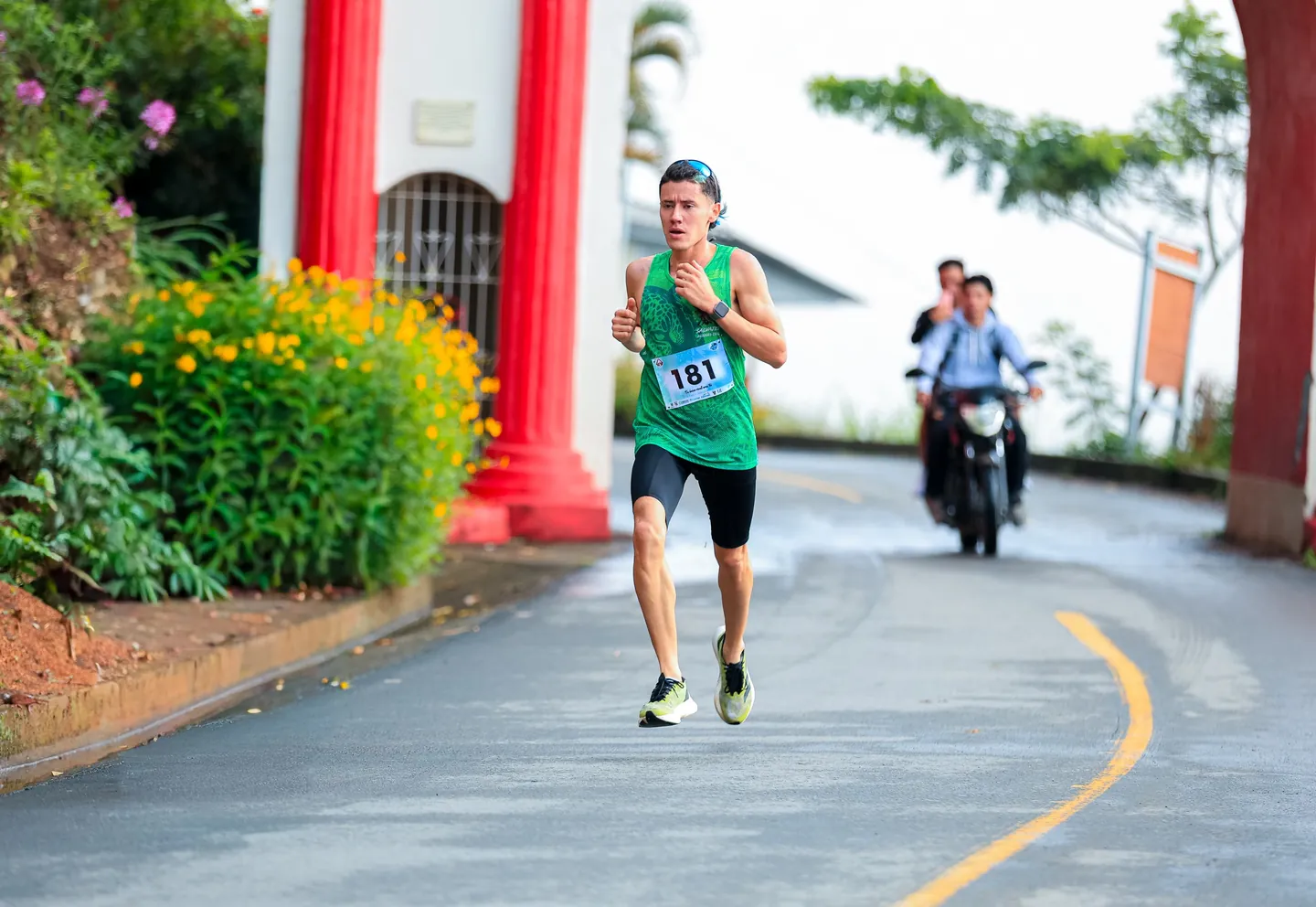
Imagen: CRISTIAN CAMILO ESTRADA / Pexels
The Alcoy Half Marathon Unión Alcoyana Seguros has established itself as an urban event with its own identity within the Valencian calendar: a route that runs through the most recognizable streets of Alcoy, adds several distances, and blends sport, heritage, and neighborhood atmosphere into a single morning of competition.
The 2026 edition is scheduled for December 15 and keeps the format that has given the race its personality: a morning start, a children’s race beforehand, and a menu of options that does not stop at 21.1 kilometers, but also opens the door to 10 kilometers, 6 kilometers, and other modalities designed for different participant profiles.
An urban race with an Alcoyan seal
Alcoy cannot be understood without its bridges, and the race takes advantage of precisely that very distinctive urban landscape to build an experience that goes beyond the mere stopwatch. The route runs through highly recognizable parts of the city center, passing through squares, avenues, and historic spots that turn each stretch into a moving postcard. This is not a peripheral circuit or an anonymous lap around the city: the city center itself takes the lead.
The organization is handled by the Club Atletisme Alcoi, a local benchmark that has kept the format going for more than a dozen editions. That continuity explains much of the race’s appeal: the event has been fine-tuning a practical structure, designed to coexist with ambitious runners, relay teams, walkers, Nordic walking participants, and children’s categories. In practice, the day works like a small athletic city festival.
The commercial surname of the race is not just decoration. The link with Unión Alcoyana Seguros helps identify a race rooted in the local fabric, but the sporting value lies in the course and its mixed format. In an increasingly crowded calendar, Alcoy preserves that useful rarity: a race that does not try to look like all the others, but instead highlights its relationship with the city.
Official distances and participation profiles
The main distance is the half marathon, but the race broadens the range with a proposal that is especially practical for those looking for different options within the same event. The main circuit is measured at 10,548 meters and is completed twice to reach the official 21.0975 kilometers. Alongside it appear the 10K and the 6-kilometer walking route, as well as modalities such as relays, Nordic walking, and micro marathon, according to the information provided in the available references.
The structure is designed with urban logic. The 10K and the half marathon share the same base route, while the walking modality uses the first and last sections of the circuit to avoid interfering with the faster runners. That practical separation, seemingly simple, is one of the keys to the race: it allows real coexistence between very different paces without turning the start into a bottleneck.
The verified length of the circuit also adds sporting credibility. In an environment where many urban races work with approximate routes, Alcoy stands out for offering a concrete reference distance, validated by GPS in the information consulted. For the runner, that precision matters more than it may seem: it changes the way effort is approached, the lap pace, and the reading of each kilometer.
The route: bridges, squares, and stretches with history
The route runs through some of the most representative streets and points of Alcoy. Among the places mentioned are the old town, Plaza de España, Plaza de Dins, Plaza de Ferrandiz i Carbonell, El Parterre, País Valencià, and several emblematic bridges such as María Cristina, Cervantes, San Jorge, and Petxina. The sequence of names already sketches the character of the route: an urban map with relief, identity, and an architectural backdrop that accompanies every step.
One of the most repeated features by the organization is that the circuit is designed around the city and not as an out-and-back toward the outskirts. That changes the runner’s perception. The race feels more enclosed, more alive, more connected to its surroundings. The crowd is better distributed, the visual references repeat with purpose, and the event gains an almost cinematic texture, with gentle climbs, recognizable straightaways, and bridge crossings that break the monotony.
The elevation gain should not be overlooked either. In the half marathon, there is an approximate accumulated total of 130 meters, a moderate figure but enough to remind you that this is not a completely flat circuit. That nuance affects pace, especially for those chasing a personal best. The race does not punish excessively, but it does require effort management and the ability to hold pace without relying entirely on any supposed ease of the route.
Services, atmosphere, and race logistics
The race presents itself as a very complete event in logistical terms. The available information mentions a finisher medal, runner’s bag, T-shirt, single-use timing chip, photography, massage, bag drop, aid stations, medical assistance, showers, toilets, changing rooms, and accident insurance. That package not only increases participant comfort; it also shows an organization that thinks of the runner as a user of a long day, not just as an entrant who crosses a finish line.
The festive dimension adds another layer. The circuit features 13 cheering points, with music and dancing spread along the route. That sound and visual presence works as emotional fuel for those who are running low on energy and also as a distinctive feature of the event. Instead of a silent urban backdrop, Alcoy offers an inner road with its own soundtrack, a kind of rhythmic murmur that keeps the pace moving.
The main start is located at Avenida Juan Gil Albert, 5, and the finish is in the same area. That continuity simplifies logistics, makes it easier for family members to arrive, and reduces the spread of flows on a morning when different races are taking place at the same time. For runners, the detail matters because it concentrates activity in a well-defined area that is easy to read within the city.
Calendar, bib pickup, and weekend rhythm
The 2026 event falls on Tuesday, December 15, a detail that shapes its place in the calendar and sets it apart from other traditionally Sunday races. The reference information also places the race in the morning, with the children’s event taking place beforehand. That setup allows the event to unfold with relative calm, with room for bib pickup and the staggered arrival of participants.
The consulted documentation includes specific times for collecting the bib or race pack on the previous days and on Sunday morning itself. The Centro Comercial Alzamora is mentioned as the pickup point on Friday and Saturday, and the Complejo Deportivo Eduardo Latorre during Sunday morning. This distribution, common in urban competitions of a certain size, avoids excessive queues on race day and improves the overall experience.
The race also sets a registration deadline noted in the reference as November 31 at 23:59, a detail that should be read with caution because of the obvious inconsistency in the month, although it does serve to show that the organization is working with an early registration cutoff. In any case, the usual practice in this type of event is that availability of places and pickup deadlines are conditioned by the internal planning of the race.
Taking part as a runner, walker, or relay team
The diversity of modalities is one of the defining features of the race. It is not limited to the experienced runner looking for a demanding time; it also includes people who want to walk, relay teams, Nordic walking participants, and children. That mix turns the day into something broader than pure racing, with profiles crossing paths without necessarily competing for the same goal.
The format is especially interesting for those who value events with city atmosphere and continuous crowd support. The fact of doing several laps of the same circuit in the half marathon has two readings: on the one hand, it allows you to get to know the route better and manage effort; on the other, it multiplies the chances of passing through areas with animation and support. What might feel repetitive in a linear race becomes, in Alcoy, a way of seeing the city again in a different light.
There is also a tactical component. A two-lap course invites better planning of pace changes, aid stations, and the relationship between effort and reward. The distance runner appreciates this kind of circuit because it offers clear data and repeated references; the more recreational participant, on the other hand, finds a manageable distance and an environment that does not push them into the coldness of a large mass event.
The weight of the surroundings and local identity
Alcoy has a geography that makes itself felt. The city, nestled among bridges, moderate slopes, and a city center full of personality, adds value that other more uniform races cannot match. The race benefits from that topography without falling into the trap of an extreme course. It is a city that accompanies, not sabotages; that forces you to manage your strength, but not to survive it.
That is why the race also works as a showcase for the municipality itself. Passing through the historic center, the most visible squares, and the most famous bridges turns the half marathon into a sporting route with cultural meaning. Local spectators recognize their city, and visitors get a fairly clear synthesis of what makes Alcoy unique: its relief, its urban layout, and its way of organizing life around its streets.
That link between sport and territory explains why the race keeps its appeal year after year. It does not compete only on times or participation; it competes on narrative. And in Alcoy the narrative is clear: an urban race, compact, with its own personality and a balanced mix of athletic ambition and popular closeness.
What to look at before taking the start
The December weather in Alcoy usually works in the runner’s favor. The reference consulted places it in a cool and dry setting, with an average high temperature of around 15 degrees and a low close to 6, as well as average rainfall of 50 millimeters. For runners, that translates into a generally pleasant morning, with less thermal stress than in warmer months and a feeling of clean air that favors sustained paces.
It is also worth reading the race realistically. The accumulated elevation, the two laps, and the coexistence with other modalities mean that the race is not just a simple succession of flat kilometers. The key is in the management: start cautiously, accept the rhythm of the circuit, and understand that crowd support and animation weigh as much as the stopwatch in certain phases of the route.
The available information leaves a fairly clear picture: the Alcoy Half Marathon Unión Alcoyana Seguros does not aim to dazzle with empty grandiosity, but rather to offer a well-built urban experience, very local and at the same time open to different participant profiles. That is where its strength lies: in sustaining, year after year, a race that combines city, history, services, and atmosphere without losing its human scale.
A date that looks at the city as much as the clock
The Alcoy race is designed to run, walk, and look around. That dual condition, sporting and urban, explains why it continues to hold its own place in the calendar. It is not just a half marathon; it is a way of moving through Alcoy from the inside, with the pulse of the asphalt, the echo of the bridges, and the constant presence of a city that recognizes itself in its streets.
In a landscape where many races seem interchangeable, Alcoy keeps a hard-to-copy advantage: it has a way of running that belongs to its geography. The runner arrives for the bib, but stays for the feeling of crossing a place with character, where every bridge, every square, and every lively stretch are part of the same scene. And that scene, precisely, is what gives the race its meaning.
You may also like: Alcácer Half Marathon 2026: date, start and route and Media Maratón Unión Alcoyana Seguros 2026: date and route.
Where to stay in Alcoy
Hotels available 13–16 December 2026.
Affiliate links: if you book through this map we earn a commission, at no extra cost to you.



How to prevent thigh chafing: causes and real solutions

Women’s running windbreakers: seven jackets and how to choose

Do more workouts get rid of soreness? A guide for runners

Jaén Half Marathon 2026: Record 3,800 Runners Registered

Men’s short running tights: how to choose the right pair

World Triathlon confirms data breach involving medical data

Izan Edo targets podium at Miyazaki World Cup

María Pérez ranks ninth in World Athletics’ 2026 top ten

Dos Santos, Duplantis and Sawe: World Athlete of the Year finalists

San Silvestre Vallecana 2026: 42,000 places, prices and start times

 Races3 months ago
Valencia Half Marathon 2027: date and registration

 Races3 months ago
Valencia Marathon 2026: entry, ballot and course

 Reviews and Comparisons4 months ago
Asics Gel-Roadmiles 3 for men: review and current price

 Reviews and Comparisons4 months ago
Asics Gel Sonoma 8 Gore-Tex: complete analysis for trail and rain

 Sneakers3 months ago
Saucony Endorphin Pro 4: full review and verdict

 News5 months ago
Strava API 2026: what changes for clubs, challenges and runner apps?

 Reviews and Comparisons5 months ago
Nike Alphafly 3: opinions, sensations, and real key points

 Reviews and Comparisons4 months ago
Under Armour running shoes review 2025-2026: models and key features

 Sports Equipment4 months ago
Shoe sizes in cm: a clear guide to getting the right fit for your footwear

 Sneakers3 months ago
Skechers GO RUN Consistent 2.0 analysis: comfort and limits

 News5 months ago
Valencia Marathon 2026 route: key tips to train and run better

 Sneakers4 months ago
Adidas Adizero Boston 13 for men: review and verdict