Races
Appletree Marathon 2026: date, distances, and route
Vancouver hosts a quick and scenic race weekend with a marathon, half marathon, and 5K along the Columbia River.

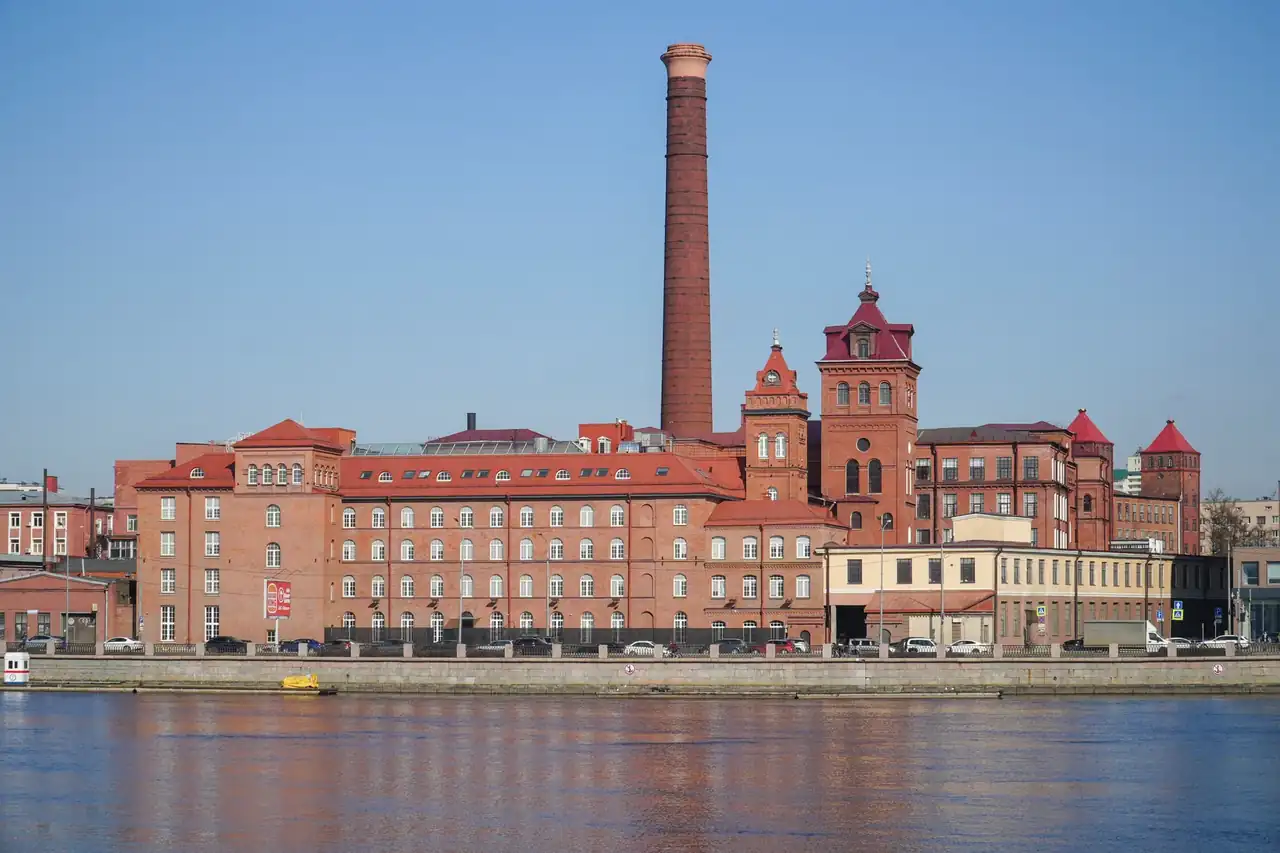
The Appletree Marathon returns to Vancouver, Washington, with a proposal that blends speed, urban scenery, and local history in a single route. The 2026 edition will be held between August 29 and August 30, with both in-person and virtual events, and with a course that has earned a reputation among those looking for a fast circuit for the marathon distance or for the half marathon.
The race is built around a very specific idea: running through recognizable streets and landmarks of the city, from Officer’s Row to Fort Vancouver, passing through the Army Barracks, Pearson Field, and the Old Apple Tree, with the Columbia River as the visual backdrop. It is an event designed to add miles without giving up the surroundings, something that sets it apart from marathons that are closed in on themselves and makes it feel more like an athletic postcard of the U.S. Northwest coast.
A race marked by speed and scenery
The course is mostly flat, with a couple of short climbs, and that combination explains much of its appeal. In a calendar saturated with demanding marathons, this route offers a different reading: less elevation gain, more rhythm continuity, and a sense of a race where the ground helps rather than punishes. For many runners, that is enough to place it on the list of options when the goal is to post a strong time.
The organizers describe the race as a fast, scenic course that is closely tied to the history of the area. That is not a marketing exaggeration. Vancouver concentrates distinctive heritage spaces, and the route takes advantage of that density to create an experience that alternates wide avenues, tree-lined areas, and points of interest that break up the usual monotony of an urban race. The result is a marathon with its own personality, almost a guided tour in running shoes.
The setting also affects how the effort feels. The end of August in that area usually brings moderate temperatures, with historical averages around 17 degrees Celsius, highs near 24 degrees, and lows around 11 degrees. That does not guarantee a perfect morning, but it does provide a reasonable window to run with less heat stress than in other late-summer North American races.
Dates, times, and the 2026 format
The 2026 edition is scheduled for Saturday, August 29, and Sunday, August 30. The available information places the in-person start between 6:00 p.m. and 8:00 a.m. Pacific Time, although the exact schedule depends on the chosen distance. This split by time slots makes it possible to accommodate a wide range of participants, from those tackling the 5K at sunset to those reserving the overnight and morning hours for longer distances.
The event venue is at 1101 Officers Row, Vancouver, WA 98661, right in the historic heart of the city. That point not only serves as the start and finish, but also as the logistical hub before and after the race: bib pickup, race atmosphere, and runner traffic through an area that preserves a very recognizable image of Vancouver. The location helps explain why the event has established itself as more of an urban experience than a simple sporting route.
The event also maintains a virtual format, with remote races for those who cannot travel or prefer to complete the effort from elsewhere. This coexistence of formats expands the event’s reach without changing its in-person essence, which remains the part that carries the strongest narrative: running among heritage sites, riverfront, and avenues with an organization that seeks to continue an already established tradition.
Available races and how they differ
The official in-person distances include the marathon, half marathon, and 5K Sunset Run. In parallel, the virtual offering mirrors those same options with a virtual Sunset 5K, virtual half marathon, and virtual marathon. That structure allows the event to adapt to very different profiles, from the long-distance runner chasing a serious time to someone looking for a shorter, more social experience or one that fits better with other goals.
The marathon is the race that draws the most interest because it serves as a Boston qualifier, a detail that adds sporting weight and puts it on the radar of runners with concrete ambitions. The half marathon shares much of the course philosophy, but with a more manageable effort and a slightly friendlier start for those who prefer a shorter challenge. The 5K, meanwhile, serves a dual purpose: it opens the door to families, companions, and less specialized runners, and it also works as a tune-up for those who will take on a longer effort over the weekend.
Among the program’s distinctive features is the First Responder’s Relay Marathon, a relay created to honor emergency personnel, healthcare workers, firefighters, and members of the armed forces. It is an identity-defining part of the event, with teams of two to nine members, custom shirts, and a symbolic charge that goes beyond competition. In a marathon where local identity matters, this relay fits as a nod to the community.
A course that mixes pavement, history, and room to chase a personal best
The Appletree Marathon route runs through Officer’s Row, Fort Vancouver, Army Barracks, Pearson Airport, Marine Park, Wintler Park, and the old Old Apple Tree, as well as other points along the Columbia Riverfront. The main route is paved, with a small stretch of about 400 meters on gravel and grass at the back of Fort Vancouver for the 5K, half marathon, and marathon distances. That detail introduces a minimal surface variation, but it does not change the overall character of the course.
The official profile classifies it as a mostly flat course, with some short climbs. In racing terms, that matters much more than it might seem. A course like this reduces the need for abrupt pace changes, makes a steadier cadence easier, and helps maintain effort for longer without the feeling of fighting the terrain. That is why the Appletree often appears in conversations about fast marathons and reasonable options for a personal best.
Comparative data point in that direction. The course has received a Course Score of 99.27 and a PR Score of 98.37, figures that place it among the best potential-performing marathons in Washington. In 2025, furthermore, 12.6% of finishers achieved a Boston qualifying time, a rate that confirms its place on the map of races with a reputation for serious times. It is not an extreme course or an easy-speed highway; it is still a marathon, with all its wear and discipline, but it offers better conditions than many more rolling races.
What Vancouver’s history brings to the race
The Appletree Marathon’s identity is tied to Vancouver’s. It is not just about using the city as a backdrop, but about turning it into part of the story. The Old Apple Tree, considered the oldest apple tree in the Northwest, provides a nearly foundational reference; Fort Vancouver adds a historical layer linked to the area’s military and civil development; Pearson Field brings the aviation dimension with what is described as the oldest operating airport in the United States. All of that comes together on the same map.
The effect on the runner is clear: the mileage unfolds with the feeling of moving through different chapters of the same city. There is a cultural logic in that blend of heritage and physical effort. Running stops being just about accumulating miles and becomes a way of reading the territory. That is one of the reasons the event has been gaining a recognizable identity within the U.S. Northwest racing circuit.
The organization insists that the local public plays a fundamental role. Volunteer support, aid stations, and energy along the route are part of the race’s story. In events like this, community participation is not decorative: it sustains the emotional rhythm of the day and, in the end, also the performance of those competing. A timely cheer, a well-handed cup, a corner lined with people. They are small details, but they add up like a quiet tide.
What participation data and recent results reveal
The race does not belong to the group of massive U.S. marathons, but it does maintain a stable enough presence to support useful comparisons between editions. In 2025 it recorded 167 finishers, compared with 174 in 2024, 122 in 2023, 79 in 2022, and 69 in 2021. It is a manageable scale, almost boutique in terms of field size, which usually translates into less crowding and a more readable race experience.
That moderate size also explains part of its appeal for those looking for a race without the noise of large urban marathons. It is not a mass event, but it is not a fringe race either. It sits in that range where the runner can feel organization, space, and some breathing room in the pack, something that is appreciated when the goal is to manage effort well and not navigate endless waves of participants.
Boston qualification adds another layer. It guarantees nothing, especially in a race where heat, strategy, and fitness level still matter most, but it does place the course within that group of marathons that many runners look at with interest when they want a reasonably fast route. Add to that the fact that the race has been described as one of the most beautiful in the Northwest, a subjective label, yes, but one supported by a landscape that combines the riverfront with streets full of memory.
Registration, prices, and in-person or virtual options
The published prices for 2026 range from $54 to $139 for the in-person races, and from $50 to $60 for the virtual ones. The range depends on the distance and the type of registration, a typical scaling for events with multiple formats. Without getting into simplistic comparisons, the price range reflects a race that is not marketed as a luxury product, but neither as a bare-minimum one: there are services, a closed course, and an identity defined enough to support those fees.
Virtual registration broadens access to the event, although the difference in experience is obvious. In the in-person race, the environment, logistics, and community matter; in the virtual one, the reference shifts and the interest rests more on completing the distance under conditions personally chosen by each runner. Both options share the event brand, but the Vancouver edition keeps the main value: running in a historic setting with a route designed to move forward with little friction.
It is also worth emphasizing that the weekend format is designed to fit different travel schedules. Vancouver is about 20 minutes from Portland International Airport, a clear logistical advantage for those arriving from outside the area. In races with a tourism component, that easy access can make the difference between a complicated getaway and a much more manageable participation.
Why the Appletree Marathon remains interesting for distance runners
Not every fast race is memorable, and not every scenic race is useful for chasing a personal best. The Appletree Marathon tries to balance both, and largely succeeds. Its course is not radically flat, but it is friendly enough; its atmosphere is not huge, but it is welcoming; its setting is not an artificial backdrop, but a real city with layers of history visible along the route.
That mix makes it a useful option for different profiles. Some arrive with Boston in mind, some are looking for a solid half marathon at the end of summer, some want a sunset 5K with a local atmosphere, and some simply prefer a race where the miles pass through places that leave a memory. In all those cases, the value is not only in the clock, but in the combination of context, course, and organization.
The Appletree Marathon 2026, with its late-August date in Vancouver, fits into that category of events that do not need grandiosity to stand out. Its strength lies in the combination of a fast course, historic scenery, and a versatile format. And that, in the running calendar, is still a pretty solid formula.
An event that unites performance and memory on a single starting line
There are marathons remembered for suffering, others for speed, and some for the city that supports them. The Appletree belongs mainly to the last group, although it leaves room for the first two. The runner who lines up on Officer’s Row is not just taking the start of a race; they are entering a route that links Vancouver’s history with the contemporary pulse of running, as if each kilometer had a double reading.
That is why the event continues to attract interest year after year. It does not promise miracles or sell an artificially epic experience. It offers something more useful: a well-shaped marathon, a consistent half marathon, and an accessible 5K, all in a setting that does not run out of interest after a few meters. The 2026 race arrives with a rare combination of concrete data and its own personality, two ingredients that explain why this name keeps appearing in the searches of those planning their next big event.



How to prevent thigh chafing: causes and real solutions

Women’s running windbreakers: seven jackets and how to choose

Do more workouts get rid of soreness? A guide for runners

Jaén Half Marathon 2026: Record 3,800 Runners Registered

Men’s short running tights: how to choose the right pair

World Triathlon confirms data breach involving medical data

Izan Edo targets podium at Miyazaki World Cup

María Pérez ranks ninth in World Athletics’ 2026 top ten

Dos Santos, Duplantis and Sawe: World Athlete of the Year finalists

San Silvestre Vallecana 2026: 42,000 places, prices and start times

 Races3 months ago
Valencia Half Marathon 2027: date and registration

 Races3 months ago
Valencia Marathon 2026: entry, ballot and course

 Reviews and Comparisons4 months ago
Asics Gel-Roadmiles 3 for men: review and current price

 Reviews and Comparisons4 months ago
Asics Gel Sonoma 8 Gore-Tex: complete analysis for trail and rain

 Sneakers3 months ago
Saucony Endorphin Pro 4: full review and verdict

 News5 months ago
Strava API 2026: what changes for clubs, challenges and runner apps?

 Reviews and Comparisons5 months ago
Nike Alphafly 3: opinions, sensations, and real key points

 Reviews and Comparisons4 months ago
Under Armour running shoes review 2025-2026: models and key features

 Sports Equipment4 months ago
Shoe sizes in cm: a clear guide to getting the right fit for your footwear

 Sneakers3 months ago
Skechers GO RUN Consistent 2.0 analysis: comfort and limits

 News5 months ago
Valencia Marathon 2026 route: key tips to train and run better

 Sneakers4 months ago
Adidas Adizero Boston 13 for men: review and verdict