Races
Trama Trail 21K in Tramacastilla: date, distances, and key details
Tramacastilla will host a mountain event with a half marathon, 13, 9, and 5 km in the middle of the Aragonese summer.

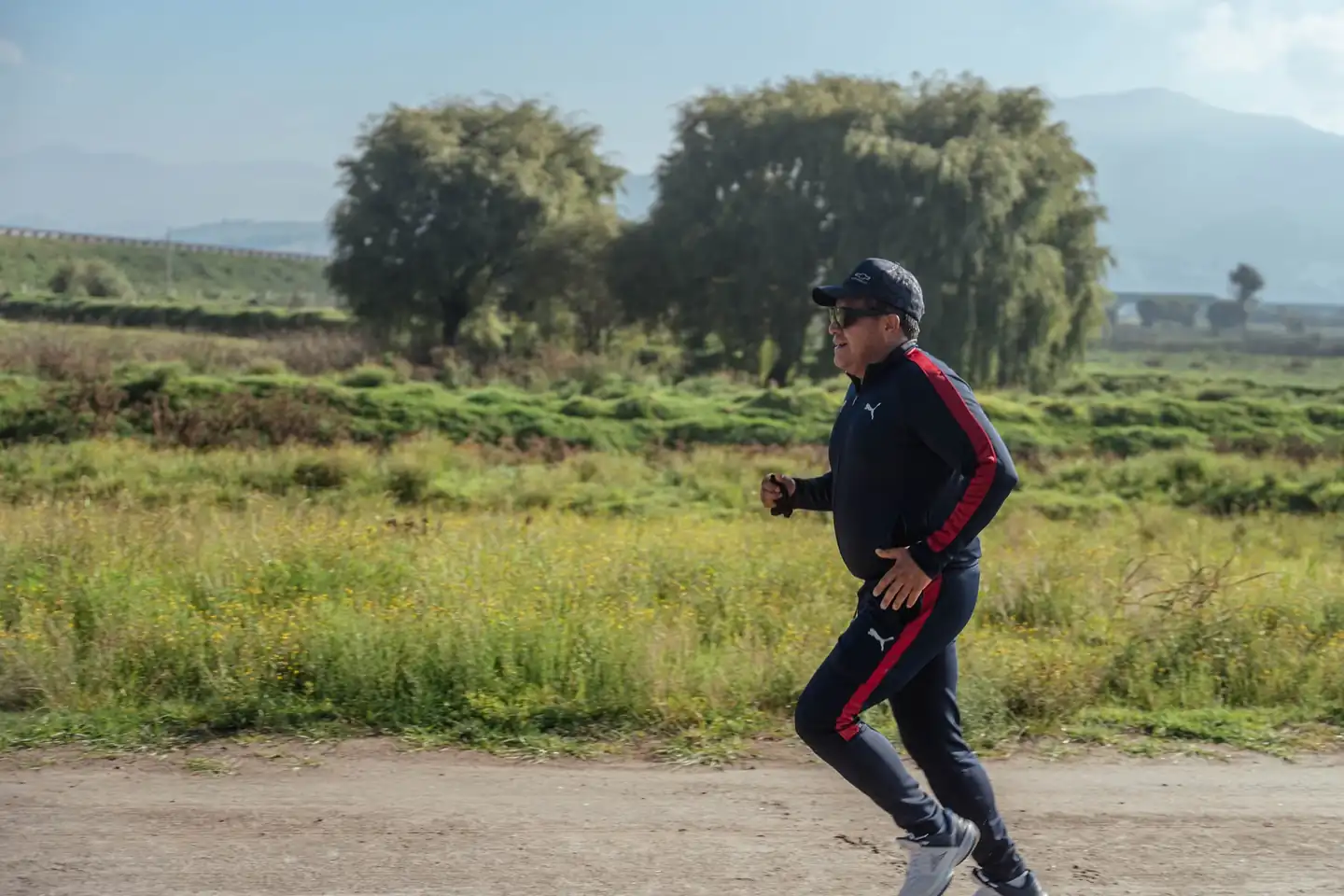
Tramacastilla will once again be a meeting point for trail running on Saturday, August 1, 2026, with a proposal that combines a half-marathon route and more accessible distances in a strongly mountainous setting. The event, held in Aragón, is already scheduled as one of those races that attract both runners seeking endurance and those who prefer a shorter but demanding effort.
The long distance is set at 21 kilometers, the format that draws the most attention in the search and gives the race its sporting identity. Alongside it are variants of 13, 9, and 5 kilometers, as well as a beginner category and a walking event, broadening the range of profiles without losing the hallmark of a mountain race.
A summer event with a very defined profile
The Trama Trail is held in Tramacastilla, in the province of Teruel, and its date is already set for the first Saturday of August 2026. The calendar matters in this kind of event because heat, light, and dry terrain completely change the runner’s experience. August in this area is no minor detail: it forces you to think about effort more with your head than with your legs.
The available information places the race as a trail running event with several official distances, something common in mountain races that aim to attract runners of different levels. The 21-kilometer distance serves as the competitive core, but the presence of shorter options makes it a more open day, less focused on the elite or the highly experienced runner.
On the map of Aragonese races, this kind of event occupies an intermediate place between a local race and an event with a certain sporting ambition. It is neither a simple recreational outing nor an ultra high-mountain race. Its appeal lies in the balance: enough elevation gain and uneven terrain to challenge runners, but with formats that lower the barrier to entry.
The 21-kilometer course and what it means in the mountains
21 kilometers in trail running are not the same as a road half marathon. The number may suggest a familiar distance, but in the mountains, time, wear and tear, and effort management change completely. Climbs, descents, loose ground, and technical sections usually turn those 21 kilometers into a much longer day than the 21-kilometer mark suggests on a road.
In a race like this, the runner is not only fighting the clock. They are also managing pace, footing, breathing, and foot placement. A loose stone, a sloping bend, or a broken track section can alter the most finely tuned plan. That is why the appeal of the format lies precisely in that mix of calculation and constant adaptation.
The 21K distance is often the most sought after by runners accustomed to middle distances who want to get into trail running without suddenly jumping into very long efforts. A mountain race like the one in Tramacastilla fits that profile well, where the challenge comes not only from the mileage, but from the terrain and the physical environment surrounding each stride.
Distances for different levels and a structure designed to broaden participation
In addition to the 21K, the organizers announce routes of 13, 9, and 5 kilometers, along with a beginner category and a 5-kilometer walk. That variety is not just a commercial add-on; in trail running, the coexistence of distances allows the day to have more life, more movement, and more of a community feel around the main competition.
The 5-kilometer format and the beginner option serve as an entry point for those who are not yet comfortable with long mountain efforts. The 9K and 13K, meanwhile, occupy that middle ground that often appeals to runners with experience in popular races or trail routes, but who prefer to avoid the punishment of a technical half marathon.
The combination of distances also helps define the character of the event. It is not designed for a single elite group or a very closed audience. It is a race that tries to build atmosphere, distribute effort, and make trail running visible as a sport with multiple levels of access. In the summer calendar, that diversity adds sporting value and also territorial value, because it places Tramacastilla on the map of routes and races with their own identity.
What kind of race it is and why the setting matters
The Trama Trail belongs to the mountain category, and that defines the entire experience. It is not road running, nor pure cross-country, nor an urban race with an occasional green section. The terrain sets the tone, and in this part of Aragón the terrain usually means trails, slopes, changes in footing, and a landscape that affects both pace and the runner’s attention.
In a race like this, the surroundings are not just scenery. They are part of the effort. The altitude, August temperatures, the type of ground, and exposure to the sun shape the race from the start. For the runner, that means mental preparation matters as much as physical preparation, because the clock is no longer the only judge: heat management, hydration, and stability on uneven footing also come into play.
That environmental component explains why summer trail races demand so much caution. A 21K in the mountains may look manageable on paper, but the strain multiplies when the heat intensifies and the elevation gain breaks the rhythm. In races like this, starting too fast usually comes at a price in the second half of the course, when the terrain no longer forgives.
Tramacastilla within the nearby race calendar
The race is part of an area with trail movement throughout the summer and into early autumn. Very nearby are races such as Trail Bronchales and Trail Piedra Roja Rodenas 21K, which creates a small sporting corridor in the province and surrounding area. For the mountain runner, this proximity of dates and locations makes the area an interesting focus within the Aragonese calendar.
In June there is Trail Bronchales, with longer distances and a profile that also points to serious mountain running. In September, Trail Piedra Roja Rodenas 21K brings back the idea of a middle-distance trail race. The presence of several events within a relatively short radius not only adds options; it also shows that there is a local trail-running culture, with runners who can string together events or choose the one that best fits their level.
Tramacastilla thus gains visibility through accumulated context. It is not an isolated race in the middle of the calendar, but part of a block of races that strengthen trail running’s presence in Teruel and its surroundings. For the runner, that means more references, more comparisons, and a clearer understanding of the type of terrain they are facing.
What distinguishes a summer trail half marathon
A 21K mountain race calls for a different strategy than an urban half marathon. On roads, average pace is usually the key metric; in trail running, the result is shaped by elevation gain, terrain, and the ability to sustain variable efforts. You do not run in a straight line, but in constant negotiation with the environment.
Summer adds another layer of complexity. At the beginning of August, temperature and solar radiation are already part of the script, and the runner must deal with faster dehydration and a thermal sensation that tangibly changes the effort. In a 21-kilometer trail race, those details can determine whether the race is run with control or in survival mode.
That is why the format is attractive to a broad but demanding audience. Runners coming from the road find a familiar distance but with a much tougher content. Those already coming from trail running discover a race that does not need to be very long to leave its mark. That middle ground is, precisely, one of the event’s strongest virtues.
The practical information worth keeping in mind
The date is already set: Saturday, August 1, 2026. The location is Tramacastilla, in Aragón, and the main distance visible in the available information is the mountain half marathon, accompanied by other shorter options. The organizers refer to their website to check for possible changes, which is common in trail calendars where weather, permits, or logistics can lead to last-minute adjustments.
In the referenced source, no fixed registration fee is listed, nor an official start time, nor a specific start/finish address. Nor does an explicit official website appear in the extracted data, although the event is identified within the runatica.com ecosystem. In informational terms, the most reliable thing is to stick to what has been verified: date, place, distances, and mountain character.
That level of certainty is important in calendar events. Often, distance and date are the first things runners look for, because they help decide whether it fits into their planning. In Tramacastilla, the basic picture is clear: a mountain race in August, with a 21K as the sporting reference and several distances to broaden participation.
Why this race has gained visibility in trail searches
The combination of a half marathon, an Aragonese setting, and a summer date explains much of the interest. A race does not need a large media infrastructure to appear in searches if it offers a clear reference for runners. The event name, the location, and the main distance are enough to place it accurately within the calendar.
In addition, the presence of nearby races reinforces Tramacastilla’s visibility as a useful point for mountain runners. Trail running thrives on repeated routes, on areas where the calendar has continuity, and on places that manage to associate their name with specific races. In that sense, the Trama Trail enters the conversation in its own right.
In a discipline so closely tied to territory, the name of the place matters as much as the distance. Tramacastilla is not just a setting; it is part of the race’s identity. And in trail running, that matters more than it may seem: geography does not accompany the event, it defines it.
A 21K that neatly sums up the logic of Aragonese trail running
The 21-kilometer Trama Trail fits the most recognizable version of inland trail running: accessible mountains, a variety of distances, and a summer that turns every kilometer into a decision. It is a race that does not need gimmicks to draw attention. It just needs a specific date, a place with personality, and a format that forces runners to read the terrain well.
In the 2026 calendar, Tramacastilla appears as a useful stop for those seeking a half marathon off-road and within a genuine mountain logic. There are longer, tougher, and more high-profile races. But few combine the accessibility of a 21K and the natural toughness of trail running so clearly as to offer such a precise reading of what it means to run in the mountains in the middle of August.
That is where its journalistic and sporting strength lies: not in excess, but in exact measure. A familiar distance, demanding terrain, and an environment that refuses to be tamed. In a calendar crowded with events, that synthesis still carries weight.
You may also like: XI Trama Trail 2026: routes, distances and entry fees.



How to prevent thigh chafing: causes and real solutions

Women’s running windbreakers: seven jackets and how to choose

Do more workouts get rid of soreness? A guide for runners

Jaén Half Marathon 2026: Record 3,800 Runners Registered

Men’s short running tights: how to choose the right pair

World Triathlon confirms data breach involving medical data

Izan Edo targets podium at Miyazaki World Cup

María Pérez ranks ninth in World Athletics’ 2026 top ten

Dos Santos, Duplantis and Sawe: World Athlete of the Year finalists

San Silvestre Vallecana 2026: 42,000 places, prices and start times

 Races4 months ago
Valencia Half Marathon 2027: date and registration

 Races4 months ago
Valencia Marathon 2026: entry, ballot and course

 Reviews and Comparisons4 months ago
Asics Gel-Roadmiles 3 for men: review and current price

 Reviews and Comparisons4 months ago
Asics Gel Sonoma 8 Gore-Tex: complete analysis for trail and rain

 Sneakers4 months ago
Saucony Endorphin Pro 4: full review and verdict

 News5 months ago
Strava API 2026: what changes for clubs, challenges and runner apps?

 Reviews and Comparisons5 months ago
Nike Alphafly 3: opinions, sensations, and real key points

 Reviews and Comparisons4 months ago
Under Armour running shoes review 2025-2026: models and key features

 Sports Equipment4 months ago
Shoe sizes in cm: a clear guide to getting the right fit for your footwear

 Sneakers3 months ago
Skechers GO RUN Consistent 2.0 analysis: comfort and limits

 News5 months ago
Valencia Marathon 2026 route: key tips to train and run better

 Sneakers4 months ago
Adidas Adizero Boston 13 for men: review and verdict