Races
Fukuoka Marathon 2026: course, schedule, and registration
The Japanese event already has a date, route, and registration deadlines. Here are the key points to understand it.

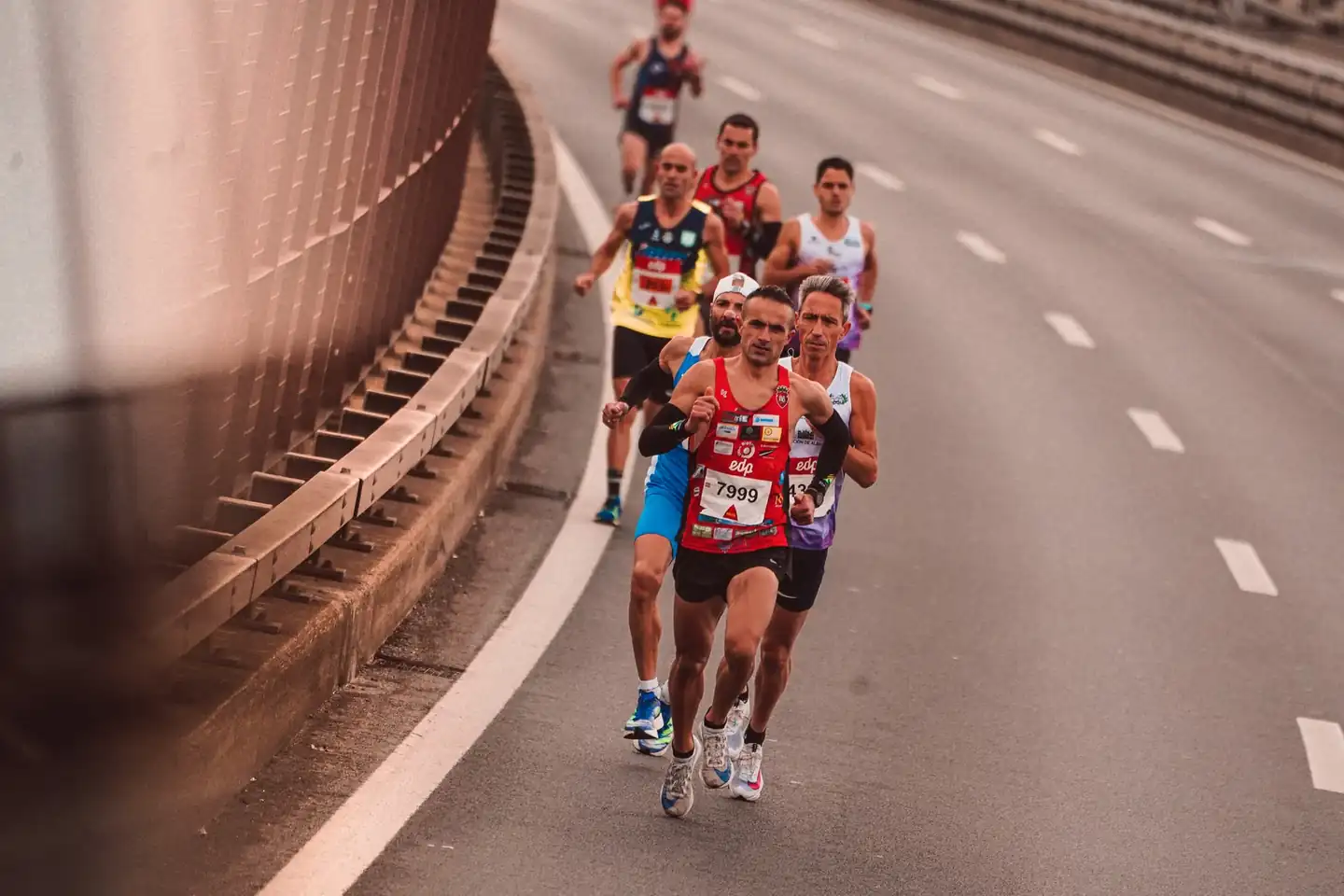
Imagen: RUN 4 FFWPU / Pexels
Fukuoka Marathon 2026 will once again turn the Japanese city and the Itoshima Peninsula into a 42.195-kilometer corridor of avenues, coastline, and stretches open to the sea. The event is set for Sunday, November 8, 2026, with a start at 8:20 for the marathon and the popular race, and an official finish scheduled for 3:20 p.m. for the main distance.
The race retains the significance of a major benchmark urban race in Asia: 13,000 bibs for the marathon, a quota of 20 spots for the wheelchair race, and 2,000 participants for the 5.2-kilometer fun run. All of this takes place in an event that combines precise logistics, athletic tradition, and a route with its own identity, far removed from impersonal races that could move to another city without anyone noticing.
A race that connects two cities and two landscapes
The 2026 edition confirms an idea that has defined Fukuoka for decades: it is not just a marathon, but a line drawn between Tenjin and Itoshima, between Fukuoka’s urban pulse and the coastal breadth that appears later like a breath of fresh air. The marathon starts at Tenjin Intersection, on Watanabe-dori, in Fukuoka City’s Chuo ward, while the finish is at Itoshima City Koryu Plaza Shima-kan.
That transition from the city to a more open setting is one of the features that makes this event unique. It is not a closed loop around itself nor a cardboard cutout race, but a course with its own narrative. The runner passes through neighborhoods, avenues, and recognizable landmarks before leaving the urban core behind and entering a landscape where the sea and the wind weigh as much as the legs. That combination explains why Fukuoka tends to attract both elite athletes and runners looking for a marathon with character.
The race also keeps its structure as a large-scale event, with multiple distances and associated services. Alongside the marathon, the day includes a 5.2-kilometer wheelchair race and a 5.2-kilometer fun run that is non-competitive and does not record times or award prizes. In journalistic terms, the picture is clear: a major road race that retains the DNA of top-level competition, while opening a parallel door to a more accessible and festive kind of participation.
Date, schedule, and basic facts for the 2026 edition
The organizers have set the edition for November 8, 2026, a Sunday, and specified that the races will be held rain or shine. The wheelchair race will start at 8:10, while the marathon and fun run will begin at 8:20. The cutoff for completing the marathon is set at 3:20 p.m., which gives a total margin of 7 hours for the flagship distance.
The control system is the usual one for a race of this level, with checkpoints distributed along the course to ensure safety and coordination with traffic. The marathon requires a sufficient pace to reach each point before the designated time, from Momochi Central Park at 5.3 kilometers to the final stretch before the finish in Itoshima. The wheelchair race, meanwhile, has two checkpoints, one after the crossing with Welfare Center and another at the finish.
The organizers have also included a very typical phrase from major Japanese marathons: the event requires preparation, medical screening, and strict attention to the rules. That is no small detail. The race takes place on urban roads and in areas that require surgical coordination among athletes, volunteers, security, and mobility. Schedule precision here is not an ornament, but the scaffold that supports the entire day.
Course, cutoffs, and what it means to run it
The marathon is certified by the Japan Association of Athletics Federations, a designation that places the race on the map of major road courses. The route starts in Tenjin and heads west with a sequence of intermediate points that require careful effort management. Runners pass through places such as Momochi Central Park, Imajuku Station, Ito Campus, Kyushu University, Imazu Sports Park, and Showa Bus Nishinoura Depot, before tackling the final kilometers to Itoshima.
The race has something of a story in chapters. The first kilometers are usually about concentration and settling into the group; then comes the section where the city is still alongside you, with subdued noise and the asphalt like a ribbon stretched between buildings and avenues; later, breathing changes as the course begins to reveal more horizon, more coastline, more space. In Fukuoka, the marathon is not limited to measuring endurance: it turns the landscape into a tactical variable.
The cutoff times clearly show the level of demand. The 5.3-kilometer mark must be reached before 9:25 a.m.; 9.9 kilometers before 10:09 a.m.; 14.3 kilometers before 10:52 a.m.; 19.8 kilometers before 11:44 a.m.; 25.0 kilometers before 12:33 p.m.; 29.8 kilometers before 1:20 p.m.; 32.9 kilometers before 1:50 p.m.; 36.9 kilometers before 2:28 p.m.; and 40.1 kilometers before 2:59 p.m. In practice, it is a race that rewards not only fitness, but also a fine reading of pace and changes in environment.
Registration, quotas, and confirmed fees
The registration period for the 2026 edition is set from April 20 at 10:00 a.m. to May 20 at 8:00 p.m.. Applications are submitted online and, if demand exceeds capacity, selection is carried out by lottery. Applicants who are accepted must pay the fee within the period indicated by the organizers.
The confirmed fees clearly distinguish between categories. The marathon costs 30,000 yen for foreign runners registering through the English website; the wheelchair race costs 3,300 yen for adults and 2,200 yen for high school students; the fun run costs 4,100 yen for those older than junior high school and 2,200 yen for junior high school students. In the marathon, the overall quota is 13,000 spots, although the organizers reserve 500 bibs for the international category before the standard applications.
These figures are useful because they show what kind of race Fukuoka is: an event with strong demand, lottery selection when necessary, and enough scale to attract both local runners and visitors. It is neither a boutique event nor an unfiltered mass marathon; it sits somewhere in between, with sporting ambition and organizational control.
Who can run and under what conditions
The marathon category is open to athletes born on or before April 1, 2008, with the exception of high school students, and requires the ability to finish in 6 hours and 45 minutes. The organizers distinguish between JAAF-registered athletes and general runners, although both groups share the same time requirement. Athletes from Japan and abroad recommended by the marathon are also accepted.
The wheelchair race is reserved for people of junior high school age or older, excluding those without a disability, and requires completing the distance in 30 minutes using a racing wheelchair in accordance with para-athletics rules. The fun run, meanwhile, is open from junior high school age and allows up to 50 minutes to finish. No times are recorded and no prizes are awarded in this distance, which defines it as a participatory, non-competitive experience.
There is also precise regulation regarding accompanying runners. Disabled runners who have difficulty competing alone may be accompanied by support runners, up to three in the marathon and up to two in the fun run. However, competing in a wheelchair is not allowed in the marathon or the fun run, and registered participants who bring two or more companions will not receive a time certificate issued by the Fukuoka amateur athletics association. In an event like this, the rules are not an administrative accessory: they are part of the balance between inclusion, safety, and competitive fairness.
Services, rules, and the machinery that makes the race possible
Fukuoka Marathon 2026 includes a set of services that speak well of the level of organization. The promoter will transport runners’ baggage from the start to the finish, although only items that fit into the carry bag handed out at bib pickup are allowed. There will also be online finish certificates with the recorded time for the marathon and no time for the fun run; participants in the registered category may request a physical certificate on the same day, for an additional fee.
The event offers bib pickup at Fureai Park, on the west side of Fukuoka City Hall, between 12:00 p.m. and 8:00 p.m. on November 6 and 7. That detail may seem bureaucratic, but in a race of this scale it is a crucial piece of the puzzle. It is also noted that there is no parking available at the venue and that public transportation is effectively mandatory, both for convenience and for traffic management on race day.
The rules on clothing, costumes, advertising, and accompanying people show careful organization. Athletes entered in the registered section may not run in costume, while everyone else may do so as long as the outfit is safe and respectful. Strollers, pets, and inviting unregistered people to run on the course are also not allowed. And company or product logos with advertising purposes are prohibited unless authorized by the organizers. It is a fairly clear snapshot of what Fukuoka is aiming for: order, sporting integrity, and an environment free of unnecessary commercial noise.
What makes Fukuoka special within the Japanese calendar
The race occupies a very specific place in Japanese athletics history. Its lineage goes back to 1947, and the current race inherits the tradition of the country’s oldest and most prestigious international marathon in its original format. For years it was an event tied to men’s high performance, with a long list of benchmark winners and top-level times. That past carries weight, but not like a museum; it weighs like a pillar that still supports the event’s identity.
In the most recent edition of the historic race, in 2025, the winner was Bayelign Teshager with 2:07:51. In 2024, Yūya Yoshida won in 2:05:16, and in 2023 Michael Githae took the title in 2:07:08. The list of previous champions includes names such as Maru Teferi, Patrick Makau, Sondre Nordstad Moen, Yuma Hattori, and Tsegaye Kebede, which helps explain why Fukuoka remains a serious showcase for road marathoning.
The continuity is also evident in the way the race presents itself to runners. It does not sell an artificial backdrop or an empty slogan; it offers an athletic experience where the city, the coast, the logistics, and tradition come together with a very Japanese engineering of detail. In that sense, Fukuoka is not competing only with other races on times or participation, but for something harder to replicate: a recognizable identity from start to finish.
A marathon that is better understood by looking at its edges
Fukuoka’s margins say as much as its main route. The fun run has no timing and no prizes, which removes competitive pressure from a short distance and turns it into a friendlier entry point. The wheelchair race is fully integrated into the day, with its own schedules, checkpoints, and prizes, reinforcing the idea of an event designed with several levels of reading and participation.
The approach to health and individual responsibility is also revealing. The organizers remind participants that each runner must know their physical condition, undergo a medical check, and prepare well in advance. They also warn that in the event of an accident or fire, an emergency vehicle may enter the course at any point and the race could be temporarily stopped. That is not a rhetorical gesture: it is their way of saying that in a marathon of this scale, the spectacle depends on a chain of very specific decisions.
For that reason, Fukuoka Marathon 2026 is not just a date on the calendar. It is a race that condenses history, rules, city, and landscape into the same effort of more than 42 kilometers. For the runner, that translates into something simple to explain and difficult to experience: a road marathon with the soul of a crossing, where every section matters and every time limit is part of the story.
The value of a race that still retains its own voice
In an increasingly crowded international calendar, few events can boast such a marked personality. Fukuoka preserves the weight of its legacy, but updates it with an open structure, concrete services, and a route that makes no false promises about what it offers. Starting in Tenjin and finishing in Itoshima is not just a geographic move: it is a way of telling the city through effort.
The 2026 edition also confirms the relevance of a race that remains important for athletes of different profiles, from those chasing serious times to those seeking to live a major urban marathon with a very clear scenic component. The calendar will mark November 8, but the sporting story begins much earlier, at the moment registration opens and the lottery decides who will take the start. That is how Fukuoka works: with precision, with memory, and with the quiet authority of events that do not need exaggeration to remain relevant.
You may also like: Hokkaido Marathon 2026: complete guide to Sapporo’s major event and Fukuoka Marathon 2026: course, date and requirements.



How to prevent thigh chafing: causes and real solutions

Women’s running windbreakers: seven jackets and how to choose

Do more workouts get rid of soreness? A guide for runners

Jaén Half Marathon 2026: Record 3,800 Runners Registered

Men’s short running tights: how to choose the right pair

World Triathlon confirms data breach involving medical data

Izan Edo targets podium at Miyazaki World Cup

María Pérez ranks ninth in World Athletics’ 2026 top ten

Dos Santos, Duplantis and Sawe: World Athlete of the Year finalists

San Silvestre Vallecana 2026: 42,000 places, prices and start times

 Races3 months ago
Valencia Half Marathon 2027: date and registration

 Races3 months ago
Valencia Marathon 2026: entry, ballot and course

 Reviews and Comparisons4 months ago
Asics Gel-Roadmiles 3 for men: review and current price

 Reviews and Comparisons4 months ago
Asics Gel Sonoma 8 Gore-Tex: complete analysis for trail and rain

 Sneakers3 months ago
Saucony Endorphin Pro 4: full review and verdict

 News5 months ago
Strava API 2026: what changes for clubs, challenges and runner apps?

 Reviews and Comparisons5 months ago
Nike Alphafly 3: opinions, sensations, and real key points

 Reviews and Comparisons4 months ago
Under Armour running shoes review 2025-2026: models and key features

 Sports Equipment4 months ago
Shoe sizes in cm: a clear guide to getting the right fit for your footwear

 Sneakers3 months ago
Skechers GO RUN Consistent 2.0 analysis: comfort and limits

 News5 months ago
Valencia Marathon 2026 route: key tips to train and run better

 Sneakers4 months ago
Adidas Adizero Boston 13 for men: review and verdict