Races
La Gorbeia Suzien 2026: complete guide to the Zeanuri skyrace
Dates, routes, elevation gain, and registration for the major mountain event in Zeanuri, with its most useful key details.

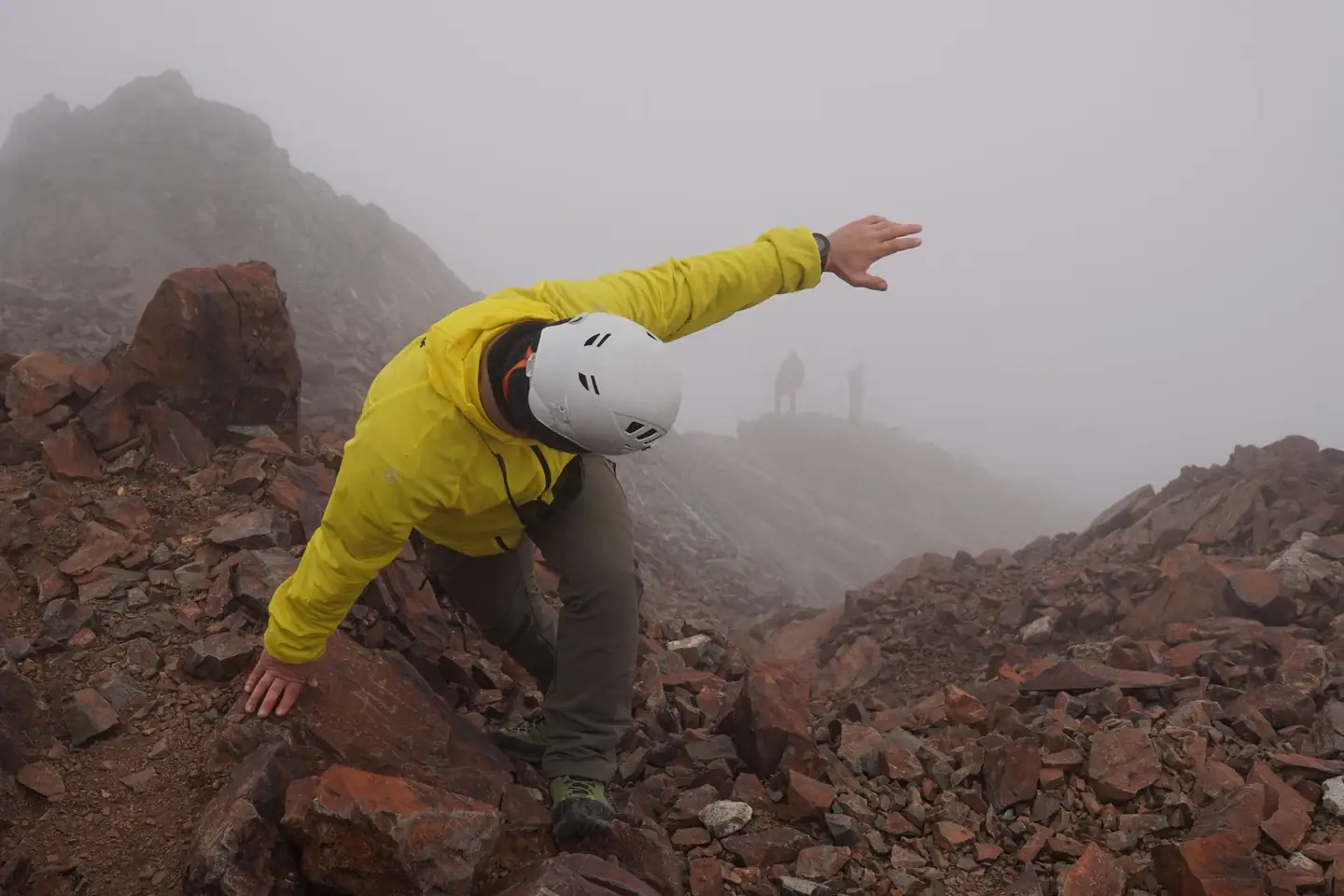
The Gorbeia Suzien returns on September 26, 2026 to Zeanuri with the same reputation it has built over the years: a demanding, changing, and highly technical course in the heart of Gorbeia Natural Park. The main race covers around 32 kilometers and 2,400 meters of positive elevation gain, with a maximum time of 6 hours and 30 minutes, while the short distance is set at 21 kilometers and 1,200 meters of accumulated ascent.
Its hallmark does not depend only on the distance. The race has earned its own place thanks to a mix of rock, mud, exposed ridges, damp forests, and shifting fog, a setting that forces runners to race with their heads and manage every climb as if it were a small high-mountain stage. In Zeanuri, the calendar marks a skyrace that demands physical fitness, experience, and a fine reading of the terrain.
A skyrace that turns Gorbeia into a mountain test
The Gorbeia Suzien does not compete on the terrain of gentle mountain races. Its reputation comes from a course that pushes from the start and barely offers any breaks, with a sequence of climbs and descents that punishes both the legs and decision-making. The surroundings help explain it: Gorbea, with its cross at 1,484 meters, dominates the landscape and sets the horizon for a race run between the valley and the heights.
In the trail running calendar of the Basque Country, few events concentrate so much identity. Zeanuri, a small municipality closely tied to the mountains, becomes the center of a day in which elite runners, experienced amateurs, and local spectators mix. The result is a race with the heartbeat of a town and international ambition, where the sound of horns, the humidity of the forest, and the echo of footsteps create a very recognizable atmosphere.
The sporting appeal lies in the density of the effort. There are no big flat sections to recover on, nor long stretches to settle into a rhythm. The race forces runners to alternate running, power walking on the steepest ramps, and descending precisely over unstable ground. That format fits squarely within skyrunning, a discipline in which the mountain is not just scenery, but an active part of the competition.
Dates, start, and distances confirmed for 2026
The 2026 edition is set for Saturday, September 26 in Zeanuri, Bizkaia. The start of the 21-kilometer event is listed at 11:00 in the registration information published by RockTheSport, while the main race is also announced for that same Saturday within the official event program. The organization has kept the two-route format, one longer and one more compact, both with an authentic mountain profile.
The main distance appears in the documentation and technical information with slight rounding variations, which is common in races of this type: some references speak of 31 kilometers and others of 32 kilometers, but the positive elevation gain remains around 2,400 meters. The short race, for its part, is set at 21 kilometers and about 1,200 meters D+, a more accessible option on paper, though still very demanding for any runner without mountain experience.
Registration for the 21K was priced at 50 euros on the management platform, while other recent references place the Skyrace at 70 euros. In practice, access usually depends on a lottery and pre-registration system, with limited spots, which adds a planning component beyond athletic preparation.
The course: Zeanuri, San Justo, Lekanda, Gorbea, and Aldamin
The main race route starts and finishes in Zeanuri, a circular course that enters Gorbeia Natural Park through the San Justo area. From there, the race quickly gets serious. The first climbs already make it clear that the window for running comfortably will be brief, and the terrain begins to shape the day around the major ascents.
The classic sequence of the course passes through Zanburu, Lekanda, the meadows of Arraba, the Zastegi area, the summit of Gorbea, and the final climb to Aldamin. That layout concentrates much of the race’s personality: ridge sections, narrow trails, steep slopes, and changes in terrain that force runners to watch the ground as much as the landscape.
The most recognizable point of the route is the ascent to the summit of Gorbea, the symbolic roof of Bizkaia and one of the most visible places in Basque mountaineering. From there, the race does not ease up; on the contrary, another major climb remains, Aldamin, which usually separates those who have managed their energy well from those who have paid the price too early. The final descent is not a carpet either: it is a mix of technical running, potential mud, and accumulated fatigue.
Mud, fog, and rock: the terrain that defines the race
The reputation of the Gorbeia Suzien is best understood when talking about the terrain. The motto associated with the race, with that idea of endure the wild, fits a landscape that may seem gentle from afar, but changes character when humidity sets in. The combination of rock, mud, and fog is not a marketing hook: it is a fairly accurate description of what runners usually encounter.
The Cantabrian climate makes September an unpredictable month. In the valley, temperatures may be mild, but at higher elevations wind and fog can change the perceived temperature in just a few minutes. Wet grass and slick stone demand caution on descents, and forest sections add thick mud that breaks rhythm and stains every stride.
That changes race strategy. Runners who arrive thinking in road-race pace soon face a different reality: in the mountains, efficiency matters more than raw speed. Saving energy in the first kilometers, power hiking aggressively on the steep ramps, and not emptying the tank on the more runnable sections are decisions that matter as much as fitness.
The 21K: a shorter format, but not an easier one
The 21-kilometer distance usually attracts runners who want to enter the Gorbeia world without taking on the full race. It is a reasonable choice, but it should not be seen as an easy race. The 1,200 meters of positive elevation gain and mountain terrain put the demand clearly above that of a conventional half marathon.
In a race like this, trail experience shows immediately. Technical descents punish anyone who runs them with uncertainty, and long climbs reward muscles accustomed to sustained effort. Runners coming from the road may discover that being good on the flat is not enough to handle a mountain day in Gorbeia.
The advantage of the shorter format is that it allows runners to experience the race atmosphere with less exposure to wear and tear. It is still necessary to manage gear, water, nutrition, and wet terrain, but the effort time is usually more contained, which can make it easier to get acquainted with a type of race that does not allow shortcuts.
Registration, lottery, and spots: how access is organized
Demand often exceeds supply. In recent editions, the organization has used a pre-registration and lottery system, with the waiting list as a regular part of the process. The 2026 registration window for the 21K was open from April 13 to 17, with the draw scheduled for April 19 in Zeanuri, according to the registration platform information.
In the Skyrace, the sources consulted mention about 500 spots for the main race, plus a quota reserved for elites, sponsors, and returning runners. That structure helps explain why registration is not handled like a mass road race. Here, a bib is not only purchased; it is also allocated, and that is part of the race’s character.
The process requires attention to deadlines, because a late registration can leave a runner out even before training is considered. The combination of quotas, lottery, and waiting list makes the Gorbeia Suzien function almost like a natural preselection. Not just anyone gets in: it’s for those who organize themselves in time and accept the challenge’s harshness.
Mandatory gear and useful equipment on an uncertain day
The official rules of a skyrace of this profile usually focus on safety, and the Gorbeia Suzien is no exception. Between ridge wind, possible rain, and abrupt temperature changes, mandatory gear is not about overcaution, but about real mountain conditions. A waterproof windbreaker with a hood is among the most important items, along with other elements the organization may require depending on the edition.
Beyond mandatory requirements, the race calls for practicality. Shoes with good grip on mud and wet rock are almost a priority, because the terrain mixes rocky areas with slippery meadows and narrow trails. A lightweight pack or vest for carrying hydration and some energy intake also becomes valuable, especially when the effort lasts several hours.
Fog adds its own twist. It is not enough to anticipate sun or think only about rain; in Gorbeia, visibility can drop suddenly, and that changes how the terrain is perceived. Light gloves, a cap, a thin warm layer, and a sensible layering system are more useful than any flashy gesture. In the mountains, style matters less than preparation.
Bizkaia, Euskadi, and a race with its own identity
The Gorbeia Suzien does not exist apart from the territory; it reflects it quite faithfully. Its sporting message fits a way of understanding the mountains deeply rooted in Euskadi: closeness to the hills, respect for the terrain, involved local communities, and a landscape that is run with both the legs and the memory. Zeanuri, with its small scale and direct relationship with Gorbeia Natural Park, reinforces that sense of a race strongly tied to place.
The atmosphere during the race adds a human dimension that does not always appear in technical sheets. Crowd support, Basque-language references, the presence of runners from outside the area, and the mix of elite and recreational athletes build a climate that is not just festive, but also very recognizable. There are races designed for the camera; this one seems designed for the mountain and for those who inhabit it.
The label of an untamable race is not an exaggeration. Those who cross the finish line usually do so feeling they have crossed a small personal frontier, not just a course. That is a big part of its magnetism: the race does not sell a comfortable experience, but an honest relationship with the mountain, with its moods and its demands.
What sets the race apart in the trail calendar
On the map of mountain races in Spain, the Gorbeia Suzien occupies a very defined place. It does not compete only on landscape beauty or tradition; it also does so through the toughness of its profile, the variety of its terrain, and the feeling of true skyrunning it conveys. It is a race where elevation matters, but so do mental verticality, patience, and technique.
Its presence in international circuits and comparisons, along with its relationship to top-level skyrunning, places it alongside well-known races in the north of the Iberian Peninsula. However, what truly makes it unique is the combination of demand and local roots. The mountain here is not presented as a postcard; it is presented as a setting for serious work.
For the runner, that has a clear consequence: preparing for Gorbeia means accepting that there will be uncomfortable moments, changing terrain, and a truly sustained effort. It also means choosing an experience that leaves a mark, because not many races condense the harshness, beauty, and character of a territory so clearly.
A race measured less by the clock than by memory
The Gorbeia Suzien finishes where it began, in Zeanuri, but it rarely stays there. The route leaves a story of mud on the legs, fog on the face, and rock underfoot that lasts far longer than the official time. That is perhaps its greatest virtue: it turns a competition day into a complete reading of the mountain, with its rough parts and its moments of clarity.
The technical data sums up a lot, but not everything. Yes, it is 32 kilometers, yes, there are 2,400 meters of positive elevation gain, and yes, the short race still commands respect. But the real value lies in how those numbers take shape in a specific landscape, in a very recognizable sports culture, and in an organization that keeps alive one of the most singular events in Basque trail running.
That balance between toughness and authenticity explains why so many eyes return to Zeanuri every September. The Gorbeia Suzien is not understood merely as a race; it is understood as a way of entering the mountains without filters, with everything that implies. And in an increasingly crowded calendar of similar events, that difference matters a lot.



How to prevent thigh chafing: causes and real solutions

Women’s running windbreakers: seven jackets and how to choose

Do more workouts get rid of soreness? A guide for runners

Jaén Half Marathon 2026: Record 3,800 Runners Registered

Men’s short running tights: how to choose the right pair

World Triathlon confirms data breach involving medical data

Izan Edo targets podium at Miyazaki World Cup

María Pérez ranks ninth in World Athletics’ 2026 top ten

Dos Santos, Duplantis and Sawe: World Athlete of the Year finalists

San Silvestre Vallecana 2026: 42,000 places, prices and start times

 Races3 months ago
Valencia Half Marathon 2027: date and registration

 Races3 months ago
Valencia Marathon 2026: entry, ballot and course

 Reviews and Comparisons4 months ago
Asics Gel-Roadmiles 3 for men: review and current price

 Reviews and Comparisons4 months ago
Asics Gel Sonoma 8 Gore-Tex: complete analysis for trail and rain

 Sneakers3 months ago
Saucony Endorphin Pro 4: full review and verdict

 News5 months ago
Strava API 2026: what changes for clubs, challenges and runner apps?

 Reviews and Comparisons5 months ago
Nike Alphafly 3: opinions, sensations, and real key points

 Reviews and Comparisons4 months ago
Under Armour running shoes review 2025-2026: models and key features

 Sports Equipment4 months ago
Shoe sizes in cm: a clear guide to getting the right fit for your footwear

 Sneakers3 months ago
Skechers GO RUN Consistent 2.0 analysis: comfort and limits

 News5 months ago
Valencia Marathon 2026 route: key tips to train and run better

 Sneakers4 months ago
Adidas Adizero Boston 13 for men: review and verdict